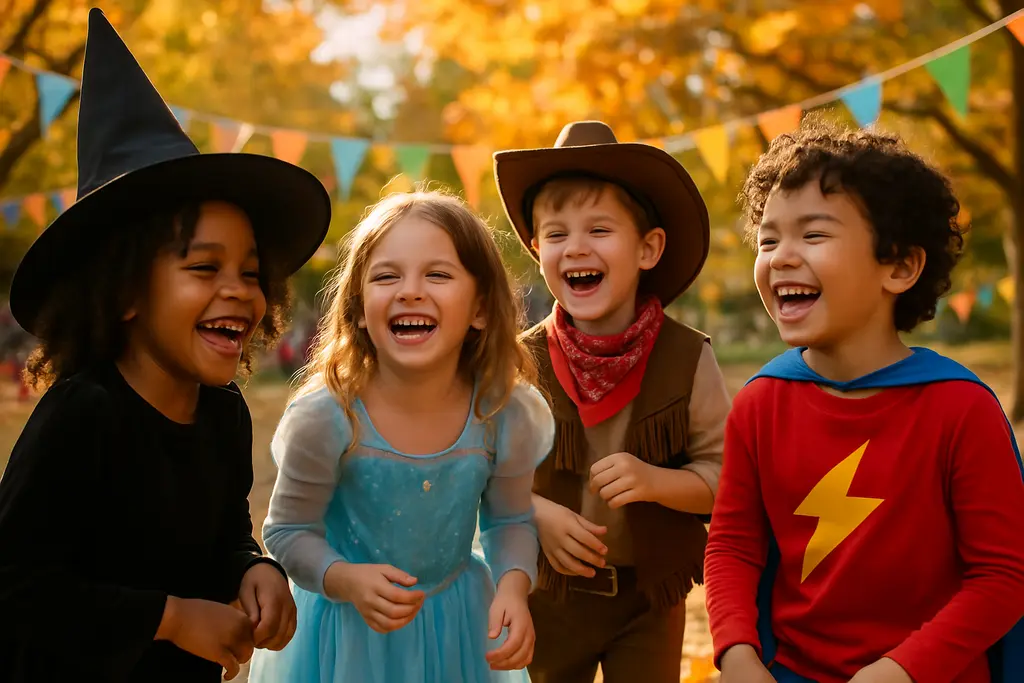

Dress-Up Play Benefits are easiest to discuss carefully when costume play is treated as a social and artistic activity, not as a guaranteed developmental shortcut. A themed event such as “Snoopy in Style” can give children a clear visual prompt: a recognizable character world, a set of costume cues, and a shared reason to pretend. The developmental value, based on the research notes available here, appears strongest when children do more than wear an outfit. They need time to invent roles, negotiate stories, and use clothing as a cue for character, mood, and social exchange.
Dress-Up Play Benefits In Themed Character Events
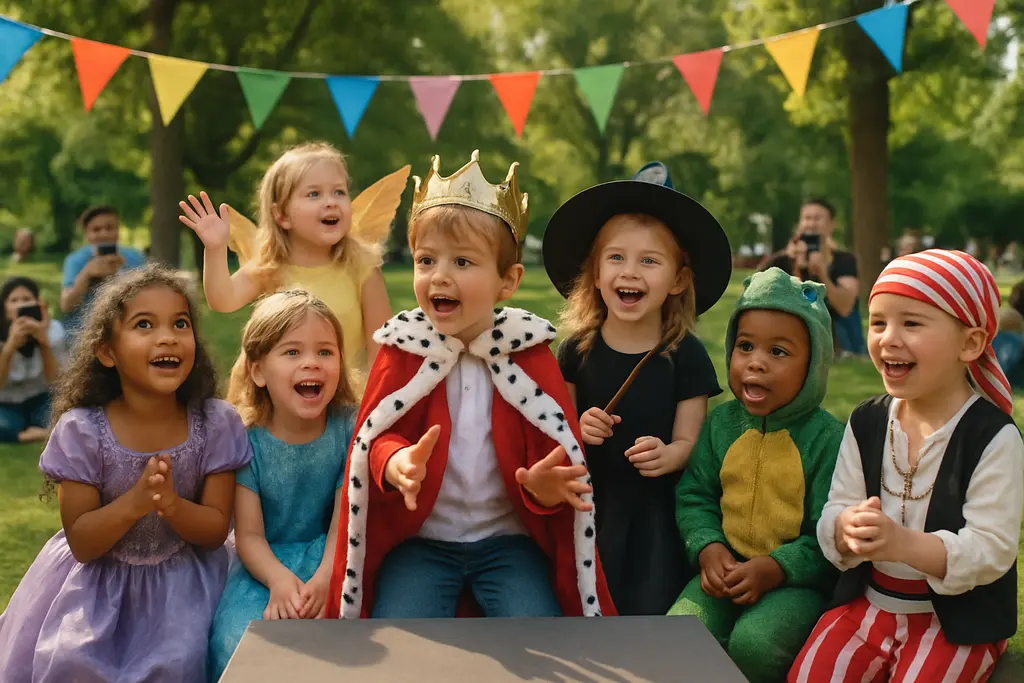
The research base points toward cautious optimism. A meta-analysis published on April 25, 2024, in Educational Psychology Review reported a positive correlation between pretend play and social competence in children aged 3–8 years, across about 2,952 children in 34 studies. The notes also state that studies assessing the quality of pretend play showed stronger effects than studies focused only on frequency. That distinction matters for costume events. A room full of capes, ears, collars, hats, and story props is not automatically educational. The likely value comes from how children use those objects to coordinate play.
For a character-based event, the adult role is best kept light but observant. Children may copy a pose, invent a side character, or shift from a known comic figure into an original puppy, detective, dancer, or friend. Those shifts are not trivial. They show that the costume is acting as a flexible tool rather than a fixed script. This is also where artistic respect enters the discussion: branded characters should not be treated as generic raw material for commercial copying. For family or school use, licensed items, handmade noncommercial accessories, or original character-inspired choices can honor the source work while still giving children room to play.
Dress-Up Play Benefits Depend On Quality
Quality in pretend play can mean several observable behaviors: children assign roles, respond to one another, manage disagreement, and keep a shared story going. The 2024 meta-analysis summarized in the research notes does not prove that every themed event causes social growth, but it does support the idea that richer pretend play is linked with better social competence. A “Snoopy in Style” activity, for example, may be more useful when children decide who is hosting a pretend fashion show, who is making the invitations, who is walking a toy dog, and who is reporting on the scene, rather than simply standing for photos.
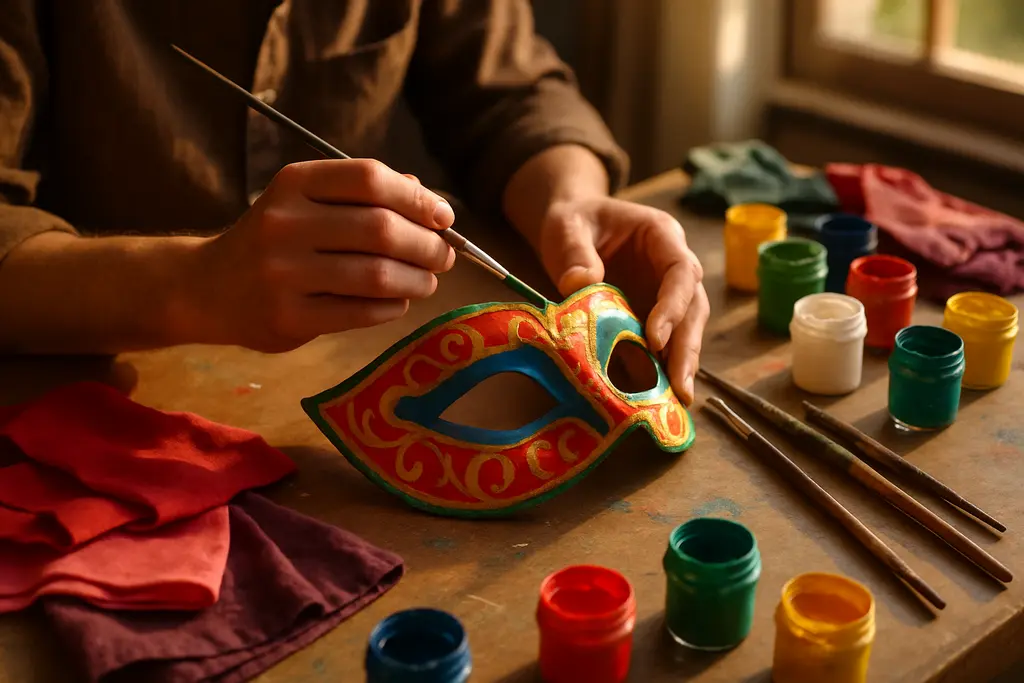
This is where costume design choices matter. Soft collars, paper badges, simple scarves, and cardboard prop cameras can invite role exchange. Highly fragile pieces may limit play because children become worried about damaging them. In DIY dress-up, durability often supports creativity better than visual accuracy. For school settings, practical costume planning also has to account for movement, bathroom access, weather, and safety; the same issue appears in this related note on school costume planning.
Character Costumes And Social Understanding
Character play gives children a way to practice perspective. The research notes include a study of 152 preschool children, aged about 3–4, which found that about 65% had imaginary companions at some point; imaginary companions and character impersonation correlated with greater emotional understanding and more advanced self-perception three years later, according to the PubMed abstract. Correlation is not causation, but the pattern fits what many caregivers observe: children often use pretend roles to test feelings that are easier to handle at a safe distance.
In a themed costume setting, a child might say, “My dog character is shy,” or “This reporter is proud,” without having to make a direct confession about their own emotions. That distance can be protective. It lets the child rehearse social language, try out confidence, or express embarrassment through a character. Adults should avoid over-interpreting any single costume choice. A child wearing a detective hat is not announcing a stable identity category. More often, the child is testing a role for a few minutes and seeing how peers respond.
Fashion As A Social Signal
Fashion in child dress-up works through signals: color, texture, shape, sound, and movement. A bow tie can suggest formality. A blanket cape can imply speed or bravery. A floppy ear headband can soften a character’s mood. These signals help children communicate before they have adult-level language for tone and identity. The research notes on social pretend play, including role-taking, costume use, and narrative enactment, connect this kind of activity with theory of mind, emotional understanding, empathy, and self-conscious emotions in the preschool years.
Additionally, for those interested in how public figures, media, and style cues circulate across popular visual culture, you can find more insights at a related site in the same network, Kay Granger.
Gender, Access, And Costume Choice
One concern in themed dress-up is whether costume racks quietly reproduce narrow expectations. The research notes point to a longitudinal observation of gender-typed dress-up play in preschool years, around ages 3–5. Girls averaged about once per week in dress-up play, while boys averaged one to two times per month; 56% of girls and 31% of boys played dress-up somewhere between once a week and every day during those years, as reported in the study available through PMC. These numbers do not mean boys dislike costume play. They suggest that access, encouragement, peer norms, and adult assumptions may shape who feels invited.
A character event can reduce that pressure if costume stations are organized by function rather than gender. Instead of “girls’ accessories” and “boys’ accessories,” use categories such as reporter, dancer, helper, explorer, musician, friend, athlete, host, and storyteller. This lets children choose based on the role they want to try. It also avoids forcing a child into a narrow reading of a branded character or costume color.
- Offer adjustable pieces such as scarves, hats, collars, cuffs, and soft vests.
- Use role labels that describe actions rather than fixed personalities.
- Keep a few quiet costume options for children who want to participate without being the center of attention.
- Let children remove pieces without treating withdrawal as failure.
The research notes also mention a longitudinal Australian study published on March 27, 2026, where stronger pretend-play ability at ages 2–3 predicted fewer internalizing and externalizing mental health problems at ages 4–5 and 6–7, with emotion regulation partially mediating the relationship. That finding should be read with care, but it supports a sensible design principle: costume play is most useful when children can practice emotion, not just display an outfit.
Drama, Confidence, And Event Design
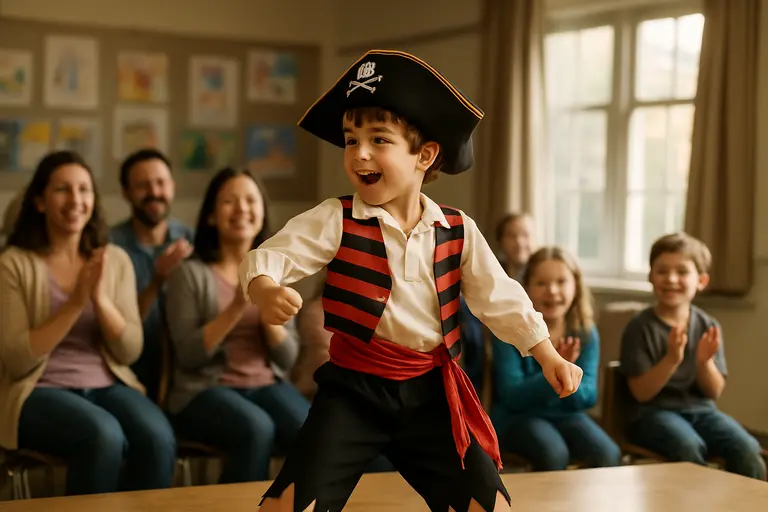
Older children and teenagers may respond less to simple dress-up bins and more to structured drama. The research notes include a 2025 quasi-experimental field longitudinal study with 202 participants that compared new improvisational theatre participants with a sports control group. The improvisation group showed greater long-term increases in creative self-efficacy and self-esteem. Another 2025 Australian pilot study over 4–5 days, with youth aged 12–17 and a sample of about 24, reported significant reductions in depression, anxiety, and stress after a drama workshop, while well-being and self-efficacy increased. Self-esteem did not significantly change in that short period.
Those findings do not mean a single themed costume afternoon should be sold as mental health support. They do suggest that performance-based play can be emotionally meaningful when it includes voice, movement, group trust, and creative choice. For a “Snoopy in Style” format, an older group might design a mini runway narrative, create original side characters, or stage short improvised scenes about friendship, nerves, pride, or apology. The costume becomes one part of a wider social structure.
Practical Costume Prompts For Adults
Adults can support Dress-Up Play Benefits without turning play into a lesson plan. Ask open prompts: “Who are you in this scene?” “What does your character want?” “How does the scarf change how you move?” “Who helps your character?” These questions encourage children to connect clothing with intention. They also leave room for humor, refusal, or reinvention.
Creator-commerce sellers should be careful with themed products. High-level caution is enough here: avoid implying official affiliation with a branded character unless that relationship exists, and avoid copying protected character artwork for sale. Original dog-themed accessories, comic-strip-inspired color blocking, or general “storybook pet parade” styling can serve families while respecting the source material.
Snoopy In Style As Costume Practice
“Snoopy in Style” works best as a costume practice model when it balances affection for a known character world with child-led invention. The event idea can support Dress-Up Play Benefits if it gives children flexible materials, social roles, and permission to revise the story. The strongest research claims in the notes are not that costumes alone produce development, but that pretend play, social role-taking, impersonation, and drama can be associated with social competence, emotional understanding, self-perception, confidence, and well-being under the right conditions.
For caregivers, teachers, and DIY costume makers, the practical message is restrained but useful: build for movement, invite many kinds of children into the play, avoid rigid gender sorting, and treat character fashion as a starting point rather than a script. That approach respects the art that inspired the event while giving children space to turn fabric, props, and character cues into shared imaginative work.