

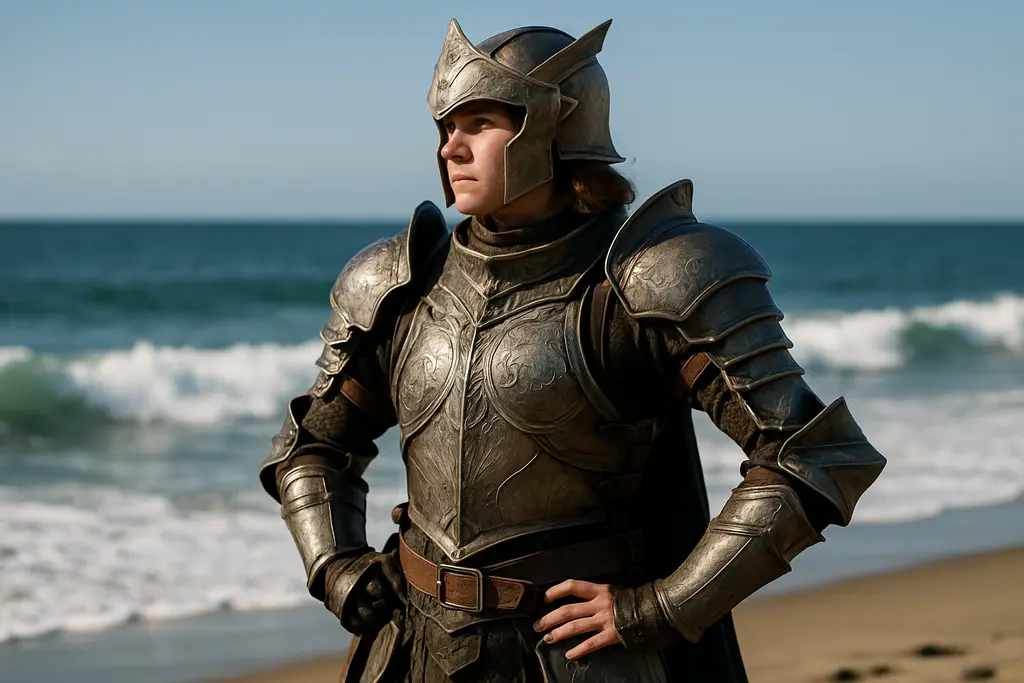
PropCon cosplay armor stood out as a useful product-review lens after The PropCon: Cosplay, Armor & Wearables took place on October 3–4, 2026, at the Ocean Center in Daytona Beach, Florida, with listed daily hours from 10:00 AM to 5:00 PM, according to The PropCon. Because the event had already ended by October 21, 2026, this review treats the show retrospectively rather than as a preview. The available evidence supports a cautious reading: the event presented a dense cluster of armor makers, wearable prop sellers, chainmail artists, 3D-printing vendors, combat demonstrations, and prop displays, but the research does not provide independent durability tests, long-term buyer feedback, or verified post-event sales data.
PropCon cosplay armor After Daytona Beach
The strongest product-review angle from the Daytona Beach event was not a single winning booth or a ranked buyer list. It was the range of construction approaches shown under one convention roof. Custom armor, handmade chainmail, 3D-printed builds, leather-and-fur costume pieces, replica gauntlets, and screen-used production props each represented a different kind of wearable or collectible value. For buyers and makers, that mix matters because cosplay purchases often sit between fashion, craft, performance gear, and display object.
The event’s title placed cosplay, armor, and wearables in the foreground, which helped frame the floor less as a general pop-culture market and more as a focused maker environment. That framing is useful for product review because it encourages questions about fit, weight, material finish, repairability, heat tolerance, and safe movement. Those issues can be harder to judge from online listings alone. A convention booth does not automatically prove quality, but it can allow a closer look at surface finish, seams, closures, padding, and the way a maker explains their process.
Why A Retrospective Review Matters
Post-event assessment is more restrained than promotional coverage. Before an event, the language often centers on what visitors could expect. After October 4, 2026, the useful question became what the vendor mix revealed about the buying categories on offer. The research supports clear statements about scheduled activities and named exhibitors, yet it does not support broad claims such as “best armor,” “top maker,” or “highest-quality booth.” For a product review section, that limit is not a weakness. It keeps the discussion anchored to observable categories and buyer-relevant signals rather than unsupported praise.
Vendor Booths As Product Review Evidence
The vendor list showed several distinct approaches to costume construction. Mando Commando Armor was listed with custom armor, helmets, cosplay accessories, and props. Dungeon Guild Printing was tied to 3D-printed armor, costume pieces, and character builds. Malonze Production brought tribal- and Viking-inspired costume pieces, including leather, fur shoulder mantles, animal-skull masks, and drinkware. Lady of the Rings focused on handmade chainmail jewelry and wearable medieval pieces, with the research also noting coifs, chainmail shirts, bras, skirts, hand wraps, accessories, stainless steel, and titanium jewelry.
Those categories do not invite the same evaluation standards. A helmet or rigid chest piece raises questions about interior fit, visibility, strap security, and ventilation. A chainmail garment asks different questions: ring closure, metal type, skin contact, garment weight, and the way the piece sits while walking. A fur mantle or skull mask shifts attention toward backing material, fastening method, comfort, and sensitivity to heat. A printed armor build invites a look at layer lines, sanding, primer work, paint flexibility, and how easily a cracked section might be repaired.
Chainmail, Leather, And Printed Pieces
Lady of the Rings is the most useful example for comparing wearable art with costume function. Chainmail can read as jewelry, medieval reference, body adornment, or full costume component depending on scale. The research says the booth included wearable and functional pieces made from stainless steel and titanium jewelry. That material note matters, but it does not settle every buying question. Stainless steel and titanium can suggest different weight and skin-feel expectations, yet an ethical review should not claim comfort without wearer feedback.
Dungeon Guild Printing and Artisan 3D Labs point toward another branch of convention buying: digitally fabricated armor and costume parts. Artisan 3D Labs was listed with live 3D printing and interactive lighting on cosplay and armor pieces. Live demonstration can help a buyer see process transparency. It may show print scale, finish expectations, or lighting integration, but it still cannot replace long-term stress testing. For serious wearers, the better question after a demo is how the part behaves after transport, repeated wear, and minor impact.
Screen-Used Props And Replica Context
Prop-based displays added a useful comparison point. Tilted Tombstone Studios was connected to Ringwraith replica gauntlets, scenic art, a 42-inch Jaws Orca model, and the chance to view molds beside finished casts. That mold-to-cast context is valuable because it shows a production path rather than only the finished surface. Screen Captured Props presented authentic screen-used weapons and production props from titles including 47 Ronin, Westworld, The Walking Dead: Dead City, The Hunger Games, Cobra Kai, The Last Samurai, and Snow White and the Huntsman, hosted by Eric Anthony Leong.
These displays should be read carefully. Screen-used objects and replica wearables serve different buyer purposes. A screen-used prop may carry provenance interest, while a convention wearable must survive body movement, posing, transport, and repeated handling. Product reviewers should avoid blurring those categories. Artistic influence and fandom reference can be discussed respectfully, but creators and sellers still need to treat protected characters, marks, and likenesses with caution. This is not legal advice; it is a reminder that fan-made objects and commercial listings can raise rights-clearance questions.
Buying Signals From Demos And Combat Features

The event also included combat and experience features that helped contextualize armor as performance gear rather than only visual costume. Castle Tournaments was listed with real competitive knight battles using steel armor and steel weapons under combat rules, with photo opportunities and armor or weapon show-and-tell after matches. Thaliondor offered foam-weapon combat events throughout both days. Those features matter because they placed armor near movement, safety, and embodied performance rather than treating it only as static decoration.
Still, competitive steel armor and convention cosplay armor should not be treated as interchangeable products. The research supports that Castle Tournaments used steel armor and steel weapons under combat rules, but it does not say that vendor armor at the show was suitable for combat. A cautious buyer should separate display armor, cosplay armor, LARP-style foam combat pieces, and protective sporting equipment. Visual resemblance does not prove safety rating, and an attractive finish does not prove impact protection.
PropCon cosplay armor Fit Questions
For PropCon cosplay armor shoppers, fit should have been the first review category. The available vendor mix suggests several inspection points: whether helmets allow adequate sight lines, whether shoulder mantles restrict arm lift, whether chainmail pulls unevenly, whether 3D-printed pieces have sharp interior edges, and whether straps can be adjusted without damaging the finish. These are practical questions, not verdicts on any listed maker. The research does not provide enough evidence to score individual booths for comfort or durability.
A fair product-review approach would also ask how the piece will be used. A costume worn for a short photo session can prioritize sculptural effect. A full-day convention outfit needs more attention to heat, weight, hydration breaks, and fast removal. A stage contest entry may need to read clearly under lights from a distance. These needs may conflict, especially with heavy materials or large silhouettes.
Value, Access, And Event Cost
Admission context also shaped the product-review value of the weekend. Saturday tickets were listed at $20, Sunday tickets at $15, and a weekend pass at $30; children 10 and under entered free with a paid adult, and student discounts were available with valid school ID, according to Cosplay 50. The Costume & Cosplay Contest was scheduled for Sunday, October 4, from 12:30 to 1:00 PM on the Main Stage, with $724 in total prizes, including $100 cash for first place and vendor tickets for runners-up.
From a buyer’s standpoint, those numbers suggest the event was accessible enough for comparison shopping, though the research does not say how many attendees purchased goods. A modest admission cost can make a maker-focused event useful even for visitors who leave without buying, because direct handling and conversation can improve later purchasing decisions. For online comparisons after the show, readers can weigh convention buying against marketplace risk by reading our review of cosplay commerce platforms. Additionally, for readers interested in expanding their exploration of maker-shopping habits beyond convention halls, our related site Shimply offers another point of reference.
PropCon cosplay armor As A Product Review Topic
The strongest reading of PropCon cosplay armor is that the Daytona Beach event worked as a concentrated sample of the current maker-product categories available to costume buyers: printed armor, handmade metal wearables, leather and fur costume pieces, replica props, screen-used displays, live fabrication, and combat demonstrations. The supported facts do not justify ranking vendors or declaring any item superior. They do support a cautious review framework built around material disclosure, wearability, movement, finish, safety claims, and rights-aware selling.
For fairytale fashion and cosplay readers, the lesson is practical. Armor and wearables are not only visual fantasy objects; they are body-worn designs that must negotiate comfort, craft, reference, and use. A beautiful gauntlet, chainmail shirt, mantle, or printed helmet can fail the wearer if it pinches, overheats, cracks, or cannot be transported safely. A plain-looking closure may matter more than an ornate surface. A maker who explains molds, materials, lighting, or repair options gives buyers more review evidence than a booth that offers only spectacle.
Because the public research for this event is limited, the fairest assessment remains category-based rather than vendor-scored. The PropCon showed enough named makers and experiences to justify serious attention from costume shoppers, but responsible reviewing should stop short of unsupported claims about comfort, longevity, or resale value. That restraint respects both the artists who build these objects and the buyers who need clear, evidence-based guidance before investing in wearable fantasy design.