

Dress-up play benefits are easiest to see when costumes act as prompts for planning, language, social rules, and emotional rehearsal rather than as decorative objects alone. As of October 22, 2026, several late-October costume events listed in the research notes still offered timely examples: Pretend City Costume Week on October 25-30, Events DC Costume Carnival on October 30, Oakland Zoo costume-contest weekends including October 24 and 31 after an October 17 date, and NYC free Halloween activities across October 4-31. These events can support imaginative engagement, but the research does not support a simple claim that any costume, any crowd, or any contest automatically improves child development.
How dress-up play benefits Event Settings
Why dress-up play benefits Need Design
The clearest caution comes from a controlled intervention published in May 2026. The study tested an 8-week pretend-play intervention across 15 schools with 333 preschoolers aged 3-7 and found no significant effect on social cognition or social-emotional behavior, according to the ERIC record. That result does not mean pretend play lacks value. It means families, educators, and event designers should avoid treating costume participation as a developmental shortcut. A child may wear wings, a crown, a cape, or animal ears and still need adult support to negotiate turns, describe a feeling, or follow a group rule.
For costume events, the implication is practical. A parade line, trick-or-treat table, craft station, or museum play corner should make the role clear enough for a child to use it. A fairy-tale helper can offer a “magic repair” to a pretend bridge. A forest animal can ask for directions. A tiny inventor can explain how a cardboard gadget works. These prompts keep the costume connected to action, speech, and choice.
Adult Participation Changes The Signal
A June 2026 study of group role play over 20 sessions with children around age 5 reported reduced perceived stress, reduced externalizing behavior, and increased prosocial behavior compared with controls; it did not find a significant improvement in internalizing symptoms, as reported in the open-access PMC article. The adult role matters here. Children were not simply placed in costumes and left alone. The play setting included structured group participation and adult presence.
This distinction matters for late-October costume events. A caregiver who asks, “What does your character do when someone is scared?” is offering a different experience from a caregiver who only says, “Stand still for the photo.” The first prompt invites a child to rehearse empathy and self-control. The second may still be pleasant, but it asks far less from the imagination.
Late October 2026 Costume Events As Play Prompts
Event Themes Can Shape The Kind Of Play
The research notes describe Pretend City Costume Week, dated October 25-30, 2026, as a museum event for toddlers aged 19 months to 3 years, with costumes encouraged alongside climbing, dancing, problem-solving, and pretend environments. For very young children, that mix can be more developmentally useful than a costume contest alone because the outfit becomes part of movement and sensory exploration.
Events DC Costume Carnival was listed for October 30, 2026, from 5:00 to 7:00 PM at St. Elizabeths East in Washington, DC, with costumes, a contest, trick-or-treat activities, music, and family activities. The Bay Area zoo examples in the notes included costume contests at noon on October 17, 24, and 31, 2026, with crafts and exhibit-based activities. NYC free Halloween events were listed across October 4-31, 2026, including parades, library activities, and festivals. Families comparing regional cultural listings sometimes use related calendars such as Next Clues. These types of resources can help find events, but the developmental value still depends on what adults and children do once they arrive.
Why Theme Boundaries Matter
Costume themes also carry artistic and ethical weight. Fairytale fashion works best when it borrows from broad visual traditions—stars, moons, woodland textures, paper crowns, quilted capes, painted cardboard armor—rather than copying a protected character design or a living artist’s signature style for commercial use. This is not legal advice; it is a cautious design principle. Respecting original works protects the creative exercise. It also nudges children toward invention instead of imitation.
A child who creates “a rain-cloud messenger” from grey felt, ribbon droplets, and a soft satchel has to explain the role. What message does the cloud carry? Why is it raining? Who needs help? That small narrative demand is where costume design begins to support language and social imagination. For readers who want a related frame on themed gatherings, this site’s discussion of character-event costume play offers a connected way to think about roles, interaction, and cautious claims.
Making Costumes Support Social And Emotional Practice
Start With A Role Script Before Fabric
The strongest reading of dress-up play benefits is not “more costume pieces are better.” Quality appears to matter. A paper crown with a clear role can be more useful than a costly outfit with no story attached. Before choosing fabric, ask what the child’s character wants, what problem the character can solve, and how the character treats other people in a crowded space. These questions give the child a script for behavior without making play stiff.
For a fairytale-inspired event, a caregiver might suggest three roles: the bridge keeper who helps people cross, the moon baker who shares pretend pastries, or the tiny dragon nurse who checks whether stuffed animals feel brave. Each role includes a social action. The child can greet, share, ask, wait, and respond while still feeling that the costume belongs to a fantasy world.
DIY Choices That Keep Children Involved
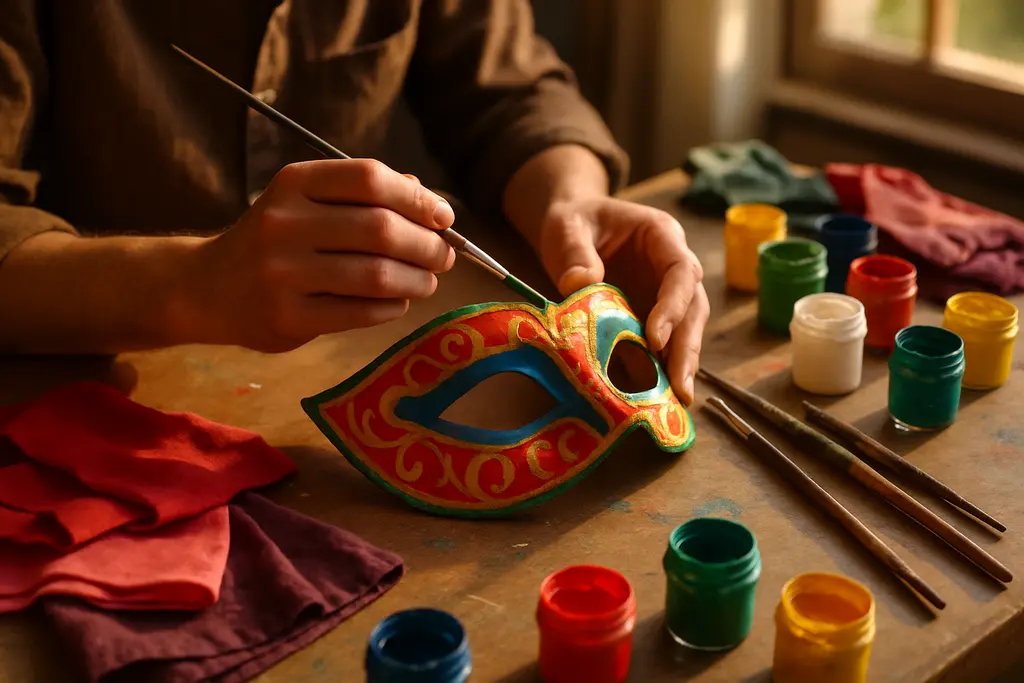
Handmade costumes often help because they leave room for child decision-making. The goal is not to produce a polished stage costume. The goal is to let the child connect material choices with identity, movement, and story.
- Use soft capes, scarves, or tunics that allow running, sitting, and safe play.
- Offer two or three color choices rather than an open-ended pile of supplies.
- Add one symbolic prop, such as a felt key, paper map, fabric star, or cardboard tool.
- Ask the child to name the role and describe one helpful action the character can take.
- Keep masks optional, especially for children who need clear sight lines or facial expression cues.
This approach treats costume-making as a form of guided authorship. A child chooses, revises, tests, and explains. Those small decisions can support planning and self-control without turning play into a lesson sheet.
Reading The Evidence Without Overclaiming

What The Research Can And Cannot Say
The research notes include meta-analytic findings linking pretend play with executive function and social competence, but the strongest responsible interpretation remains cautious. Correlation does not prove that any single costume event causes a developmental gain. The 2026 intervention evidence is mixed: one controlled preschool study did not find significant social-competence effects, while another group role-play study found reductions in stress and externalizing behavior and increases in prosocial behavior under adult-supported conditions.
That mixed picture is useful rather than disappointing. It tells parents, educators, and event planners where to focus: clear roles, small-group interaction, adult participation, and emotional language. A costume event becomes more meaningful when children have chances to ask for help, offer help, wait for a turn, narrate a character’s feelings, and change the story when another child adds an idea.
Contests Need Careful Framing
Costume contests can be fun, but they can also shift attention toward adult sewing skill, store-bought detail, or public comparison. A child-centered contest can reduce that pressure by recognizing imagination, kindness in character, reuse of materials, or storytelling. A cardboard crown that comes with a thoughtful explanation may deserve as much attention as a more elaborate outfit.
Event staff can support this by asking open questions: “What does your character protect?” “Who is your helper?” “What happens if your plan changes?” These questions create social space for shy children and reduce the emphasis on visual display alone. They also respect costume design as a creative act rather than a ranking system.
Costume Events And dress-up play benefits
For families considering late-October 2026 costume events, dress-up play benefits are most plausible when children do more than wear a look. The event should invite movement, speech, cooperation, and flexible storytelling. A museum play week, a community carnival, a zoo craft area, or a neighborhood parade can all support those aims if adults help children connect costume choices to actions.
The best fairytale costume is not necessarily the most ornate. It is the one a child can move in, explain, adapt, and share with others. A felt star pinned to a cape, a handmade map, or a paper lantern wand can become a prompt for planning and empathy when the child has a role to play. That is the careful promise of costume play: not guaranteed improvement, but a well-supported opening for imagination, language, and social practice.