
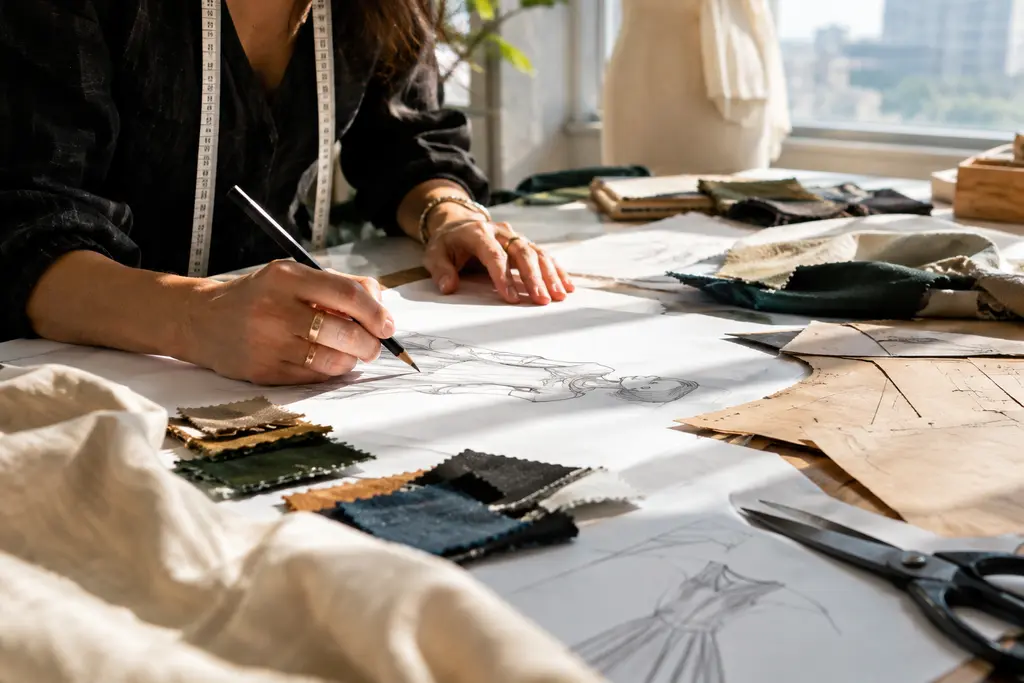
Paris Couture Patterns can be a productive starting point for fashion creators, but only if the exhibition is treated as evidence rather than a catalog to copy. The “Paris Couture” exhibition opened on October 4, 2026, in Minneapolis and is scheduled to run until January 17, 2027, with more than 80 pieces tracing haute couture from the late 19th century to the present, according to the Palais Galliera exhibition notice. For makers, the most useful lesson is not a single sleeve, bead layout, or famous silhouette. It is the disciplined relationship between ornament, structure, surface, and movement.
Exhibition Cues Worth Translating
The Paris Couture Patterns Starting Point
The strongest pattern work begins with a clear boundary: study the construction idea, not the protected identity of a garment. Christian Dior’s 1952 “Palmyre” dress, worn by Wallis Simpson and described in the exhibition materials as carrying sequins, pearls, and crystals, suggests a surface strategy built around concentrated light. Cristóbal Balenciaga’s 1967 sculptural ensemble, noted for its gazar fabric, points toward another lesson: textile body can become architecture. Neither reference requires imitation. A creator can respond by testing where a bodice needs stiffness, where a cape needs air, or where embellishment should cluster to change visual weight.
Scale, Weight, And Negative Space
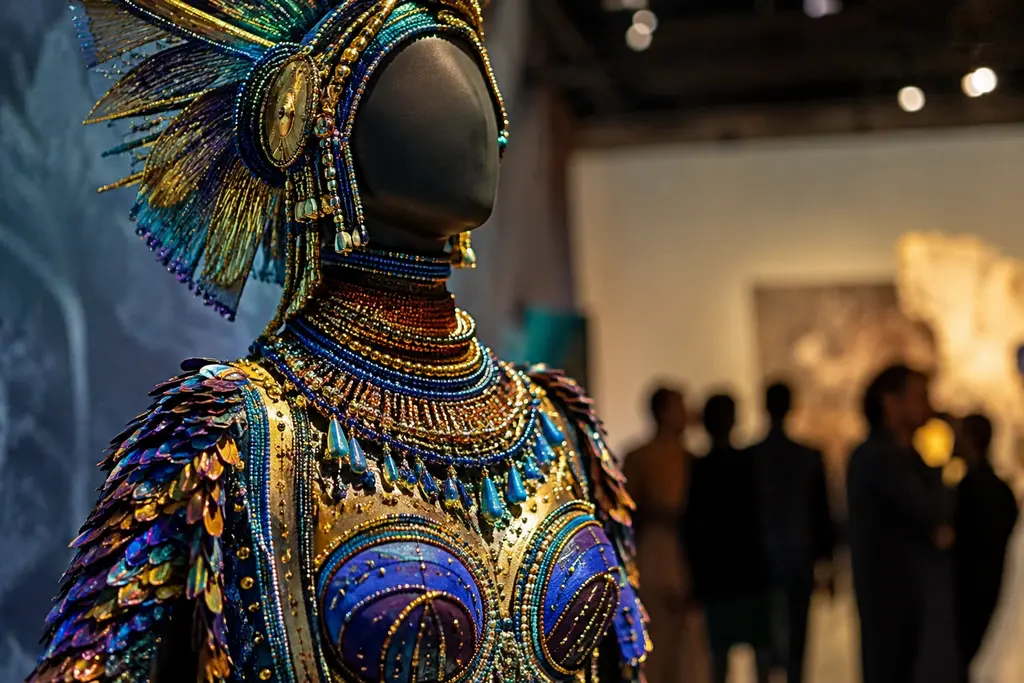
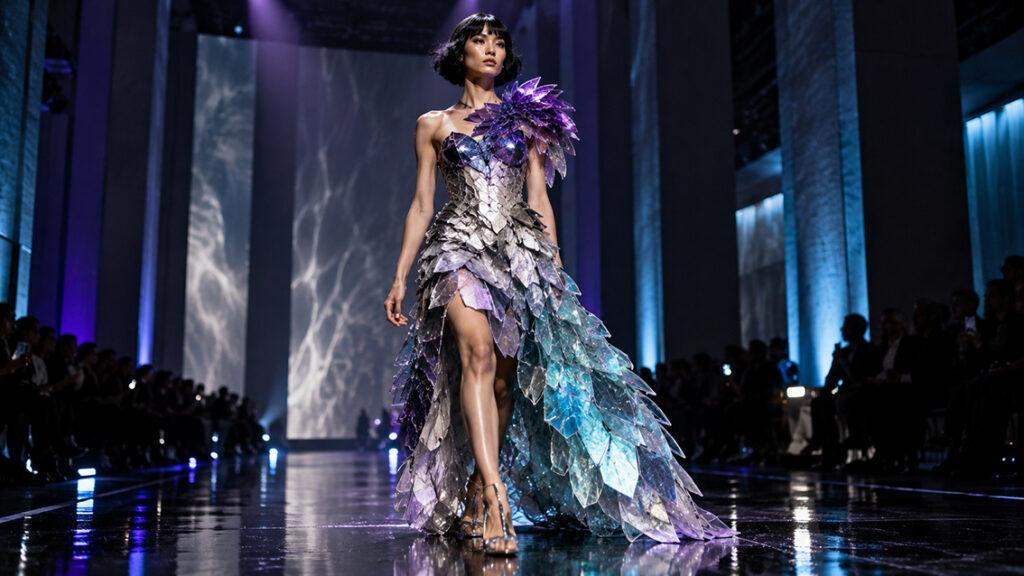
Paris Couture Patterns work best for independent makers when scale is translated into practical modules. A small studio may not have couture embroidery teams, but it can draft a yoke with a single dense beaded zone, then leave adjacent panels plain so the eye registers contrast. The same thinking applies to translucent fabric scales mentioned in the exhibition’s contemporary Spring 2026 couture works. Thousands of scales are not required for a thoughtful costume or art garment. A collar, cuff, detachable overskirt, or shoulder veil can carry a reduced version of that idea while keeping the design original and wearable.
This is especially useful for fairytale costume design. A maker building a moonlit queen, forest herald, or dreamlike courtier can use couture evidence to control mood without borrowing a recognizable dress. Surface treatments should serve the character logic: frostlike beads for a winter figure, softened floral shadows for a garden spirit, or raised geometry for a ceremonial guard. The aim is not replication; it is translation through drafting choices.
Pattern Drafting From Couture Evidence
Turning Ornament Into Repeat Logic
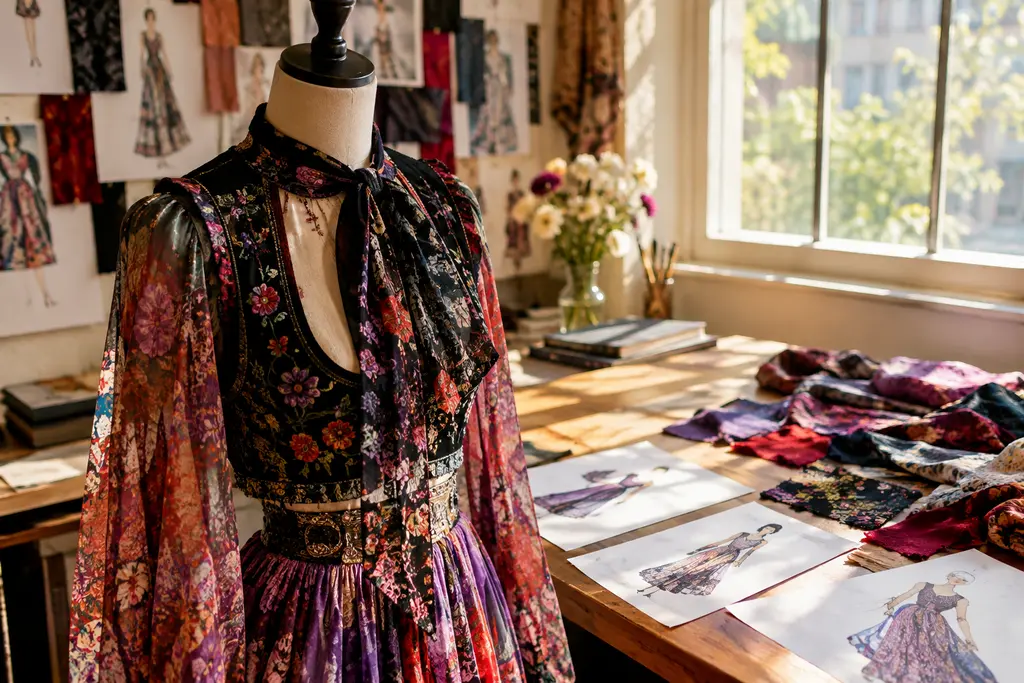
A useful drafting method is to separate a couture reference into three layers: silhouette, surface, and attachment. Silhouette asks whether the garment is columnar, rounded, winged, veiled, or sharply sculpted. Surface asks whether the eye reads shimmer, haze, relief, floral density, or graphic geometry. Attachment asks how the effect might be made: appliqué, couching, quilting, pleating, gathered tulle, detachable panels, or layered organza.
- For a shimmer-led design: draft a plain base with one embellished panel, such as a crescent hip insert or bib-shaped bodice overlay.
- For a sculptural design: test muslin shapes first, then choose fabric with enough body to hold the intended volume.
- For a scale effect: use repeated handmade units sparingly on cuffs, hems, or shoulder pieces rather than covering the whole garment.
- For a floral fantasy costume: build layered petal silhouettes from your own sketches instead of tracing historical couture motifs.
Respecting Originals While Making New Work
Creators should be cautious with famous garments because couture pieces often carry strong authorship, house identity, and visual recognition. A safe artistic habit is to write down what you are studying in abstract terms. Instead of “make the Balenciaga shape,” write “test a standing volume made from a stiff fabric.” Instead of “copy the crystal placement,” write “place reflective points along stress lines and edges.” That small change pushes the project toward analysis and away from imitation.
For makers working across costume culture, masquerade, or handmade fantasy pieces, this ethical filter also protects the design voice. A related discussion of original surface design appears in masquerade art patterns, where the same principle applies: masks, motifs, and ornament can be referential without duplicating another artist’s work. In addition, the guidance from Next Clues may be beneficial for adjacent creative strategies and visual research habits.
Trend Signals From Print Reports
Print Directions That Fit Couture-Inspired Making
Paris Couture Patterns do not have to ignore current print research. Patternbank’s September 2026 report on Première Vision AW 26/27 identified six print and pattern directions: Abstract Blurs, Botanical Haze, Nomadic Embellishments, Painterly Florals, Interlocking Geometry, and Midnight Flora, as reported in its Première Vision AW 26/27 analysis. These categories are useful because they describe visual systems rather than single garments. A creator can use them as prompts for original repeats, appliqué placement, or dye studies.
Abstract Blurs can become ombré-dyed cape panels or watery sleeve inserts. Botanical Haze can become layered floral silhouettes cut from sheer remnants. Interlocking Geometry suits bodices, belts, and structured cuffs because repeated angular units can reinforce the body’s lines. Midnight Flora is especially strong for fairytale costume work, where dark grounds and pale botanical elements can imply night gardens, enchanted forests, or ceremonial interiors without relying on any copyrighted character likeness.
The caution is simple: trend terms are not instructions to reproduce someone else’s print. Treat them as broad visual categories. Draw your own flowers from observation, cut your own geometric blocks, and test scale on scrap fabric before moving to the final textile. A large repeat can overwhelm a small bodice, while a tiny repeat may disappear under stage lighting or event photography.
Building A Maker-Friendly Pattern Plan

From Sketch To Test Garment
A disciplined couture-inspired plan can be modest. Start with one base block you already trust: a bodice, skirt, capelet, trouser, or tunic. Add only one experimental pattern feature at a time. If you are testing a sculptural shoulder, keep the skirt quiet. If you are testing a dense floral appliqué border, avoid adding heavy sleeve volume in the same sample. This restraint helps you see whether the pattern idea works on its own.
Muslin remains useful because it reveals balance problems before expensive fabric is cut. Paper half-scales can also show whether repeated units, such as scales, petals, or geometric tabs, are too large for the garment. If the project is meant for dress-up play, build movement into the test: sit, turn, raise arms, and walk through a doorway. Fantasy garments fail quickly when they ignore use. The most theatrical piece still needs a human body inside it.
Paris Couture Patterns For Fashion Creators
Paris Couture Patterns offer the most value when they sharpen a creator’s eye. The 2026 exhibition provides verified examples of couture spanning historical and contemporary work, while the print research around AW 26/27 offers practical categories for surface experimentation. The responsible path sits between admiration and invention: observe how couture uses structure, light, texture, and scale, then draft a new garment that belongs to your own hand.
For DIY dress-up, that approach is liberating. A child’s cape, an adult masquerade layer, or a seller’s one-off art garment can carry couture lessons without pretending to be couture. Use fewer elements, place them with intent, and let negative space do part of the work. The result will be more original, more wearable, and more respectful of the artistic labor that made the exhibition worth studying.