
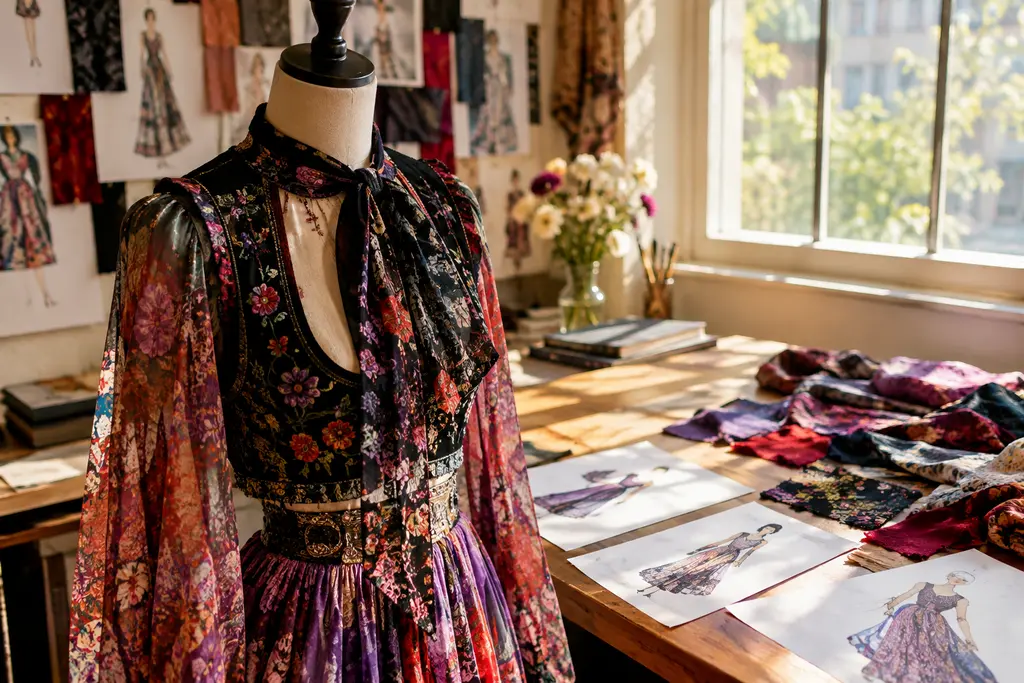
The Anna Sui Archetypes are best understood as a design grammar, not a box of costumes to raid. In The World of Anna Sui, the designer’s work was framed through 13 recurring archetypes, a structure noted in a Nylon review. The exhibition also gathered more than 125 full looks, spanning from Sui’s first runway show in 1991 through collections including Spring/Summer 2017, according to the Fashion and Textile Museum record. That evidence gives creators a useful but demanding lesson: Sui’s fashion impact comes from repeated visual systems, not isolated decoration.
Anna Sui Archetypes As Exhibition Grammar
Archive As A Pattern Room
A retrospective can become a mausoleum if the clothes are treated as relics. Sui’s exhibition format did something more practical for designers, stylists, and costume players. By arranging the work through archetypal identities such as Fairytale, Punk, Victorian, Mod, School Girl, Grunge, and related categories, the show made the archive read like a pattern room. Each category suggested a method for combining fabric, silhouette, attitude, and memory.
The value of Anna Sui Archetypes lies in that repeatable structure. A fairytale reference does not have to mean a princess sleeve copied line for line. A punk cue does not have to mean a studded jacket made into a uniform. In Sui’s work, as presented through the exhibition frame, the archetype acts like a candle behind colored glass: it stains the room, but it does not dictate every object inside it. That distinction matters for anyone making garments for street styling, staged photography, convention wear, or small-batch art pieces.
Reading Anna Sui Archetypes Without Copying Looks
The strongest lesson for aspiring creators is restraint. Sui’s archive invites study of relationships: floral against black, youth codes against historical romance, soft dress forms against harder subcultural references. Those relationships can be analyzed without reproducing a protected garment, campaign, or runway look. Respect for artistic integrity begins by asking what a look is doing rather than how to mimic it.
A creator might study why a school-uniform reference becomes theatrical when placed near lace, or why Victorian mood can darken a modern dress without turning it into period costume. That is not a license to sell replicas. It is a way to build a design vocabulary. The original work stays intact; the student learns proportion, contrast, and character construction.
Pattern Lessons For Contemporary Fashion
Layering As Controlled Collision
Sui’s archetype system is useful because it treats layering as a controlled collision. Many young designers add references until a garment becomes noise. The exhibition model suggests a stricter method: choose a dominant identity, then allow one or two secondary references to disturb it. A Victorian base might accept a rock-and-roll accent. A fairytale mood might be sharpened by grunge texture. A mod outline might become less polite through darker styling.
This is where the review becomes practical. The system is generous, but it is not easy. It asks the maker to decide which idea leads the garment. If every reference has equal force, the outfit loses its sentence structure. A dress can whisper, snarl, or glow like a carnival bulb in a dark field, but it cannot do all three with equal volume and still remain legible.
Silhouette Before Ornament
The first temptation is to chase surface: lace, flowers, dark tights, bright print, a collar, a boot. Sui’s archetype structure points to a better sequence. Start with silhouette. Is the body line narrow and schoolish, long and Victorian, loose and nomadic, short and mod, or softened into fairytale volume? Once the silhouette is chosen, ornament has a job rather than a tantrum.
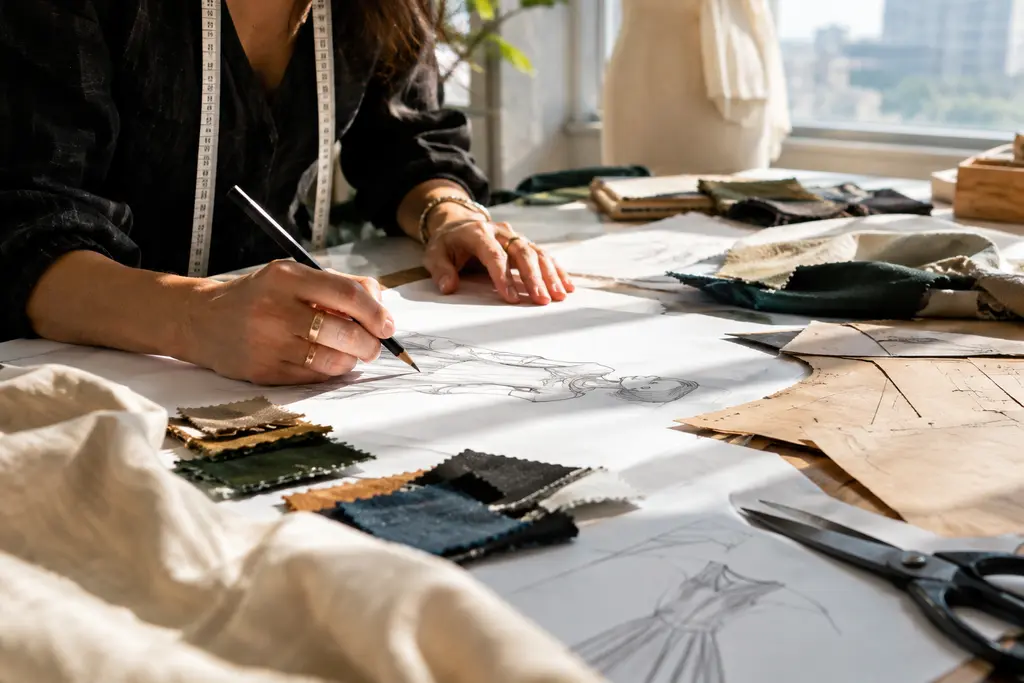
For pattern cutters and costume builders, this means the paper pattern should carry the character before trim enters the room. A sleeve shape, hem height, shoulder angle, or skirt volume can carry more meaning than a pile of appliqué. The clearest contemporary use of this method is not imitation; it is disciplined translation. Designers working near fantasy fashion or cosplay can keep the garment readable by assigning each element a role.
- Choose one main archetype before selecting fabric.
- Use a second archetype only as an accent or tension point.
- Test the silhouette in plain cloth before adding trim.
- Change scale, color, and material if the result resembles a known runway look too closely.
- Keep resale, public performance, and shop listings cautious if references approach a living designer’s recognizable work.
Costume Play Without Costume Theft
Archetype, Not Replica
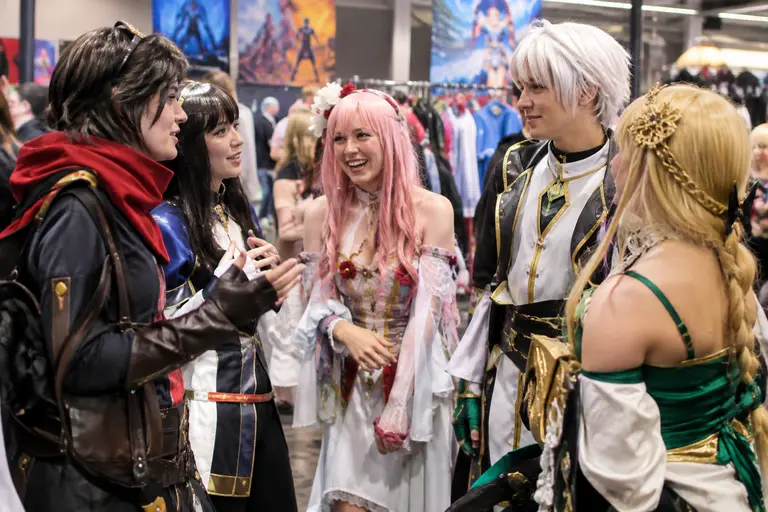
Costume play often depends on instant recognition, but fashion influence works best when it leaves room for authorship. The research basis here supports Sui’s archetypes as an exhibition and brand framework; it does not provide precise measurements for cosplay adoption. That uncertainty should not be hidden. What can be said with care is that the categories named around Sui’s work overlap with motifs frequently used in costume culture: punk attitude, fairytale romance, school-uniform codes, Victorian drama, and retro styling.
The caution is ethical as much as aesthetic. A costume player can build an original character using a fairytale-punk split, a mod-schoolgirl silhouette, or a Victorian-grunge mood without claiming the result as Sui’s design. Credit can be given in discussion, mood notes, or educational captions, while the garment itself should carry original pattern decisions. For readers interested in how fashion intersects with other cultural forms, Robsonic offers insightful context within the same network of cultural coverage.
Scale, Character, And Creator Commerce
Small makers need special care because a design study can quickly become a product. If a creator sells a dress, accessory, doll garment, or cosplay pattern, the safest artistic practice is to avoid trade dress mimicry and direct look replication. This is not legal advice; it is a conservative studio habit. Build from public archetypes, not from a living designer’s exact composition.
Scale also changes meaning. A lace collar on a doll-sized garment, a full human costume, and a runway dress do not behave the same way. Proportion can make a reference feel studied rather than copied. For related thinking on scale and dress-up construction, the site’s DIY dress-up proportion notes offer a useful companion point without asking makers to imitate any one designer.
Anna Sui Archetypes In Costume Play Practice
Critical Verdict For Aspiring Creators
Anna Sui Archetypes remain valuable because they turn mood into structure. The exhibition record supports a clear claim: Sui’s body of work has been presented through recurring identities across many full looks and many years of runway practice. That is a stronger lesson than a trend claim. It gives creators a way to think in families of form, fabric, music memory, youth code, romance, and rebellion.
The weakness appears when the archetype becomes a shortcut. A costume made from generic lace, black boots, and a floral dress may hint at Sui’s world, but it may also collapse into thrift-store fog if the maker has not decided on proportion, character, and hierarchy. The better path is slower: select an archetype, draw the silhouette, test fabric weight, remove one decorative idea, then add back only what the garment can carry.
Anna Sui Archetypes should be treated like constellations over a cutting table. They help a maker find direction, but they are not the garment itself. For contemporary fashion and costume play, their impact is strongest when creators use them to sharpen original work: a fairytale sleeve made stranger, a school code made less obedient, a punk accent made more poetic, a Victorian line brought into modern movement. The archive burns brightest when it lights new rooms without burning down the house it came from.