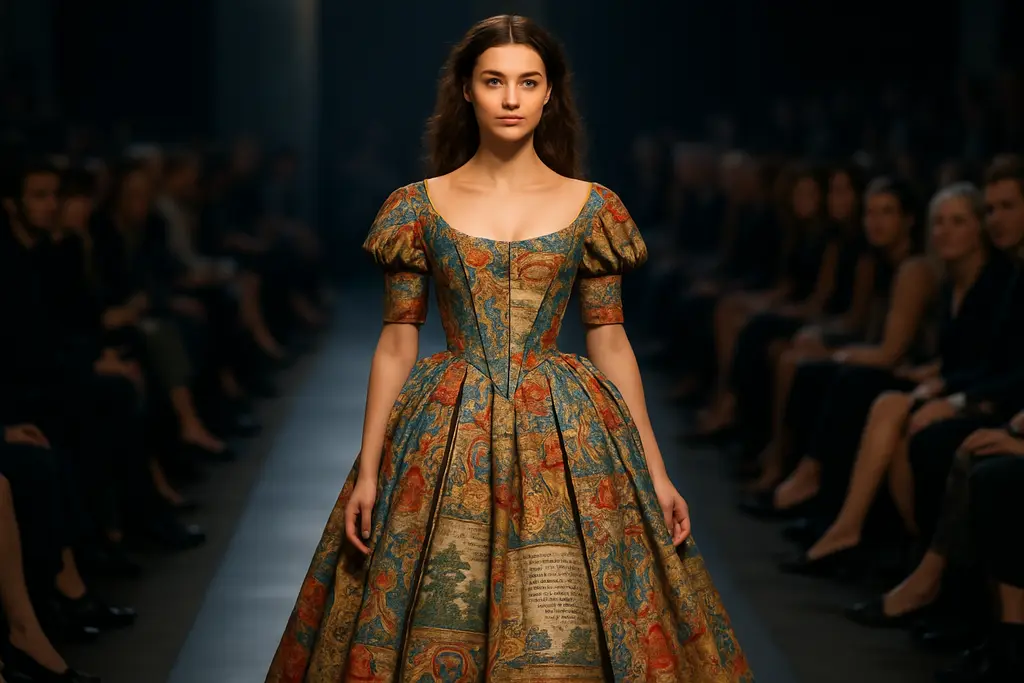
Literary Costumes have become a useful lens for reading recent livestreamed fashion events because the strongest examples did not treat clothing as isolated product. They used books, camera angles, gothic atmosphere, guest participation, and character-coded styling to create a narrative frame around dress. As of October 7, 2026, the most relevant cases are already past events: Maison Valentino’s Antibiblioteca show on October 4, 2026, H&M’s H&M&YOU&I livestream on September 17, 2026, and Vogue World: Hollywood on October 26, 2025. Each case placed fashion near performance, publishing, film, or costume language without making every garment a literal adaptation of a text.
Literary Costumes As Runway Reading
Maison Valentino’s Antibiblioteca presentation for Spring/Summer 2027 offered the clearest book-centered example in the research. The event asked guests to bring books, either to donate or from their own collections, as part of the “Antibiblioteca: Catalogue of the Unread” concept. In practice, the book became more than an invitation detail. It functioned as an accessory, a prop, and a disclosure of taste. According to Book Riot, the show took place on October 4, 2026, and positioned books as central to the concept rather than as a decorative afterthought.
Literary Costumes And The Book As Prop
The Antibiblioteca concept is significant because it shifted attention from the garment alone to the social meaning of reading. A front-row book can suggest discipline, privacy, aspiration, nostalgia, or performance, depending on how it is held and framed by the camera. The research notes also state that Valentino’s invite included imagined titles such as “The Hand That Slows Down to Write” and “Keeper of a Light No Ship Needs Anymore.” Since those titles are described as fictional within the show material, they should be read as mood-setting devices rather than as references to published works.
That distinction matters for respectful criticism. Fashion often borrows the aura of literature, but a runway concept can operate through suggestion without adapting a specific author, character, or plot. Here, the unread catalogue idea pointed toward absence: books owned but not opened, books carried for identity, books used as social signals. For readers tracking how classic texts and clothing intersect, this site’s earlier classic bookish dress analysis offers a useful companion context without collapsing every bookish look into costume reproduction.
Camera Access And The Livestreamed Wardrobe
H&M closed the opening night of London Fashion Week with H&M&YOU&I on September 17, 2026. According to the research notes, the presentation used a multi-angle broadcast rather than a standard runway format, moving viewers through red carpet, backstage, and front-row views. That kind of format changes how fashion storytelling works. A garment no longer appears only in a linear walk; it is seen in fragments, in social clusters, in preparation spaces, and in reaction shots.
Backstage Views As Narrative Editing
The backstage angle has a specific effect on costume reading. It can make styling look provisional, as if a character is still being assembled. Red carpet footage, by contrast, emphasizes arrival and social hierarchy. Front-row footage places clothing within a community of viewers. H&M’s production, as described in the research, prioritized participation and access, with hosts moving the audience across venue locations. The result was not the same as theatre costume, but it borrowed theatre’s concern with entrances, staging, and audience position.
For Literary Costumes, this type of access is especially relevant because book-based or book-adjacent fashion often depends on mood rather than direct plot. A dark coat, a reading-room palette, a school-uniform echo, or a poet-like scarf can read differently depending on whether the camera catches it backstage, under flash photography, or beside a row of spectators. The livestream format gives editors and producers part of the authorship. Their choices decide whether the viewer reads a look as commercial styling, personal character study, or literary allusion.
Gothic And Fairytale Signals In Fashion Events
Not all literary influence begins with books visible in the hand. Some of it arrives through genre cues: crowns, ears, veils, headpieces, shadows, and ritualized silhouettes. Rodarte’s New York Fashion Week show is a useful comparison point because AP described the presentation as carrying viewers into a “majestic Celtic fairytale land with a dark twist,” with crowns, fairy ears, and elaborate headpieces. The research does not specify the date in the supplied notes, so the event should be discussed here as a documented fashion example rather than tied to an unsupported timeline.
Genre Cues Without Literal Adaptation
Fairytale and gothic references require caution. A crown does not automatically name a queen from a particular story; fairy ears do not prove a designer is adapting one novel or folklore source. They can signal genre atmosphere instead. This is where critical restraint protects artistic integrity. The responsible reading is to identify visible devices and compare them to genre conventions, not to claim a hidden source without evidence.
That caution also applies to creator commerce and costume-inspired styling. A seller, stylist, or fan maker can respond to gothic, fairytale, or bookish moods through general elements such as dark florals, structured collars, aging paper tones, or library-coded accessories. For those interested in exploring related fashion sites, Shimply serves as a relevant reference within the network. They should be wary of presenting a design as connected to a specific protected character, film, or living artist without permission. This is not legal advice, but it is a practical ethical boundary for anyone building fashion content around literary or cinematic references.
What Recent Events Suggest About Storytelling
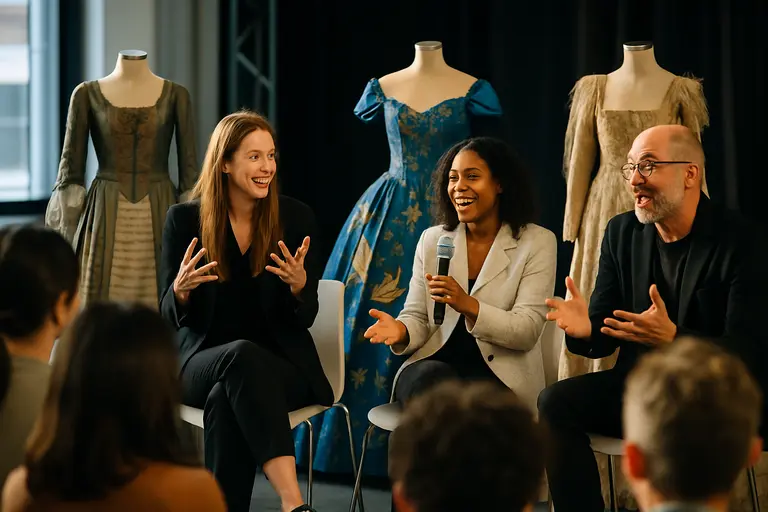
The research also points to Vogue World: Hollywood, livestreamed on October 26, 2025, as a past event that blended fashion runway with costume design theatrics. The supplied notes state that the thirty-five-minute show honored film, fashion, and costume designers, with actors walking in designer pieces and styling that referenced character and narrative rather than commerce alone. This matters because film costume and runway fashion use different systems of meaning. Costume usually serves a scripted role, while runway dress often builds an image around a house, season, or concept. Livestreamed productions can bring those systems closer together.
- Books as accessories: Valentino’s Antibiblioteca used carried books to shape the social meaning of the front row.
- Camera as editor: H&M’s multi-angle livestream changed how viewers encountered garments, spaces, and guests.
- Genre as atmosphere: Rodarte’s fairytale and gothic cues show how literary mood can appear without a named text.
- Costume as reference point: Vogue World: Hollywood linked fashion display to character-based styling and screen culture.
The common thread is not a single trend claim, since the research base is limited. The safer reading is that livestreamed and recorded fashion events have made narrative context harder to separate from clothing. Props, camera routes, venue access, and guest behavior now shape reception alongside silhouette, fabric, and styling. In sportswear terms, this is similar to how a performance garment gains meaning from the arena, the entrance tunnel, and the broadcast close-up. The item itself matters, but the event teaches the viewer how to read it.
Literary Costumes In Livestreamed Events
Literary Costumes in recent livestreamed events should be read as a set of storytelling strategies rather than a fixed genre. Valentino made the book a visible social object. H&M used broadcast structure to move viewers through fashion spaces. Rodarte’s gothic fairytale language showed how headpieces and mythic styling can summon genre without naming one source. Vogue World: Hollywood, based on the supplied research, placed runway movement near costume design and film memory.
The strongest lesson is interpretive discipline. A critic can identify books, gothic references, fairytale styling, and character-coded presentation while still avoiding unsupported claims about direct inspiration. That balance is especially useful for fashion readers, costume makers, and stylists who want to respect original works while studying how visual culture circulates. Livestreamed fashion does not merely show clothes faster or to a wider audience; in these examples, it frames garments as scenes, clues, and reading prompts.