
Indigenous Fashion Designers are central to the fashion story around áyA Con 2026, which is scheduled for October 8-11, 2026, at the National Western Center, LVC CoBank Arena, 4850 National Western Dr, Denver, Colorado, according to the official áyA Con page. The festival’s return matters for more than event programming. It places clothing, adornment, drag performance, maker commerce, cosplay, and cultural authorship in direct conversation. For readers who care about dress-up play and fantasy costume design, the lesson is not to copy sacred or personal motifs. The more useful lesson is to study how artists frame identity, material choice, silhouette, and storytelling with care.
Why Indigenous Fashion Designers Matter At áyA Con
The strongest fashion festivals do not treat garments as decoration around another main attraction. áyA Con appears to position fashion as part of the festival’s cultural argument. The 2026 Futurism Fashion Showcase carries the theme Resistance, following the 2025 theme Reclamation. Those words suggest a runway language concerned with memory, ownership, material reuse, and future-facing design. That reading should still be cautious: without statements from each maker, viewers should not assign one fixed meaning to every garment.
Indigenous Fashion Designers And The Runway Frame
A runway changes how costume and fashion are read. A handmade jacket on a vendor table may emphasize construction, price, and touch. The same jacket under stage lighting can emphasize stance, sound, movement, and symbolic scale. That shift is especially relevant at a festival where fashion sits beside pow wow, comic culture, cosplay, panels, and performance. The garment is not isolated from the body that wears it or the community setting that receives it.
The 2025 Reclamation Fashion Showcase featured ten established Indigenous designers and makers: Reclaim Designs, Thrifs, Adriana Garcia, Afro Funk Wear, Brushstroke 80, Sunshine Sweetwater, Blanket Door, Raelene Whiteshield, Raquel Toni Begay, Sunrose Ironshell, and Quana Madison. It also represented three debut designers or makers on the runway for the first time: Ana Barcenas, StrongHeart Designs by Javi Jerome, and accessories by Caitlyn Cox. That mix of established and debut participants is significant because it creates a visible pathway between experience and first public runway presentation.
Fashion As Cultural Presentation, Not Costume Extraction
For dress-up enthusiasts, áyA Con offers a useful ethical boundary. Inspiration from structure, layering, color balance, or repair techniques is different from copying regalia, clan-connected designs, ceremonial objects, or a living maker’s recognizable visual language. That distinction matters in cosplay and fantasy fashion, where admiration can quickly become flattening if the source culture is treated as an aesthetic supply shelf. A careful DIY maker can learn from the event by asking better questions: Who made the object? What context does the maker provide? Is this design meant for sale, ceremony, performance, or personal expression?
The October 8 Runway And Performance Setting
The Futurism Fashion Showcase – Resistance is scheduled for Thursday, October 8, 2026, with doors opening at 6:00 PM and the show beginning at 7:00 PM, according to the Meow Wolf Denver event listing. Because October 8, 2026 is after the date of publication, the careful wording is scheduled rather than reported as already staged. Public details name the showcase, date, venue context, and time, but the provided research does not confirm a full 2026 designer roster.
The performance structure also matters. The Indigenous Haus of Barbie, described in the research as a Two-Spirit drag troupe, returns with MC Buffalo Barbie and performers including Landa Lakes, Alice Glamour, and Nicco Nuche, among others. Drag inside a fashion showcase changes the event’s rhythm. It brings host work, character construction, lip-sync or stage presence, and audience address into the same space as garment presentation. That pairing fits a festival model where fashion is not silent display, but a performed relationship between maker, wearer, host, and audience.
Resistance As A Design Prompt
Resistance can be read through many design choices: reclaimed textiles, protective silhouettes, disruptive styling, sharp color contrast, historical reference, or refusal of commercial polish. Yet it would be a mistake to claim one universal visual code for the theme. Indigenous Fashion Designers do not share a single design language. The more accurate view is that a theme gives each maker a prompt, not a script. Some may answer through futurist shapes, some through material memory, some through humor, and others through quiet craft discipline.
Marketplace Strategy For Native-Owned Fashion Work
áyA Con 2026 is also set to include a marketplace with more than 100 artisans, creatives, and Native-owned businesses. For fashion makers, this matters because runway visibility and marketplace sales operate differently. Runway work builds recognition and shows the full artistic idea. Marketplace work tests wearability, pricing, inventory, packaging, and customer education. A festival that holds both spaces gives Indigenous Fashion Designers a chance to present statement pieces while also selling smaller objects, accessories, or ready-to-wear items that visitors can understand in person.
Creator commerce at cultural festivals depends on trust. Buyers may be drawn to beauty first, but responsible purchasing also means respecting maker identity, stated use, and price. Handmade work often carries labor that is hard to see at a glance: pattern drafting, beadwork, sourcing, fitting, repair, and finishing. This issue is often framed through the lens of sustainability by sites in the same creator network, like Kay Granger. That framing is useful here because festival fashion is not only spectacle; it can be part of a maker’s income structure.
What Buyers Should Read Before Buying
Clear product labels, maker biographies, and care instructions help buyers understand what they are purchasing. If a garment includes cultural references, the maker’s own description should carry more weight than a viewer’s outside interpretation. If a buyer plans to use a piece for cosplay, photography, resale styling, or performance, asking permission for that context is a respectful practice. This is especially true for accessories and garments that may be rooted in community-specific knowledge or personal story.
- Ask who made the piece and whether the maker provides cultural or material context.
- Credit the maker in photos, styling notes, and public posts when requested or appropriate.
- Avoid presenting purchased work as self-designed costume craft.
- Do not assume festival purchase equals permission for commercial reproduction.
Design Lessons For DIY And Fairytale Costume Makers
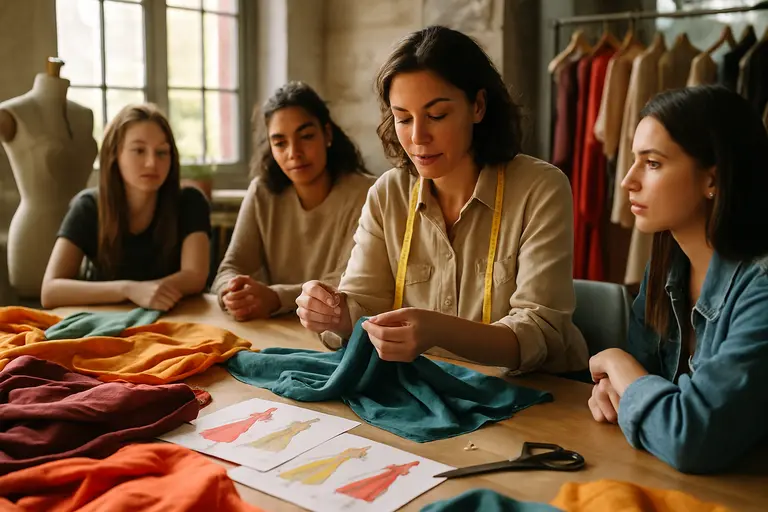
For people building fairytale costumes, pageant looks, or fantasy garments at home, the responsible takeaway is method rather than imitation. Study how volume directs attention. Notice how accessories change the scale of a silhouette. Observe whether a look uses contrast between soft fabric and hard structure. These are general design principles, not cultural ownership claims. A DIY cape, crown, or gown can learn from runway pacing and material contrast without lifting protected community symbols or copying a living artist’s identifiable work.
This distinction is central to artistic integrity. Fantasy fashion often borrows from folklore, archival dress, stage costuming, and illustration. That borrowing becomes stronger when it is transparent about influence and careful about rights. If a maker sells costume pieces, the need for caution rises. Avoiding celebrity likenesses, copyrighted characters, and recognizable living-artist imitation is not just risk management; it also keeps the work creatively honest. Indigenous Fashion Designers at áyA Con show why authorship matters: clothing can carry personal, cultural, and commercial meaning at the same time.
Material Thinking Without Visual Appropriation
A useful exercise is to translate an observed design principle into unrelated materials. If a runway look uses layered movement, a fairytale maker might test organza over cotton, felt over canvas, or ribbon over thrifted suiting. If a look uses strong shoulder geometry, a costume builder might experiment with detachable capelets or padded sleeve heads. The goal is not to make a cheaper copy. The goal is to understand proportion, movement, and craft problem-solving while leaving culturally specific imagery where it belongs.
Indigenous Fashion Designers At áyA Con 2026
The most defensible reading of áyA Con 2026 is that the festival treats fashion as a site of authorship, performance, and maker economy. The confirmed dates, location, runway time, theme, marketplace scale, and 2025 designer context support that view. What remains uncertain from the provided materials is the complete list of 2026 runway designers, so any claim about individual 2026 collections would be premature. For now, the evidence points to a fashion program where Resistance is not a decorative slogan, but a curatorial prompt that asks makers and audiences to think carefully about who gets to tell visual stories, who profits from them, and how clothing can hold both imagination and accountability.