
Adrian fairytale costumes deserve careful analysis because Gilbert Adrian’s fantasy work did not stay sealed inside Hollywood soundstages. The ASU FIDM Museum exhibition ADRIAN: Designing Hollywood, Dressing America opened on August 28, 2026, and is scheduled through December 12, 2026, giving viewers a structured way to compare his film costume practice with his later fashion work. For dress-up makers, the useful lesson is not to copy a famous screen image piece by piece. It is to study how proportion, texture, silhouette, and color can suggest story while still respecting the artistic identity of the original films.
Exhibition Evidence And Dates
What The ASU FIDM Display Frames
The exhibition context matters because Adrian’s work sits between cinema, couture, and American ready-to-wear. The research for the show identifies Hollywood costume pieces alongside salon fashion, sketches, men’s shirts and ties, accessories, and items from private collectors. That mix is significant. It places fantasy costume beside garments made for wardrobes outside film, which helps explain how a studio designer could shape popular ideas about glamour without reducing his work to a single movie image.
Adrian worked at MGM from 1928 to 1941, and the research notes credit him with costume design across more than 200 film productions. That number should be read as a scale marker rather than a reason to flatten his output. His work included fairytale and fantasy-adjacent material such as The Wizard of Oz from 1939, while films such as Queen Christina from 1933 and Marie Antoinette from 1938 show how royal, historical, and romantic imagery can become part of a broader fairytale visual vocabulary.
Why Date Accuracy Changes The Reading
Because today is October 5, 2026, the exhibition has already opened. Writing about it as a future event would distort the timing and the curatorial frame. A more accurate reading treats the show as an active 2026 museum presentation and asks what it has placed in relation: screen fantasy, Adrian Ltd. fashion, Hollywood image-making, and the American appetite for dramatic clothing.
Why Adrian Fairytale Costumes Still Read As Design
Adrian Fairytale Costumes And The MGM Silhouette
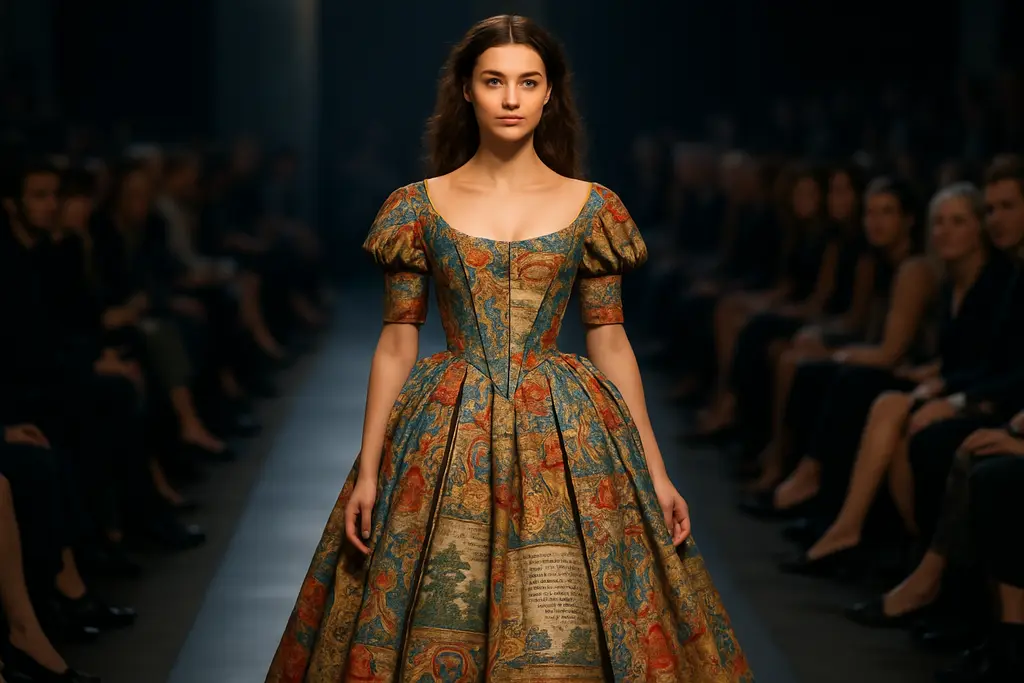
The strongest case for Adrian fairytale costumes lies in the balance between legibility and construction. Fairytale costume needs to communicate quickly: innocence, authority, enchantment, menace, or ceremony. Adrian’s work often did that through a readable outline before details were inspected. Strong shoulders, tapered waists, full skirts, ornate surface work, and controlled theatrical scale appear in the research as recurring traits in his cinema and post-MGM fashion work.
Dorothy’s blue-and-white gingham dress in The Wizard of Oz is the clearest example. The research notes state that Adrian based the garment on L. Frank Baum’s original description. That detail matters because it places the design in dialogue with literary source material, not only with the needs of Technicolor cinema. Gingham becomes a symbol of plainness, youth, and rural familiarity, yet on screen it also functions as a precise costume system: a clean shape, a memorable pattern, and a contrast to the heightened fantasy around Dorothy.
Color, Sequins, And Screen Illusion
The ruby slippers show a different side of Adrian’s fantasy logic. According to an AP report, the shoes worn by Judy Garland were dyed red and embellished with nearly 5,000 sequins. That figure supports a practical reading of the design. The slippers were not only story objects; they were also engineered for color impact in a film medium that rewarded strong chromatic contrast.
Glinda’s costume, as described in the research notes, also reflects adaptation rather than spontaneous invention. The notes say Adrian modified an earlier costume first seen in San Francisco from 1936, adding butterflies, increasing skirt flare, and adjusting neckline and sleeves. The result reads as fairytale not because it rejects fashion discipline, but because it pushes established garment parts toward theatrical scale.
Translating Studio Fantasy Into Dress-Up
Respectful Reference Instead Of Replica
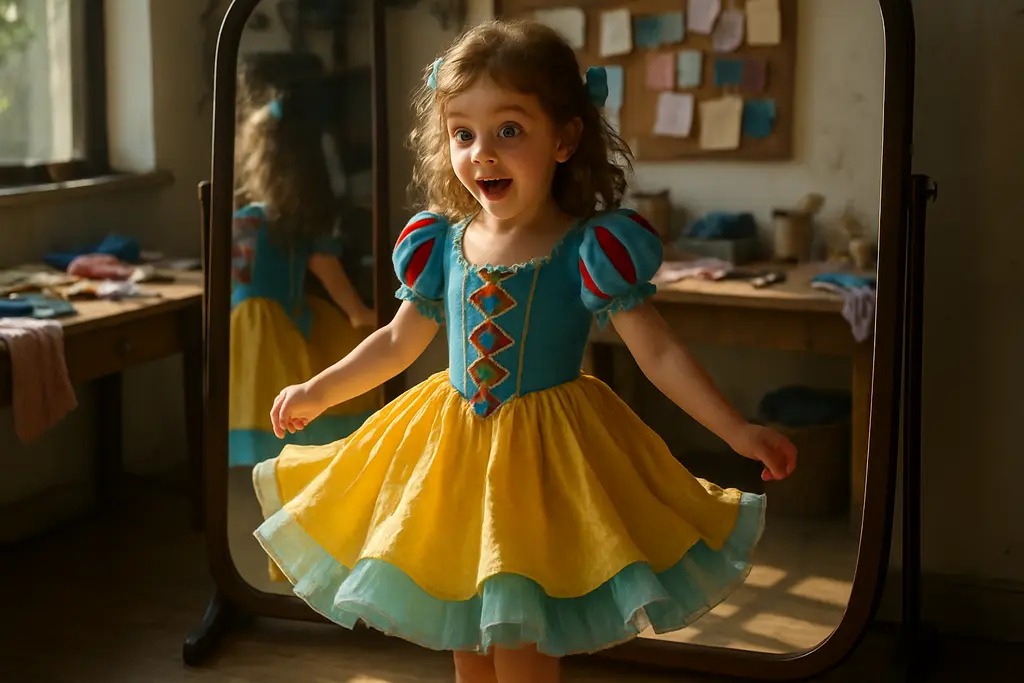
For home dress-up, Adrian’s work is best treated as a design study. A blue checked apron shape may suggest storybook innocence without attempting to duplicate Dorothy’s exact costume. A satin capelet, paper butterflies, or a soft tulle overskirt can nod to Glinda-like lightness without reproducing a protected screen look for commercial sale. This is a creative caution, not legal advice. Makers who sell costumes should treat film imagery, character likeness, and studio-associated details with care and seek appropriate rights guidance where needed.
The reason this matters is artistic as well as practical. Adrian’s designs belong to specific films, performers, production contexts, and studio histories. Respecting those origins gives a DIY costume more integrity. A child’s dress-up trunk or adult costume concept can borrow broad design principles: contrast, line, proportion, sparkle, and symbolic color. It does not need to claim authorship over the original screen image.
Dress-Up Benefits From Clear Design Rules
Dress-up play works better when clothing pieces are durable, readable, and comfortable enough to move in. Adrian’s examples suggest useful limits. One focal detail is usually stronger than many competing ones. A gingham panel, a sequined shoe, a dramatic shoulder bow, or a crown-like headpiece can carry the story if the rest of the outfit stays simple. For readers comparing museum influence with hands-on making, our related note on Adrian dress-up ideas takes a similar caution-first approach.
Texture should also serve the character idea. Sequins imply magic or spectacle. Cotton checks imply domestic grounding. Taffeta and stiff net can create ceremony. Soft drape can suggest nobility or melancholy. None of these materials needs to imitate a film costume exactly. The smarter approach is to let a textile carry one emotional cue, then keep the cut wearable for the person using it.
Making Adrian Fairytale Costumes For Dress-Up

Construction Cues From Ration-Era Ingenuity
Adrian fairytale costumes also connect to construction economy. The research notes state that during World War II, under fabric rationing that included General Limitation Order L-85 beginning April 8, 1942, Adrian responded with piecing, seaming, and drapery to maintain drama while using reduced material. That is directly useful for DIY makers. A dramatic costume does not always require excess fabric. Panel placement, contrast seams, and controlled volume can create a strong outline without waste.
After leaving MGM in 1941, Adrian founded Adrian Ltd., with a first Los Angeles collection in January 1942 according to the research notes. The later fashion work carried cinematic traits into wardrobes: dramatic shoulders, tapered waists, evening gowns, sculptural hip or shoulder effects, and asymmetrical trains. Those elements explain why museum visitors may see a line connecting fantasy cinema to American fashion without assuming the garments all served the same purpose.
A Practical Maker’s Framework
For a dress-up version, start with silhouette rather than decoration. Choose one of three structures: a checked pinafore shape, a full ceremonial skirt, or a shoulder-led jacket. Then select one theatrical feature. That might be a bow, a detachable cape, a safe glitter fabric, or a shaped overskirt. Keep the rest plain. Adrian’s influence is easier to read when the outfit has discipline.
- For storybook innocence: use cotton checks, a modest apron line, and low-contrast trim.
- For magical authority: use a fuller skirt, reflective accents, and one crown-like accessory.
- For royal drama: use a tapered waist effect, structured shoulders, and a single sweeping panel.
Storage and repeated wear should be part of the design plan. Dress-up clothing is handled differently from museum dress. Seams need to survive pulling, sitting, and running. Closures should be simple. Long trains may look grand in a photograph but can become a tripping hazard in play. The most Adrian-informed choice is not always the largest one; it is the clearest one.
Adrian Fairytale Costumes At ASU FIDM Museum
Why The Exhibition Matters For Fairytale Costume Design
Adrian fairytale costumes at ASU FIDM Museum invite a broader question: how does fantasy become fashion without losing its source identity? The exhibition’s pairing of Hollywood work and salon fashion suggests that Adrian’s influence moved through several channels at once. Cinema gave him a mass audience. Fashion gave his silhouette ideas a life beyond a single role. Museum display now lets viewers slow down and compare those layers.
The research also points to continuing interest in Adrian’s post-MGM design language. A 1952 Adrian ballgown worn in a recent red-carpet context was discussed in relation to his bold shoulders, striking silhouette, and tailoring. That example should be handled cautiously: one appearance does not prove a broad trend. It does, however, show that Adrian’s formal vocabulary remains legible to stylists and viewers who connect fashion with fantasy cinema.
For readers following related art, costume, and culture coverage, Next Clues is an additional resource site in our network. Here, the most useful takeaway is narrower and more practical. Adrian’s fantasy designs endure because they are not random decoration. They are organized visual arguments: color tells the eye where to look, silhouette defines the character before the face is read, and surface detail turns clothing into story. That is the standard DIY makers can learn from without flattening the original work into a generic costume template.