
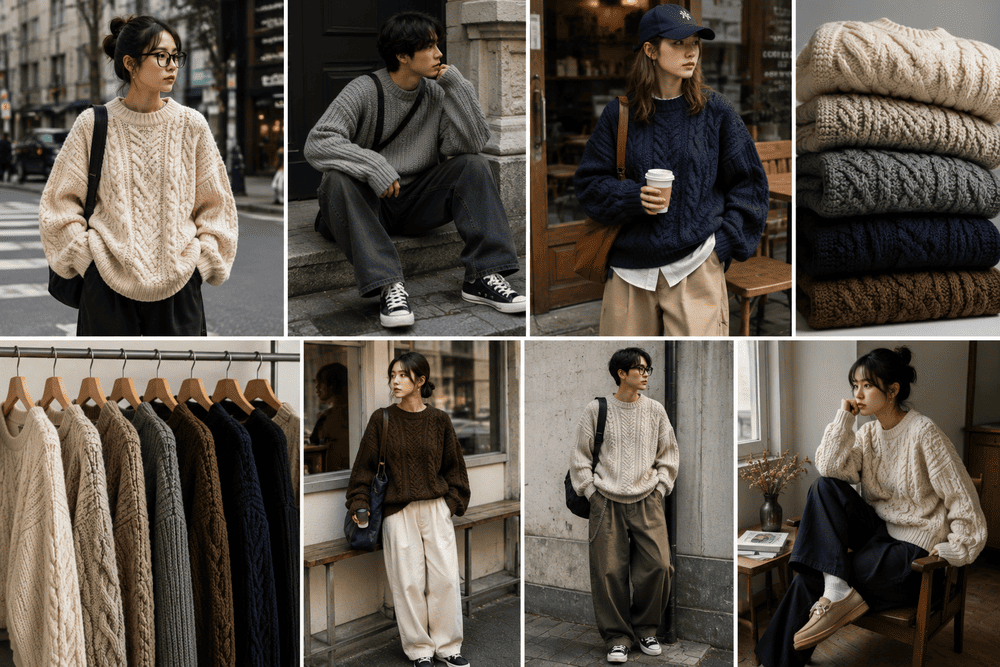
Winter dressing frequently causes deep frustration. Staying warm often feels like a direct trade-off against looking sharp. Dropping temperatures demand heavier garments, pushing the chunky sweater to the forefront of daily dressing. Many individuals treat this garment strictly as comfortable loungewear, throwing it on without any strategic thought. Treating a heavy knit strictly as a functional warming tool ignores its massive aesthetic potential.
Knowing exactly how to style a chunky sweater requires analyzing human proportions, textile drape, and spatial geometry. A successful outfit uses the thick wool to create a deliberate, architectural shape around the body. The wearer must control the volume rather than letting the fabric swallow their frame. By applying strict rules of proportion and textile matching, anyone can transform a basic warming layer into a highly sophisticated sartorial statement. The process requires a mathematical approach to layering, a strict understanding of fabric composition, and absolute precision in accessorizing.
The Geometry Of Heavy Knitwear
Heavy knitwear operates on a completely different physical logic than standard cotton shirting. The thickness of the yarn directly dictates the final shape of the garment. Thick cable knits and heavy ribbed sweaters stand away from the body. They possess their own rigid structure. When you put on a massive fisherman sweater, you add inches of visual bulk to your torso. The human eye immediately registers this thickness as physical mass.
Managing this bulk represents the primary challenge of winter styling. A successful look requires a strict mathematical approach to body proportions. The top half of the outfit carries intense visual weight. The bottom half must respond accordingly to prevent the wearer from looking entirely unbalanced. Pairing a massive top with flimsy, unstructured bottoms creates a top-heavy silhouette. The eye struggles to make sense of the drastic shift in physical mass.
Designers build chunky sweaters using specific gauge measurements. A lower gauge means a thicker, heavier yarn. These low-gauge knits require careful manipulation. The drop-shoulder seam stands as a common feature in modern knitwear. This specific cut pushes the shoulder line down the arm, creating a relaxed, boxy shape. To maintain a sharp appearance, the wearer must pay close attention to where the hem of the sweater hits the body. A hem resting right at the widest part of the hips broadens the entire frame. A hem cropped at the natural waist highlights the narrowest point of the torso.
The knitting pattern itself alters the geometry of the garment. The vertical lines of a thick ribbed knit draw the eye up and down, creating a distinct illusion of length. Heavy cable knits add massive horizontal bulk due to the twisted, three-dimensional yarn patterns. The wearer must select the knit pattern based on their own physical frame and the desired geometric outcome of the outfit.

Fiber Composition And Visual Weight
The raw material of the sweater changes the entire styling strategy. Different fibers react differently to gravity and physical movement. Standard sheep’s wool provides excellent insulation and contains lanolin, a natural water repellent. This makes raw wool ideal for damp winter days. It tends to hold a very rigid, stiff shape. A heavy sheep’s wool sweater works best as a highly structural piece, acting almost like a soft jacket.
Alpaca and cashmere blends offer a completely different physical reality. These premium fibers provide extreme warmth with a much softer, more fluid drape. Cashmere fibers are completely hollow, trapping microscopic pockets of air to provide extreme heat without adding literal weight. A chunky cashmere sweater collapses slightly against the collarbone and shoulders. This fluidity allows for much easier tucking and layering. The softer drape feels distinctly more formal than a stiff, scratchy wool.
Synthetic fibers present a massive styling obstacle. Acrylic and heavy polyester knits mimic the look of wool from a distance. Up close, they completely lack the natural depth and subtle color variations of organic fibers. Synthetics trap heat uncomfortably against the skin and frequently develop severe pilling after minimal wear. This aggressive pilling ruins the clean lines of the garment. A pilled sweater immediately looks sloppy, destroying the polished aesthetic entirely. Investing in pure natural fibers guarantees the garment holds its shape and maintains a clean surface texture for years. You can review exact fiber grading standards in prominent fashion textile guides published by top industry analysts.
| Fiber Type | Drape Quality | Best Styling Application |
| Pure Sheep’s Wool | Rigid, highly structural | Boxy silhouettes, outer layers |
| Cashmere | Fluid, soft collapse | Tucked styles, formal pairings |
| Alpaca Blend | Fluffy, lightweight volume | Layering over collared shirts |
| Synthetic (Acrylic) | Stiff, prone to pilling | Avoid for structural dressing |
Commanding Proportion Control And Tucking Techniques
Controlling the massive volume of a heavy knit requires strict spatial awareness. Letting a thick sweater hang completely loose over wide trousers creates a shapeless block. The human form disappears entirely under the heavy yarn. Creating visual breaks in the fabric restores immediate structure to the outfit.
The front tuck serves as the absolute most effective tool for managing volume. By pushing just the front hem of the sweater behind the waistband of the trousers, the wearer exposes the beltline. This simple action instantly reestablishes the leg line and highlights the natural waist. The rest of the sweater falls loosely around the hips, providing coverage and retaining the relaxed aesthetic.
Executing a proper front tuck with heavy yarn requires a precise technique. A full tuck is physically impossible with low-gauge knits. The sheer volume of yarn threatens to pop the button off standard trousers. You cannot simply stuff the thick wool into tight jeans. This creates a highly unflattering bulge at the stomach. The waistband of the trousers must sit high and offer enough room to accommodate the extra fabric. A smooth, flat tuck requires rolling the hem of the sweater slightly under itself before resting it just inside the top of the waistband.
Some modern knits feature a distinct split hem. The side seams remain open at the bottom, allowing the front panel to tuck easily as the back panel hangs flat. This engineered detail solves the bunching problem completely. Incorporating these pieces simplifies the morning dressing routine significantly. Our internal breakdown of core winter wardrobe staples examines these precise structural details in immense depth.
The Structural Contrast Of Silk And Heavy Knits
Texture mixing represents a highly advanced styling technique. The most compelling outfits rely on intense visual friction. Pairing a heavy, matte wool sweater with a smooth, highly reflective silk skirt creates a perfect textural dichotomy. The brain registers the stark difference between the rugged top and the delicate bottom immediately.
A bias-cut silk midi skirt falls fluidly over the hips and legs. The fabric reacts to every slight movement and catches the ambient light like a liquid mirror. A dense, oversized cable-knit sweater provides a completely static, light-absorbing counterpoint. Thick wool acts as a physical sponge for light. This combination works exceptionally well for evening events during the colder months. The wearer stays perfectly warm on top, maintaining a highly elegant, formal appearance below.
The physical weight of the sweater grounds the floating silk. Without the heavy knit, the silk skirt might feel too fragile for daytime wear. The sweater forces the skirt into a stark daytime context. A monochrome approach heightens this specific effect. A heavy charcoal wool sweater paired directly with a charcoal silk skirt forces the viewer to focus entirely on the contrasting textures rather than distracting color patterns.
Integrating Structured Trousers For Formal Settings
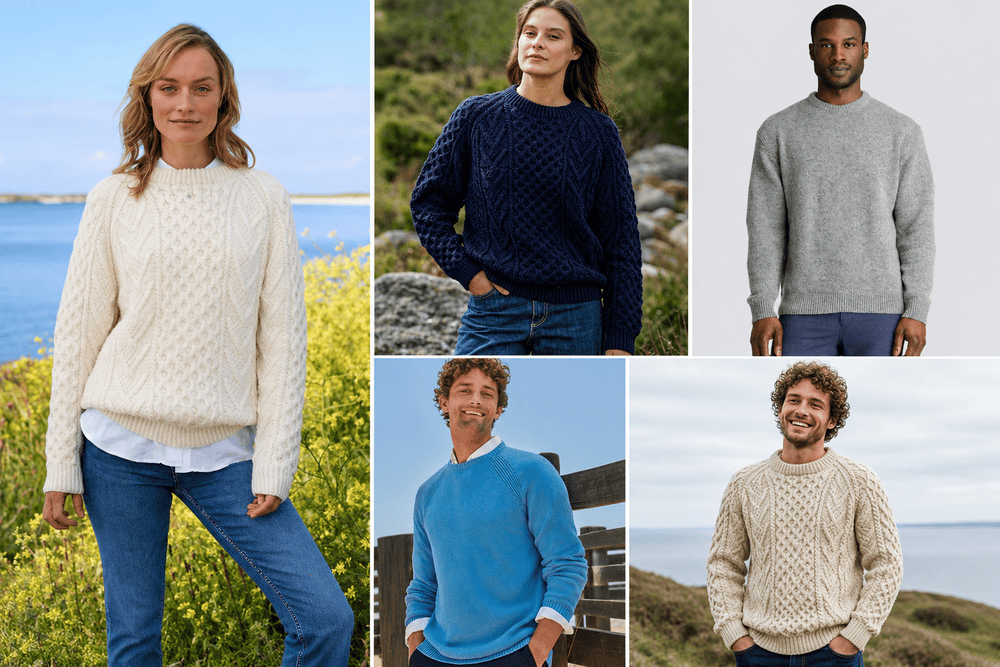
Corporate environments historically reject heavy knitwear. Traditional office dress codes favor flat, crisp fabrics like poplin and worsted wool. The modern workplace allows for much more flexibility, provided the execution remains perfectly sharp. A chunky sweater transitions seamlessly into a professional setting when paired with highly structured, pleated trousers.
The trousers must feature a wide, straight leg to balance the mass of the upper body. A slim, tapered pant leg makes the wearer look completely top-heavy. Heavy wool or thick cotton gabardine trousers hold a sharp front crease. This rigid vertical line cuts straight through the softness of the sweater above it. The hard lines of the tailoring act as a necessary physical boundary for the sprawling knitwear.
The break of the trouser leg matters immensely. A full break, where the fabric pools heavily at the shoe, combined with a chunky sweater looks distinctly sloppy. A slight break or no break, hitting exactly at the ankle bone, maintains sharp precision. The neckline of the sweater dictates the exact formality of the look. A thick, high turtleneck projects absolute authority and frames the face perfectly. A deep v-neck requires a solid base layer. Wearing a crisp white cotton collared shirt under a heavy v-neck sweater provides a classic, academic appearance. The stiff collar popping out from the soft wool adds another layer of strict architectural interest. The collar must remain perfectly pressed and stark white to maintain the required professional standard.
Denim Pairing And The Barrel Leg Silhouette
Denim and heavy wool form the absolute standard weekend uniform. Upgrading this basic combination requires strict attention to the cut of the jeans. Skinny jeans paired with a massive sweater create an outdated, poorly balanced shape. The current standard relies heavily on raw, rigid denim cut in wide or barrel-leg silhouettes.
The barrel-leg jean curves outward at the knee and tapers sharply at the ankle. This massive, balloon-like shape matches the exact volume of a dropped-shoulder chunky knit. Both garments stand far away from the body. The resulting outfit looks highly intentional and deeply modern. The weight of the denim must equal or exceed twelve ounces per square yard to hold its shape against a heavy sweater. Thin, stretchy jeans collapse instantly under the visual pressure. The lack of stretch in raw denim provides a stiff, protective shell for the lower half, mirroring the thick insulation on top.
Dark indigo washes read as significantly more polished and deliberate. Light, heavily distressed denim pulls the outfit into a chaotic, messy direction. A clean, dark wash grounds the bright colors often found in winter knitwear. A bright cobalt blue or cherry red chunky sweater pops violently against a dark, saturated indigo jean. The contrast feels sharp and highly calculated, elevating a casual weekend outfit into a striking sartorial statement.

Outerwear Logistics For Voluminous Knits
Putting a coat over a massive sweater presents a severe physical challenge. A standard, highly fitted structured coat simply will not slide over thick cable-knit sleeves. Forcing a tight coat over a heavy sweater restricts blood flow and makes bending the arms nearly impossible. The wearer ends up looking stiff and physically uncomfortable, destroying any illusion of effortless style.
Solving this logistical nightmare requires specific outerwear silhouettes. The oversized, unlined wrap coat acts as the perfect structural solution. These coats feature massive armholes and dropped shoulders, designed exactly to accommodate thick layers underneath. A raglan sleeve coat offers another excellent option. The sleeve seam runs diagonally from the collar directly to the underarm, providing maximum geometric clearance and mobility for the shoulder joint.
Cape coats bypass the sleeve friction issue entirely. A heavy wool cape draped over a chunky fisherman sweater provides maximum warmth and total arm mobility. If wearing a standard coat, the hemline must fall past the knee. A short, cropped jacket worn over a long, bulky sweater breaks the body into awkward, horizontal blocks. A long, sweeping wool overcoat covers the hem of the sweater entirely, creating a single, unbroken vertical line. This long line visually stretches the entire frame, counteracting the widening effect of the thick knitwear.
Footwear As The Visual Anchor
The shoes act as the final structural anchor for the entire outfit. The massive volume on the top half of the body demands an equally heavy base. A delicate, thin-soled ballet flat gets completely crushed under the visual weight of a heavy fisherman sweater and wide-leg trousers. The outfit loses all physical grounding.
Chunky leather boots provide the necessary visual balance. A thick rubber lug sole adds physical height and aggressive texture to the bottom of the look. Platform boots elevate the wearer, counteracting the widening effect of the knit directly. The sole thickness must reflect the yarn thickness. This heavy base prevents the outfit from looking top-heavy. Heavy combat boots or thick Chelsea boots mirror the rugged, highly functional nature of raw wool perfectly.
For a much more refined approach, a heavy leather loafer offers a sharp alternative. The loafer must feature a thick, substantial sole. Adding a ribbed wool sock inside the loafer connects the texture of the sweater directly to the footwear. This styling trick creates a cohesive, unified look from the neck straight down to the pavement. The deliberate coordination proves that every single element of the outfit received equal analytical thought.
Neckline Geometry And Minimalist Accessories
The neckline of a heavy sweater dictates the exact space available for accessories. Chunky knits demand extreme restraint in the jewelry department. The thick yarn already provides massive visual interest and heavy physical texture. Adding complex, layered necklaces creates chaotic clutter around the face, ruining the clean lines of the knit.
A thick crewneck or mock neck sweater leaves very little exposed skin. A mock neck naturally elongates the torso. A simple pair of heavy metal hoop earrings draws the eye up to the face without interfering with the collar. A deep v-neck sweater exposes the collarbone, allowing for a single, heavy chain. Delicate pendants get lost instantly against the thick, ribbed wool. The jewelry must possess enough physical mass to compete directly with the heavy garment.
Watches and bracelets pose a severe functional risk. Heavy wool snags easily on sharp metal prongs and complex watch clasps. A single pulled thread ruins the entire structural integrity of the sweater immediately. Pushing the sleeves up the forearm exposes the wrist safely. This simple adjustment creates a slimmer profile for the arm and allows the wearer to display a sleek, minimalist watch without damaging the delicate knitwear.
Maintenance And Structural Integrity
A chunky sweater loses all aesthetic value the moment it loses its physical shape. Heavy knits require strict maintenance protocols. Hanging a heavy wool sweater on a standard wire hanger permanently destroys the shoulder seams. The weight of the fabric pulls the garment down relentlessly, stretching the yarn far beyond repair. Storing sweaters on hangers stretches the neckline, destroying the intended geometry permanently.
These garments must remain folded flat on a shelf or inside a drawer. Storing them flat preserves the exact geometric proportions created by the original designer. Natural fibers attract pests, demanding strict environmental control. Cedar blocks and proper storage bags prevent moths from destroying the expensive yarn. Washing protocols demand equal rigor. Machine washing agitates the natural fibers, causing them to felt and shrink into a dense, unwearable mass. Cold water hand-washing or professional dry cleaning represents the only viable options for keeping the garment intact.
Pilling occurs naturally when short fibers break and tangle together from friction. Regularly shaving the garment with a specialized cashmere comb cuts these tangles away and removes natural surface friction. This simple maintenance task keeps the lines of the sweater perfectly sharp. A well-maintained chunky knit functions as a permanent architectural pillar within a highly functional winter wardrobe. By treating the garment with analytical respect, the wearer guarantees years of flawless, structurally sound cold-weather style.