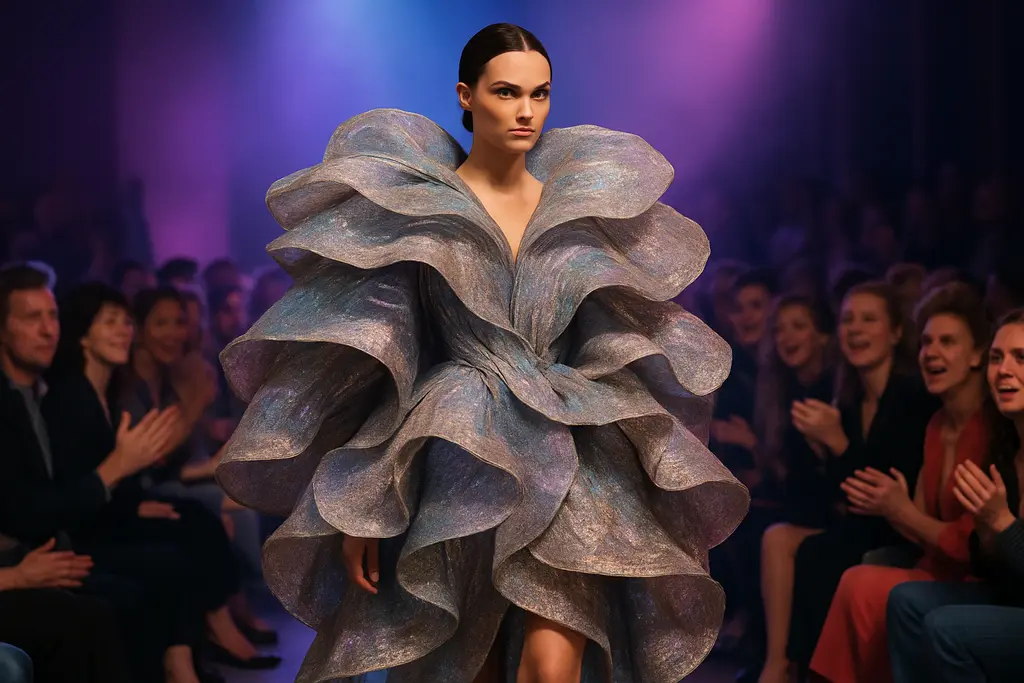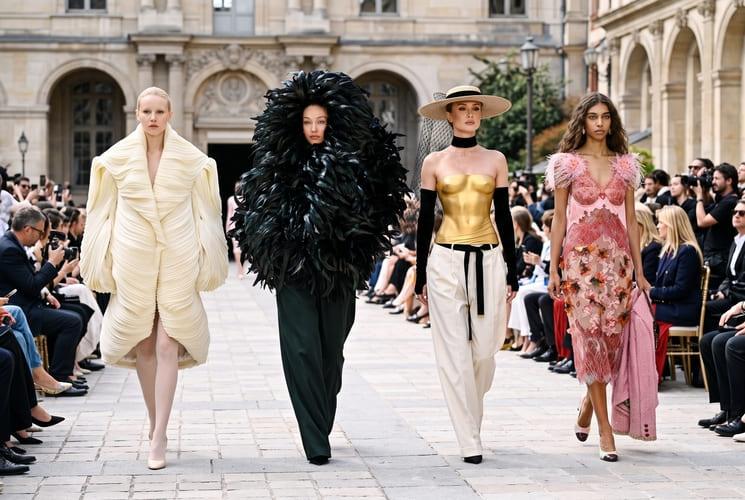
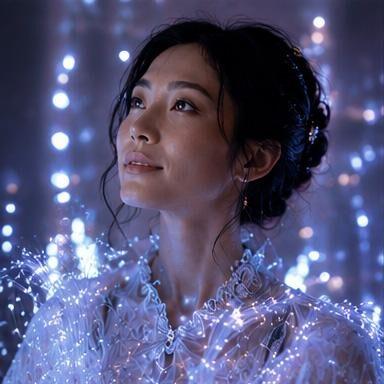

The Francesco Scognamiglio Fall 2026 couture collection, titled “La Grazia,” presents a sharp departure from his previous season’s mythological references. The Italian designer shifts his focus to the unapologetic excess of early-1980s nightlife, rebuilding the visual language of Studio 54 through sheer lace, dimensional crystal embroidery, and structural corsetry. Rather than executing a simple retro exercise, the house constructs a modern wardrobe for crowded dance floors. The lineup balances exaggerated proportions with close-fitting jersey gowns, offering pieces that react directly to light and movement. Scognamiglio treats the body as a guiding structural force, combining nineteenth-century dressmaking techniques with high-gloss embellishments to shape a bold, highly physical aesthetic.
The Evolution Of Neapolitan Glamour
Francesco Scognamiglio founded his fashion house in 1998, establishing a distinct brand DNA rooted in Neapolitan glamour. Over the decades, the label has consistently merged sensual dressmaking with unapologetic red-carpet drama. The Fall 2026 presentation highlights a strategic shift for the house. The previous year’s Fall 2025 couture collection leaned heavily on mythological references and archaeological dreams. “La Grazia” pulls the brand firmly back into the modern, physical world.
The references shift from ancient history to the very specific cultural moment of 1980s nightlife. The designer replaces ethereal goddesses with nightclub patrons, creating clothes that demand physical interaction. This transition proves that the atelier can pivot its aesthetic narrative and maintain its core technical skills. The sheer gowns, heavy embellishments, and visible corsetry remain, but their context is entirely new. Scognamiglio proves his label does not depend on dressing clients for the exact same type of entrance every season.
The Intersection Of Monumentality And Fluidity
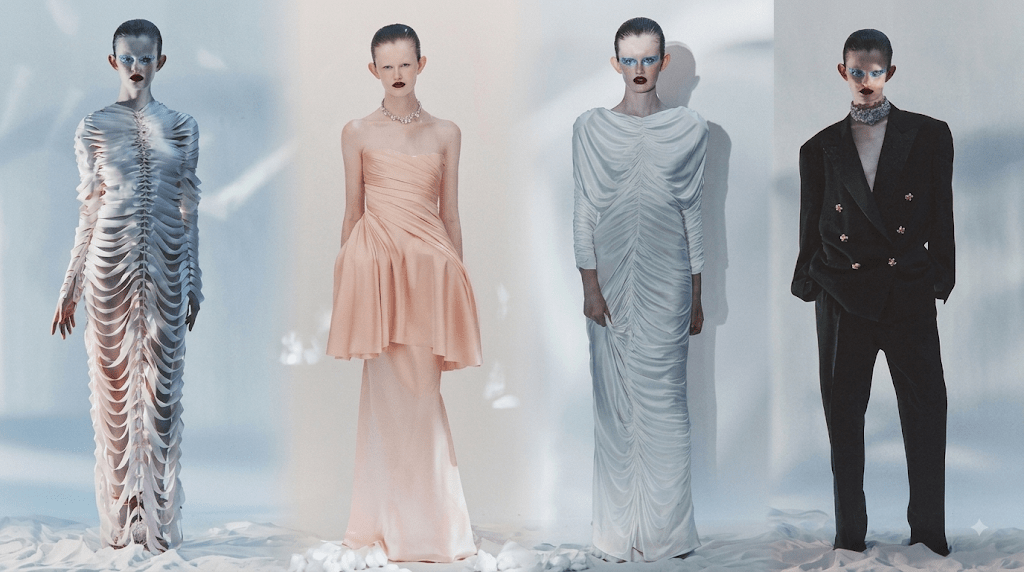
Scognamiglio grounds his Fall 2026 presentation in the physical relationship between heavy structure and sheer lightness. The garments use silhouette as the primary means of expression, relying on long vertical lines to give the human figure an elongated profile. Fluid, draped jersey column gowns introduce softness, clinging closely to the wearer’s contours. The stretch jersey material supports this direct physical connection, allowing the fabric to trace every movement without compromising the garment’s monumental shape.
This focus on structural exactness allows the designer to push the boundaries of sheer fabrics. Transparent organza bases serve as the foundation for complex floral appliqués and scalloped ruffles. Black organza dresses layer these dimensional details over exposed undergarments, creating a clear visual tension between the airy silk and the dense, heavily worked surface embellishments. The contrast proves that weightless materials can support architectural exactness without losing their connection to the body.
Optical Illusions And Color Theory
The color palette of “La Grazia” relies on stark contrasts and highly reflective surfaces. Black organza and dark rhinestone-covered jersey serve as the collection’s baseline. These dark materials absorb ambient light, allowing the applied crystals and micro-sequins to stand out with blinding intensity. The silver embroidery on the bralettes functions like a wearable mirror, actively throwing light back into the surrounding environment.
Scognamiglio interrupts this dark, metallic narrative with sudden flashes of high-saturation color. A hot-pink satin hoop skirt completely disrupts the visual flow of the runway, demanding immediate attention. Pink satin ribbons appear throughout the sharp suiting, providing a cohesive link between the heavy suit construction and the exuberant eveningwear. This disciplined use of color forces the audience to focus on the structure and texture of the garments. The lack of chaotic prints lets the sheer organza and complex floral appliqués remain the primary focal points.
Engineering The Nineteenth-Century Corset
The incorporation of nineteenth-century dressmaking techniques provides the collection with its rigid foundation. The corsets used in “La Grazia” are not merely decorative overlays; they are highly engineered support structures. Artisans construct these foundational pieces by hand, using firm boning to manipulate the waist and bust.
This firm construction creates a deliberate technical tension when paired with weightless silks and sheer organza. The architectural exactness of the corset holds the body in a strict posture, and the visual lightness of the sheer overlays keeps the garment from looking like historical costume. The atelier applies every micro-crystal individually onto these corsets, turning the heavy structural seams into lines of pure light. By exposing the corset rather than hiding it beneath heavy layers of fabric, Scognamiglio celebrates the mechanical engineering required to build high fashion garments.
Sculpted Foundations And Hoop Skirts
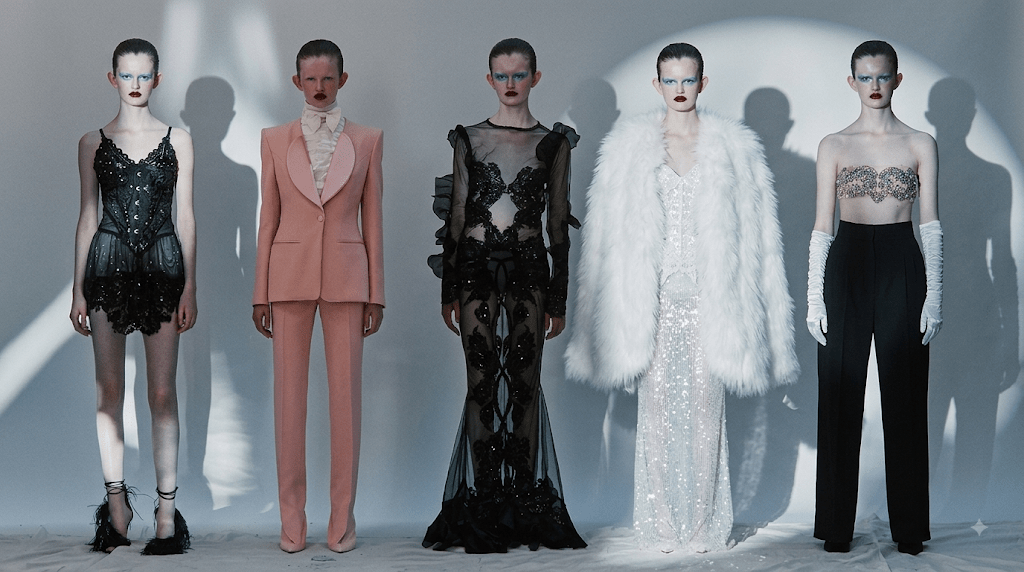
Lingerie construction drives the underlying geometry of the entire lineup. Scognamiglio amplifies this aesthetic through exaggerated hoop minidresses. One standout piece arrives in black rhinestone-covered jersey gauze, pushing the boundaries of scale and transparency. A hot-pink satin iteration sits over a long column skirt, forcing the eye to process two distinct geometric forms simultaneously.
The architectural rigidity of the hoop skirts clashes intentionally with the sheer fabrics, creating a visual friction that defines the collection’s bold character. Lace-intarsia minidresses scattered with crystals further support this theme, offering a highly technical approach to nightlife dressing. Crystal bralettes reflect light with mirror-ball intensity, serving as focal points rather than hidden support structures.
Sartorial Precision And Cultural Icons
The suiting in the Francesco Scognamiglio Fall 2026 couture lineup delivers some of the collection’s cleanest lines. Taking clear inspiration from figures like Bianca Jagger and David Bowie, the designer presents oversized tuxedos commanding attention through scale rather than surface embellishment. Broad, pronounced shoulders define the proportions of these jackets, providing a masculine counterweight to the sheer, hyper-feminine gowns.
One pink tuxedo features a rounded lapel, channeling a distinct Bowie influence, and remains grounded in modern sartorial techniques. The use of antique jeweled buttons adds a layer of historical weight to the otherwise modern suits. Scognamiglio proves that structured jackets can hold their own against fully crystallized dresses, letting sharp cuts and precise fabric choices shape the wearer’s image.
Surface Illumination And Material Tension
Embellishment contributes directly to the construction of the garments. The atelier distributes micro-sequins, crystals, and hand embroidery in diffused arrangements across the fabric. These applications create three-dimensional textures, giving the materials a shifting luminosity. The designer treats light as a structural element. As the wearer moves, the crystals catch the room’s lighting, altering the perceived shape and volume of the dress.
Micro Mongolian fur pieces add another layer of intense material study. The thick, high-pile fur introduces massive volume to the female figure, giving the wearer a pronounced stage presence. The tactile difference between the dense fur and the sheer lace heightens the dramatic impact of the looks. Exploring these structural contrasts remains a consistent theme in high-end design, as frequently documented in haute couture week coverage. Scognamiglio uses material as an active, expressive device, allowing scale and surface texture to replace conventional prints.
The Finale: A Bridal Vision Of Lightness
The presentation closes with the Mariée, a bridal creation interpreting the traditional wedding gown through the lens of protection and atelier skill. Constructed from layers of soft tulle, the gown surrounds the figure in weightless volume. Heavy embroidery and concentrated crystals give the final look a luminous, textured finish, grounding the airy fabric in pure artisanal craftsmanship.
This final piece summarizes the exact intention of the “La Grazia” collection. It defines modern femininity through the direct connection between soft draping and rigid, historical construction. Scognamiglio blends technical research with hand-applied embellishments, maintaining a strict focus on how the fabric interacts with the wearer’s body.
Redefining The Nightlife Wardrobe
The Francesco Scognamiglio Fall 2026 couture collection refuses to fade into the background. The garments require flash photography, loud music, and a high-energy environment. By utilizing traditional couture techniques to create unabashed clubwear, the house challenges the expectation that haute fashion belongs exclusively in quiet, formal settings.
The use of ruched jersey, an unexpected material in many traditional ateliers, proves that the brand prioritizes physical comfort alongside visual drama. Towering jersey gowns follow the body closely, allowing the wearer to move freely. These pieces balance the more extreme hoop skirts and heavy fur coats, resulting in a cohesive lineup. Readers studying modern structural fashion can find similar integrations of comfort and high-art construction within our broader analysis of haute couture collections.
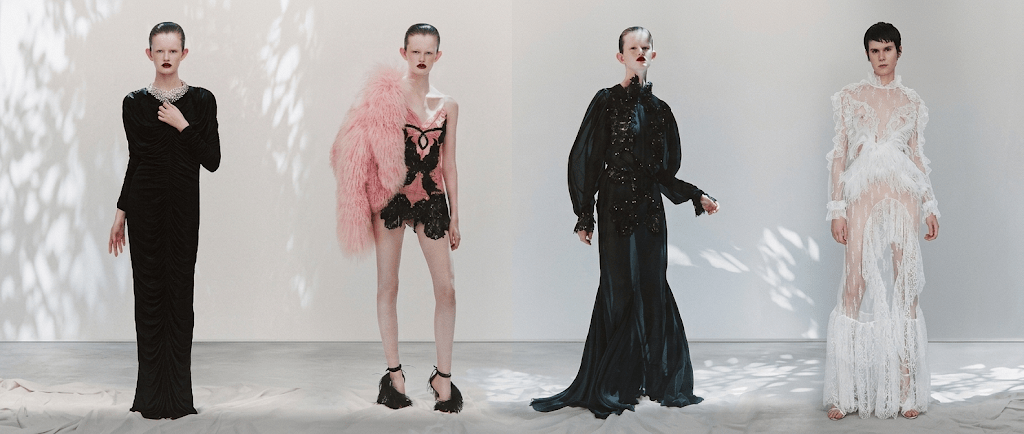
Scognamiglio brings a distinct Neapolitan glamour back to the Paris runways. His reliance on hand-embroidered corsets, mirror-ball bralettes, and massive tuxedos creates a clear aesthetic signature. “La Grazia” succeeds by treating the past as raw material, rebuilding 1980s excess with modern sartorial exactness. The collection presents a wardrobe built for those who demand total visual authority in every room they enter.