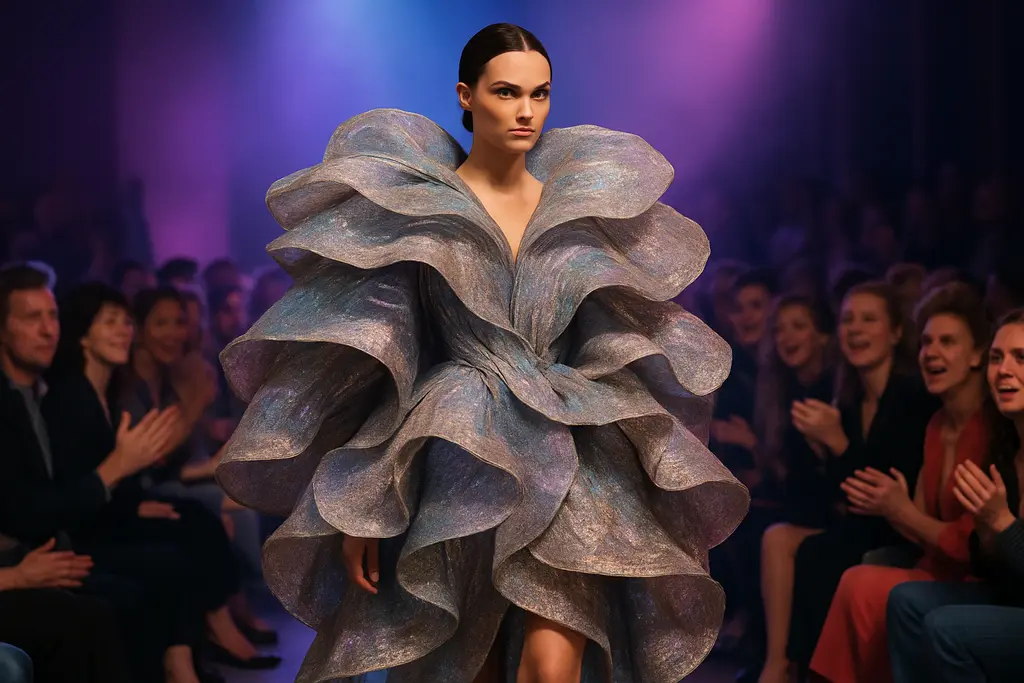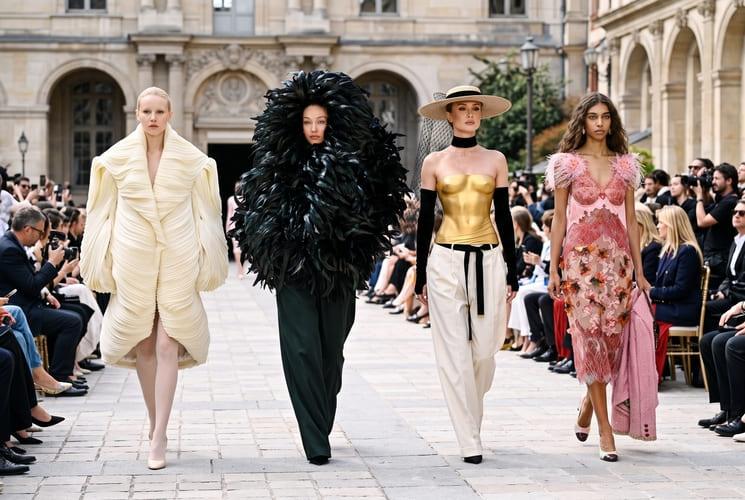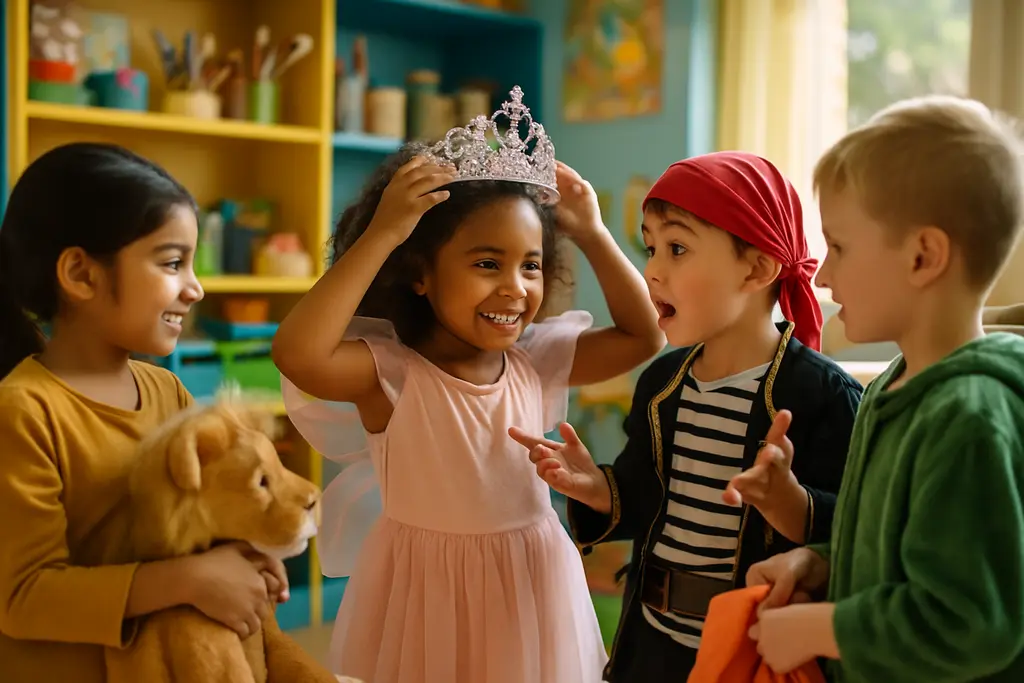
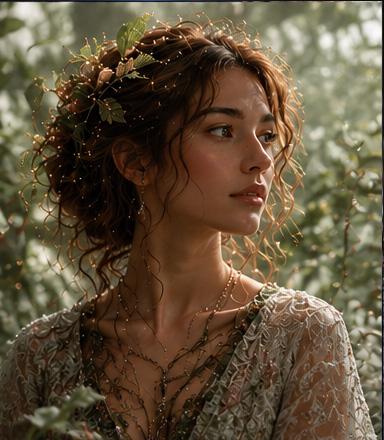
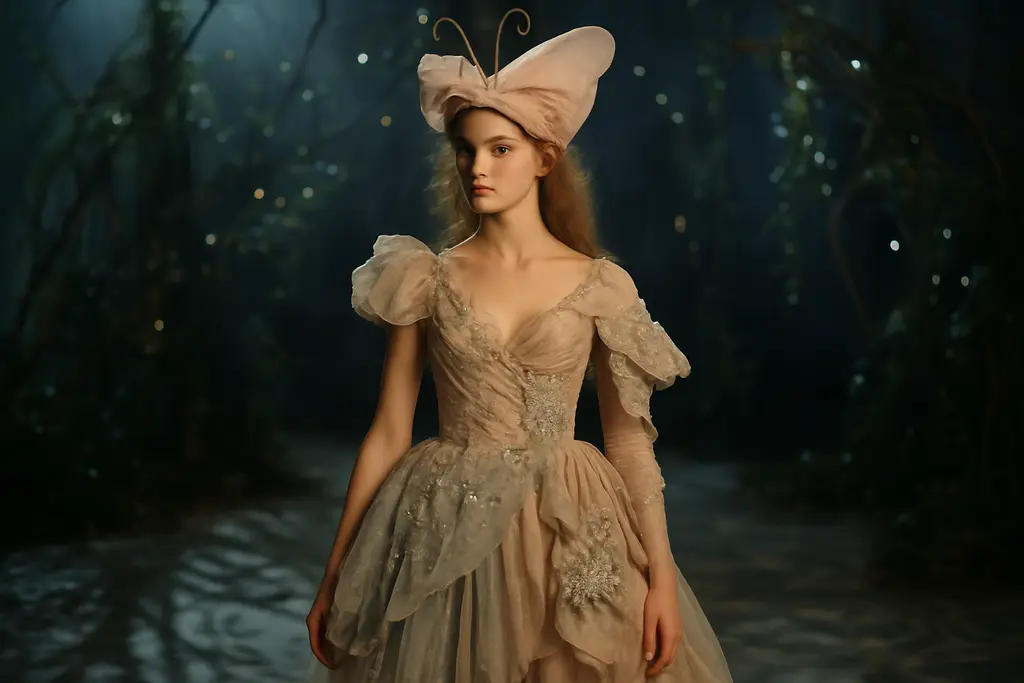
Fade Costume Design offers a cautious way to read the Studio Museum in Harlem’s Fade without reducing the exhibition to a mood board. On September 1, 2026, Fade was still on view through September 6, 2026, presenting 17 emerging artists of African descent whose work embraces spirituality, surrealism, and nonlinear conceptions of time, according to the Studio Museum. For costume makers, the useful question is not how to copy any artwork. The stronger question is how fairytale dress can borrow structural ideas: suspension, blur, threshold, layered time, and a body that refuses one fixed reading.
That distinction matters. Fairytale costume design often leans on familiar archetypes: the princess, the woodland spirit, the old magician, the royal child, the shadow figure. Fade suggests a more unstable method. A costume can feel enchanted without relying on a single crown, wing, wand, or character reference. It can communicate memory through veiling, grief through softened edges, lineage through layered garments, and transition through unfinished hems. Those choices respect the exhibition’s artistic integrity because they translate formal strategies rather than imitating specific works.
Fade Costume Design As Surrealist Method
Why Fade Costume Design Resists Literal Illustration
The term “fade” carries several meanings in the exhibition framing: a cinematic transition, a haircut, and a basketball move. In the museum context, it points toward departure, adaptation, and slipping in and out of view. For costume design, that gives us a precise visual grammar. A cloak does not need to announce “ghost” to feel spectral. A skirt can fade from opaque cotton to sheer organza. A sleeve can be cut longer than expected so the hand appears half-present. A headdress can hover slightly away from the scalp through lightweight armature, suggesting a thought or aura rather than a crown.
Fade Costume Design is less a pattern than a discipline of restraint. The strongest fairytale garments inspired by the exhibition would resist literal illustration. Instead of placing symbols everywhere, the designer can ask what is absent, what is partly visible, and what seems to have crossed from another time. This is especially useful for handmade costumes, because small material shifts can carry meaning: frayed ribbon, veiled duplication, mismatched shoes, translucent sleeves, or a detachable train that changes the wearer’s outline as they move.
Suspension, Blur, And The Unfixed Body
Reported installation details from Fade are especially relevant to costume thinking. Works cross gallery thresholds; sculptures are suspended from ceilings; sightlines open across rooms; Antonio Darden’s Untitled (Reclining Figure) from 2025 is described as hovering overhead; London Pierre Williams’s The Stage: He that leaves me blue, a dream from 2026 combines garments such as dresses, pumps, boots, and sagging pants to keep identity multiple rather than fixed, as described by Impulse Magazine. These details do not provide costume templates, but they do identify a set of spatial moves: lift, soften, double, cross, and refuse closure.
In fairytale terms, the “unfixed body” can be practical as well as poetic. A child’s dress-up piece might be reversible: one side matte, one side sheer. A performance costume might combine a structured jacket with a skirt panel, or boots with a gown, without assigning those combinations to a single identity claim. The design aim is not costume as disguise, but costume as a visible record of change.
From Gallery Effects To Fairytale Garments
Material Translation Without Copying The Art
A fairytale costume can acknowledge surrealist influence while staying independent. Suspended gallery works may suggest floating collars, transparent capes, or headpieces supported by almost invisible wires. Blurred figures may suggest veils, doubled sleeves, shadow appliqué, or fabric overlays that soften the body’s edge. Nonlinear time may appear through a bodice with historical proportions paired with synthetic netting, or through an old-fashioned cape clasp attached to a highly abstract garment. These translations work best when the maker writes down the formal source of the idea—“hovering,” “threshold,” “doubling,” “erosion”—rather than the name of an artwork to replicate.
For related thinking on art references, costume planning, and storage, the site’s discussion of fairytale-inspired costumes offers another way to keep artistic influence separate from direct imitation. Readers comparing exhibition-led design notes across culture coverage may also find adjacent arts context at Next Clues, a related site in the same network that broadens the framework of costume inspiration.
| Element In Fade | Costume Translation | Playroom Handling |
|---|---|---|
| Suspended or hovering objects | Sheer capes, lifted collars, lightweight headpieces | Hang pieces on wall hooks so they keep their airiness |
| Blurred or doubled figures | Veils, duplicate sleeves, ghost panels, mirrored trim | Store overlays flat in labeled fabric envelopes |
| Threshold crossing | Long trains, modular panels, garments that extend behind the body | Use a separate bin for trains so they do not knot around shoes |
| Material transformation | Faded dye, distressed hems, cracked-looking texture, mixed surfaces | Separate delicate textures from Velcro, sequins, and rough crowns |
Gender Codes, Thresholds, And Story Logic
The exhibition’s interest in multiplicity can sharpen fairytale design because many old story types depend on rigid visual codes. Royalty wears one silhouette, laborers another, villains another, magical figures another. A more surreal approach can interrupt that coding. Boots can ground a translucent gown. A jacket can sit over a tulle skirt. A sash can look ceremonial from one angle and utilitarian from another. These combinations should not be treated as novelty. They are design decisions that let the wearer hold more than one story position at once.
A practical Fade Costume Design process begins with three questions. What part of the body should appear to slip from view? What detail should feel inherited rather than newly purchased? What part of the costume should cross a boundary, such as floor to air, room to hallway, or past to present? Those questions keep the garment tied to form and experience, not surface quotation.
Playroom Systems For Spectral Costume Pieces

Sort By Effect, Not Character
Playrooms often become disorderly because costumes are sorted by character name or occasion. A surrealist fairytale system works better when children and caregivers sort by effect. This keeps the pieces open-ended, which supports imaginative play without forcing a single script. It also makes cleanup easier because every item has a sensory or structural category.
- Floating: capes, wings, veils, gauze collars, lightweight overskirts.
- Shadow: dark scarves, soft masks, sheer black panels, muted gloves.
- Threshold: trains, door-frame banners, modular skirts, detachable sleeves.
- Memory: antique-looking ribbons, family-safe fabric scraps, faded trims, soft sashes.
- Structure: crowns, foam staffs, boots, belts, shoulder pieces, rigid props.
This system also protects fragile pieces. Sheer layers should not sit beneath boots. Rigid crowns should not crush veils. Any costume element inspired by glass, water, acrylic, or wood should be interpreted with child-safe materials if the item is intended for play. For example, a jar-like visual cue can become a soft pouch with a clear vinyl window rather than a fragile object. The goal is to preserve the feeling of spectral storage, not to bring gallery fragility into a toy bin.
Care Notes For Mixed Materials
Costumes inspired by blur and fading often use fabrics that snag easily. Store veils, netting, organza, and gauze in breathable cotton bags or smooth envelopes. Keep hook-and-loop closures turned inward. Place boots and structured props in a lower bin so children can reach them without pulling down delicate pieces. If a garment has intentional unfinished hems, inspect it after play; an expressive trailing thread can become a practical nuisance if it lengthens enough to trip the wearer.
For family use, the most successful fairytale storage resembles a small costume archive. Labels can name the effect rather than the character: “floating blue veil,” “shadow sleeves,” “memory sash,” “threshold train.” This preserves creative freedom and reduces arguments over ownership. It also teaches children that clothing communicates through material, shape, and movement—not only through named characters.
Fade Costume Design For Fairytale Rooms And Wardrobes
The value of Fade for fairytale costuming lies in its refusal to settle the image too quickly. Its surrealist and spiritual elements point toward garments that hover, soften, split, and cross boundaries. A fairytale wardrobe shaped by these ideas would not simply dress a child or performer as a fixed figure. It would let the wearer appear between states: part memory, part ancestor, part dream, part everyday body.
That is also a useful ethic for makers. Use the exhibition as a prompt for structure, not as a catalogue of forms to reproduce. Study how suspension changes attention, how blurred edges affect emotion, how mixed garments complicate identity, and how thresholds alter movement through a room. Then build costumes that are clearly your own: respectful, wearable, organized, and alive to the strange half-light where fairytales often begin.