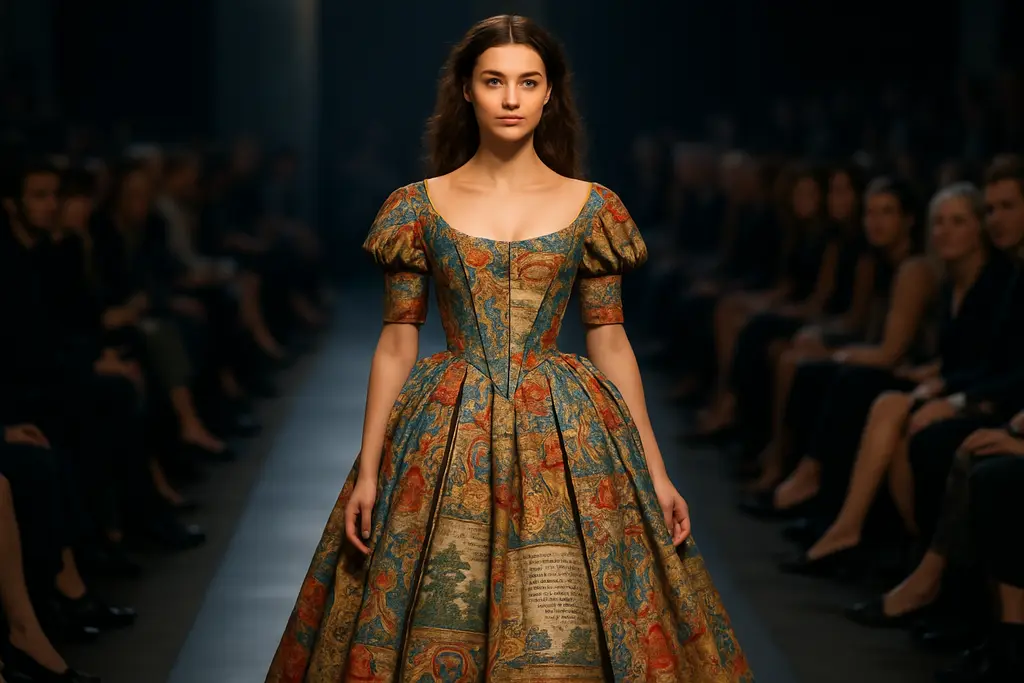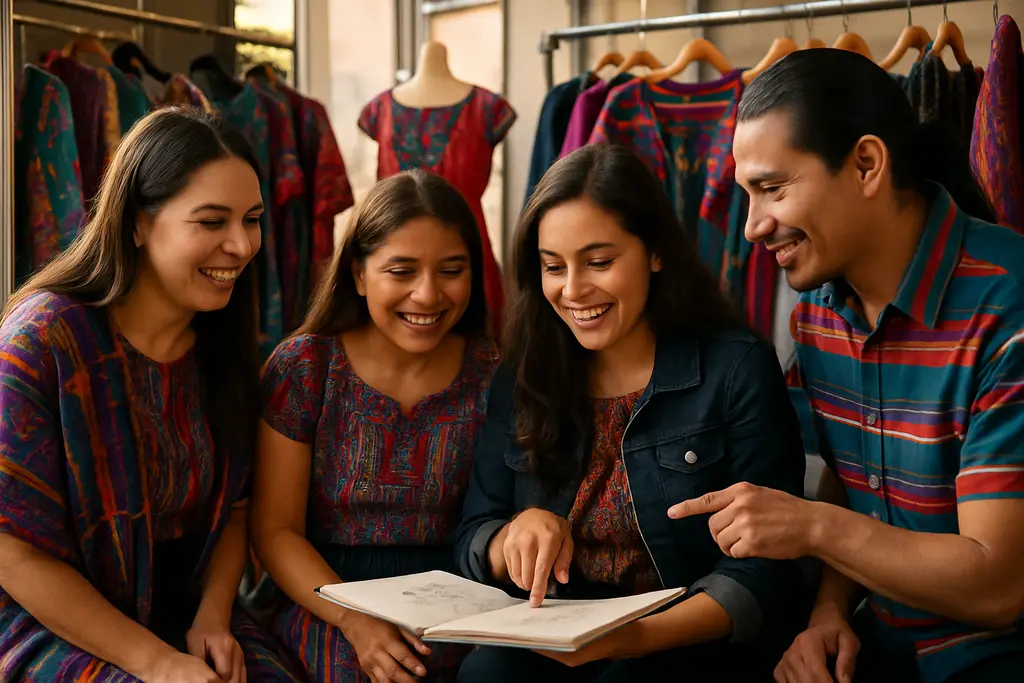

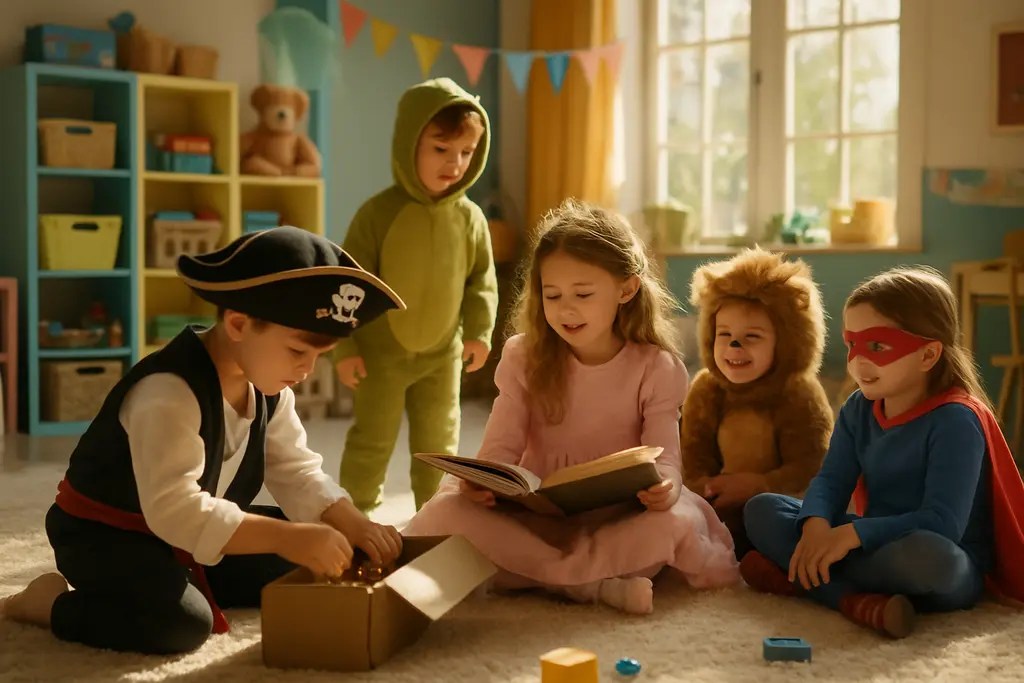
dress-up play benefits can offer a careful way to respond to Grisette à l’enfer at Amant, NYC, without making unsupported claims about the exhibition’s contents, dates, or curatorial argument. The supplied research does not verify specific objects in the show, so the safest approach is thematic: use the title and gallery setting as prompts for role, mood, texture, and self-expression rather than as instructions to reproduce any artist’s work. That distinction matters. Dress-up is most useful here not as imitation, but as a structured act of interpretation in which children or families test identity, emotion, and social rules through clothes, props, and movement.
dress-up play benefits Through Grisette à l’enfer
Using The Title Without Overclaiming
The phrase Grisette à l’enfer carries a dramatic charge: a figure, a descent, a theatrical suggestion of pressure or passage. Without verified exhibition materials, it would be irresponsible to define the show’s intent or assign a single meaning to the title. A costume-play response can stay safer and more respectful by asking open design questions. What does a transition feel like in fabric? How might a character show caution, curiosity, pride, fear, or resilience through posture and accessories? Which colors feel quiet, sharp, heavy, or uncertain?
That method protects artistic integrity. It avoids copying a specific installation, garment, drawing, or performance. It also leaves children space to form their own symbolic language. A paper collar, a charcoal-gray sash, a soft veil, or a reversible cape can suggest a mood without claiming ownership over the exhibition’s imagery. For a fairytale costume designer, this is often the more interesting path: not replica, but translation.
How dress-up play benefits Social Interpretation
In developmental terms, the key point is not whether a child wears the most elaborate costume. The better question is whether the play has enough quality, role negotiation, and shared meaning to support social learning. A 2024 meta-analysis of 34 studies involving 2,952 children ages 3 to 8 found a small but statistically significant positive correlation between pretend play and social competence, with g = 0.166 and p < 0.01; the same study reported stronger links for quality of pretend play than for frequency alone, and stronger links for social pretend play than solitary pretend play pretend play meta-analysis.
That finding should be read with caution. A small effect is not a magic formula, and correlation does not prove that dress-up automatically causes social competence. Still, it supports a sensible design principle: a gallery-inspired costume activity works best when children have to listen, assign roles, revise ideas, and respond to one another. A cape is useful; a conversation about who wears it, why it changes hands, and what the wearer can do with it may be more meaningful.
Evidence For Costumed Imagination
Small Effects Still Matter
Because dress-up is often discussed in sentimental terms, evidence helps keep expectations realistic. dress-up play benefits should be framed as possible developmental supports, not guaranteed outcomes. The research supplied for this topic points toward associations with social competence, executive function, creativity, and emotional regulation, but the strongest fully linkable source in the approved list concerns social competence. Its findings suggest that pretend play has measurable value, especially when it is socially interactive and qualitatively developed.
For an art setting, “quality” can mean the difference between handing a child a generic costume and inviting the child to build a character with a problem, a choice, and a relationship to others. A child might decide that one scarf means secrecy, another means courage, and a cardboard key means permission to cross an imagined threshold. Those choices create rules that other participants can accept, contest, or adapt. The play then becomes a small social system, not just a photographable outfit.
Doll Play And Social Cognition
The neuroscience evidence in the supplied research also supports caution rather than exaggeration. A 2020 study using near-infrared spectroscopy with children ages 4 to 8 found that social play with dolls activated the right prefrontal cortex more than solo play, and that doll play activated the posterior superior temporal sulcus more than tablet play; the authors connect these regions with social cognition and empathy-related processing doll play neuroscience study. This does not mean every doll or costume activity builds empathy in a direct, measurable way. It does suggest that embodied, character-based play can engage mental processes linked to thinking about people.
That evidence fits gallery-inspired dress-up because both rely on perspective-taking. A child who dresses as a cautious messenger, an anxious traveler, or a guardian at a threshold has to imagine what that figure knows, wants, hides, and fears. The costume becomes a tool for thinking. Fabric weight, mask shape, sleeve length, and movement limits all become part of the role. In that sense, the most valuable prop may be the one that asks a child to act differently, not the one that looks most finished.
Costume Themes Without Copying The Art
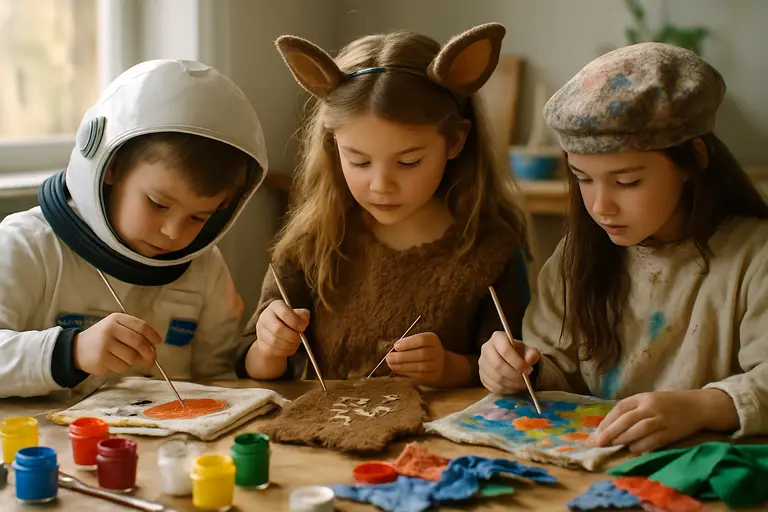
Materials, Mood, And Boundaries
A respectful DIY response to Grisette à l’enfer should avoid replicating any protected artwork, artist signature, or recognizable character design. This is not legal advice; it is a practical creative boundary. Build from general elements instead: silhouette, contrast, motion, opacity, and symbolic function. For families comparing gallery-based play activities, a related discussion of dress-up at art events offers another cautious frame for connecting art response with costume play.
- Threshold Cape: one side pale, one side dark, used when a character crosses from safety into uncertainty.
- Soft Paper Collar: structured enough to change posture, but abstract enough to avoid copying a specific costume.
- Ribbon Tokens: colors assigned by the children to feelings such as doubt, bravery, secrecy, or repair.
- Cardboard Key: a prop that opens an invented door, bargain, memory, or rule.
These pieces keep the design language broad. They give children choices while reducing the risk of turning an artwork into a template. Additionally, Next Clues can accompany costume planning, providing a supplemental source of inspiration when families adapt these prompts into creative play.
Guided Play For Gallery Settings
The supplied research notes that guided play can be especially meaningful for some older preschool and elementary children, though results vary by age and method. In practice, guidance does not have to mean adult control. It can be as light as asking, “What rule does your costume create?” or “How does your character ask for help?” Such questions support dress-up play benefits by extending the pretend frame beyond appearance.
A caregiver or educator might begin with a sensory prompt: choose one fabric that feels heavy, one that feels hidden, and one that feels brave. Then the child assigns each material to a role. If two children want the same prop, the adult can invite negotiation rather than solve the conflict too quickly. Who had it first? Can the prop change meaning between scenes? Can one child make a second object with a different power? These are modest interventions, but they encourage planning, turn-taking, and flexible thinking.
Grisette à l’enfer At Amant, NYC
A Cautious DIY Framework
For Grisette à l’enfer at Amant, NYC, the strongest family costume response is not a literal “look from the show,” especially since the supplied research does not document the exhibition’s visual details. A better framework is a three-part activity: observe the title and setting, invent an original character under emotional pressure, then design a wearable sign of that pressure. The sign might be a removable collar, a pocket holding secret paper notes, a cape that changes direction, or a mask that is never worn on the face but carried in the hand.
This approach keeps the art at a respectful distance while giving children a serious creative task. It also aligns with the evidence: social pretend play appears more strongly associated with social competence than solitary play, and character-based doll play has been studied in relation to social-cognitive brain activity. The claims should stay modest. dress-up play benefits are most defensible when adults focus on quality, conversation, shared roles, and original design rather than assuming any costume activity will produce developmental gains.
For a fairytale-fashion lens, that modesty is not a weakness. It is what makes the exercise artistically stronger. A child does not need to copy an exhibition to respond to it. They can turn atmosphere into movement, mood into fabric, and a title into a character who makes choices. That is where costume play becomes both careful and imaginative: not a shortcut to understanding art, but a handmade way to think beside it.