
dress-up play benefits are easiest to overstate when costume work is treated as magic. The evidence supports a more careful claim: dress-up can help children and adult participants practice cooperation, symbolic thinking, communication, identity expression, and material problem-solving when the setting is supportive and well guided. At major art events, fan gatherings, museum programs, and collaborative workshops, costume is not just decoration. It becomes a wearable prompt that asks participants to negotiate character, movement, audience, craft, and respect for the source material.
How dress-up play benefits Artistic Collaboration
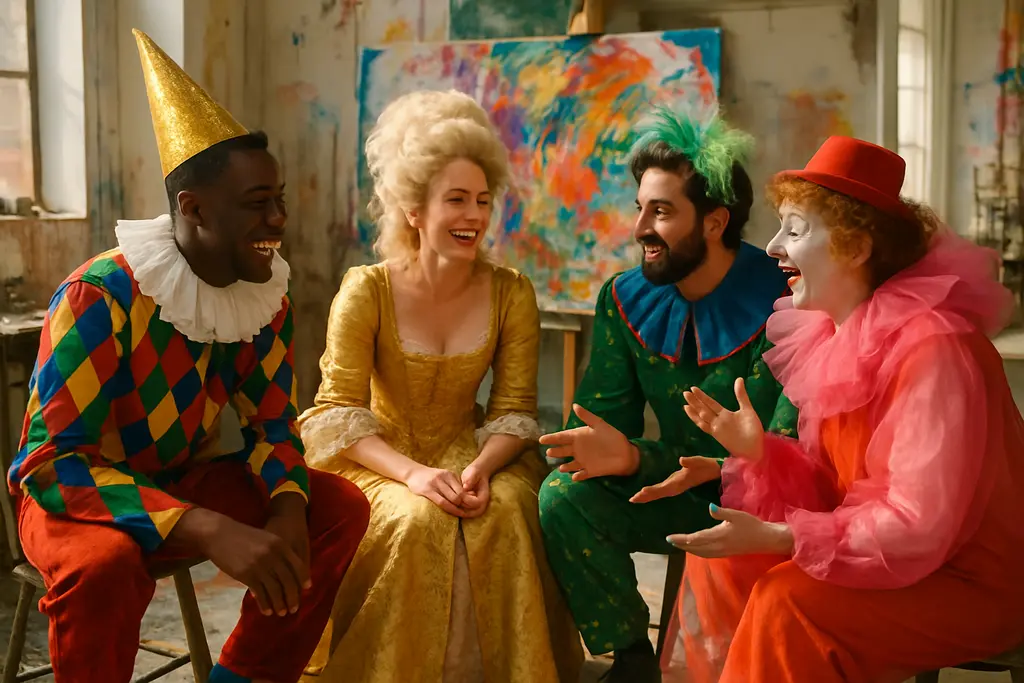
Artistic collaboration changes dress-up from private pretending into a shared creative task. A child choosing a cape at home may build a story alone; a child using that cape inside a group workshop must listen, wait, adjust, and respond. The same pattern appears in adult cosplay, live role-play, and fan-event costume culture, where the garment is often part of a larger social exchange rather than a single finished object.
Shared Making As A Social Rehearsal
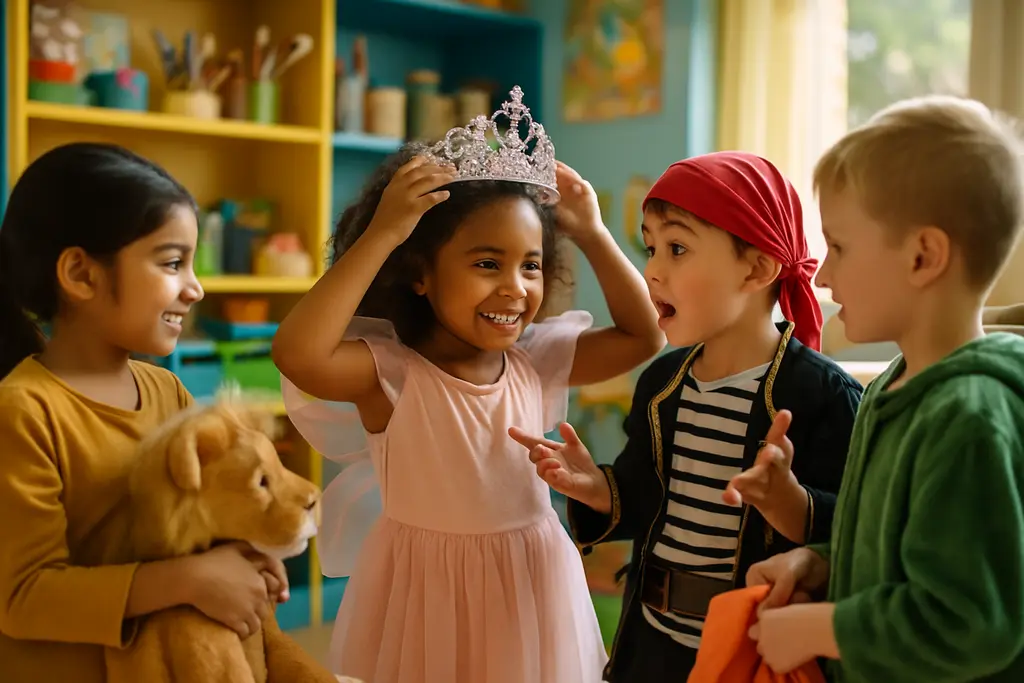
In collaborative settings, costume decisions create small but meaningful negotiations. Who gets which prop? How does a group scene work if one participant wants to be a dragon and another wants to be a moon? These questions sound simple, but they require planning, turn-taking, and flexible thinking. The research brief for this topic points to cooperation, pretend-play behavior, and identity expression as recurring themes across performance, cosplay, and art-program studies.
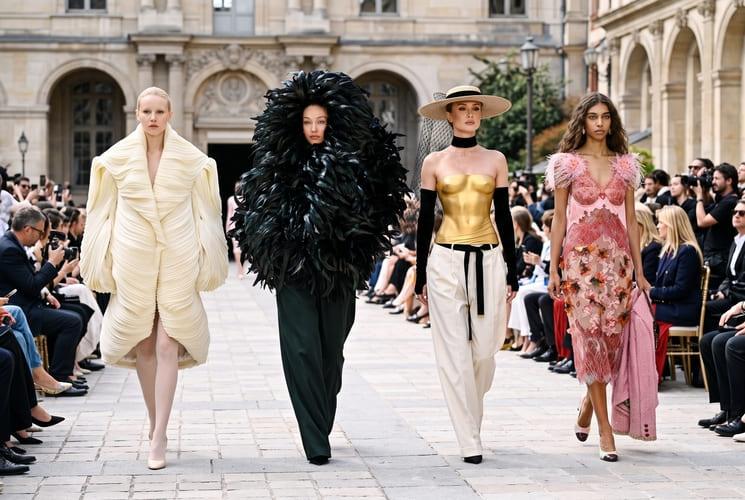
This is where large art events can be especially useful, provided they are designed with care. A crowded event alone does not create learning. A guided costume station, a facilitated mini-performance, or a workshop that invites participants to make and revise wearable elements can give structure without reducing play to obedience. For families building similar settings at home, a small dress-up stage can echo this model; the site’s related piece on a dress-up photo booth and mini theater offers a practical bridge between informal play and performance.
What dress-up play benefits Can And Cannot Show
dress-up play benefits should be read as likely supports, not guaranteed outcomes. A costume does not automatically make a participant more creative, more confident, or more socially connected. The surrounding conditions matter: adult guidance, peer safety, access to materials, cultural respect, and room for revision. A child who is assigned a role too rigidly may have less imaginative space than a child who is invited to adapt a role. An adult fan who wears a costume in a welcoming convention hall may experience connection, while another person in the same setting may feel exposed or judged.
That caution matters for major art events because scale can hide uneven experiences. Large programs may bring artists, educators, families, fans, and visitors into the same space, but participation still depends on consent, clear expectations, and accessible materials. The best costume-based collaborations treat dress-up as a conversation between maker, wearer, and audience rather than as a spectacle placed on top of the participant.
Evidence From Guided Performance And Pretend Play
The most directly relevant source in the approved research is a 2018 article in the American Journal of Play. It reported that theatrical or interactive performance experiences were associated with increases in cooperation and pretend-play behavior among preschoolers in the period immediately after involvement in the performance experience, according to the American Journal of Play study. That finding does not prove that every art-event costume station will have the same effect, but it supports the idea that guided performance contexts can influence social and pretend-play behaviors.
Why Adult Guidance Matters
Guidance is not the same as control. In dress-up work, strong facilitation often looks light from the outside: an educator asks open questions, offers safe materials, helps children fasten closures, and invites them to explain what their costume means. This approach leaves room for invention while reducing conflict and confusion. The research brief also included a future-dated October 2026 meta-analysis entry; because today is August 22, 2026, that item should not be treated here as published evidence.
For younger children, physical interaction with costume pieces may also support practical learning. Buttons, snaps, ties, scarves, and soft armor pieces ask the hands to coordinate with the eyes. The research notes describe fine motor practice, language use, and social communication as common benefits associated with dress-up. Those claims fit the observational reality of costume play, but they still depend on age-appropriate materials and patient adult support.
Adult Fans And Identity Expression
Adult costume participation sits beside, but not inside, the child-development evidence. The research brief describes recent cosplay and live-action role-playing studies that connect fan-costume participation with well-being, identity disclosure, and social contact, while also noting possible anxiety, depressive symptoms, or isolation among some convention visitors. That mixed pattern is worth preserving. Costume communities can create belonging, but they are not a substitute for mental-health care, and attendance at a large event does not carry the same meaning for every participant.
For creators, the identity dimension also raises questions about artistic influence. A costume may quote a fairy-tale silhouette, a historical garment, a surrealist mood, or a fan-world archetype without needing to copy a protected character or living artist’s signature look. Respectful design asks: what is the underlying visual idea, and how can it be reinterpreted without misrepresenting the source?
Costume Design Choices That Respect Art
Major art events often sit close to museums, commissions, performances, fan art markets, and creator commerce. That means costume play should be culturally and artistically literate. Respecting a work’s integrity does not mean avoiding influence. It means naming influence honestly, avoiding deceptive imitation, and distinguishing personal appreciation from commercial use.
From Reference To Interpretation
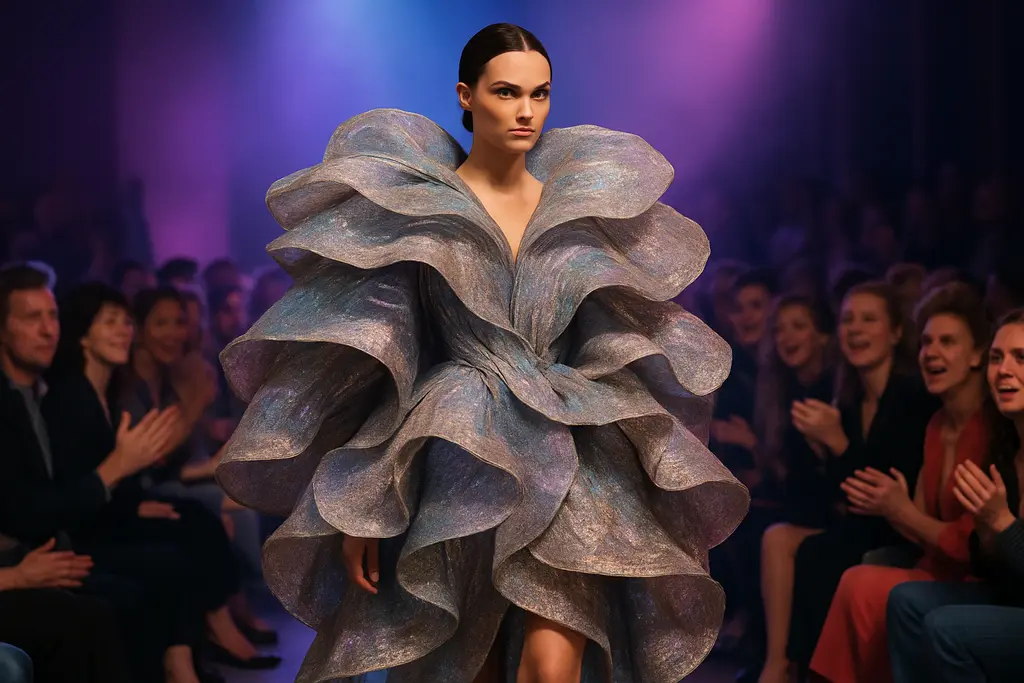
A fairy-tale costume can reference moonlight, thorn branches, glassy textures, or courtly silhouettes without copying a specific film costume. A surrealist-inspired outfit can use scale shifts, dreamlike materials, or unexpected object pairings without pretending to be a lost work by a named artist. This distinction helps both children and adults learn that art influence is not a costume-store shortcut; it is a set of choices that should be studied, credited where appropriate, and adapted with care.
For handmade sellers and workshop leaders, caution is especially useful. If a costume is for personal play, the risk profile differs from selling replicas, using celebrity likenesses, or marketing an item with the name of a protected franchise. This is not legal advice, but a practical ethics point: build original forms, use public-domain references thoughtfully, and avoid implying approval from artists, estates, studios, or institutions unless permission is clear.
Materials As Evidence Of Thought
Costume materials can teach participants how art is built. Paper scales, recycled fabric crowns, cardboard masks, and stitched fabric banners all make construction visible. In a workshop setting, those choices can encourage discussion about texture, weight, movement, and durability. The garment becomes an argument about form: why does a cloak trail, why does a mask hide the eyes, why does a crown change posture?
The research brief’s art-science example is useful here because it shows collaboration beyond costume. The VI4 Artist-in-Residence program, active from 2019 to 2021, paired more than 80 artists with 50 scientists and produced visual science-communication outputs, including images, animations, and media used in conferences and publications, as described in the VI4 program study. While that program was not about dress-up, it supports a related point: cross-disciplinary art settings can help participants develop new skills and communicate ideas through visual form.
Adult Collaboration Without Taking Over
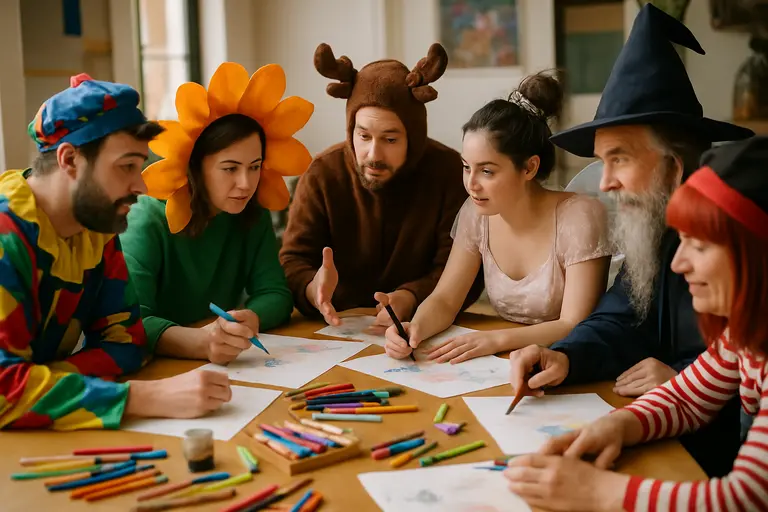
Guided dress-up succeeds when adults set the frame and then step back enough for genuine play. At a major art event, this may mean preparing safe fasteners, offering neutral costume bases, providing fabric scraps, and asking participants to invent the role rather than assigning it. A child can be asked, “What does your cloak help you do?” instead of being told, “You are the queen.”
- Use open-ended costume pieces rather than exact replicas of well-known characters.
- Invite participants to explain their choices before correcting or refining them.
- Keep movement, comfort, and sensory needs central to costume design.
- Credit artistic influences in plain language when a workshop draws from a tradition, exhibition, or artwork.
- Separate personal fan expression from commercial claims of affiliation or approval.
This balance protects imagination. It also reduces the tendency to treat children’s costume work as cute content for adults. A collaborative event should make space for the participant’s own meaning, even if the result is visually uneven. For broader cultural reading in the same network, Next Clues offers insightful comparisons about how public events frame participation, identity, and creative communities.
Assessment Without Draining The Play
Educators and parents often want to know whether a costume activity “worked.” The answer should not depend on polish. Better signs include whether participants negotiated roles, tried new materials, revised an idea, described a character, or cooperated through a scene. These observations fit the cautious evidence base better than claiming that dress-up alone causes creativity.
At major events, organizers can document process rather than only finished looks. Notes from facilitators, participant reflections, and low-pressure sharing circles can show whether the activity encouraged communication and agency. Photography should be consent-based, especially with children, and should not become the main purpose of the activity.
dress-up play benefits At Major Art Events
dress-up play benefits are strongest when costume is treated as participatory art rather than disposable novelty. The supported claims are promising but bounded: guided performance can increase cooperation and pretend-play behavior in young children; collaborative visual programs can help people learn across disciplines; costume participation can offer identity expression and social contact, though outcomes vary by person and setting.
For fairytale fashion, that evidence points toward a practical design ethic. Build costume activities that are open-ended, culturally respectful, physically accessible, and honest about influence. Let a paper crown, stitched cape, or improvised mask become an invitation to speak, move, listen, and revise. In that form, costume play earns its place at major art events—not because it guarantees growth, but because it gives participants a structured way to test imagination in public, with other people, through the language of dress.