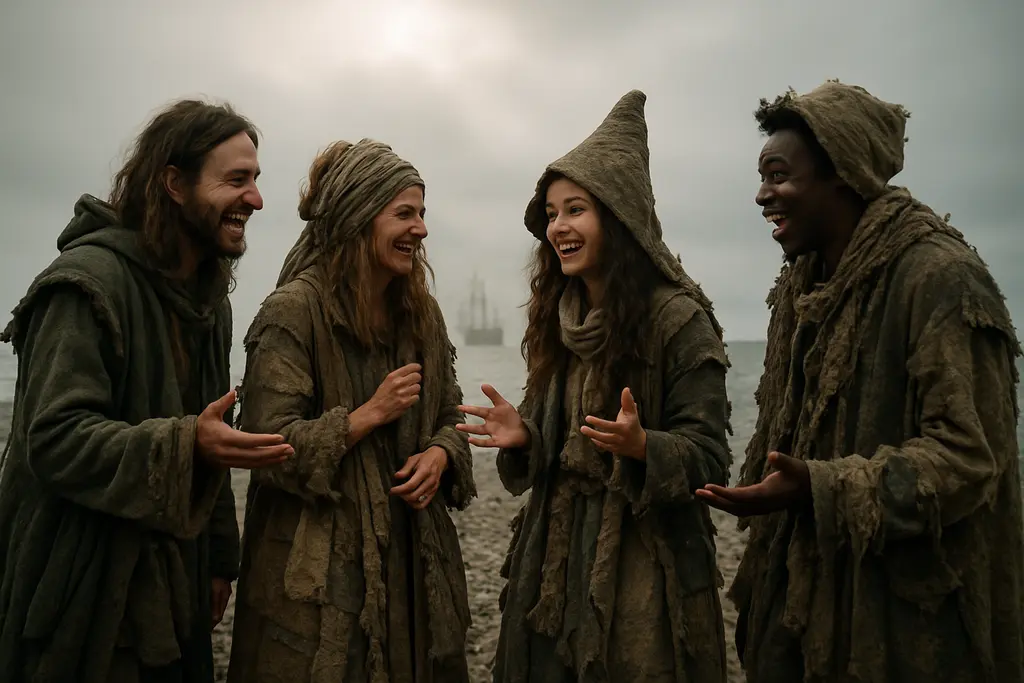
Apocalyptic literary costumes gave Selkie’s Fall 2026 collection, titled The Ghost Ship, a sharper frame than the brand’s familiar romance alone could provide. Presented during New York Fashion Week on September 15, 2026, the show joined pirate imagery, circus exaggeration, corsetry, chainmail, romantic dresses, seashell accessories, and religious jewelry within a fictional post-collapse setting. Designer Kimberley Gordon connected the mood to an “apocalyptic feeling” shaped by anxiety around global crises, according to Fashionista’s review. That does not make the collection a literal adaptation of a single book. It is better read as a fashion narrative that borrows from literature, personal memory, fantasy costuming, and performance.
Apocalyptic Literary Costumes And The Ghost Ship
Selkie’s The Ghost Ship imagined a traveling pirate circus inhabited by “warrior girls” living off the grid after a fictional apocalypse. That premise matters because it gives the clothes a social setting. The corsets, theatrical silhouettes, harlequin patterns, and armored touches are not just decorative signs of fantasy. They describe a group identity: a self-made community using performance, beauty, and play as survival tools.
Apocalyptic Literary Costumes As Social Signals
In dress-up terms, apocalyptic literary costumes often work through tension. They combine signs of damage or danger with signs of ceremony. Selkie’s version leaned toward romance rather than realism, so the apocalypse appeared through staged excess: pirate drama, circus costume codes, chainmail, gothic edges, and oversized accessories. The result suggested that collapse had not erased ornament. Instead, ornament became proof that the imagined survivors still cared about ritual, presentation, and joy.
This is where the collection becomes useful for literary costume analysis. A post-collapse setting can easily turn clothing into plain utility: boots, packs, neutral layers, and practical repair. Selkie moved in another direction. The show proposed a fantasy afterlife for theatrical dress, where impracticality itself becomes meaningful. A giant accessory or romantic dress may not solve danger, but within the story it marks defiance against fear.
Literary Sources Behind The Survival Fantasy
Gordon’s cited references included Cheryl Strayed’s 2011 essay The Ghost Ship That Didn’t Carry Us, later included in Tiny Beautiful Things, and Emily St. John Mandel’s novel Station Eleven. Based on the reported comments, Strayed’s essay informed ideas around life choices and regret, while Mandel’s novel supplied a key post-apocalyptic arts premise: performers preserving culture after civilization falls.
Regret, Choice, And The Ship That Never Sailed
The title The Ghost Ship carries a useful ambiguity. A ghost ship can be a vessel, a missed path, a warning, or a fantasy that continues to haunt the present. Within a fashion show, that image fits garments that appear caught between eras: pirate references, courtly romance, circus clowning, and survival armor. The literary cue from Strayed’s essay supports a reading based on alternate lives. The ship may stand for what did not happen, while the runway turns that absence into costume.
That interpretation should stay cautious. The available reporting does not provide a garment-by-garment map of text to outfit. It supports a broader reading: the collection used literary influence to create mood, not a direct illustrated edition. For readers and makers interested in adjacent fairytale styling, our related discussion of Selkie’s Fall 2026 show tracks the same presentation through darker romance and pirate-circus imagery.
Performance After Collapse
The Station Eleven reference is especially revealing because it shifts apocalypse away from spectacle alone. Gordon reportedly saw in the novel the idea that creativity and love can survive even after civilization falls. That reading aligns with Selkie’s runway-to-retail decision: the Fall 2026 collection was available to shop on the same day it was presented. The fantasy was staged, but it was also built for immediate consumer life within the brand’s existing model.
For costume culture, this creates a productive question. If survival is the theme, why so much decoration? One answer is that decoration becomes the evidence of human continuity. Songs, stories, costumes, and ceremonies are not extra layers added after safety is restored. In many narratives, they are part of how people remember themselves. Selkie’s apocalyptic literary costumes therefore sat closer to theatrical memory than tactical survival gear.
Pirate Circus Motifs As Costume Language
The show’s visual vocabulary joined maritime folklore, historical fantasy, circus imagery, and hyper-feminine Selkie codes. Pirate motifs suggested lawlessness and mobility. Harlequin patterns and clown references brought in performance, ridicule, and self-conscious spectacle. Chainmail and corsetry created a protective structure around romantic softness. Seashells linked the fantasy back to the oceanic ghost-ship frame, while dramatic religious jewelry added ceremony and danger.
Clowning, Criticism, And Performance
Gordon also connected the show to past online criticism, including being called “a clown,” and turned that insult into a performative theme described in the reporting as “the ultimate clown show.” This context matters because clowning is not only comic. In costume history and theatre practice, clown imagery can signal exposure, exaggeration, social reversal, and vulnerability. In Selkie’s setting, clown references appear to convert public mockery into controlled spectacle.
That move fits the pirate circus premise. A traveling troupe survives by being seen, yet it also lives outside ordinary systems. The garments, then, can be read as uniforms for a community that has accepted spectacle as both risk and shield. The collection’s darker elements did not cancel the brand’s romantic fantasy; they altered its pressure. Puff, frill, and corset became less like pure sweetness and more like staged resistance.
Armor Beside Romance
The pairing of armor-like details with romantic dresses is one of the clearest costume strategies in the reported collection. Chainmail and corsetry suggest protection, but they also shape the body into a theatrical sign. This is not documentary clothing for a real disaster. It is symbolic dress for a fictional aftermath, where the body is guarded and displayed at once.
As a dress-up idea, that contrast is useful. A reader can build a character from two opposing needs: softness and defense, grief and play, regret and invention. For inspiration beyond runway reporting, a related creative site in the network like Shimply becomes relevant, offering a platform for comparing handmade, giftable, or playful visual ideas across projects.
DIY Reading Without Copying The Collection
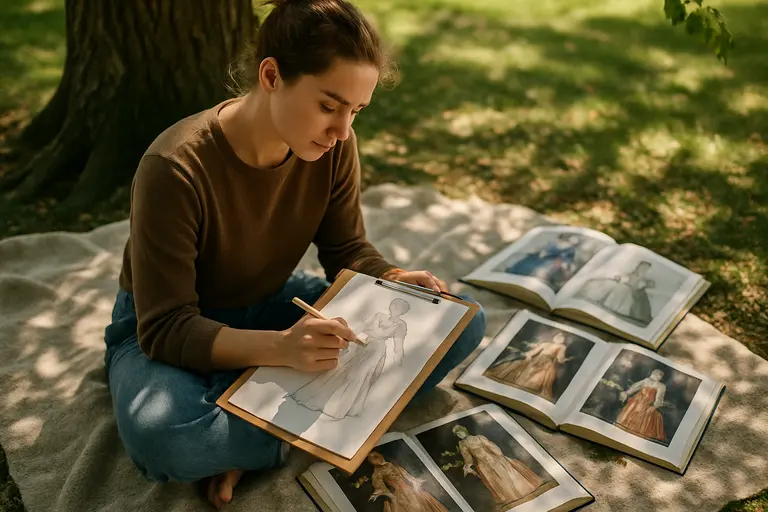
For home dress-up and creator projects, the safest and most respectful approach is to study the structure of the idea rather than reproduce Selkie’s specific garments. The concept can be translated through broad categories: shipwrecked performer, post-collapse storyteller, off-grid circus leader, or romantic survivor. Those roles leave room for original choices while still engaging the literary themes.
- Start with a text-based prompt: choose regret, survival, performance, or cultural memory as the central idea.
- Use contrast: pair one soft element, such as tulle or ribbon, with one protective cue, such as a mock armor panel or heavy belt.
- Keep references general: avoid copying a full runway look, signature garment arrangement, or recognizable branded design.
- Let wearability guide play: children’s and casual dress-up pieces should allow easy movement, safe fastenings, and clear visibility.
This method protects artistic integrity while making space for interpretation. A handmade costume can respond to a literary mood without pretending to be an official piece or a replica. It can also avoid overclaiming influence. If a shell necklace, striped fabric, or corset shape appears in many costume traditions, the meaning comes from how the maker frames the character, not from any single borrowed object.
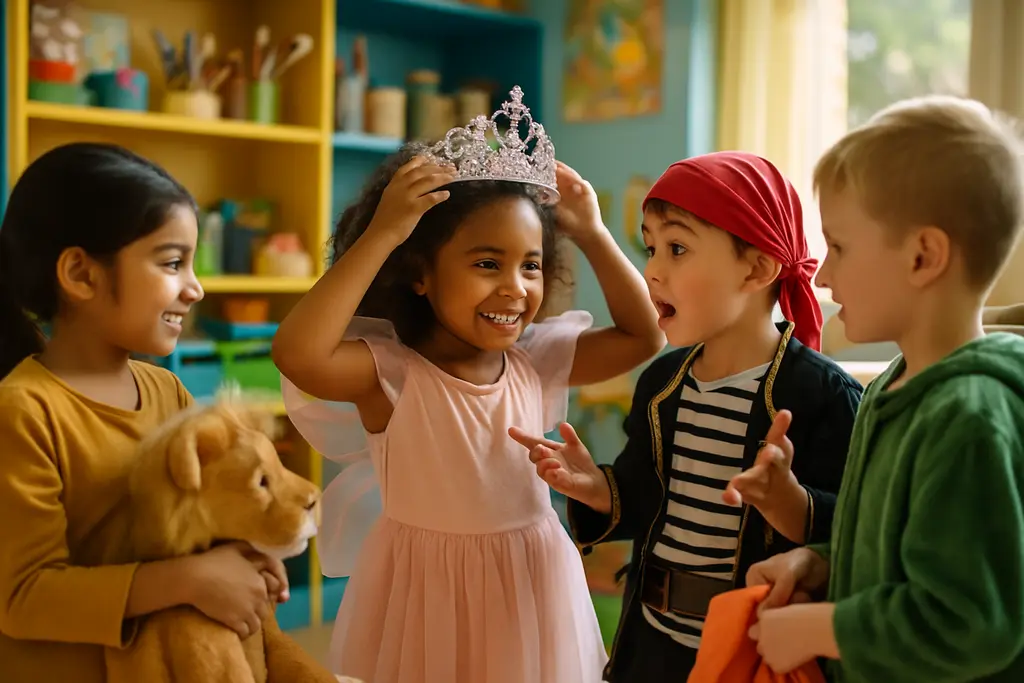
Apocalyptic literary costumes work best in play when the child or wearer has a story to act out. A cloak is not only a cloak; it can be a map, a shelter, or a stage curtain. A patched skirt may imply travel. A paper medallion can stand in for ceremony without relying on specific religious replication. These choices keep fantasy open, accessible, and respectful.
Selkie Fall 2026 Literary Costumes
Selkie’s Fall 2026 show is most convincing as narrative fashion: a staged answer to fear, regret, mockery, and cultural survival. The collection did not treat apocalypse as an end point. It imagined a theatrical group still dressing, performing, and inventing identity after collapse. That idea connects directly to the cited influence of Station Eleven, where art persists after disaster, and to the ghost-ship image of paths not taken.
For literary costume readers, the lesson is not that every dark romantic dress is apocalyptic, or that every pirate motif carries literary depth. The evidence supports a narrower claim: in The Ghost Ship, Selkie used named literary references and a fictional post-collapse premise to push its romantic fantasy into stranger, more gothic territory. Apocalyptic literary costumes became a way to stage endurance through beauty, theatricality, and chosen community.