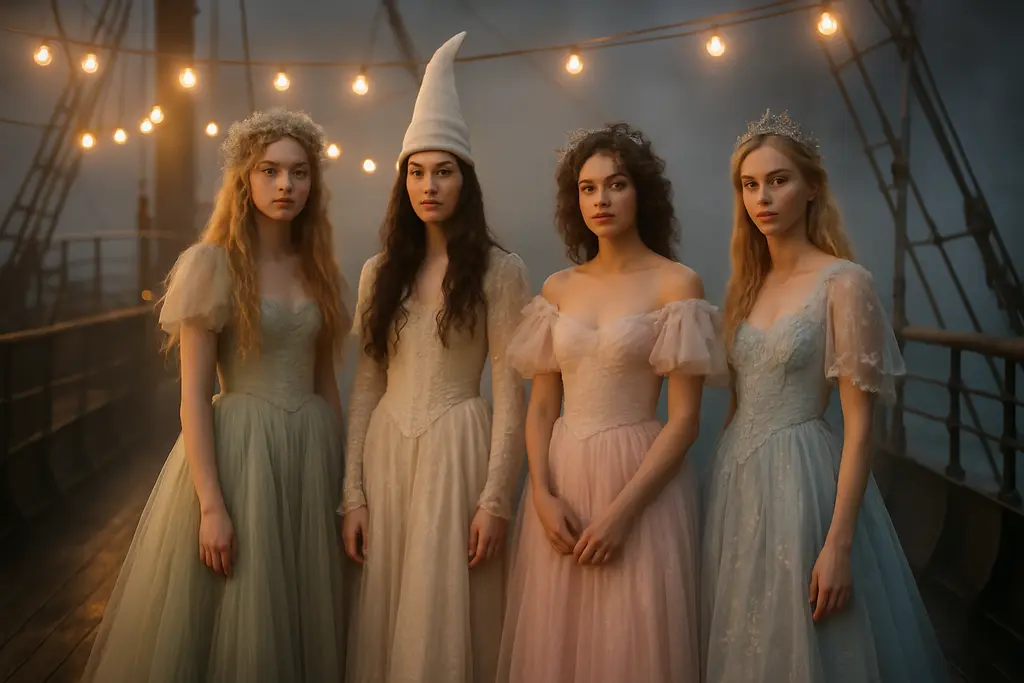
Fairytale Costumes often work best when sweetness is put under pressure. Selkie’s Fall 2026 collection, The Ghost Ship, did that with a darker register than the brand’s usual romantic fantasy vocabulary. As of September 28, 2026, the New York Fashion Week presentation had already taken place, so the useful question is not whether the concept will arrive, but how its visual story functioned after being shown. Fashionista reported that the collection debuted during New York Fashion Week in September 2026, was available immediately through a runway-to-retail model, and used a traveling pirate circus after an apocalypse as its central premise according to Fashionista’s review.
That premise is unusually productive for costume analysis because it gives every ruffle, corset, shell, chain, and oversized accessory a job. The clothing did not simply borrow pirate references or circus exaggeration for surface drama. It positioned dress as a way of surviving cultural wreckage, at least within the story the runway proposed. The result was not a tidy princess fantasy. It was a theatrical situation in which performance, ruin, and self-invention shared the same stage.
Selkie’s Ghost Ship After New York Fashion Week
A Runway-To-Retail Fantasy
The immediate availability of The Ghost Ship matters because it shortened the distance between runway image and consumer dress-up practice. A fantasy collection can stay abstract when it exists only as a staged fashion event. Runway-to-retail changes that reading. It invites viewers to ask which elements are wearable garments, which are styling signs, and which belong mainly to the show’s fictional world.
Selkie’s use of a ghost ship title also gave the collection a literary frame rather than a purely decorative one. The research notes connect Kimberley Gordon’s inspiration to Cheryl Strayed’s 2011 essay “The Ghost Ship That Didn’t Carry Us” from Tiny Beautiful Things and to the novel Station Eleven. Those references support a reading of the collection as post-loss fantasy: not escapism in the simple sense, but an attempt to imagine creativity after damage. That does not mean every garment needs to be read as a direct adaptation of those texts. A cautious reading treats them as influences on mood, structure, and emotional pressure.
The Apocalyptic Feeling
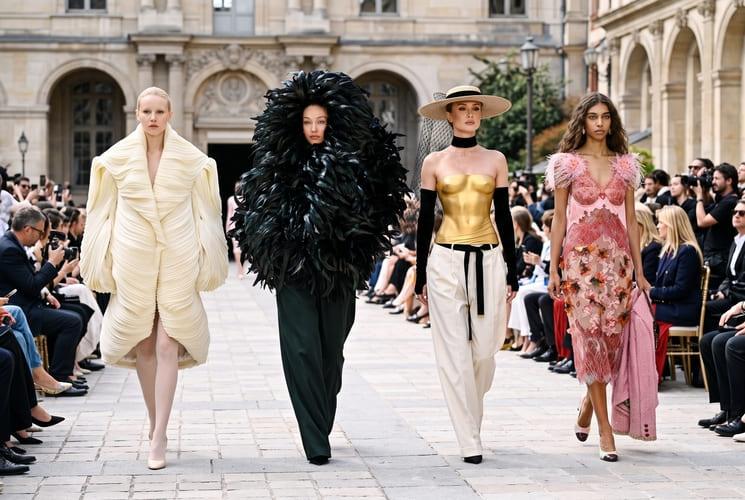
The research describes an “apocalyptic feeling” at the center of the collection. In costume terms, that feeling appeared through contrast: soft gowns and dramatic corsets were set against tougher cues such as armor and chainmail. This is a familiar but effective method in fantasy styling. A garment can signal fragility through float, volume, or romance, then interrupt that softness with a defensive surface. The eye reads both vulnerability and self-protection at once.
That tension is why the pirate circus idea carried more weight than a simple theme-party reference. Pirates suggest outlaw movement, broken rules, ships, spoils, and danger. Harlequin and circus references suggest performance, exaggeration, and public display. After an apocalypse, those references become more pointed. Clothing becomes less about social polish and more about forming a troupe, a role, and a reason to keep appearing in front of others.
How Fairytale Costumes Shape The Narrative
Fairytale Costumes As Survival Theater
Fairytale Costumes are often mistaken for nostalgic prettiness, but Selkie’s Fall 2026 show argued for a harsher use of fantasy. The warrior girls and pirates described in the research were not passive storybook figures. They were performers in a broken world, using theatrical dress as a kind of identity construction. That makes the collection closer to survival theater than to costume-box innocence.
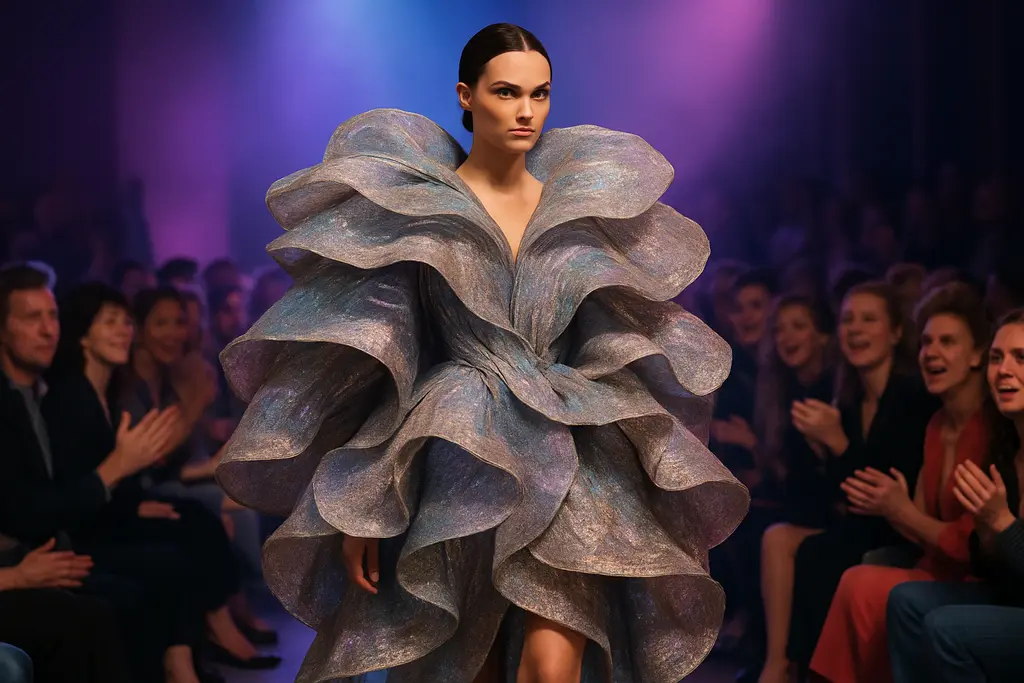
These Fairytale Costumes also depended on layering. Seashells suggested oceanic myth and shipwreck. Chainmail and armor suggested combat or defense. Corsetry implied constraint, posture, and historical romance. Oversized accessories turned the body into a readable silhouette from a distance. None of those signs needs to be reduced to a single meaning. Costume design usually works by accumulation: one motif introduces danger, another introduces comedy, another introduces beauty, and the full look holds them in tension.
Pirate, Harlequin, Armor
The pirate and harlequin references are especially useful because they come from different performance traditions. Pirate dress is often read through adventure fiction and maritime danger. Harlequin imagery points toward theatrical mischief and patterned stage identity. Armor pulls the look toward combat readiness. In one outfit, these references can create productive friction: a character might be charming, unstable, guarded, and playful before speaking a word.
For DIY dress-up, the lesson is not to reproduce a runway look piece by piece. That would risk flattening the original artistic proposal into a checklist. A more respectful approach is to borrow the grammar: pair soft volume with one protective texture, or contrast a romantic neckline with a deliberately theatrical accessory. Anyone building a costume for play, photography, or a small performance can learn from the structure without presenting a copy as an original Selkie design. For readers comparing runway cues with home craft decisions, our piece on Fall 2026 dress-up ideas offers a related approach to proportion and texture.
Materials, Performance, And Body Politics
Inclusive Casting As Story Evidence
The runway story was not carried by garments alone. Vanity Teen described the show as brought to life by deeply inclusive casting that celebrated diverse bodies and identities according to Vanity Teen’s NYFW review. That point matters because fantasy fashion can either narrow who is allowed to appear magical or widen the image of who gets to occupy the story. In this case, the casting supported the collection’s premise: a post-apocalyptic troupe should not look like a single ideal body repeated in different fabrics.
Inclusive casting also changes how corsetry and volume are read. A corset on one body may communicate discipline, another may read as armor, another as theatrical exaggeration. A dramatic skirt can suggest romance, defiance, or comic excess depending on the performer wearing it. The collection’s story gained credibility because the bodies on the runway appeared as participants in the fiction, not as neutral hangers for fantasy objects.
The Contortionist And The Living Stage
The research notes that a flexible performer, described as a contortionist, opened and closed the show on September 15, 2026. That performance detail matters. It framed the presentation as a live act with bodily risk and control, not only as a garment procession. Contortion has a long association with circus spectacle, but here it also echoed the collection’s broader concern with adaptation. A body bends, survives, and reorients itself under pressure.
From a design perspective, performance elements can sharpen a fashion narrative when they are used sparingly. Opening and closing the show with the same kind of act gave the collection a bracketed structure: the audience entered and exited through circus logic. The clothes then existed inside that frame. The danger, for any theatrical runway, is that performance can overwhelm garments. Based on the available reviews, the performer appears to have reinforced the theme rather than replacing the clothes as the main subject.
Dress-Up Lessons Without Copying The Runway
Texture Contrast Over Literal Imitation
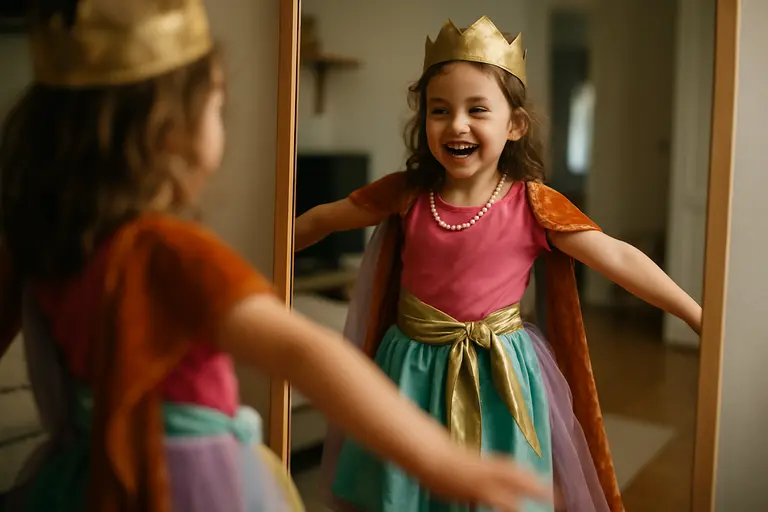
Fairytale Costumes do not require exact imitation to carry a strong story. For home dress-up or small-scale costume building, the most practical Selkie lesson is texture contrast. A soft dress can be paired with a faux-metal belt, a shell-like ornament, or a structured vest. A simple pirate scarf can be made less predictable by adding harlequin geometry or a single oversized accessory. The point is to create a readable character logic, not to duplicate the brand’s styling.
Creators selling handmade costume pieces should be especially cautious. Referencing broad ideas such as shipwreck, circus, armor, or romantic apocalypse is different from presenting work as Selkie merchandise or copying distinctive runway combinations for commercial confusion. This is not legal advice, but a practical ethics note: respect the original collection’s authorship, avoid implying affiliation, and build a separate design identity. For simple dress-up storage, craft planning, or related family costume resources, Shimply offers practical inspiration.
Why Children’s Dress-Up Benefits From Tension
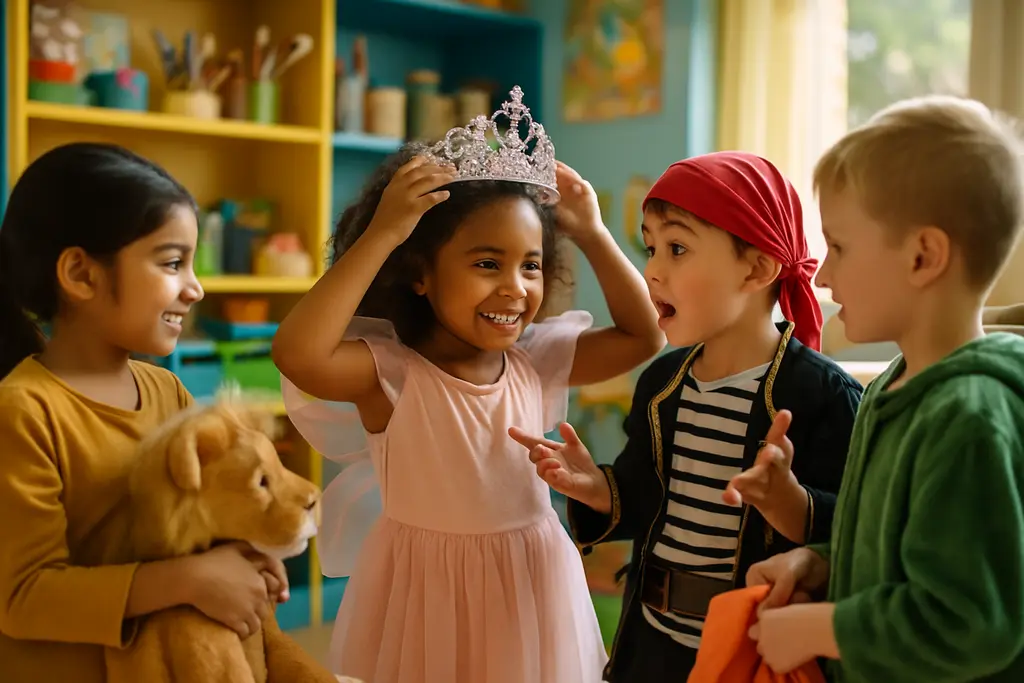
Although The Ghost Ship is an adult fashion collection, its storytelling logic can help adults think about dress-up play. Children often understand costume through contrast: soft and strong, silly and brave, lost and heroic. A pirate circus after collapse may sound dark, but the underlying play pattern is recognizable. A child chooses a role, adds signs of power or comedy, and tests a feeling in a safe setting.
The adult task is to keep that play open rather than overly scripted. A shell does not need to mean mermaid. A cardboard cuff does not need to mean battle. A striped sleeve does not need to announce a single character. The best costume boxes allow parts to move between stories. Selkie’s Fall 2026 collection, read carefully, supports that idea: fantasy is strongest when it leaves room for change.
Fairytale Costumes And The Ghost Ship’s Afterlife
The lasting value of The Ghost Ship is its refusal to treat fantasy as comfort alone. It used shipwreck, circus, armor, corsetry, and romantic volume to picture a group of performers making beauty after imagined collapse. That is a darker proposition than a ball gown fantasy, but it is also more flexible. It lets fashion hold anxiety and pleasure in the same silhouette.
For dress-up culture, Fairytale Costumes can take one careful lesson from Selkie’s Fall 2026 show: the story improves when opposites are allowed to coexist. A costume can be pretty and defensive, comic and mournful, handmade and theatrical. The strongest reading of the collection is not that everyone should dress as a pirate circus survivor. It is that fantasy dress can acknowledge uncertainty without giving up creative joy.