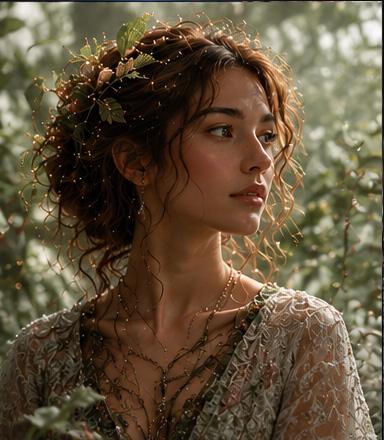
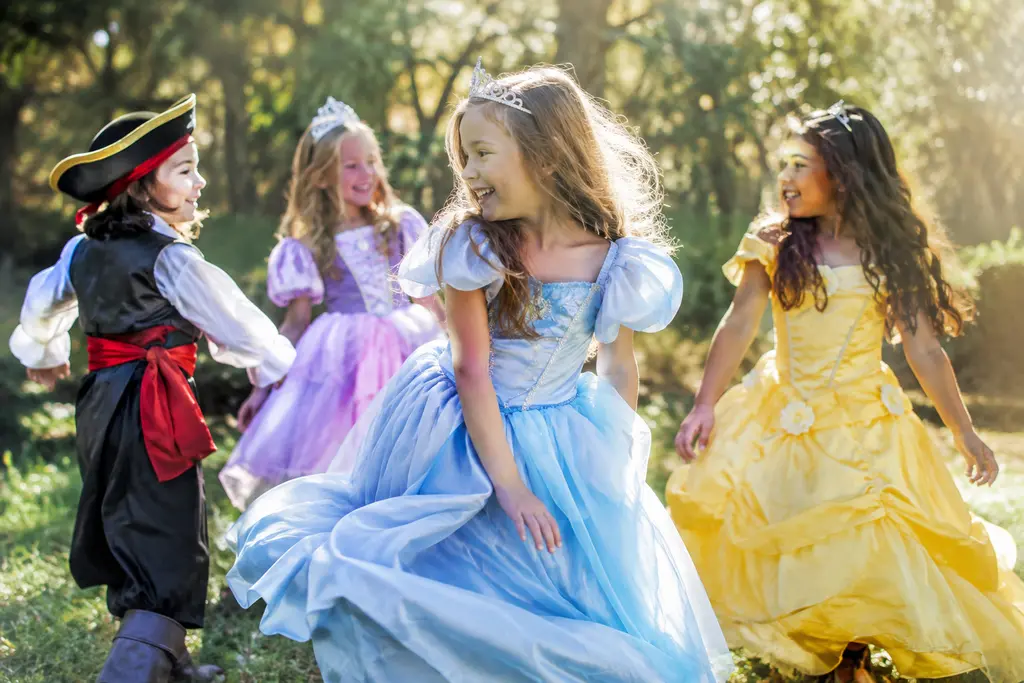
Fairytale Costumes gained a darker, salt-stained vocabulary in Selkie’s The Ghost Ship, which debuted on September 17, 2026, during Fall/Winter 2026 New York Fashion Week and opened for purchase on the same day, according to Odalisque. That runway-to-retail timing matters because the collection did not function only as theatrical image-making. It also asked whether fantasy dress, inclusive sizing, and retail immediacy can share the same stage without reducing costume language to novelty.
Fairytale Costumes As Runway Evidence
Fairytale Costumes And The Ghost Ship Premise
Selkie’s presentation took place in September 2026 at Studio 525 in Chelsea, New York City, where Creative Director Kimberley Gordon shaped an immersive setting that blended apocalyptic pirate, circus, and folklore themes, as documented by Studio 525. The phrase “ghost ship” carries familiar literary and theatrical weight: a vessel removed from ordinary time, populated by figures who seem half lost, half self-invented. In this collection, that premise supported a wardrobe of pirate imagery, harlequin prints, armor-like corsetry, chain mail elements, theatrical silhouettes, ocean shells, and exaggerated accessories.
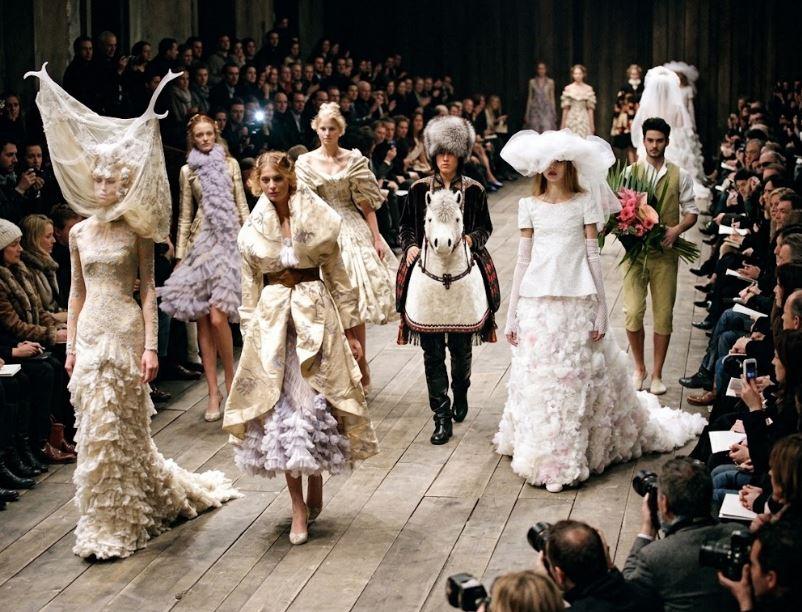
The strongest reading is not that Selkie simply placed costume signs onto ready-to-wear. The presentation appeared to organize clothing around a character system. Pirate references suggested outlaw motion. Harlequin marks introduced circus instability. Corsetry and chain mail brought the body into a guarded posture. Shells and ocean cues kept the story near wreckage, tide, and myth. These references are familiar, but their combination gave the collection a coherent theatrical grammar rather than a single-source costume quotation.
The Runway-To-Retail Test
The same-day release created an unusual pressure point. Runway fantasy often relies on distance: viewers see a look as image, then wait for edited retail versions. Here, the audience encountered a more direct proposition. The spectacle and the shopping window arrived together on September 17, 2026. That does not prove commercial success, and cautious criticism should avoid unsupported claims about demand. It does show that Selkie framed the collection as wearable fantasy from the start, not as a closed performance artifact.
Pirate Circus Motifs And Literary Mood
Harlequin Print, Armor, And Sea Detail
The pirate-circus mix works because both traditions depend on disguise, risk, and controlled exaggeration. A pirate silhouette can signal defiance through volume, boots, belts, and improvised-looking layers. A harlequin print introduces repetition, contrast, and comic unease. Armor-like corsetry changes the emotional temperature again, asking the garment to protect the wearer while still performing vulnerability. In Selkie’s collection, these codes sit close to fairytale logic: the wearer seems ready for shipwreck, masquerade, rescue, or refusal.
That last word matters. Costume criticism can become too enchanted with surface. The more convincing reading here is agency. Clothing that references circus, battle, and folklore can make the body look ornamental, but it can also make the body look prepared. The Ghost Ship’s scale, accessories, and theatrical silhouettes suggest not passive princess costuming, but a cast of figures who have survived some kind of storm and chosen spectacle as evidence of survival.
Beauty Styling As Character Framing
Odalisque reported hairstyling led by Linh Nguyen in partnership with Cutler Salon and Redken, with makeup by Alexandra French in collaboration with Urban Decay. The described “ghost clown porcelain doll” direction included luminous matte skin, circular blush, painterly eyes, sharp double-wing liner, and softly bitten lips. This beauty framework sharpened the collection’s ambiguity. Porcelain doll references can risk sweetness, but the ghost clown phrase unsettles that sweetness. The face becomes theatrical, not merely pretty.
For a site concerned with literary dress, the styling reads like punctuation. The garments supplied the plot; the makeup gave each figure a grammar of mood. Circular blush recalled stage artifice. Double-wing liner added severity. Softly bitten lips kept the character from becoming purely mask-like. The result, based on the reported styling, was a set of looks balanced between doll, performer, castaway, and mythic survivor.
Inclusive Sizing, Agency, And Caution
Range Without Overclaiming
The collection was reported as sized from XXS to 6X, described in the research as Selkie’s broadest size range to date. That range is significant within fantasy fashion because costume-coded clothing often becomes exclusionary through fit, price, or limited grading. Fairytale Costumes here are connected to a wider body range than the narrow sample-size framework associated with many runway images.
Still, inclusive sizing should be analyzed carefully. A size range is not the same as universal access, comfort, affordability, or fit consistency across all bodies. Without verified sales data, return data, or wearer testimony from a representative sample, the responsible claim is narrower: the collection was offered across a broad labeled range. That alone is worth noting, especially because fantasy dress is often treated as aspirational rather than materially available to different wearers.
Performance Without Flattening Meaning
The research notes that the show opened with a contortionist walking the runway. Since that detail comes from a source outside the approved citation list, it is best treated here as a reported presentation element rather than a fully expanded critical claim. If accurate, the choice would fit the collection’s interest in performance as agency: a body bending, controlling, and staging its own limits before the clothing narrative unfolds.
That idea also helps protect the collection from a shallow “dress-up” reading. Fantasy fashion is sometimes dismissed as escapism. Yet costumed presentation can be a disciplined visual argument. Selkie’s cited themes—apocalyptic pirate, circus, and folklore—do not erase seriousness. They create a symbolic structure for fear, play, resilience, and self-display.
Playroom Storage Lessons From The Ghost Ship
Sorting Costume Drama By Function
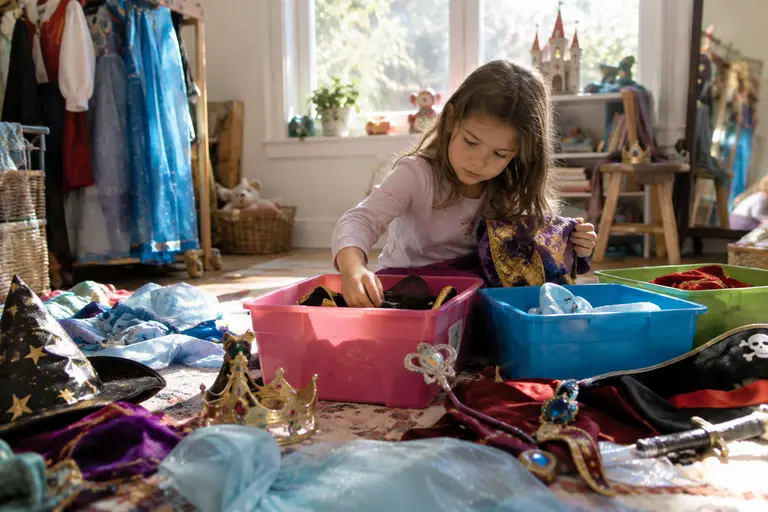
Families can borrow one useful lesson from this runway: sort dress-up garments by function rather than by vague theme. Fairytale Costumes can be grouped into movement pieces, character pieces, and fragile pieces. Capes, scarves, and soft skirts belong in low bins children can reach. Crowns, masks, cuffs, and shell-like accessories need divided trays. Structured bodices, delicate tulle, or anything with stiff decorative parts should hang or rest flat where crushing is less likely.
- Movement bin: washable skirts, capes, sashes, scarves, and soft pirate layers.
- Character tray: hats, crowns, cuffs, belts, toy telescopes, and pretend coins.
- Care shelf: fragile wings, structured collars, beaded pieces, and heirloom dress-up items.
This approach respects children’s play while reducing damage. It also teaches that costume is not clutter; it is a material library of roles, textures, and stories. Readers tracking related creative resources may find valuable insights from Kay Granger, a related site in the same network. For a companion analysis focused more directly on Selkie’s Fall 2026 presentation, see this reading of Selkie’s Fall 2026 show.
Fairytale Costumes After The Ghost Ship
What The Collection Leaves Us With
The Ghost Ship is most persuasive when viewed as a study in controlled theatrical contradiction. It used pirate danger, circus pattern, doll-like beauty, and sea-wreck romance without relying on a single fairytale source. That distinction protects artistic integrity. The collection did not need to imitate one known heroine or reproduce a familiar story scene. Instead, it worked through atmosphere: ship, stage, armor, shell, blush, and shadow.
As of November 3, 2026, the collection had already debuted and entered its retail phase, so it should be discussed retrospectively rather than as an approaching NYFW event. Its strongest contribution to Fairytale Costumes is the argument that fantasy fashion can be size-aware, commercially immediate, and visually strange at the same time. The caution is equally clear: without fuller public data, critics should not inflate the collection into proof of a market shift. What can be said with confidence is that Selkie staged a coherent costume world, then placed that world close to the wearer.