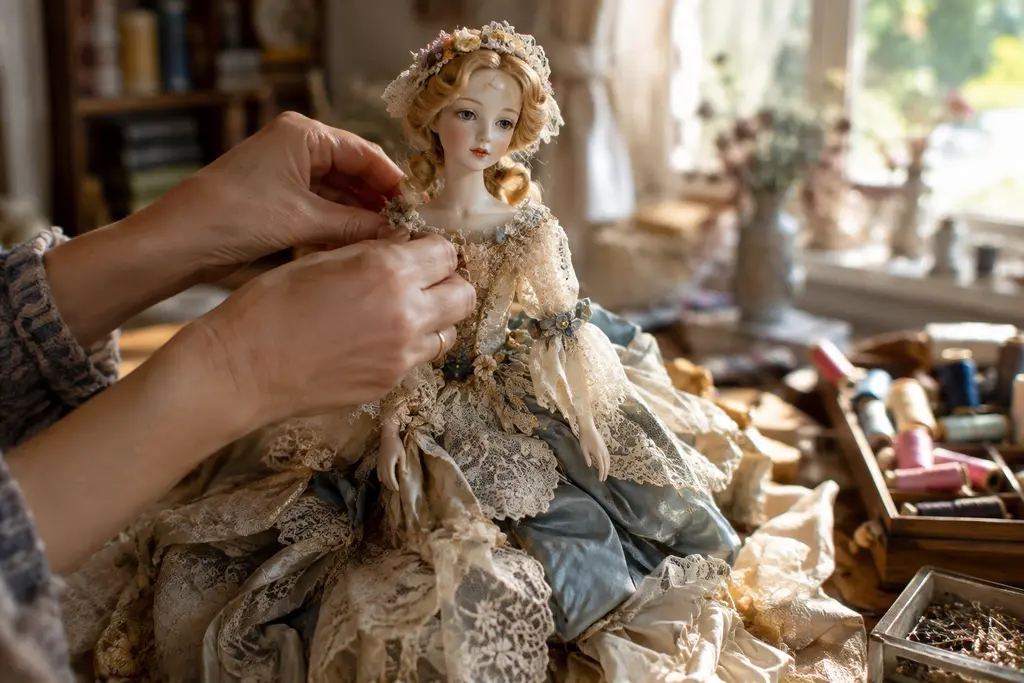
The phrase Doll Dressing costumes sounds playful, but at The Museum at FIT it becomes a serious design question: how does fashion change when the body is imagined as doll, paper figure, miniature model, fantasy icon, or staged self? Doll Dressing has been on view at the Museum at FIT in New York since September 16, 2026, and runs through January 3, 2027; the museum states that it presents more than 170 objects, including fashion dolls, full-size garments, accessories, videos, and artworks from the 18th century to the present Museum at FIT. For fairytale costume readers, the exhibition is useful because it does not treat the doll as a simple toy. It treats the doll as a design problem involving scale, identity, gesture, surface, and control.
That distinction matters. Fairytale dress often relies on heightened proportion: the too-perfect bow, the bell-like skirt, the tiny shoe, the exaggerated sleeve, the body that appears almost made rather than merely clothed. The exhibition’s doll framework gives those features a way to be studied without claiming that every ruffle or bow is automatically fairytale-coded. A cautious reading is more productive: doll aesthetics and fairytale aesthetics often meet through artifice, theatrical posture, and a refusal of ordinary scale.
Doll Dressing Costumes As Scale Studies
Doll Dressing Costumes And Miniature Logic
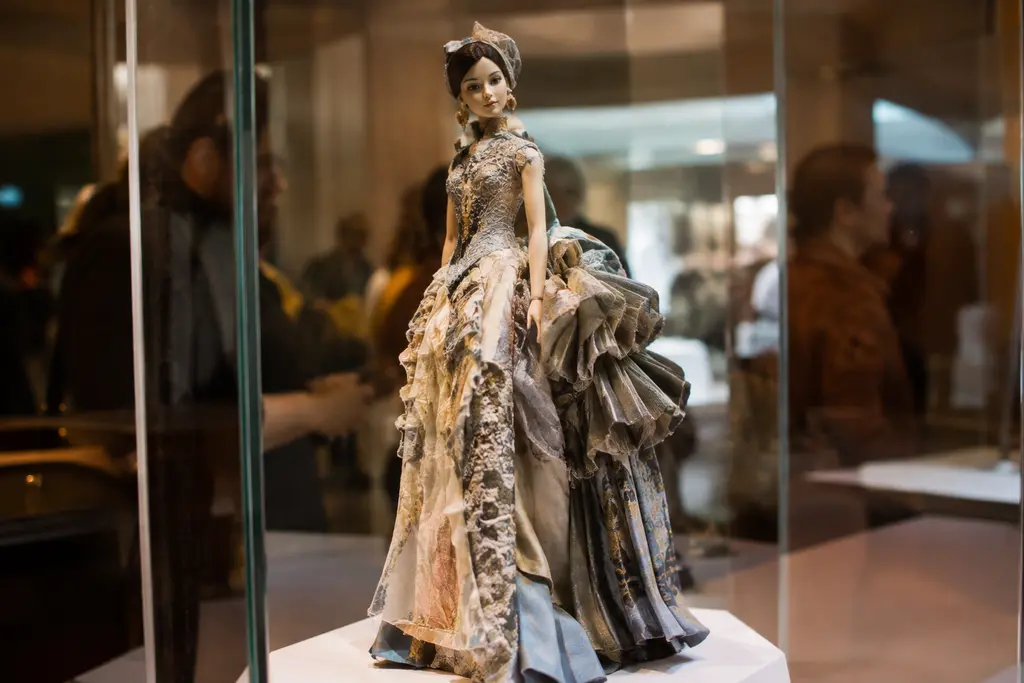
One of the exhibition’s strongest costume design lessons comes from scale. The Museum at FIT identifies a section titled “Fashion Doll Foundations,” which traces how 18th-century dolls were used as miniature fashion models that circulated couture designs among dressmakers. That history gives the exhibition a practical foundation: dolls were not only objects of fantasy; they could operate as three-dimensional carriers of fashion information. In a fairytale costume context, this makes the doll less passive. It becomes a tool for imagining how a silhouette reads before it is made full size.
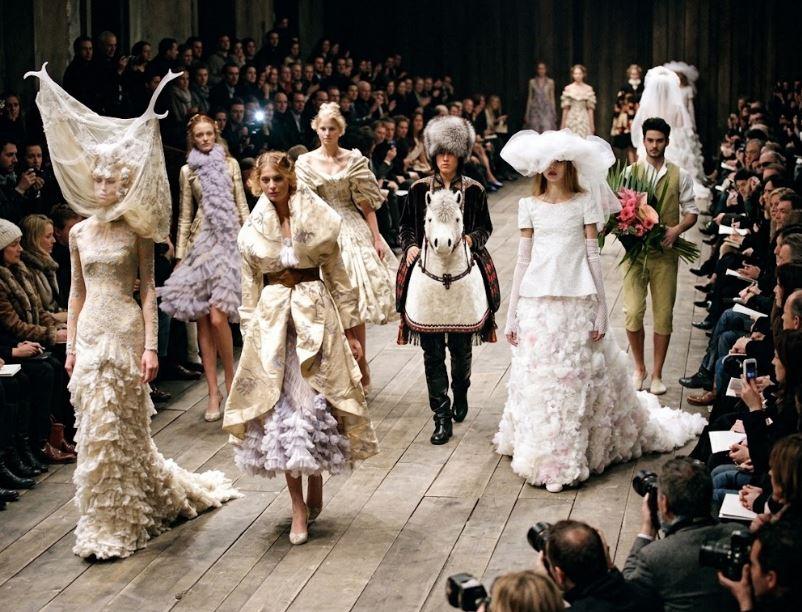
The “Modes in Miniature” section, as described in the museum’s materials, pairs runway looks with doll-scale counterparts by contemporary designers including Anna Sui, Jason Wu, and Emily Adams Bode Aujla. The design interest is not only cuteness. Miniaturization exposes construction choices. A sleeve that seems soft at human scale may become sculptural at doll scale. A bow that reads decorative on a runway garment may become structural when reduced. Doll Dressing costumes ask viewers to notice these shifts rather than flattening them into nostalgia.
Paper-Doll Edges And The Flat Garment
Paper dolls add a different kind of costume logic. Harper’s Bazaar reports that the exhibition includes Claire McCardell’s 1956 paper-doll illustrations by Whitman, along with trompe-l’oeil fashion pieces that mimic paper-doll effects by Jeremy Scott for Moschino and Jun Takahashi for Undercover Harper’s Bazaar. This is a sharp bridge between illustration and dress. The paper-doll tab, the flat outline, and the graphic border all remind us that costume can point back to drawing.
Fairytale costume design often begins with a silhouette that could almost be cut from a page: a cape, a pinafore, a court dress, a hood, a stiff collar. Paper-doll references intensify that relationship. They turn clothing into an image of clothing, asking the viewer to recognize both the garment and the fantasy of fastening it onto a body. That is a subtle but powerful distinction. The costume is not only worn; it is selected, posed, and displayed.
Fairytale Codes Without Literal Retelling
Fragility, Ornament, And Performance
The exhibition’s fairytale relevance does not require a literal princess dress or named storybook character. Research notes on the show point to sections such as “All Dolled Up” and “Broken Dolls,” where flapper, dolly bird, Lolita, horror, and grunge-inflected doll archetypes appear through design features such as lace, ruffles, bows, fragility, and altered proportion. These are not neutral details. In costume design, a bow can infantilize, sharpen, parody, or ritualize a look depending on placement and scale. Lace can suggest delicacy, mourning, ceremony, or theatrical excess.
For a curator of fairytale dress, the most useful reading is restrained. The exhibition does not need to prove a single fairytale source to show fairytale-adjacent design behavior. It shows how garments can construct the “living doll” effect through hair, makeup, posture, accessories, and surface. That effect has long belonged to stage, fashion, photography, and costume play. It can be beautiful, unsettling, comic, or critical. The most interesting designs often hold more than one of those moods at once.
Representation Against The Standard Doll
The exhibition also addresses identity and representation through objects named in the museum’s materials, including a 1980 Black Barbie by Kitty Black Perkins, Black Dolls Matter dolls, and Conner Ives’s “Protect the Dolls” trans-affirming T-shirt. This matters for fairytale costume analysis because doll ideals have often been narrow. Hair texture, skin tone, body age, gender presentation, and beauty standards shape who is imagined as magical, desirable, fragile, heroic, or collectible.
Costume design can repeat those limits, but it can also question them. The presence of these objects positions doll fashion as a site where representation is not decorative; it is part of the design argument. A fairytale lens should not erase that. If the doll can be a fantasy body, the exhibition asks whose fantasy is being staged and who gets to control it.
Playroom Order For Doll-Inspired Dress-Up
Storage That Respects Costume Design
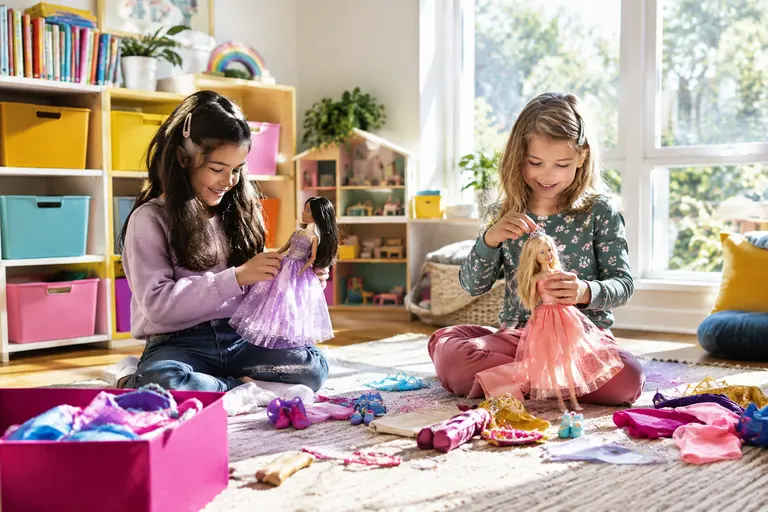
For families and educators, the exhibition offers a practical lesson: dress-up clothing benefits from being treated as design material rather than clutter. Capes, doll dresses, paper crowns, fabric cuffs, and small accessories last longer when sorted by type and stored where children can see the choices. Open bins can hold soft textiles; shallow trays can hold tiaras, gloves, bows, and doll-scale props; hangers can protect garments that crease easily.
This is not about making play rigid. It is about making selection easier. A child who can find a cape, a sash, and a pair of soft shoes can build a costume narrative without emptying every container. For makers, Doll Dressing costumes point toward proportion-first play: one oversized bow, one crisp apron, or one dramatic collar can suggest a whole character without copying a protected character design. A related set of cautious making ideas appears in these DIY dress-up notes, while broader household sorting habits can be paired with practical inspiration from Shimply, a related site in the same network.
Rotation Instead Of Excess
A playroom does not need an overflowing costume chest to support imaginative dress. Rotation can work better. Keep a small set of seasonal or story-based materials available, then store the rest. A winter group might include velvet scraps, pale ribbons, mittens, and a hood. A garden group might include aprons, floral headbands, soft wings, and green scarves. The point is to support combination, not to prescribe a finished character.
- Sort garments by function: capes, skirts, tops, headpieces, hand props, and doll accessories.
- Keep delicate lace, paper pieces, and small bows in low trays rather than deep bins.
- Use labels with simple drawings for children who are not reading yet.
- Retire damaged pieces for repair before they become frustrating during play.
This approach respects the same design issues the exhibition raises: scale, gesture, and selection. A paper crown and a doll dress are small objects, but they can organize a whole performance.
Doll Dressing Costumes In Fairytale Practice
What The Exhibition Lets Us Say Carefully
Doll Dressing costumes are most useful to fairytale costume study when they are read as systems rather than isolated pretty objects. The exhibition supports several careful claims: dolls have carried fashion information, miniature garments can expose design decisions, paper-doll references connect dress to illustration, and doll aesthetics can both repeat and challenge ideals of beauty and identity. Those claims are grounded in the exhibition’s stated objects and sections.
The fairytale influence, then, is not a single source line from story to garment. It is a shared design grammar: scaled bodies, staged gestures, ornate surfaces, symbolic accessories, and controlled display. The Museum at FIT’s exhibition gives that grammar enough historical and visual structure to study it without reducing it to whimsy. For costume lovers, that is the real value: the doll becomes a lens for seeing how fantasy dress is built, posed, questioned, and cared for.