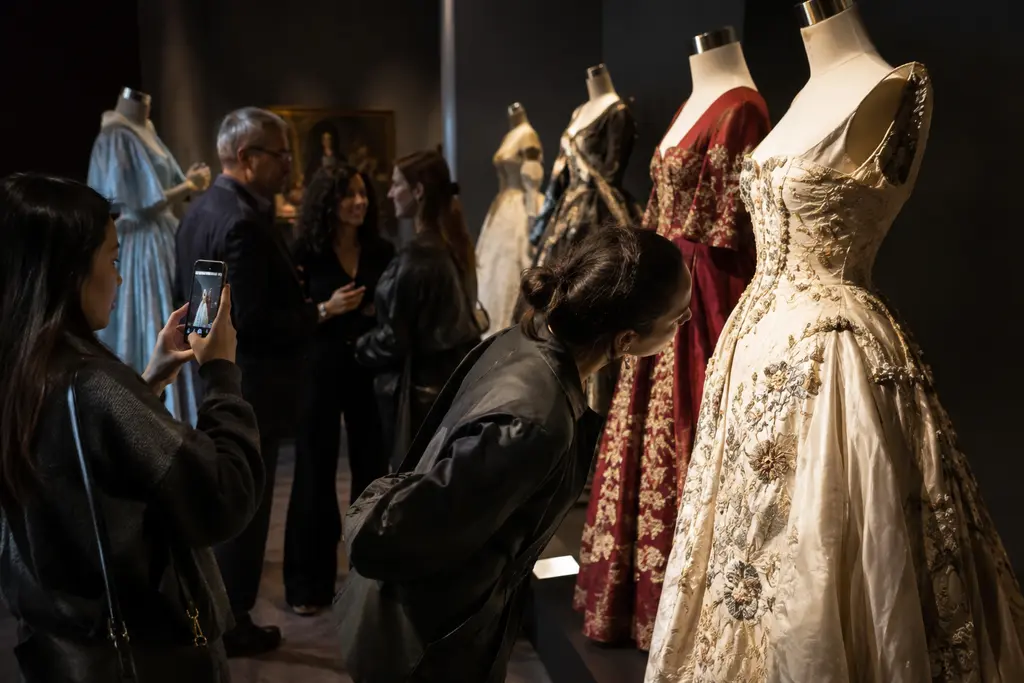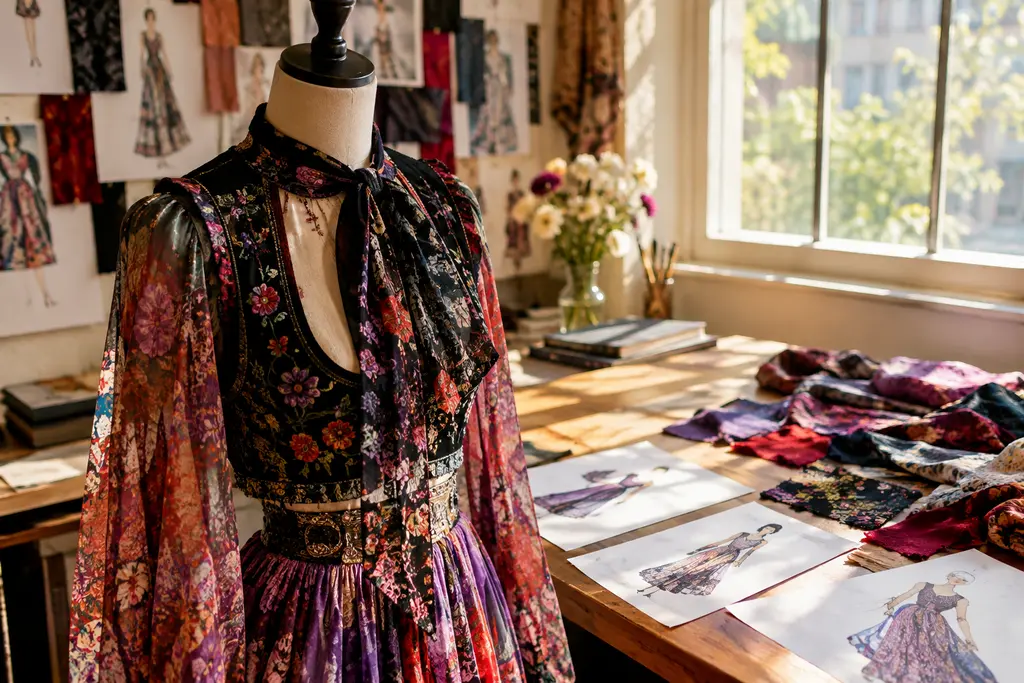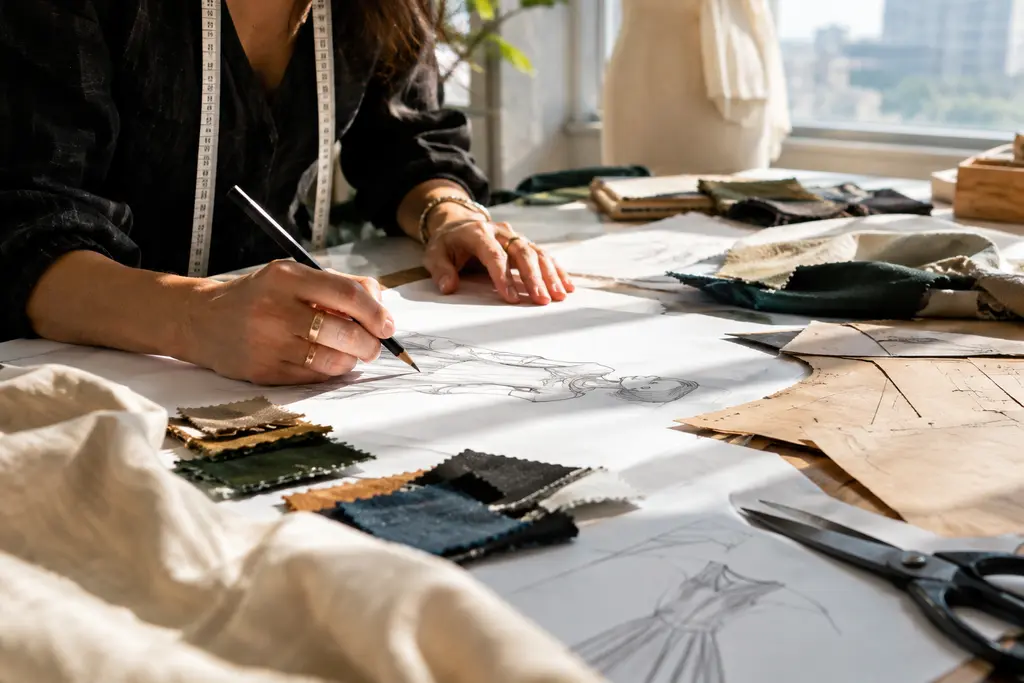

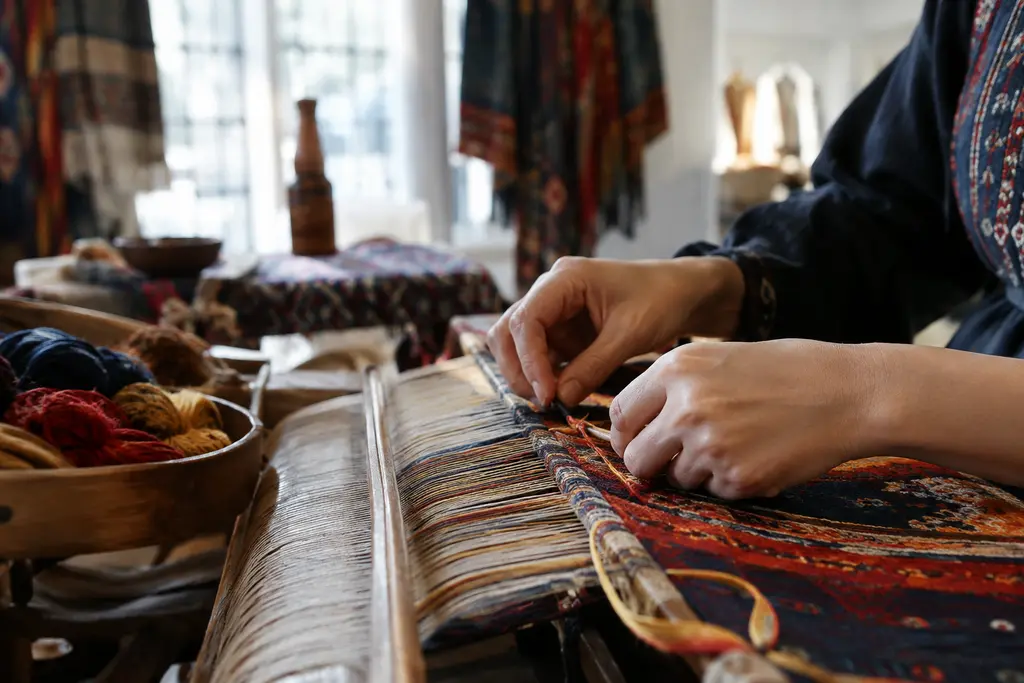
Textile Alchemy craft is best understood as a study of how material intelligence becomes fashion language without reducing cloth to decoration. Textile Alchemy: The Art of Reiko Sudō & NUNO opened at LACMA on September 20, 2026, and runs through March 7, 2027, in the Resnick Pavilion; LACMA describes it as the largest retrospective of Sudō’s textiles to date, with over 100 limited-edition textiles shown alongside sketches, raw materials, tools, mock-ups, and prototypes LACMA exhibition details. That format matters for fashion brands because it shifts attention away from finished surface alone and toward the chain of decisions that makes a textile possible.
For a fashion reviewer, the most useful lesson is not that brands should imitate NUNO’s visual effects. That would flatten the artistic integrity of Sudō’s work and ignore the local craft networks behind it. The stronger lesson is procedural: research the material, test its limits, respect the hands that make it, and let evidence from the cloth guide the design. In that sense, this exhibition is not simply a museum display about fabric innovation. It is a record of disciplined curiosity.
Textile Alchemy Craft At LACMA
Why Textile Alchemy Craft Reads As Process
The exhibition’s inclusion of design sketches, raw materials, tools, mock-ups, and prototypes is more than archival padding. Those objects show that the textile is not an isolated artifact; it is the visible end point of drawing, sampling, stress testing, failed trials, and repeated adjustment. For fashion brands, this is a direct challenge to the common marketing habit of presenting fabric as mood. NUNO’s work, as framed here, asks viewers to read fabric as engineered behavior.
That behavior can include lightness, opacity, fold, abrasion, translucency, stiffness, collapse, or controlled irregularity. The research supplied for the show points to rust-dyed rayons, feathers encased in silk organza, metals sputtered onto fabrics, upcycled plant-fiber weaves, and acid burnout treatments. Because those examples involve specific physical interventions, they resist vague claims about inspiration. They show that Sudō’s practice can be discussed through methods and material results, not only through atmosphere.
The Retrospective As A Brand Archive
NUNO has never operated as a conventional fashion label built around seasonal runway spectacle alone. Reiko Sudō has led NUNO since its founding in 1984 and became creative director in 1987 after Jun’ichi Arai left, according to Vogue’s exhibition coverage Vogue on Sudō and NUNO. That long timeline helps explain why the LACMA retrospective reads as a brand archive as much as an art exhibition. It traces a sustained design position rather than a single trend cycle.
The reconstructed footprint of NUNO’s original 1984 Roppongi shop strengthens that reading. The shop was a Tokyo basement space that served as a meeting place for designers, architects, artists, and writers, based on the research notes. This does not make every textile a collective artwork in a simple sense, but it does show how the brand cultivated conversation as part of design culture. For small labels and handmade sellers, that is a useful distinction: community can inform a practice without becoming a shortcut for authorship.
Sources Of Inspiration And Material Discipline
Mottainai As A Design Constraint
Sudō was born in 1953 in Ishioka, Ibaraki Prefecture, where early exposure to the Japanese concept of mottainai, often rendered as “don’t waste,” shaped her sustainable design sensibility. In fashion terms, that is not a slogan about being green. It is a constraint that affects what materials are kept, how remnants are reconsidered, and how a designer justifies intervention. A cloth made from upcycled plant fibers does not become persuasive because waste reduction sounds virtuous. It becomes persuasive when the resulting textile has structure, tactility, and a convincing reason to exist.
This is where Textile Alchemy craft offers a useful correction to shallow sustainability branding. The work described in the research notes does not rely on moral language alone. It pairs conservation-minded thinking with craft testing. For independent makers, that distinction is significant. A remnant-based design still has to perform as an object: it must hold shape, survive wear or display demands, and carry a visual argument that is more specific than “rescued material.”
Regional Industry Without Costume Quotation
The exhibition’s research context links Sudō’s inspiration to traditional crafts and regional industries, including weaving, dyeing, and silk production in places such as Isesaki, known for ikat-patterned silk since the Edo period. The key point is restraint. Regional reference does not need to become costume quotation. In NUNO’s case, the evidence points to older techniques being pulled into new conditions: spandex folded like origami, metal-based weaves adapted from industrial processes, and organzas recalling jellyfish through gel or paste and heat treatments.
That approach is relevant for fashion brands working with heritage codes. Referencing a craft tradition carries responsibility, especially when the maker is not part of the community that developed it. The better practice is to name sources clearly, avoid passing inherited knowledge off as private genius, and work with skilled artisans where the project requires their expertise. This theme is echoed across related arts and fashion writing, which often emphasizes the need for specificity and credited contributions to create credible influence.
Fashion Brand Lessons From NUNO

Why Experiment Needs Proof
Many fashion brands like the language of experiment, but the LACMA presentation suggests that experiment needs proof. A rust-dyed rayon or a metallic sputtered textile carries risk because the process may affect hand, drape, surface, and durability. A feather sealed in organza changes the cloth’s optical and tactile behavior. Acid burnout alters structure by removing material rather than adding ornament. These are not merely “special effects.” They are decisions that must be judged by how the cloth behaves.
That is the practical value of Textile Alchemy craft for contemporary labels. It shows that experimental material development can be poetic without becoming vague. A maker does not need access to the same workshops or technologies to learn from the method. A smaller studio can document swatches, note wash tests where relevant, compare fiber blends, and record why one treatment was rejected. That kind of evidence builds trust with buyers and avoids overclaiming.
Collaboration Without Erasing Labor
The research notes describe collaboration as central to NUNO, involving independent artisans and workshops across Japan, regional dyeing and weaving industries, and many hands in production. Some artisans are described as octogenarians in the notes, a detail that signals both expertise and vulnerability within craft knowledge systems. Since that claim comes from research outside the two cited authority links, it should be treated cautiously, but it still aligns with a broader point supported by the exhibition’s focus on process: textiles are rarely the work of a single isolated hand.
Fashion brands can learn from that without making sentimental content out of artisans. The ethical move is to credit collaborators, explain the process at a level the maker is comfortable sharing, and avoid implying that traditional knowledge exists only to refresh a brand’s image. A useful parallel appears in discussions of handcrafted fashion and human authorship, where visible skill is treated as evidence rather than a decorative claim.
Textile Alchemy Craft For Fashion Brands
The LACMA Curtain Commission As A Cautionary Model
One of the most interesting facts in the research notes concerns a major architectural commission: custom “sputtered chrome” metallic fabrics, in matte and gloss versions, were developed as curtains for LACMA’s new Peter Zumthor-designed David Geffen Galleries. The stated function was to help protect artwork from light while preserving transparency. Even without expanding beyond the supplied research, that fact shows how cloth can operate between fashion, architecture, and conservation needs.
For brands, the lesson is not to claim museum-grade performance without testing. The lesson is to ask better questions at the start of development. What must the fabric do besides look distinctive? Does it need to filter light, retain volume, breathe, shimmer, resist fray, collapse softly, or hold a fold? Textile Alchemy craft makes clear that the most persuasive fabric stories begin with function and material behavior, then move toward image.
A Respectful Path For DIY And Seller Culture
DIY dress-up culture can take inspiration from the exhibition without copying Sudō’s textiles or presenting lookalike work as NUNO-adjacent merchandise. A respectful approach would study categories of thinking: waste reduction, collaborative skill, regional research, sample testing, and the tension between old techniques and new materials. That keeps the reference analytical rather than extractive.
For sellers, the safest creative brief is to build original textiles from one’s own tests and disclose the process honestly. A handmade accessory might explore layered organza, plant-fiber remnants, or controlled metallic accents, but it should not trade on NUNO’s name, reproduce a recognizable textile, or imply endorsement. The exhibition’s strongest message for fashion commerce is disciplined authorship: know what the material is doing, know who contributed to it, and let the cloth carry evidence of thought rather than borrowed prestige.