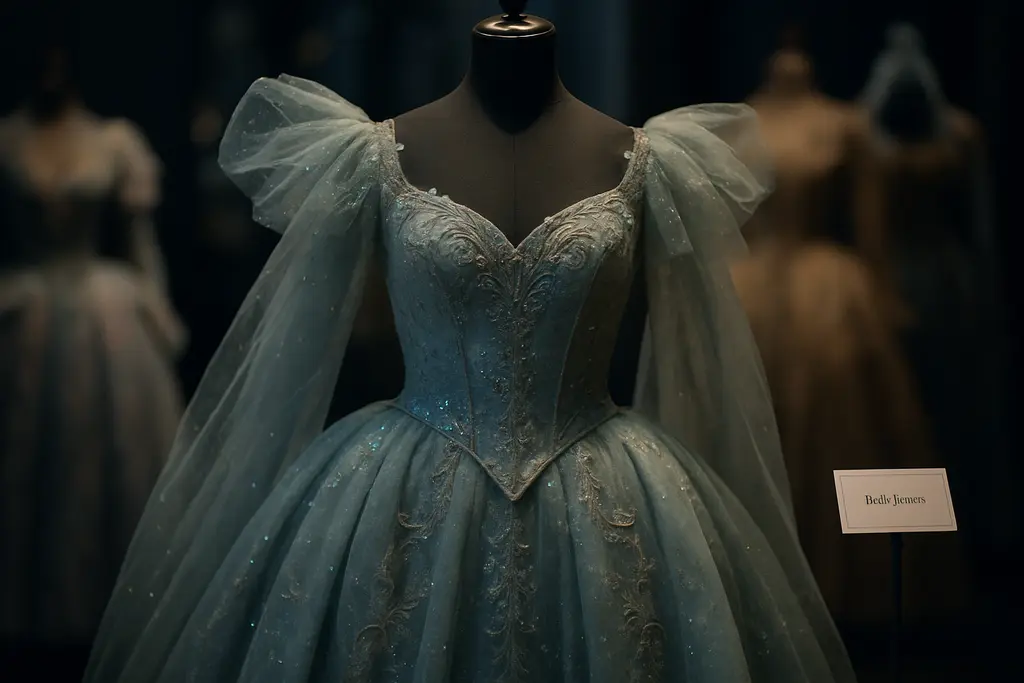
Fairytale Costumes at MoCA Long Island’s Dis-dressed exhibition are best read as symbolic garments rather than literal storybook dress. As of October 14, 2026, the exhibition has opened: it runs from October 3 through December 6, 2026, at MoCA L.I., and its stated focus is clothing, adornment, and the body as carriers of memory, identity, ritual, vulnerability, and transformation, according to the Discover Long Island listing. That framing matters. It keeps the work close to costume culture while resisting the simpler category of fantasy fashion display.
Exhibition Frame And Dates
Dis-dressed is a multi-artist exhibition, so any reading of its costume references needs caution. The show does not appear, from the available listing, to be organized as a fairytale exhibition in the narrow sense. Instead, its garments and body forms suggest fairytale logic through ritual, disguise, memory, and symbolic identity. Those elements are familiar to literary dress: a cloak that hides a child, a crown that marks a burden, a gown that signals passage from innocence into social expectation.
The exhibit’s title also points to removal and exposure. To be “dressed” can imply protection, rank, ceremony, or performance. To be “dis-dressed” can suggest vulnerability, a body placed under pressure, or clothing made strange. That tension gives the show its strongest connection to costume analysis. Garments are not treated as simple decoration. They appear as carriers of loss, protection, faith, and invented identity.
Why Fairytale Costumes Resist Literalism Here
Fairytale Costumes in this context do not need wings, glass slippers, or named princesses. The fairytale charge comes from how dress changes the status of a body. A skeleton may become a saintly figure through beadwork and embroidery. A child’s garment may become remote after being coated in crystalline material. A collage figure may appear part historical, part invented, part theatrical. In each case, dress operates as a threshold between ordinary life and symbolic presence.
Fairytale Costumes As Memory Objects
Melanie Berardicelli’s work, as described in the exhibition information, offers one of the clearest links between costume and remembrance. She hand-fashions, beads, and embroiders ornate garments onto resin-cast skeletal écorchés, drawing on traditions of the Roman Martyrs. The listing also states that her pieces often take about six months to complete. This slow craft process changes the dressed body into an act of devotion rather than a costume worn for display.
The symbolic details are significant: glass beads, gems, sequins, hand embroidery, crowns, swords, and ribcage windows. These are not neutral embellishments. In a fairytale reading, a crown can confer dignity or danger; a sword can signal heroism or sacrifice; a window in the ribcage can make interior feeling visible. The exhibit’s research notes indicate that Berardicelli names figures for heroic people from her life, which places the work closer to mourning ritual than fantasy escapism.
Ritual Dress, Mourning, And Heroic Identity
The show’s costume language is strongest where it treats adornment as ethical attention. Dressing skeletal forms could easily tip into spectacle, but the described process suggests remembrance through labor and naming. Fairytale Costumes often turn anonymous figures into recognized beings: the lost child, the cursed prince, the disguised helper, the saintly victim. Here, that structure appears in an art context, with dress acting as a means of granting identity to figures who might otherwise remain abstract.
Tanya Kaiser’s use of children’s garments and comfort objects extends that concern into childhood memory. The research notes describe her encasing items such as a handmade First Communion gown in sugar crystals. The material shift is sharp: cloth associated with softness, faith, family, and childhood becomes hardened and visually precious, but also less accessible. It is a persuasive image for how memory can preserve and distance an object at the same time.
Collage Scale And Imaginary Bodies
Johanna Goodman’s The Catalogue of Imaginary Beings, begun in 2015, offers another route into costume invention. Her artist statement describes a body of work with more than 400 plates of composite figures that bring together historical images, fabric scraps, contemporary fashion, surrealism, and symbolism; the figures are often female, with some male figures also present, as noted in Goodman’s statement. The result, based on the available description, is not costume as apparel but costume as constructed identity.
Goodman’s figures are useful for reading the exhibit’s broader direction: the body is assembled, not merely clothed. Fabric scraps can operate like narrative fragments. Historical images can create a sense of inherited pose or social role. Contemporary fashion can pull the figure into the present without erasing the older references. The work sits close to surrealist collage, but the costume question remains central because the silhouette does so much of the narrative labor.
Silhouette As A Story Device
In literary design, silhouette is often the first clue. A massive sleeve may imply power before the viewer understands the character. A narrow bodice may imply discipline. A mask may raise questions of secrecy or performance. The exhibit makes Fairytale Costumes feel less like outfits and more like visual sentences. Their meaning comes from proportion, surface, and the chosen distance between body and garment.
For readers comparing museum dress displays, the scale question also links to doll culture and miniature staging; a related reading of doll dressing at the museum shows how reduced or exaggerated bodies can change the meaning of fashion objects. In both cases, costume is not only something to wear. It is a way to build a body that belongs to a story.
What The Exhibit Suggests For Dress-Up Storage
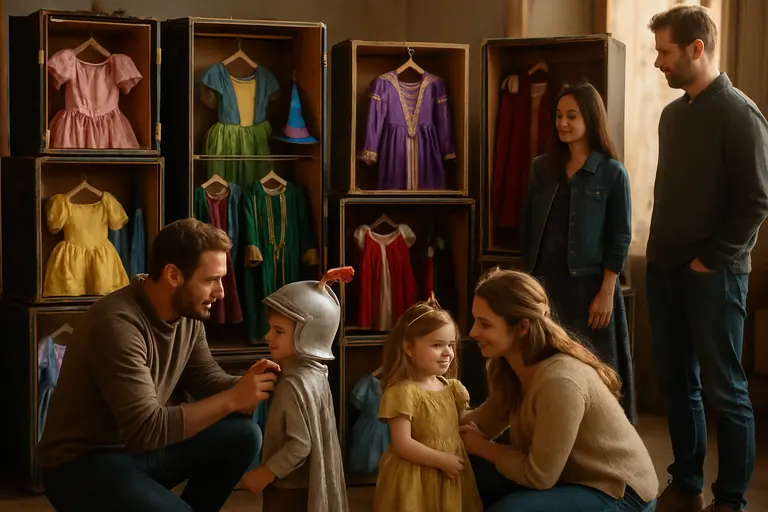
A playroom cannot, and should not, imitate the fragility of gallery objects. Still, the exhibition offers useful principles for organizing children’s dress-up clothing with more care. The first lesson is separation by function. Ritual-like pieces, such as capes, crowns, veils, and wings, benefit from visible storage because children often choose them by symbol rather than by outfit. Soft garments, by contrast, can sit in bins grouped by use: animal play, royal play, helper roles, dance, or seasonal dress.
The second lesson is material respect. Kaiser’s crystalline garments remind us that sentimental textiles can become inaccessible when preserved too firmly. In a family playroom, that means the most fragile or inherited garments may need a memory box rather than a daily costume basket. A handmade gown, a beaded cape, or a religious ceremony garment can be documented with a photo and stored flat, while washable costume pieces remain within reach.
- Use shallow bins for soft garments so children can see choices without dumping every item.
- Hang crowns, masks, and wands on low hooks to reduce breakage and make symbolic props easy to return.
- Keep fragile heirloom clothing separate from daily dress-up pieces, especially if beadwork or aging fabric is present.
- Label by role or mood, such as “forest,” “ceremony,” or “heroes,” instead of only by garment type.
For an exploration of similar themes in arts and culture, Next Clues offers broader reading in the same cultural orbit. Within the playroom, though, the guiding idea is modest: children understand costume as identity play, so storage should make that identity play easy to start and easy to clean up.
Fairytale Costumes At MoCA Long Island
The strongest trend visible in Dis-dressed is not a single look. It is a shift toward costume as sculptural memory. Beading, resin casting, embroidery, collage, photography, sugar crystals, and found textile fragments all push clothing away from wearability and toward symbolic form. That direction matters for fairytale study because many old tales use dress as proof, disguise, punishment, reward, or passage into another social state.
Fairytale Costumes at MoCA Long Island therefore read as cautious, art-centered propositions rather than consumer trends to copy. Berardicelli’s adorned skeletal figures point toward remembrance and heroic naming. Kaiser’s hardened childhood garments point toward preservation and loss. Goodman’s composite beings point toward invented bodies built from history, fashion, and symbolism. Seen together, these works suggest that costume’s strongest power may lie in how it lets a body become legible: mourned, protected, disguised, honored, or imagined anew.