
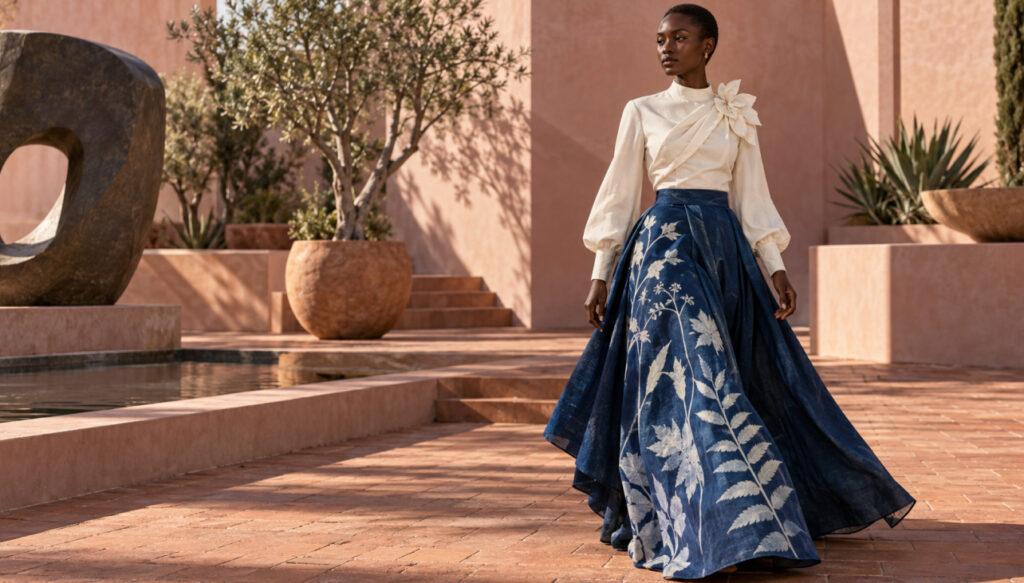
Rio Uribe’s Spring/Summer 2027 collection, HORIZONS, brought botanical imagery into New York fashion through photographic textiles, plant-inspired silhouettes, and expressive color. Presented on September 11, 2026, at The Lighthouse in Brooklyn, the collection received further attention through September runway coverage and PAPER’s September 22 lookbook feature. For fantasy fashion makers, its cyanotype prints offer a useful starting point: a way to translate natural forms into clothing with a distinct visual story. The Garnette Report
Fantasy fashion readers often compare creative choices by asking what makes one option worth choosing over another; the same habit appears in other decision guides, such as Why pick BetOnline?, where the focus is on weighing features before committing. In Rio Uribe’s botanical runway, that same question becomes aesthetic: why choose cyanotype-inspired prints when digital florals, embroidery, appliqué, and hand painting are all available? The answer sits in the print’s visible relationship with sunlight, fabric, and plant forms, which gives a garment the feeling of a pressed memory rather than a flat decoration.
In his September 12 runway review, Vogue’s Max Berlinger identified leaf and butterfly outlines created using a cyanotype sun-printing technique on coordinated separates. Those details connect a contemporary collection with a much older photographic practice. They also raise practical questions for costume makers: which fabrics suit the process, how should a botanical image sit on the body, and what happens when the finished garment needs washing? Vogue
How HORIZONS Turned Botanical References Into Clothing
The collection’s starting point extended beyond flowers. DSCENE’s September 15 coverage describes an architectural influence drawn from Luis Barragán, with sun-faded pink, deep blue, and succulent green shaping the palette. Botanical cyanotypes brought plant imagery onto fabric, and flower forms informed garment construction. Nature supplied both the surface decoration and the broader design vocabulary. designscene.net
For a costume designer, that relationship is more useful than treating every botanical motif as interchangeable. A fern print, a rounded petal sleeve, and a thornlike seam each suggest a different character. Their effect depends on proportion, placement, and the surrounding material.
A garment can communicate a woodland theme through one carefully chosen feature. A large botanical panel might establish the story across the back of a cape. A smaller motif at a cuff could suggest a character who studies plants or carries an illustrated field notebook. These are possible adaptations for original costume work, rather than descriptions of pieces in Uribe’s collection.
The design question is whether the image contributes to the garment’s identity. Adding more leaves does not automatically make a costume more convincing. A clear relationship between motif and silhouette can give a relatively simple outfit a stronger sense of character.
What Cyanotype Printing Actually Does
Cyanotype is a photographic printing process associated with blue images. The Victoria and Albert Museum dates its invention to Sir John Herschel in 1842 and explains its use of light-sensitive iron salts. Objects or negatives placed against a prepared surface control where light reaches it, producing an image through exposure and subsequent processing. V&A
Botanical subjects have a long history within the medium. New York’s Museum of Modern Art holds Anna Atkins cyanotypes, including fern studies dated 1853. That history gives contemporary botanical printing a connection to observation and specimen collecting, alongside its decorative appeal.
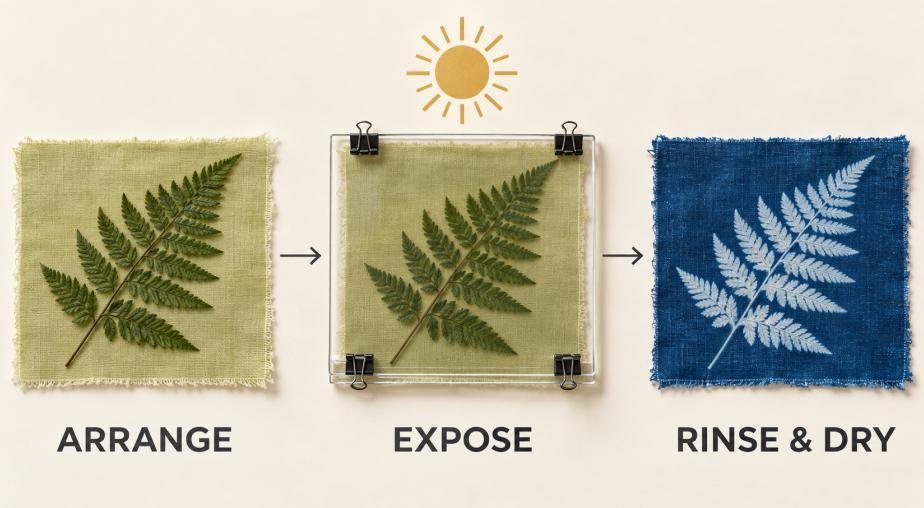
On fabric, the process can produce a photographic impression without a camera. Jacquard’s prepared cotton sateen sheets, for example, allow objects or transparencies to block light during exposure. Its documentation describes pale impressions against a blue background and explains that drawings on transparent film can supply the image. Cyanotype Fabric Sheets
Cyanotype belongs to surface-image making, which distinguishes it from 3D-printed fabric construction. It gives an existing textile an image; it does not print the textile’s physical structure. For makers exploring fashion technology, that difference affects equipment, material choice, and the kind of result they can expect.
Why Botanical Prints Suit Fantasy Fashion
A botanical silhouette can suggest something familiar without depicting it in everyday color. Pale stems against blue can read as a moonlit garden, a preserved specimen, or an imagined underwater plant. These interpretations depend on the rest of the costume, giving the maker room to establish an original setting.
Scale changes that interpretation. A single oversized leaf might act as a character emblem. Smaller scattered forms could resemble a collection gathered over time. A narrow border can direct attention along an opening or hem, giving the print a structural role in the composition.
Placement deserves attention before fabric is cut. A seam through the center of a carefully arranged motif may interrupt its shape. Dense gathering can conceal an image that looked clear on a flat swatch. A print intended for a skirt should be assessed hanging vertically, with the folds it will have during wear.
PAPER’s September 22 HORIZONS lookbook feature highlights cyanotype-printed tanks and coordinated sets carrying botanical imagery and RIO lettering. For independent makers, the useful lesson is the coordination between surface design and garment identity. Original plant arrangements and personal motifs can establish that relationship without reproducing the brand’s artwork or lettering.
Choose the Fabric Around the Intended Garment
The success of a printed sample does not settle whether it will work as clothing. A costume still needs an appropriate weight, drape, fit, and care routine. The planned use should guide the fabric choice from the beginning.
Jacquard supplies prepared cyanotype fabric in cotton sateen. Its technical guidance lists cotton, linen, silk, and other natural surfaces as compatible with its sensitizer, but says polyester generally cannot be used. Makers should check the composition of the actual fabric, especially with blends, and test before committing a garment’s worth of material. Cyanotype Fabric Sheets
Fairytale Fashion’s guide to choosing costume fabrics connects material selection with movement, appearance, and maintenance. Those considerations remain relevant after a photographic process enters the workflow. A beautiful print on an unsuitable base fabric can still produce an uncomfortable or awkward costume.
A removable decorative panel is one possible starting point. It lets a maker assess the print alongside the main garment before deciding on permanent construction. A sample can be pinned into position, viewed from several distances, and photographed under the lighting expected at an event.
These trials answer different questions. A close photograph shows edge definition. A full-length image reveals whether the motif is large enough to register. Walking and sitting show whether folds repeatedly hide the most important part of the composition.
Washability Sets a Practical Limit
Cyanotype’s appearance makes it appealing for wearable artwork, but cleaning requirements deserve equal attention. Jacquard’s cyanotype care guidance recommends minimal washing, cold-water handwashing, and a non-phosphate detergent. It warns that excessive washing can cause fading and that sweat, hand oils, or alkaline conditions can affect the image. jacquardproducts.com
That guidance concerns the manufacturer’s process. It does not establish the durability of RIO’s finished garments, whose complete production and finishing methods are not documented in the coverage reviewed here.
For a maker, the sensible next step is a care test on a spare printed swatch. Keep an unwashed sample for comparison, record the cleaning method, and examine any change before selecting the process for a frequently worn piece. A costume intended for occasional photography has different demands from clothing used for repeated performances.
The term “sun printing” also covers more than one system. Jacquard’s process comparison distinguishes traditional cyanotype from its SolarFast light-developed dye, which the company describes as more washfast on fabric. Similar-looking botanical imagery can therefore involve different materials and care requirements. jacquardproducts.com
A maker’s description should reflect the process actually used. A digitally reproduced blue botanical design may share the aesthetic, but calling it a handmade cyanotype would misrepresent its production.
Build an Original Botanical Story
An effective adaptation begins with a character or setting rather than a shopping list of runway details. A fictional night gardener might wear a restrained arrangement of branching stems. An imaginary conservatory keeper could have specimen-like panels placed across an apron. A woodland traveler could carry the botanical image on a detachable bag flap.
Each concept suggests a different composition and level of wear. The apron may require frequent cleaning; the detachable panel may receive more controlled care. Thinking about those uses early prevents the print from becoming an isolated decorative decision.
A small design record can make the experimentation more useful. Photograph the arrangement, note the fabric composition, and retain the exposure and care instructions supplied with the chosen product. Record which parts of the motif remain visible after sewing. Those details help the maker repeat successful choices without claiming identical results from every handmade print.
Uribe’s botanical runway offers a clear creative prompt: give the material a role in the story. For fantasy fashion, the strongest response is an original garment whose plant imagery, silhouette, and intended use support one another—and whose maker knows how the finished textile behaves beyond the photograph.