AI Creator Commerce became a sharper consent issue after model Francheska Pujols sued Rainbow USA on May 22, 2026, alleging that the retailer used AI to create new advertising images of her likeness in poses, settings, and outfits she had not approved, as reported by Fashion Policy Nigeria. For sports wear sellers, stylists, models, and small creator-led brands, the dispute is less a distant fashion-law story than a practical warning: image production can no longer be treated as a simple extension of a photo shoot once synthetic generation enters the process.
AI Creator Commerce And The Rainbow Dispute
What Pujols Alleged
Pujols alleged that Rainbow generated advertising images showing her in scenes she never posed for, including examples described in the research record as a barstool image involving a drink and another image showing her resting her head on another model’s lap. Her claims, as summarized by LegalClarity, included reputational harm, lost licensing income, misappropriation of likeness, false endorsement, defamation, and alleged violation of New York privacy law.
The contract background matters because the dispute did not begin with a fully open image license. According to the research notes, Pujols signed a September 2024 catalog photography agreement that allowed only minor edits, such as cropping or stylistic changes. That agreement expired on March 15, 2026. Pujols claimed the later use of AI-generated imagery went beyond that limited permission. Rainbow disputed the allegations and argued that its use of her images was covered by the agreement she signed.
What The Court Had Not Resolved
The case was still active as of October 2, 2026. A requested preliminary injunction was denied on July 17, 2026, meaning the disputed images were not ordered removed at that stage while litigation continued. That denial should not be read as a final ruling on the merits. It only shows that the early request for emergency restraint did not succeed. For creators, the caution is straightforward: a court may need time to sort out the contract language, the factual record, and the technical nature of the images.
That uncertainty is especially relevant to catalog-driven retail. A traditional shoot creates a fixed set of images. Generative editing can produce new bodies of advertising content from older source material. If the original agreement speaks only about ordinary edits, creators and brands may disagree about whether new poses, new settings, or new outfit pairings are still edits or a separate use requiring consent.
Contract Language And Consent Gaps
Why AI Creator Commerce Contracts Need Specific Consent
AI Creator Commerce depends on trust between the person whose likeness is used, the brand paying for the campaign, and the audience asked to believe the presentation. In the Pujols dispute, the central contract issue was not whether images may ever be edited. It was whether “minor edits” could cover alleged AI-generated scenes that the model said she never performed. That distinction is material for sports wear, where posture, movement, activity, and body placement can imply endorsement of a product’s fit or function.
A cautious creator agreement should define the difference between retouching, cropping, color correction, background replacement, composite work, and synthetic generation of new scenes. That is not legal advice; it is a practical planning point for anyone arranging a campaign. A model may be comfortable with a wrinkle being removed from a tracksuit image but object to being digitally placed in a nightlife setting or an athletic pose never performed. The gap between those uses is where disputes can form.
For readers comparing this dispute with broader fashion consent coverage, the related analysis on AI fashion consent gives more context on why contract scope has become a live issue for image-based retail. The safer creative habit is to ask before generating new identity-bearing images, document the allowed uses, and avoid treating a likeness as raw material once the original shoot has ended.
Sports Wear Raises A Practical Test
Sports wear advertising often relies on believable movement: stretching, walking, lifting, dancing, lounging, or posing in ways that suggest how fabric behaves on the body. If AI creates an image that the model did not perform, the brand may gain a fast campaign asset, but it also risks weakening the credibility of the product presentation. A digitally invented pose can imply fit, comfort, or attitude that was never observed during production.
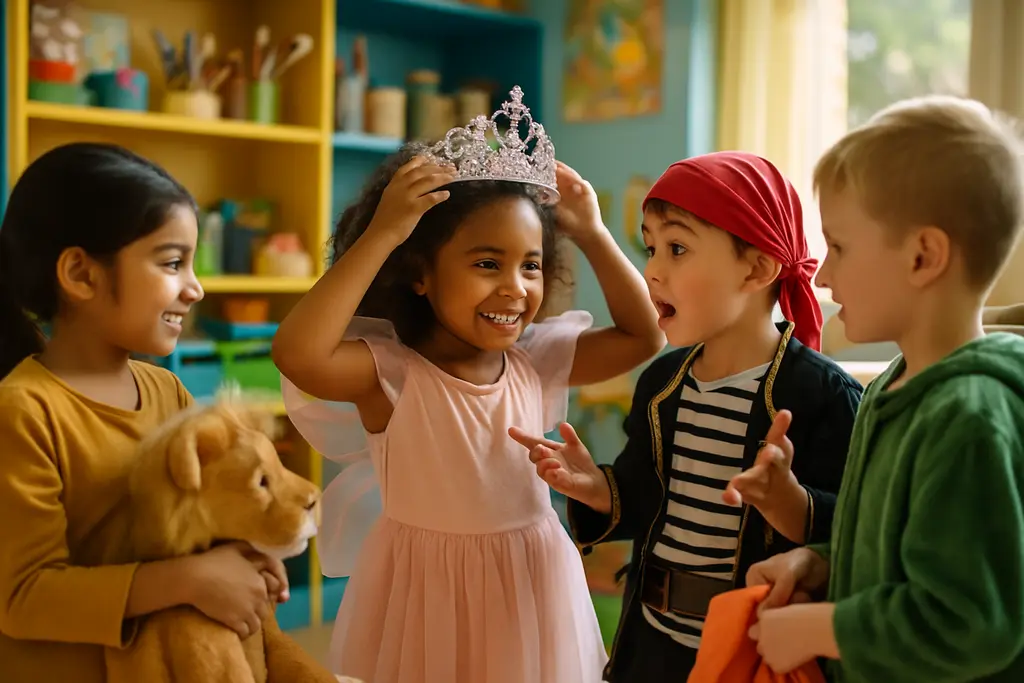
This matters for large retailers and independent sellers alike. A small costume maker, dancewear seller, or athleisure designer may be tempted to extend one photo shoot into many scenes. As a DIY dress-up enthusiast, I understand the creative appeal: one base image can become a lookbook, a mood board, or a fairytale training outfit concept. Yet artistic expansion should not erase the personhood of the model. The model’s pose, expression, and setting are part of their professional identity, not just design material.
Disclosure Rules And Brand Trust
New York’s Synthetic Performer Rule
New York’s Synthetic Performer Disclosure Law took effect on June 9, 2026, after being signed on December 11, 2025. The research notes state that the law requires disclosure in commercial advertisements in New York when a synthetic AI-generated performer visibly resembles a human and the producer has actual knowledge of that use. The listed civil penalties are $1,000 for a first violation and $5,000 for later violations.
That disclosure rule is connected to, but not identical with, the Pujols dispute. The law addresses disclosure of synthetic performers in ads. The Pujols case tests a different pressure point: whether an actual person’s licensed image can be used as the basis for AI-generated advertising beyond what the agreement allowed. A label can disclose that an image is synthetic and still face consent questions if the image appears to derive from a real model’s likeness without clear authorization.
Transparency Is Not A Substitute For Permission
AI Creator Commerce will likely reward brands that separate two duties: telling audiences when synthetic performers appear, and obtaining permission from real people whose likenesses or source images are used. Those duties serve different audiences. Disclosure speaks to consumers. Consent speaks to models, photographers, stylists, and creators whose labor and identity make the campaign possible.
For sports wear brands, a transparent workflow can also protect the design itself. If an AI-generated image places compression leggings, track jackets, or dance skirts in unreal settings, viewers may receive inaccurate signals about fabric, drape, and movement. Clear labeling and careful permissions help preserve confidence in the garment. For adjacent cultural coverage across the same network, a related site by Kay Granger offers another point of reference, but the practical lesson here remains grounded in image ethics: the audience should know what is synthetic, and the featured person should know what was authorized.
A Maker’s View Of Synthetic Styling
Cost Savings Still Carry Creative Costs
Retailers use AI because it can reduce friction in product photography, copywriting, and campaign testing. The research notes indicate that Rainbow had used generative AI in product descriptions, titles, and increasingly in product photography, while taking a cautious approach to wider use because of risk. That risk is not only legal. It is aesthetic and relational.
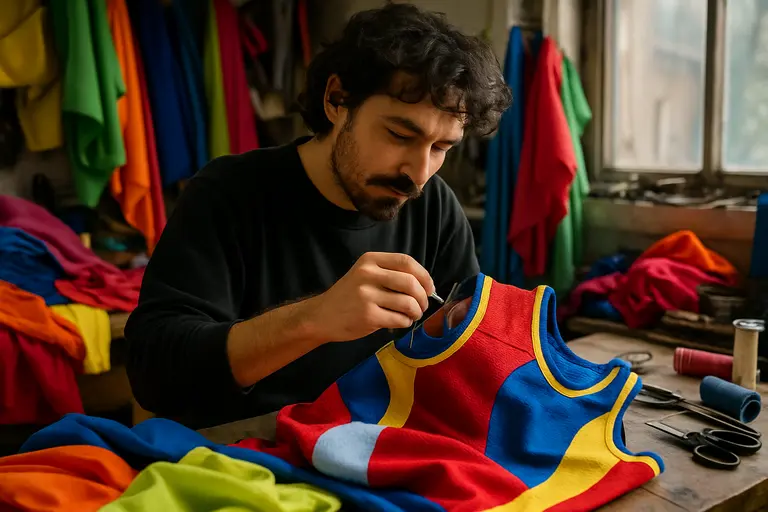
In handmade dress-up culture, trust often comes from visible human authorship: the stitched hem, the adjusted sleeve, the repaired waistband, the honest fit photo. Sports wear commerce has a similar trust signal. People want to know how clothing behaves on a body. If AI imagery becomes too detached from the shoot, the product can start to feel less verifiable. That may be efficient for a campaign calendar, but it can weaken the bond between buyer, model, and maker.
Respecting Source Images
Respect for source images is also respect for the creative team. A catalog shoot may include a model, photographer, makeup artist, stylist, art director, and retoucher. AI generation can blur that chain of contribution if later images appear to build on the shoot without fresh approval. Fairytale costume design offers a useful analogy: a pattern, a sketch, and a fitting session each carry authorship. Reusing them outside their agreed purpose can distort the work, even if the result looks polished.
Brands do not need to reject AI to treat creators fairly. They can separate human-shot campaign images from synthetic experiments, mark AI-assisted assets internally, keep clear version records, and seek new approval before creating new likeness-based scenes. Those steps may slow production, but they also create a clearer record of consent.
AI Creator Commerce In Sports Wear
AI Creator Commerce in sports wear now sits at the intersection of speed, consent, performance imagery, and audience trust. The Pujols v. Rainbow dispute showed how a phrase such as “minor edits” can become unstable once AI tools are used to produce scenes beyond the original shoot. The case had not reached a final resolution by October 2, 2026, so broad claims about its legal outcome would be premature.
The safer reading is narrower and more useful: creators should ask what a contract permits before a shoot begins, brands should avoid assuming that old catalog rights cover new synthetic scenes, and sports wear marketers should remember that a body in motion is not a neutral prop. It is a professional likeness carrying reputation, labor, and implied endorsement. AI can support commerce, but consent remains the design line that responsible campaigns should not cross.