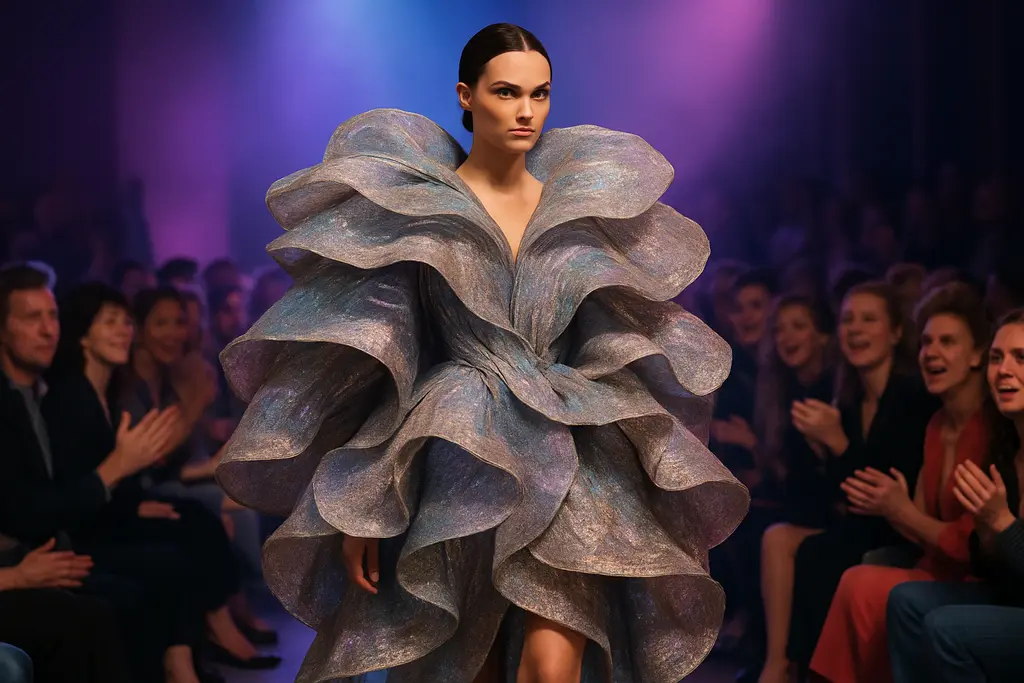
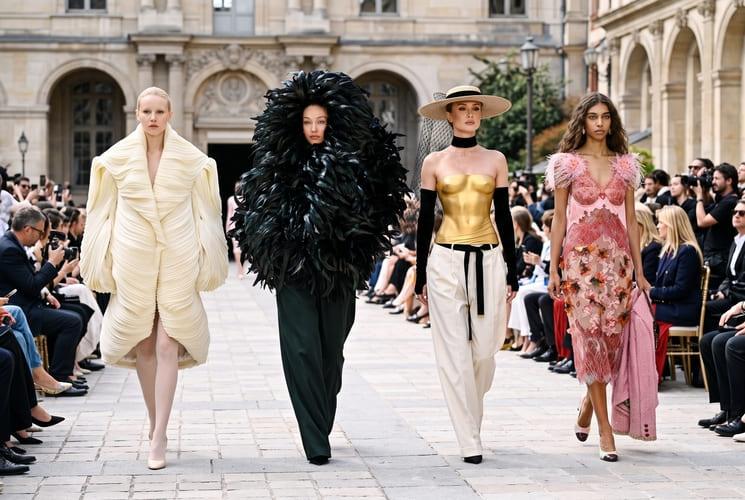
The Paris Fashion Week October 2026 schedule brought the Spring/Summer 2027 collections to the French capital from September 28 to October 6. The presentations operated under extreme industry scrutiny, closing a highly volatile month of international shows. Major houses presented a clear shift away from severe, rigid architecture in favor of fluid, yielding constructions. The week was defined by high-stakes debuts and intense speculation regarding executive appointments. Designers rejected heavy historical costuming, focusing entirely on redefining exactly how modern luxury interacts with the human body.
The Architecture of Rumor and Transition
The atmosphere surrounding the shows was heavily influenced by executive transitions. Speculation dominated the front rows regarding Chemena Kamali’s tenure at Chloé. After revitalizing the brand’s sales, rumors circulated heavily that her Spring/Summer 2027 collection might serve as a final statement before a potential move to succeed Anthony Vaccarello at Saint Laurent. This speculation forced critics to view the Chloé presentation through a highly analytical lens. Kamali delivered a joyful, folk-inspired collection filled with the brand’s signature romanticism. The garments focused on fluid movement, offering pastel neutrals and sun-faded hues that provided a soft counterpoint to the sharper silhouettes seen earlier in the week. These reports remain unconfirmed; the discussion itself highlights the intense pressure placed on creative directors to generate immediate commercial success. For further context on how executive shifts impact formal aesthetics, reviewing recent haute couture collections reveals how rapidly a brand’s DNA can change under new leadership.
Givenchy’s New Era Under Sarah Burton
The most anticipated event of Paris Fashion Week October 2026 was Sarah Burton’s debut for Givenchy. Replacing Matthew M. Williams, Burton brought her distinct interpretation of modern femininity to the French house. Her presentation explicitly rejected the rigid, armored aesthetics that dominated previous seasons. She focused entirely on peeling back the structure of formal dressing to reveal skin and a sense of lightness. The collection opened with monastic, clean lines, establishing a disciplined baseline before expanding into more complex drapery.
Burton engineered pieces that blurred traditional gender boundaries. Several of the pristine suits presented on female models were constructed in a men’s tailoring workshop. This manufacturing decision gave the suiting a specific, deliberate weight, anchoring the softer, more romantic elements of the collection. The designer incorporated rich brocades and floral patterns referencing Northern European old masters. Accessories played a critical role in the narrative. Milliner Stephen Jones provided knotted T-shirt headpieces, establishing an understated, natural approach to headwear. By offering a stylistic kaleidoscope that included padded gloves and reworked Shark boots, Burton proved that the Givenchy woman is not defined by a single, static archetype. The collection was a study in balancing austere precision with yielding romance, reviewed comprehensively by publications like L’Officiel.
Dior and the Fluid Silhouette
Maria Grazia Chiuri continued her exploration of female liberation at Dior. The presentation signaled its conceptual intentions immediately through the invitation: a pair of wénwán nuts. These objects, traditionally rolled in the hand to develop a jade-like patina, represented the slow, tactile passage of time. The clothing reflected this philosophy of gradual softening. The house’s famous Bar jacket, typically a rigid symbol of mid-century constraint, appeared completely relaxed.
Chiuri utilized sheer, fluid textiles that appeared caught mid-movement. Dresses featured hand-cut petals scattering across the fabric, giving the illusion of organic dispersal. The garments maintained the recognizable Dior geometry but abandoned the heavy internal scaffolding that normally supports those shapes. This approach demands perfect pattern drafting. Without stiff interfacing to hide behind, the drape of the fabric must be flawless. The collection proved that a brand can maintain its historical codes and entirely update its physical comfort.
The New Realism at Miu Miu
Miuccia Prada utilized her Miu Miu presentation to answer a specific industry question: how do you execute “real clothes” with luxury exactness? Miu Miu has spent recent seasons perfecting the balance between mass-market covetability and high-fashion authority. The Spring/Summer 2027 collection stripped away fantasy in favor of elevated pragmatism. The runway featured garments that felt entirely familiar but were constructed from premium materials. This approach rejects the idea that high fashion must look alien or uncomfortable. By focusing on the exact proportions of daily uniform dressing, Miu Miu established a baseline for modern luxury that relies on perfect execution rather than shock value. Integrating these precise basics provides a solid foundation for capsule wardrobe investments, allowing consumers to build highly functional closets.
Emerging Voices and Uncanny Humor
The heritage houses focused on softening their archives. Emerging designers injected a sense of necessary disruption into the schedule. London-based designer Torishéju Dumi presented a collection that treated contemporary life as an uncanny circus. Dumi utilized leopard prints and romantic florals in unexpected, slightly bizarre arrangements. Her patterns and cuts reflected the chaotic, off-kilter nature of modern news cycles. The garments demanded attention through intentional mismatching and bold pigment combinations, providing a sharp contrast to the muted, monastic minimalism seen elsewhere during the week.
Hermès and the Pared-Back Tour de Force
Hermès closed out the major narratives of the week with an exhibition of absolute restraint. Nadège Vanhée-Cybulski delivered a pared-back presentation that focused entirely on material superiority. The Spring/Summer 2027 collection ignored trend cycles completely, relying on the house’s unmatched leatherworking and silk processing capabilities. The garments functioned as quiet, permanent investments rather than seasonal statements. The runway offered streamlined midi skirts, sturdy double-breasted coats, and fluid leather shirts. This exhibition of quiet confidence proved that true luxury requires zero shouting, operating perfectly through flawless seaming and superior raw materials.
| Fashion House | Creative Direction | Spring/Summer 2027 Key Aesthetic Focus |
| Givenchy | Sarah Burton | Monastic suiting, fluid drapery, twisted headpieces |
| Dior | Maria Grazia Chiuri | Softened Bar jackets, fluid textiles, petal appliqués |
| Miu Miu | Miuccia Prada | Elevated pragmatism, luxurious daily uniform dressing |
| Hermès | Nadège Vanhée-Cybulski | Stripped-back material superiority, fluid leather shirts |
| Carven | Louise Trotter | Intimate domestic materials, bedsheet-inspired draping |
Carven and the Architecture of Bed Linens
Carven approached the Spring/Summer 2027 season with a study of intimate, domestic materials. The collection opened with a cloud of soft pastels, utilizing butter yellow, icy blue, and candyfloss pink. The atelier engineered twin sets and wispy dresses to resemble rumpled bedsheets. Achieving this specific, careless aesthetic required exact pinning and highly calculated draping. The presentation eventually transitioned into stark blacks and whites, offering a more severe, stern lineup that retained the fluid geometry of the opening looks. This progression from soft, sleep-inspired pastels into rigid, formal monochrome provided one of the most compelling visual arcs of the entire week.
Loewe and the 180th Anniversary
Loewe presented a collection deeply rooted in the brand’s long history. The Spanish house celebrates its 180th anniversary this year, prompting a thorough examination of its archives. The Spring/Summer 2027 presentation bridged antique craftsmanship with modern silhouettes. The runway featured mesh clutches heavily embellished with glass beads, demonstrating the brand’s absolute commitment to manual artistry. Elongated square-toe kitten heels provided a sharp, geometric foundation for the fluid garments above them. This presentation solidified the current creative direction, proving that heritage brands can honor their origins and push formal aesthetics forward simultaneously.
The October 2026 season proved that Paris remains the absolute center of gravity for global fashion commerce, forcing brands to compete at the highest possible level of physical construction and visual storytelling. Designers provided a compelling, refined vision for the future of daily dressing, proving that structural vulnerability translates flawlessly into exacting modern fashion.