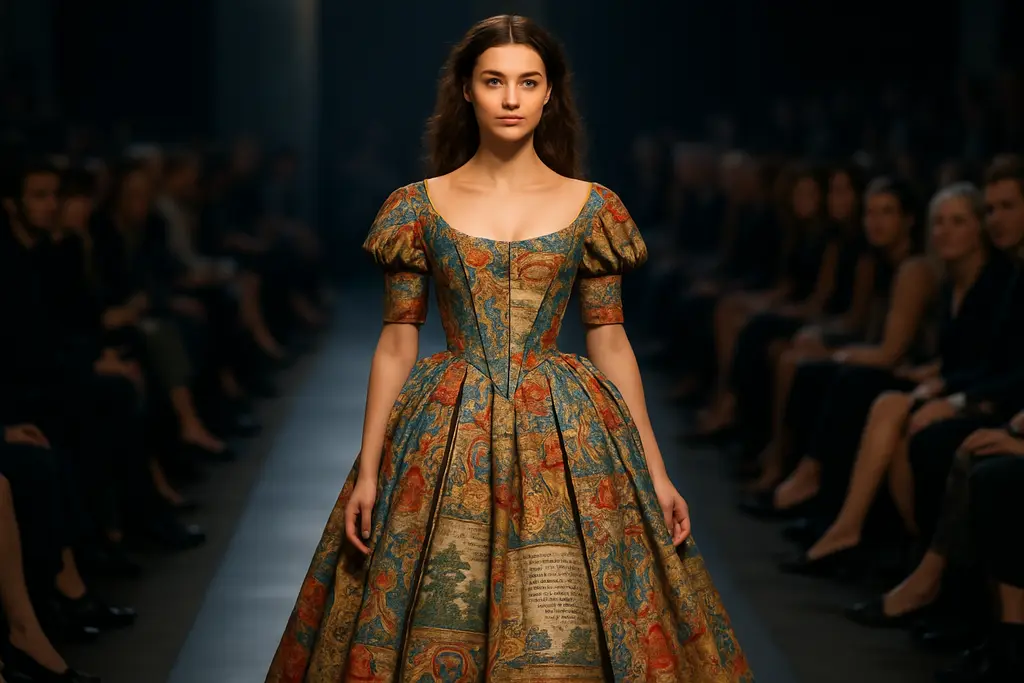

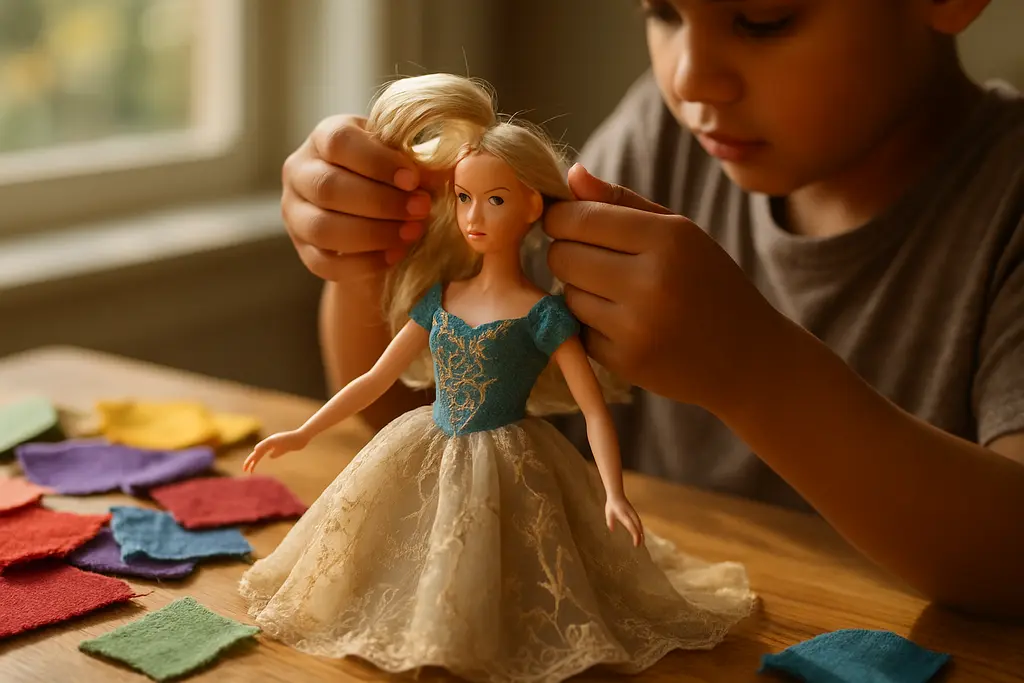
The Doll Dressing Exhibition at The Museum at FIT gives fashion designers, costume makers, and dress-up enthusiasts a precise subject: the doll as a small object with large influence. As of September 29, 2026, the exhibition is open in New York City and runs from September 16, 2026, through January 3, 2027, in the museum’s Special Exhibitions Gallery, according to the MFIT exhibition listing. Its premise is not simply that dolls are charming. The show positions dolls as fashion mediators, teaching tools, commercial objects, and design provocations from the 18th century through the present.
That framing matters because doll culture is often treated as secondary to “serious” fashion. The exhibition’s object count pushes against that assumption. With more than 170 objects, including fashion dolls, full-size garments, accessories, videos, and artworks, the display asks viewers to compare miniature clothing with human-scale design rather than keeping them in separate categories. For someone who studies fairytale costume and DIY dress-up play, the strongest lesson is scale: a doll can make a sleeve, tab, seam, room, or pose easier to see.
Why The Doll Dressing Exhibition Matters
Doll Dressing Exhibition Scale And Scope
The exhibition is curated by Dr. Colleen Hill, Senior Curator of Costume at The Museum at FIT. The related publication, Doll Dressing: Fashion from Barbie to Bratz & Beyond, was scheduled for Fall 2026 through Rizzoli. Research notes for the show identify essays by Valerie Steele, Elizabeth Way, and Patricia Mears, along with interviews with designers including Martin Margiela, Viktor & Rolf, and Jun Takahashi. That roster suggests a scholarly approach rather than a display built only on nostalgia.
The Doll Dressing Exhibition therefore fits into a broader museum pattern: using familiar objects to test fashion history. Dolls can hold many types of evidence at once. They show proportion, garment closures, silhouettes, adult fantasy, childhood aspiration, manufacturing limits, and marketing cues. They also make one question visible for designers: what happens when a garment is designed for a body that is symbolic rather than practical?
Miniature Fashion As Evidence
One of the key sections, “Fashion Doll Foundations,” looks back to historical fashion dolls, including 18th-century examples connected with Colonial Williamsburg loans in the research notes. The section addresses how dressmakers used dolls to interpret high-end fashion in miniature. That point is useful for costume readers because it places doll dressing before modern mass-market fashion dolls. Miniature dress was not only play; it could be a way to circulate style information.
This historical grounding changes how one reads later designer work. A doll is not just a small figure waiting to be styled. It is also a model, a messenger, and sometimes a critique of fashion’s own fantasies. The exhibition’s strength appears to come from holding those meanings together without flattening them into a single argument.
Designer Case Studies In Doll Logic
Paper-Doll Tabs And Surface Illusion
The research notes identify designers and houses represented in the show, including Balenciaga, Comme des Garçons, Maison Martin Margiela, Marc Jacobs, Patrick Kelly, Loewe, Louis Vuitton, Moschino, Anna Sui, and Undercover. That range is broad enough to show that doll references are not limited to one mood. A designer may use a doll reference for humor, critique, memory, theatricality, or structural experiment.
Jeremy Scott’s Moschino Spring 2017 look with paper-doll tabs is one clear example. The tabs matter because they make attachment visible. A skirt or jacket appears to carry the logic of a paper outfit waiting to be folded onto a flat figure. That device can read as playful, but it also points toward fashion’s dependency on surface, fantasy, and staged completion. The garment does not hide the idea that dressing is an act of assembly.
Scaled-Up Margiela And Critical Distortion
Martin Margiela’s Fall 1994 collection, represented in the research as using garments scaled up to 5.2 times their usual size, brings a sharper critical edge. Enlarging the garment to that degree does not simply make fashion bigger. It exposes construction, proportion, and bodily expectation. A familiar garment becomes strange because the viewer can no longer assume that it belongs naturally to the body.
The exhibition’s “Playing with Dolls” theme addresses exaggerated proportions, trompe-l’oeil effects, and distorted scale. For designers, this is where doll aesthetics become analytical tools. A doll-like proportion can question standard beauty forms. Trompe-l’oeil can make clothing look like an image of clothing. Distorted scale can make a viewer notice how much fashion relies on convention. These methods have special value for fairytale costume design, where enchantment often depends on controlled artificiality rather than realism.
Dollhouses, Interiors, And Dress-Up Play
Apartment Coat As Wearable Interior
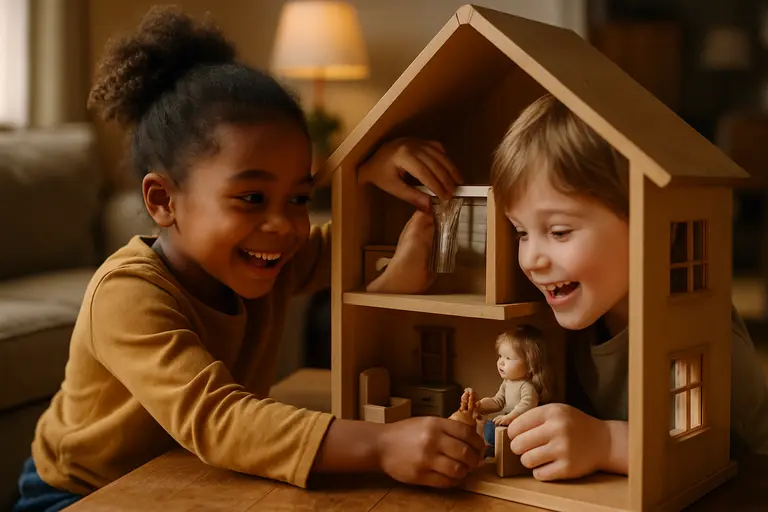
Another section, “The Dollhouse,” connects clothing with interiors and architecture. Lirika Matoshi’s “Apartment Coat,” described in the research notes as depicting appliquéd interiors such as furniture and rooms, makes the body into a mobile house. That idea feels especially close to dress-up play because children and adults often use costume to build a temporary setting around the body. A cape can suggest a forest. A collar can imply royalty. A coat with rooms turns that principle literal.
The dollhouse theme is also helpful because it avoids treating fashion as only silhouette. Texture, surface, and scene all become part of dress. For a DIY maker, this could support small-scale experimentation: a pocket shaped like a window, appliqué furniture on a play cape, or fabric panels that suggest rooms without reproducing a specific designer’s work. Respecting the artist’s original design means studying the method, not copying the recognizable arrangement.
Public Participation And Cautious Inspiration
The show includes a participatory element called “We Love Dolls!,” inviting the public to share stories about favorite dolls. The research notes also mention the audio feature “If These Dolls Could Talk…” through Bloomberg Connects. These elements are significant because doll meaning often comes from use, memory, repair, and attachment. A doll outfit is rarely just a garment; it may hold family labor, childhood repetition, or a personal styling rule learned through play.
For dress-up educators, that aligns with evidence-informed approaches to guided play: the adult can provide materials and prompts while leaving room for a child’s choices. Readers interested in that angle may find related context in this site’s discussion of dress-up play benefits. For broader craft-play browsing outside the museum context, consider Shimply, a related site in the same network, as a less formal source of creative prompts.
Doll Dressing Exhibition Design Notes
From Museum Reference To Original Costume Work
The most responsible way to use the Doll Dressing Exhibition as inspiration is to separate principle from replication. A maker can study paper tabs as an attachment language, scaled garments as proportion studies, and dollhouse surfaces as spatial storytelling. Those ideas can support original fairytale costumes without copying a living designer’s exact work, a branded doll identity, or a protected character likeness for sale. This is a cautious creative boundary, not legal advice.
A practical studio exercise would begin with one doll-related design rule. For example: make the fastening visible; enlarge one familiar detail beyond expectation; place a room on a garment; or design an accessory that looks as if it could belong to a miniature figure. Each prompt encourages analysis rather than imitation. The value lies in asking why doll fashion feels different from human fashion: the body is smaller, the pose is fixed, the clothes can be symbolic, and the viewer often completes the fantasy.
The Doll Dressing Exhibition is valuable because it treats play as a serious design archive without stripping away its emotional force. Its historical dolls, designer garments, public stories, and dollhouse themes show that miniature fashion can clarify full-size fashion. For fairytale costume makers, that is the best kind of museum prompt: specific enough to guide the hand, open enough to leave room for original invention.