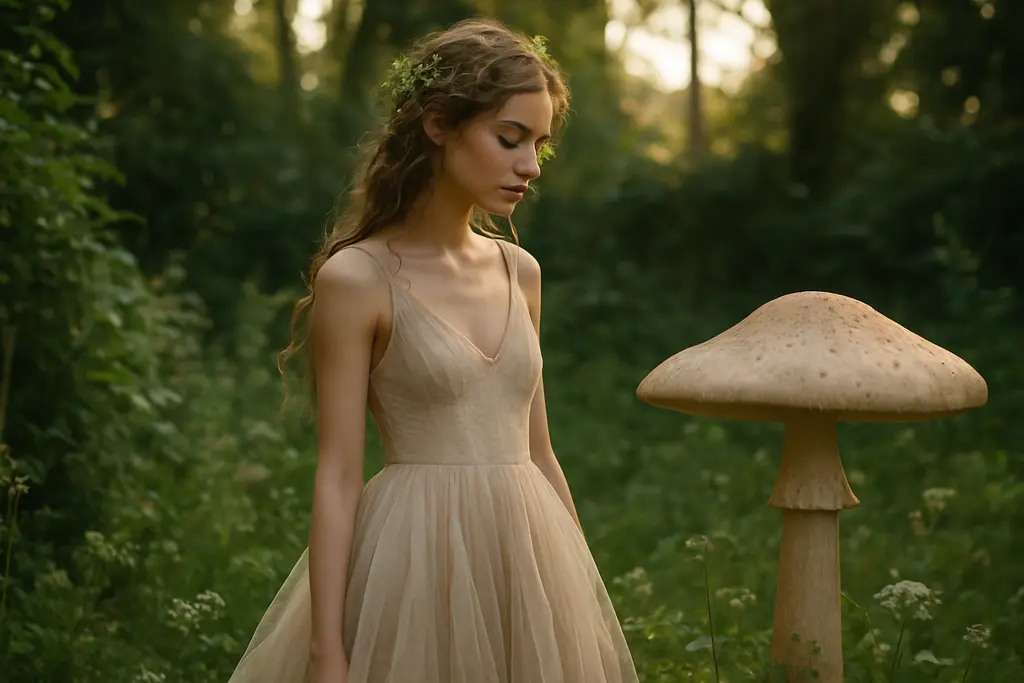
The fairytale aesthetic became one of the clearest narrative tools in the Fall/Winter 2026 haute couture presentations by Chanel and Robert Wun. Both shows had already concluded by September 7, 2026: Chanel presented its Fall/Winter 2026/27 haute couture show on July 7, 2026, and Robert Wun followed on July 8, 2026. The similarity stopped at the broad premise. Chanel treated folklore as biography, craft memory, and house symbolism. Wun treated childhood fantasy as a charged emotional language, where innocence could slide into unease without losing wonder.
Chanel’s Beanstalk Couture Logic
Matthieu Blazy’s Storybook Premise
Chanel’s July 7, 2026 couture show, directed by Matthieu Blazy, was framed through fairytale references including Jack and the Beanstalk, Goldilocks, The Ugly Duckling, and Puss in Boots, while also reading Gabrielle Chanel’s life through a rags-to-riches narrative arc, as recorded in Vogue’s Chanel runway record. That framing mattered because it did not treat the storybook source as decorative nostalgia alone. It turned the house founder into a figure shaped by social ascent, survival, reinvention, and self-authorship.
The Grand Palais setting supported that reading. The show space was presented as an overgrown garden with giant vine structures and strange floral forms. In costume-design terms, the set acted like a scale device. Human figures appeared caught between domestic elegance and oversized nature, a familiar fairytale imbalance where ordinary rooms suddenly obey dream logic. Chanel’s recognizable codes—tweed, camellias, little black dress discipline, pearls, and restrained column shapes—were not discarded. They were absorbed into a story of growth, threat, and self-invention.
Bean Fronds, Camellias, And The Fairytale Aesthetic
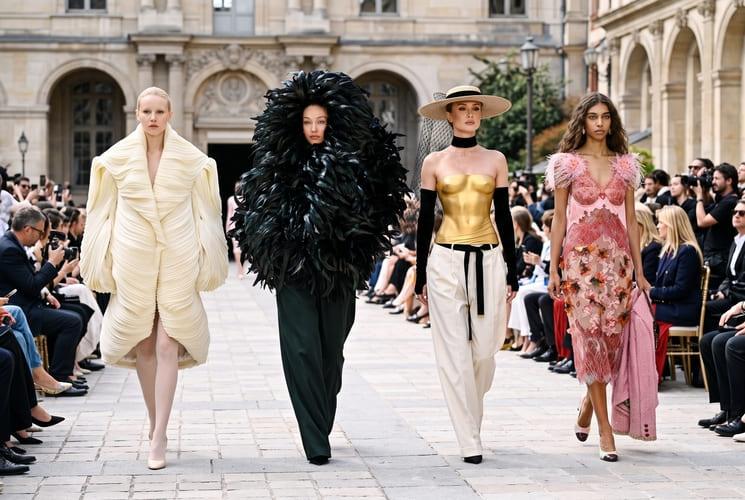
The fairytale aesthetic appeared most clearly in the tension between familiar house materials and intrusive organic motifs. A sheer grid tweed suit embroidered with bean fronds placed a storybook plant directly onto a Chanel staple. Camellias mingled with thorny vines, butterflies, greenery, and three-dimensional flowers. Accessories extended the same language through gold-leaf effects, bean- and egg-shaped pearls, transparent fabrications, and small metallic evening bags shaped around fairytale figures.
Color also carried narrative weight. Earthy forest tones, golds, dusky blues, maroons, and neutrals suggested woodland passage rather than sugary fantasy. Raw edges, feather trims, frayed tweeds, softened structures, shift dresses, and column gowns helped the clothes sit between polish and disturbance. That is where the collection became most persuasive: it understood that fairy tales are rarely only pretty. They often pair invitation with warning.
Robert Wun’s Childhood Surrealism
The Darker Uses Of Play
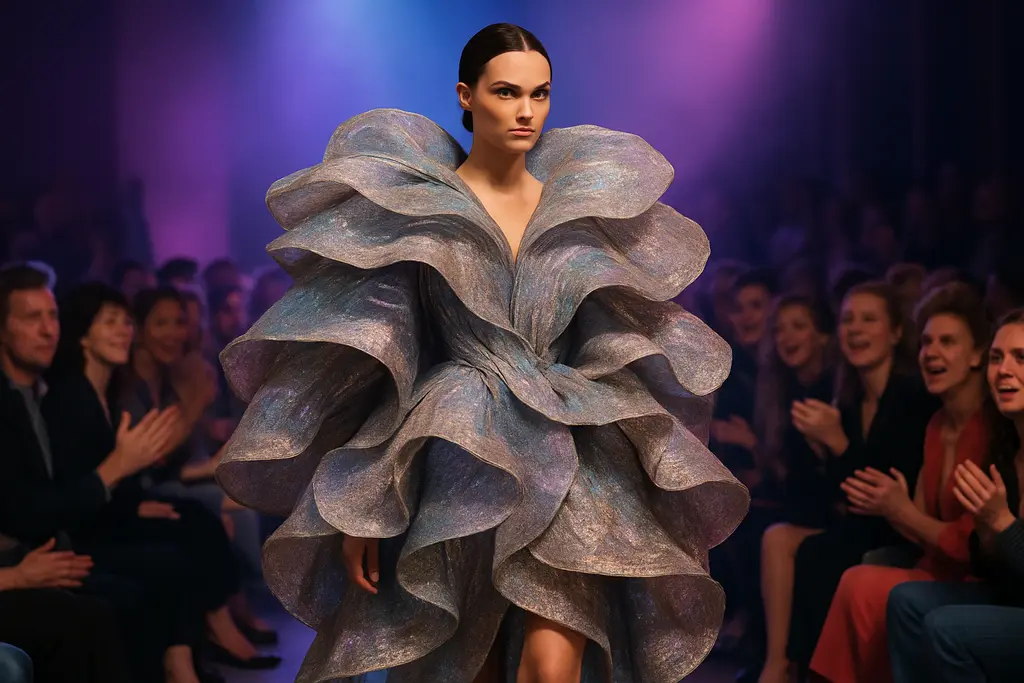
Robert Wun’s July 8, 2026 Fall/Winter haute couture show, titled Childsplay in the research notes, worked from a different emotional register. His references included Charles Perrault, the Brothers Grimm, and Hayao Miyazaki, combined with doodle-like marks, stuffed animals, oversized fantasy creatures, and images of childhood play. The result was not simple sweetness. It placed childish forms under pressure, asking what happens when fantasy grows up before it is ready.
The Dôme de Paris venue gave Wun enough scale for supersized imagery, including an inflatable Skull Panda installation above the runway. That kind of staging can easily overwhelm garments, but in Wun’s case it clarified the collection’s premise. The models moved through a theatrical childhood environment that felt partly protective and partly ominous. The clothes then became evidence of an uneasy passage from fantasy to adulthood.
Sculpture, Jokes, And Technical Control
Several described looks sharpened that emotional split: a monumental black gown with a chaotic cloud of customized balloons, a Cinderella-like moment involving a glittering shoe, a Maleficent rendering in glossy black garbage-bag material, and a firefighter-style astronaut look encrusted with crystal. These were not quiet references. They operated like stage images, asking the audience to read silhouette, material, and memory at once.
Wun’s strength in this context was the refusal to let whimsy cancel rigor. Razor-sharp tailoring, sculptural hats, Harlequin suggestions, inventive textiles, paint-splatter effects, teddy-bear forms, and visual jokes all appeared in the research. That mixture made the work useful for broader costume analysis. It showed how childish symbols can be handled seriously without stripping them of humor. For readers tracking the designer’s wider Fall 2026 context, our related analysis of Robert Wun’s childhood architecture offers a closer reading of his structural method.
Shared Motifs And Opposing Tones
Two Versions Of Enchantment
Chanel and Wun shared several devices: surreal staging, enlarged childhood symbols, mythic storytelling, and an interest in fantasy as a way to discuss lived experience. Yet the tone of each show differed sharply. Chanel’s version was rooted in house continuity. Its fantasy grew out of tweed, camellias, pearls, and the little black dress. Wun’s version used couture as a pressure chamber for childhood memory, with wonder, dread, comedy, and spectacle occupying the same visual field.
That contrast is useful because it prevents the fairytale aesthetic from becoming a single look. It is not defined only by capes, crowns, gowns, or woodland motifs. In these two Fall 2026 shows, the aesthetic functioned as a story system. Chanel used it to revise biography and house myth. Wun used it to expose the instability beneath childhood play. Both approaches respected fantasy as a serious artistic language rather than a shortcut to prettiness.
The Wedding Dress That Was Not There
Chanel’s finale made that seriousness especially visible. The show did not end with the traditional bridal look often associated with couture presentation. Blazy closed with a simple little black dress, with reporting noting the line that Gabrielle Chanel never married in The Guardian’s report. That choice shifted the fairytale ending away from marriage and toward self-definition. It was still a fairytale structure, but one stripped of the automatic bride figure.
For costume culture, that is a meaningful adjustment. Many fairytale looks rely on the visual shorthand of coronation, wedding, or rescue. Chanel’s finale suggested another route: a black dress as self-possession, refusal, and authorship. Wun’s work made a parallel argument from another direction, allowing fantasy to hold fear and hope at the same time.
Dress-Up Lessons For Makers And Stylists
How To Reference Without Copying
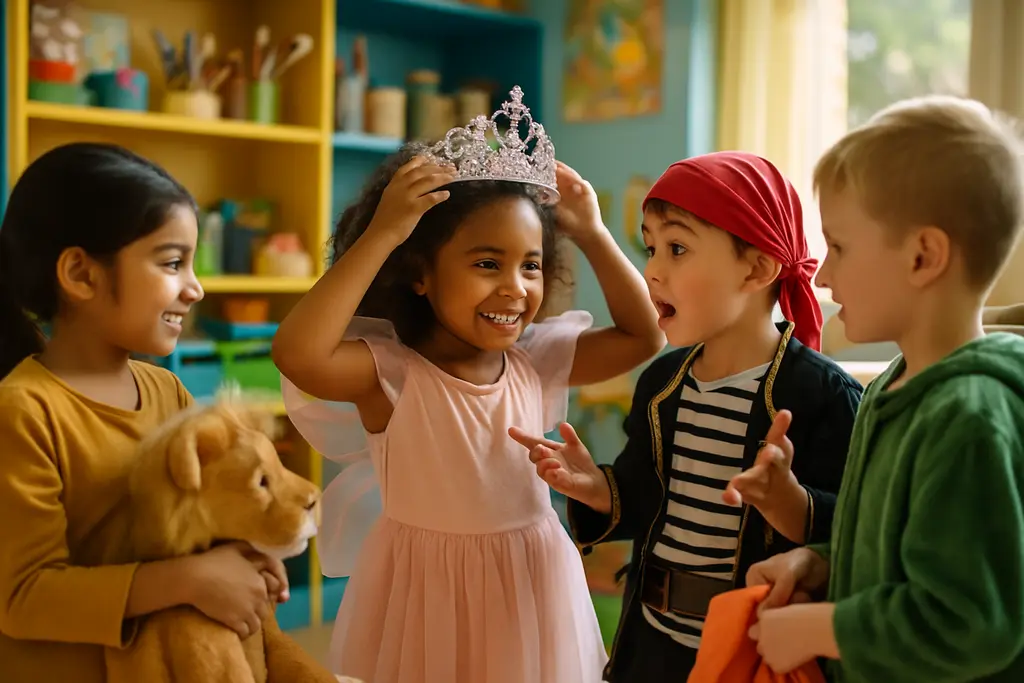
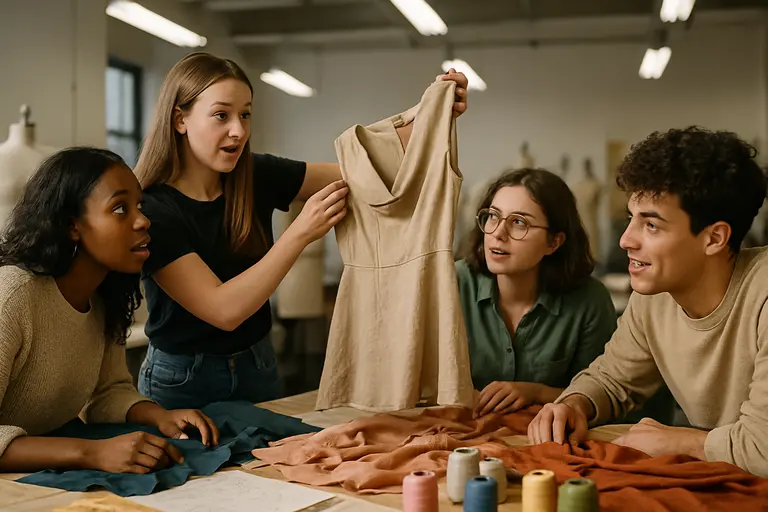
For dress-up makers, the fairytale aesthetic in these shows offers ideas without requiring direct imitation. A personal costume or editorial styling project can borrow structural principles rather than reproducing protected house codes, character likenesses, or designer-specific motifs. Chanel suggests one method: start with a disciplined garment shape, then let one strange natural element interrupt it. Wun suggests another: begin with a childhood object, enlarge its emotional meaning, and balance humor with controlled construction.
This distinction matters for creator ethics. Referencing a mood, silhouette category, material contrast, or general folklore idea is different from copying a specific runway look or using a recognizable character for commercial confusion. Makers should be cautious with fan-merch assumptions, especially where branded characters, living designers’ signatures, or luxury house identifiers are involved. Readers interested in fashion commentary across different cultural sites may visit Kay Granger, a related site within the same network.
- Use scale carefully: one oversized bow, flower, shoe, balloon shape, or stuffed form usually reads stronger than several competing symbols.
- Pair softness with control: tulle, feathers, organza, or plush textures need a clear bodice, coat, or skirt structure to avoid costume clutter.
- Let color carry story: forest neutrals, bruised maroons, black gloss, gold accents, and dusky blues can imply danger without literal props.
- Keep references broad: folklore themes, childhood memory, and dreamlike proportion are safer design prompts than one-to-one runway replication.
Fairytale Aesthetic In Fall 2026 Fashion Shows
Why The Fairytale Aesthetic Worked
The fairytale aesthetic worked in Fall 2026 couture because Chanel and Robert Wun did not treat fantasy as escape alone. Chanel linked it to Gabrielle Chanel’s biography, house codes, and a finale that rejected the default bridal ending. Wun linked it to childhood objects, surreal scale, technical control, and the darker side of play. Both designers used fantasy to make reality more legible, not less.
That is the strongest lesson for fashion analysis and DIY dress-up alike. Fairytale design has force when it understands contrast: polish against thorns, pearls against bean forms, teddy bears against dread, comedy against grief, elegance against refusal. The strongest looks from these shows did not ask viewers to believe in a perfect fantasy. They asked viewers to recognize how fantasy can hold ambition, fear, memory, and independence inside a single garment.