
Nick Cave Mammoth at the Smithsonian American Art Museum offers a rare case study for fashion observers because it treats costume, object, performance, and memory as interdependent forms rather than separate categories. On view from February 13, 2026 through January 3, 2027, the exhibition gives dress-up culture a serious art context: wearable form can be playful, monumental, ancestral, and politically resonant without becoming simple decoration, as documented by the Smithsonian listing.
Reading Nick Cave Mammoth Through Costume
The exhibition’s fashion relevance begins with scale. A wearable mammoth costume appears as both sculptural installation and part of the video piece Roam, according to the research record. That detail matters because the costume is not presented as a theatrical prop alone. It sits between garment, body extension, sculpture, and ritual object. For people who study fairytale silhouettes, parade dress, cosplay builds, or handmade pageantry, the mammoth form points to a broader question: how can clothing carry memory without turning memory into costume shorthand?
Nick Cave Mammoth As Wearable Monument
The wearable mammoth costume reportedly uses a wooden frame, a practical construction choice that also has visual force. A frame changes how a body moves. It creates distance between wearer and outer surface, making the figure appear larger than ordinary human scale. That is a familiar principle in carnival dress, court dress, mascot construction, and fantasy costuming, yet here it is placed in a museum setting with ancestral and environmental themes. The effect is ethereal not because the object is weightless, but because it makes weight visible: historical weight, material weight, and bodily labor.
Fashion audiences should resist reading this as a ready-made trend board. Cave’s work has its own authorship and context. The useful lesson for DIY dress-up makers is structural rather than imitative. Volume can suggest myth. Found material can suggest time. Repetition can make an object feel ceremonial. Those ideas can inform original costumes without copying a living artist’s visual language for commercial deception.
Movement, Procession, And Dress-Up Play
A related performance event was scheduled for October 24, 2026, with multiple mammoth costumes carried through the galleries in procession and ending with dance in the Kogod Courtyard, according to the research notes. Since today is September 1, 2026, that event had not yet occurred at the time of this analysis. Its planned form still clarifies the exhibition’s logic: the costume is not fixed. It is meant to be activated by movement, group rhythm, and shared viewing.
That point connects to dress-up play in a serious way. Dress-up is often dismissed as escapism, but art and developmental research frequently treat role play as a form of experimentation with identity, movement, and social meaning. Staying within the facts available here, Mammoth shows how a worn object can shift from static display to collective image. In practical costume design, that means a silhouette should be judged not only on how it looks at rest, but on how it behaves when carried, turned, lifted, or seen from behind.
Materials, Memory, And Found Object Fashion
The exhibition includes a 700-square-foot light table covered with thousands of found objects, including vintage tools, household items, thimbles, and toys, arranged like paleontological specimens. This is one of the clearest fashion-adjacent gestures in the show. A thimble, a hand-me-down garment, a quilt reference, or a farm tool can carry associations of labor and repair. In the research notes, Cave’s childhood in Chariton County, Missouri is cited as a direct source for the exhibition, with farm tools, clothing hand-me-downs, quilts, craft traditions, and other artifacts incorporated into the project.
That material approach matters for fashion because it rejects the idea that surface ornament is neutral. Buttons, feathers, wires, sequins, and other objects may be visually dazzling, yet they also raise questions about use, inheritance, salvage, and touch. The Washington Post reported that six mounted Soundsuits appear in the exhibition and described Cave’s signature wearable sculptures through materials such as buttons, feathers, wires, and sequins Washington Post coverage. The show’s ethereal force comes partly from that tension: hard objects become atmospheric through accumulation.
Craft References Without Flattening The Artist
For fairytale fashion, the temptation is to translate this into “more texture equals more magic.” That reading is too thin. Cave’s use of objects is tied to memory, identity, and creative legacy in the research record. A responsible design response would ask why a material belongs in a costume before asking whether it looks striking. A maker building an original woodland procession look, for example, might choose repaired fabric, family sewing remnants, or discarded household trim because those materials have personal meaning, not because they mimic a museum installation.
The same caution applies to seller and creator-commerce settings. It is safer and more respectful to develop original silhouettes and material systems than to market work as if it reproduces the look of a named living artist. This is not legal advice; it is a creative ethics point. Respecting authorship protects both the artist’s integrity and the maker’s own voice.
Why The Light Table Matters For Fashion Eyes
The 700-square-foot light table is not clothing, but it teaches an important visual principle. Objects arranged like specimens encourage slow looking. Fashion often depends on fast recognition: silhouette, color, texture, styling. Cave’s display, as described in the research, asks viewers to read each object as part of a larger field of evidence. That method can inform costume boards and fairytale dress planning. Instead of choosing trim only for sparkle, a designer can sort materials by age, use, touch, and symbolic temperature.
- Scale: a large frame changes the wearer’s relationship to space.
- Accumulation: repeated objects can create a soft visual haze even when each item is hard.
- Memory: reused materials can hold personal or communal associations.
- Movement: wearable sculpture needs to be judged in motion, not only in photographs.
Ethereal Aesthetics Without Escapism
The word ethereal can be misleading if it suggests prettiness alone. In this exhibition, the airy or otherworldly mood appears to come from contrast: monumental animal form against human movement, ordinary objects under museum light, craft references at architectural scale, and wearable sculpture displayed as both costume and evidence. The beaded curtain and the photographic mural Palimpsest (Promised Land), mentioned in the research notes, deepen that reading by bringing textile craft, memory, and place-based imagery into the installation.
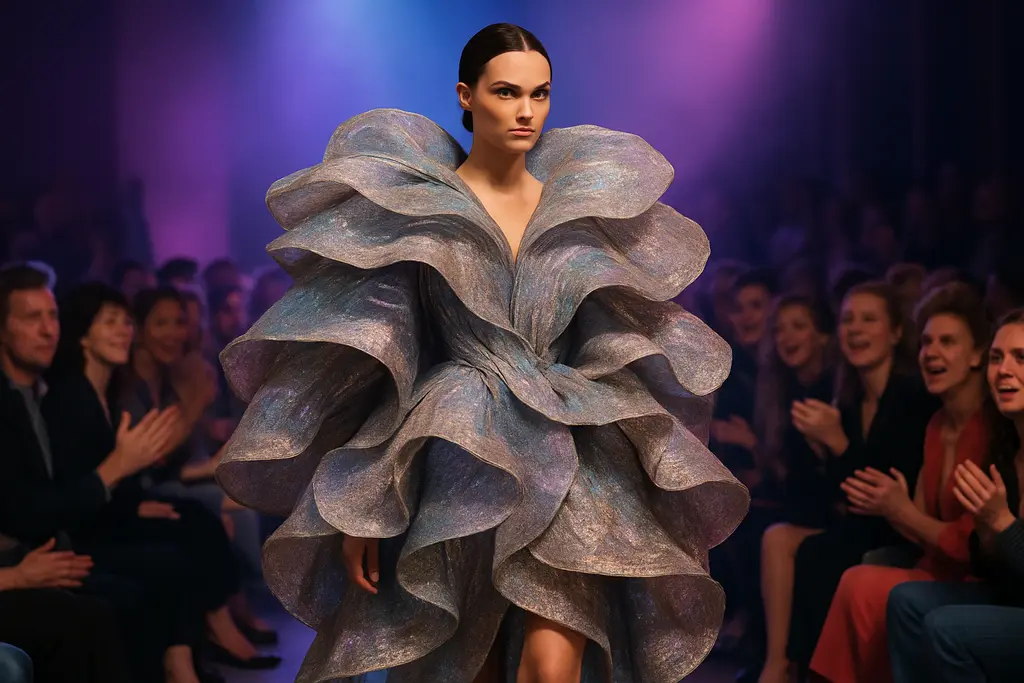
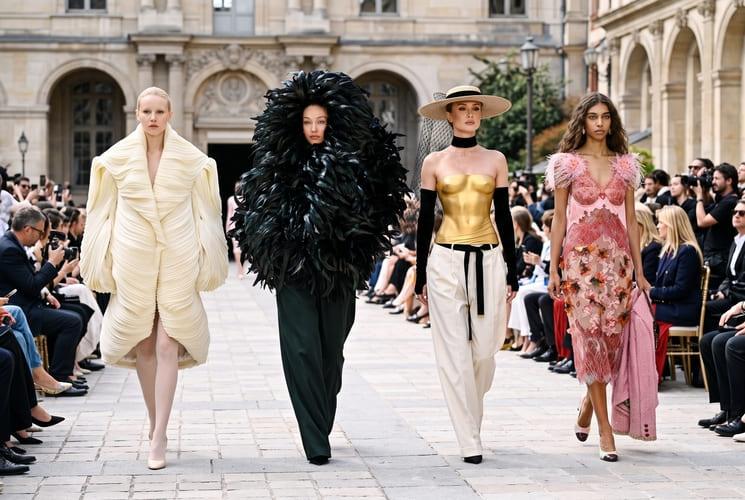
For fantasy fashion, this is a useful correction. Fairytale dress does not have to depend on sheer fabrics, pale colors, or wing-like accessories to feel uncanny. It can feel otherworldly through density, shadow, age, and repetition. Nick Cave Mammoth suggests that wonder can be built from the ordinary when objects are gathered, recontextualized, and given bodily scale.
A related comparison sits within fashion exhibition practice. Retail, installation, and garment display often overlap, but they do not mean the same thing. Readers interested in how fashion presentation can become art criticism may find this analysis of retail as art useful as a counterpoint. Cave’s project, by contrast, is not reducible to shopping logic; its stakes are grounded in memory, identity, and sculptural performance.
Design Lessons For Ethical Dress-Up

From a DIY perspective, the exhibition offers methods rather than templates. A dress-up project inspired by mammoth scale could explore padded shoulders, hoop structures, lightweight armatures, or procession-friendly movement, but it should not reproduce Cave’s specific costume or market itself through his name. A fairytale maker might build an original ancestral creature, a forest guardian, or a winter migration figure using personal materials and independent sketches.
There is also a sustainability-adjacent lesson, though the available research supports caution rather than sweeping claims. Because the exhibition incorporates found objects, hand-me-down clothing references, quilts, farm tools, and household items, it invites attention to reuse and repair. That does not prove a broader fashion shift by itself. It does show that reused materials can carry aesthetic and emotional force in a major museum setting.
For readers comparing arts coverage across sites, checking out Kay Granger can be beneficial as it is a related site in the same network, emphasizing how cultural interpretation improves through patient reading across disciplines. Costume art, museum installation, and handmade dress-up all explore how objects gain meaning when they meet the body.
Nick Cave Mammoth As Fashion Context
Nick Cave Mammoth gives fashion observers a disciplined way to think about ethereal costume design: not as escape from matter, but as careful attention to matter. The exhibition’s wearable mammoth costume, mounted Soundsuits, found-object table, beaded elements, and performance planning all point toward clothing as a carrier of memory and movement. Its value for fashion trends is not a claim that everyone will start dressing like mammoths. The stronger point is that contemporary costume thinking can become more thoughtful when it studies scale, reuse, procession, and authorship with care.
For fairytale fashion makers, the takeaway is clear enough to be practical and restrained: build original forms, let materials justify their presence, design for movement, and treat the work of living artists as context rather than a pattern sheet. That approach keeps dress-up play imaginative while respecting the artistic integrity of the exhibition that prompted the conversation.