
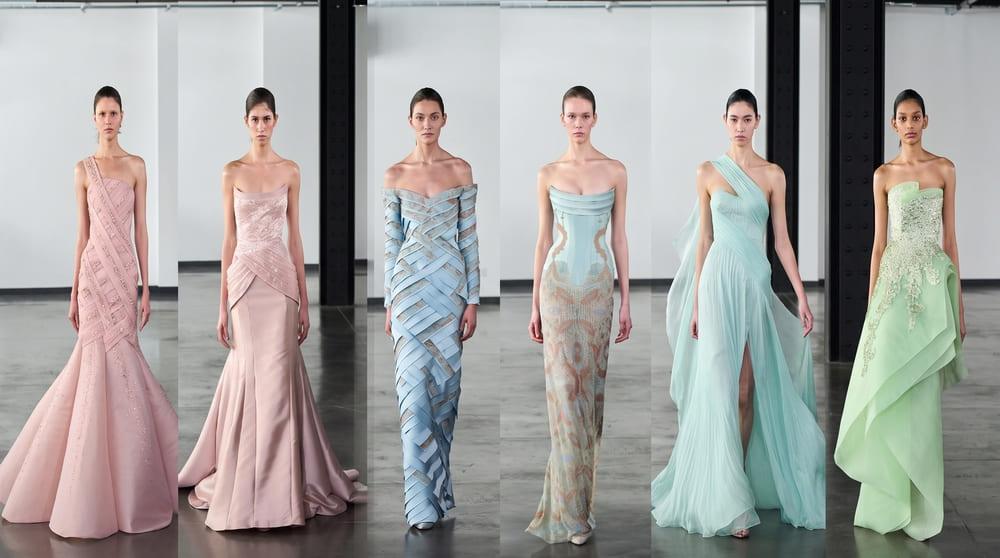
The Rami Al Ali Spring 2026 couture presentation, officially titled “Fragments in Harmony,” establishes a rigorous framework for contemporary eveningwear. Showcasing at Paris Haute Couture Week, the Dubai-based designer bypasses standard red-carpet spectacles to construct a deeply intellectual wardrobe. This season, Al Ali focuses directly on the tension between rupture and repair. Drawing inspiration from the 13th-century Persian poet Rumi, the collection translates philosophical text into physical garments. Rumi’s writings suggest that breaking and fracturing create the necessary conditions for new beauty to emerge. The atelier applies this literal concept to the pattern drafting and surface design. By refusing to rely on seamless, expected perfection, the designer proves that structural vulnerability translates flawlessly into exacting modern fashion. The presentation forces fashion critics to evaluate garments as physical representations of cultural memory and architectural precision.
The Aesthetics of Rupture and Repair
Fashion frequently hides its own construction. Al Ali reverses this standard practice for the Spring 2026 season. The atelier treats the physical assembly of the garment as the primary visual motif. Designers typically conceal stitching deep within the internal lining. Here, seams remain intentionally exposed across multiple looks. These visible connection points act as quiet markers of the artisan’s hand, celebrating the physical labor required to join separate pieces into a cohesive form.
This concept of reassembly extends heavily into the surface embellishments. The design team bypassed traditional floral lacework, choosing instead to replicate the appearance of shattered glass and broken mosaics. Artisans reconstructed these fractured motifs using dense concentrations of metallic threads, heavy glass beads, and cut crystals. The resulting textures provide a hard, abrasive contrast against the soft silk foundations. The embroidery traces delicate pathways across the body, functioning as a second skin that glitters continuously. The garments operate as wearable proof that contrasting, shattered elements produce structural strength when organized with exact intent. Every bead placement requires mathematical calculation, guaranteeing the heavy glass does not warp the fragile organza base.
Structural Clarity and Fluid Suspension
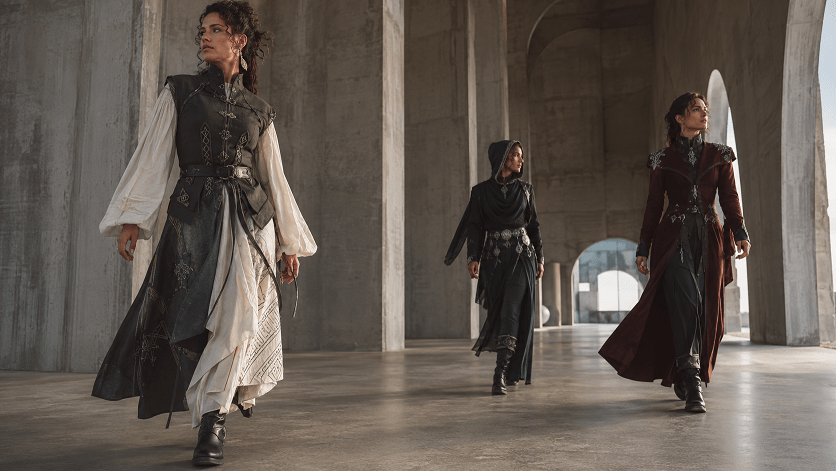
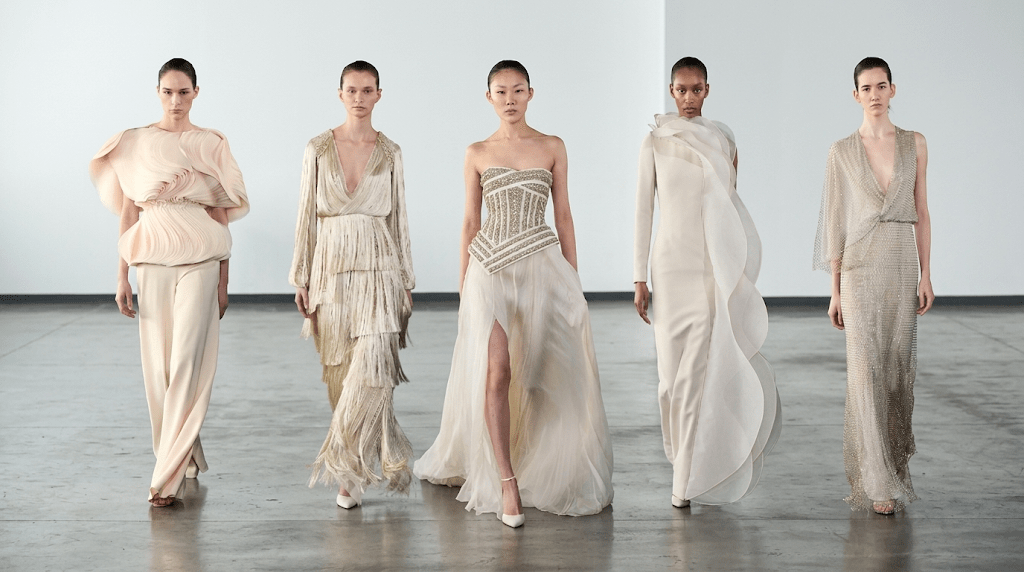
The physical shape of a gown determines its visual authority. The Spring 2026 lineup abandons the predictable ballgown silhouette in favor of sharp, linear construction that gradually gives way to fluid draping. Al Ali introduces elongated, vertical silhouettes that stretch the human form, occasionally breaking their own continuity before reconnecting through complex layered construction. The rigid upper proportions contrast immediately with the lower sections of the dresses. Sculptural forms trace the waistline, locking the midsection into a strict hourglass shape before releasing into floor-length trains.
This tension between rigid garment construction and fluid movement defines the technical success of the season. Layers of silk organza and sheer lace build depth without adding physical weight. The hard lines of the corsetry break apart as the model walks, revealing soft pleats and transparencies hidden beneath the exterior. The overlays temper the strict architectural geometry, forcing straight and curved lines to intersect across the torso. The contrast between the unyielding architectural forms and the shifting, weightless trains creates a highly dynamic runway presence. The garments respond directly to the wearer’s anatomy, shifting and resetting with every step. Observers tracking haute couture color trends will recognize this shift favoring garments that prioritize physical motion over static rigidity.
Color Theory and Luminous Gradients
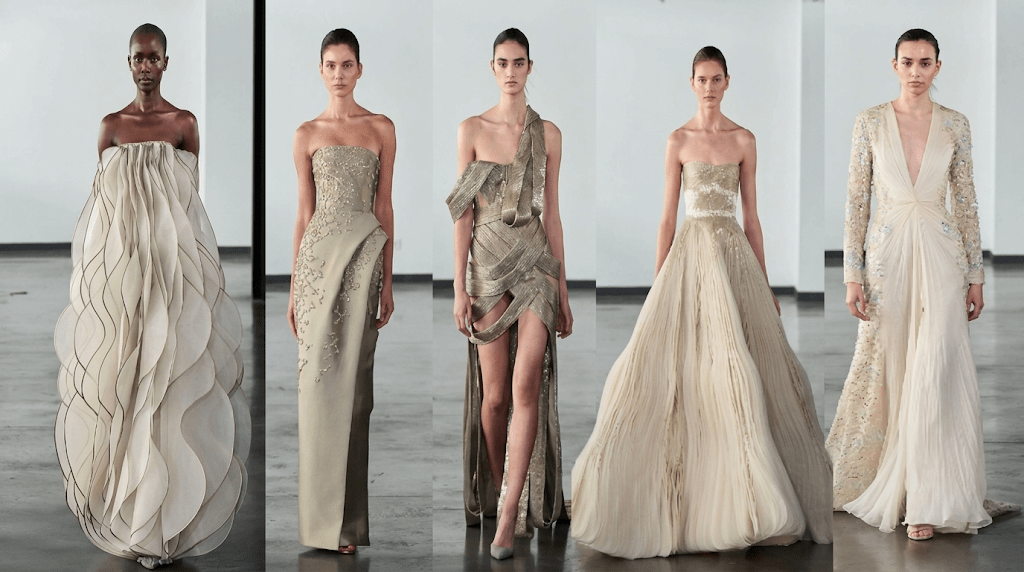
The pigment choices in the collection operate under strict discipline. Al Ali modeled the color palette entirely on the concept of light refracting through broken glass. The sequence of the runway show tracked a specific tonal progression, forcing the audience to process color as a shifting, organic entity. The designer stripped away heavy, matte fabrics in favor of lustrous, reflective surfaces.
The presentation opened with stark, neutral foundations. Ivory, alabaster, and pale pink established a calm, clinical baseline. These pale looks transitioned rapidly into warmer, saturated colors. Powdered rose, warm beige, and sage green flooded the runway. Gold, pearl, champagne, and lilac accents caught the harsh runway lighting, creating subtle shimmer without overwhelming the primary fabrics.
| Visual Phase | Dominant Pigments | Embellishment Focus |
| Foundation | Ivory, Alabaster, Pale Pink | Visible seams, structural overlays |
| Mid-Tones | Sage Green, Delicate Blue, Warm Beige | Layered organza, shifting transparencies |
| Saturation | Powdered Rose, Coral, Amber | Metallic threads, shattered glass mosaics, heavy beadwork |
The color progression prevents the collection from feeling disjointed. The exact dye matching and tonal sequencing provide the clothing with an organic, inevitable rhythm. The metallic reflections force the eye to register the full intensity of the runway lighting, bouncing illumination back into the surrounding room.
Auditory Architecture and Sensory Integration
A couture presentation requires a specific atmosphere to support the physical garments. For this collection, Al Ali collaborated directly with Persian composer Shora Karimi to create an original, bespoke score. The music drew its core structure from Rumi’s Mathnawi, utilizing live instrumentation and vocalists to echo the exact themes present in the clothing.
The auditory component anchored the visual narrative. As the fractured, mosaic-inspired gowns moved down the runway, the accompanying vocals reinforced the concept of opposing forces finding resolution. This synchronization between the auditory environment and the textile engineering prevented the collection from feeling disconnected or purely commercial. The strict adherence to a specific philosophical text gave the clothing an organic, inevitable rhythm. Anyone reviewing international runway fashion coverage can immediately identify the narrative arc created through this precise sensory integration.
Redefining Modern Couture
The Rami Al Ali Spring 2026 couture presentation forces critics to evaluate formalwear through the lens of intellectual restraint. “Fragments in Harmony” translates complex poetry into a sharp, highly relevant modern wardrobe. The collection commands respect through raw technical skill, exact color theory, and structural intelligence.
By exposing the seams and highlighting the physical act of repair, the designer challenged the traditional expectation of flawless, untouched luxury. He proved that true formal authority relies on exact cut, fluid motion, and the honest display of human craftsmanship. The garments function as wearable monuments, designed to illuminate the disciplined, resolute modern figure facing a fractured environment. Al Ali secures his position as a dominant force in modern eveningwear, establishing a wardrobe built for those who understand that beauty often requires a process of breaking and rebuilding.