

Studying dress-up play benefits through the Eaux Claires Music & Arts Festival experience requires a careful boundary. The festival is not a child-development study, and the available research does not provide direct data on costume play among attendees. Still, its emphasis on music, visual art, collaboration, and participation offers a useful cultural model for thinking about why costumes can support learning. A festival environment invites people to test mood, persona, movement, and audience awareness without pretending that the outfit itself is the art. For parents, educators, and DIY costume makers, that distinction matters: dress-up is strongest when it encourages interpretation, not imitation.
The Festival As A Participation Model
Collaboration As A Costume Prompt
Eaux Claires was established in 2015 and is identified in the research as a project co-founded by Justin Vernon of Bon Iver and Aaron Dessner of The National. Its public identity has centered on a blend of music, visual arts, and community engagement rather than a single-stage concert format. After a pause following the 2018 event, the festival announced a return for July 24–25, 2026, according to WEAU’s report. That return is relevant to dress-up culture because festivals often operate as shared creative settings, where clothing can signal participation, respect, humor, memory, or belonging.
The most useful lesson is not that every festivalgoer should arrive in costume. The supported point is narrower: Eaux Claires shows how an arts event can create conditions where audience members expect some degree of creative exchange. In a home or classroom, that same structure can be scaled down. A child choosing a cape, scarf, crown, jacket, or mask is not only decorating the body. The child is selecting a role with rules. That role may affect posture, voice, pacing, and social behavior. The outfit becomes a prompt for decision-making.
Performance Without Exact Copying
The Guardian reviewed Bon Iver’s 2026 performance as Bon Dylan, a set dedicated to Bob Dylan covers, and framed it as a distinctive Wisconsin festival moment in its review. For costume thinking, the lesson is subtle. A cover set can honor influence while making the act of interpretation visible. Dress-up can do something similar when it borrows broad cues such as silhouette, texture, era, or stage mood rather than copying a living artist’s likeness or a protected character design for commercial use. That is a cautious creative standard, not legal advice.
Festival-inspired dress-up can therefore focus on categories: folk musician, woodland listener, stagehand, poet, painter, lantern carrier, or weather-ready dancer. These are open roles, not replicas of named performers. This keeps the activity respectful toward artists and reduces the risk of flattening a real person’s identity into a costume.
How dress-up play benefits Creative Learning
dress-up play benefits And Role Distance
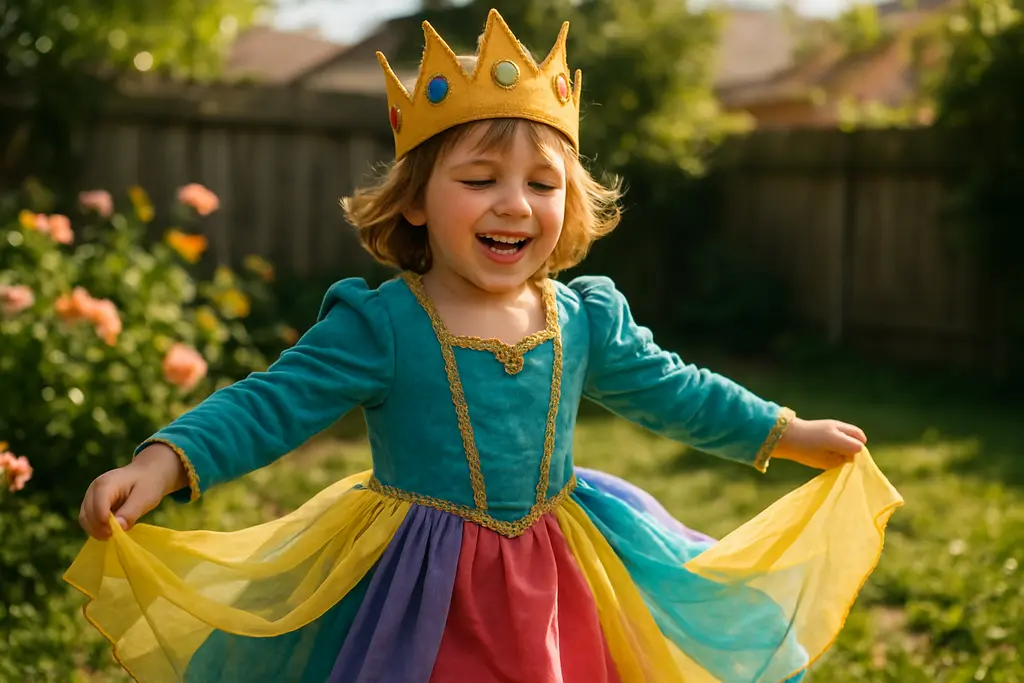
The strongest dress-up play benefits appear when a child has enough distance from the role to experiment safely. A child who says, “I am the festival map keeper,” can make choices inside a pretend frame. Which path is safe? Who needs help? What happens if the band starts late? These small imagined problems invite cognitive flexibility and problem-solving. The research notes that dress-up play can support cognitive development, social skills, emotional expression, creativity, cultural awareness, language development, physical coordination, and confidence. Because those points are broad rather than specific to Eaux Claires, they should be treated as transferable possibilities, not festival-measured outcomes.
Those dress-up play benefits become clearer when adults pay attention to process rather than polish. A handmade jacket made from a blanket may teach more than a flawless purchased costume if the child helps decide what it means. A cardboard wristband can become an access pass, a signal of responsibility, or a story object. A paper flower crown can become a marker of a woodland stage, but it should not be sold as a copy of a specific artist’s personal look. The learning sits in the naming, negotiation, and storytelling.
Language, Movement, And Emotional Practice
Narrative play is especially useful because it turns clothing into speech. A child who introduces a pretend band, interviews a friend, or announces a weather delay is practicing vocabulary, sequencing, tone, and public confidence. Movement enters as well. Buttoning, tying, folding, arranging scarves, stepping around props, and carrying a pretend instrument can support fine and gross motor coordination. Emotional expression is also present, but not always obvious. A shy child may speak through a puppet-like role. An energetic child may learn to wait for a cue before entering the scene. A disappointed child may replay a missed performance and change the ending.
Adults can support this without forcing performance. The aim is not to make every child louder or more theatrical. Some children use dress-up quietly, arranging garments, making tickets, or assigning seats. That still counts as meaningful play. If the setting borrows from a festival, the adult can ask grounded questions: Who is arriving? What does this scarf tell us about the character? What should the audience do if the rain starts? These questions create structure without taking ownership away from the child.
Designing Respectful Festival-Inspired Costumes
From Mood Board To Dress-Up Bin
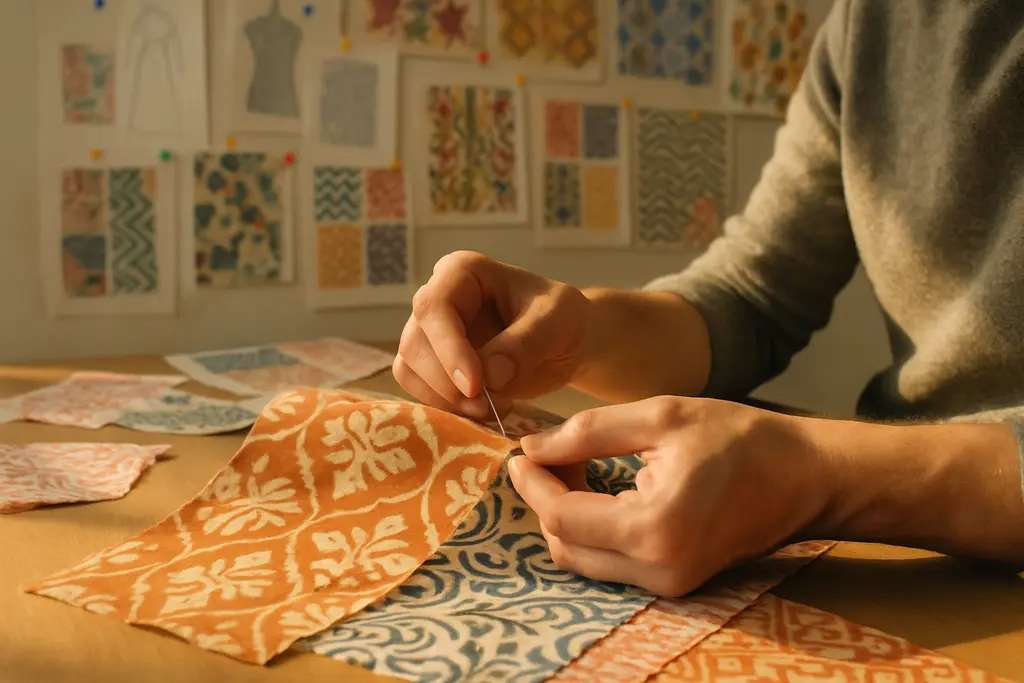
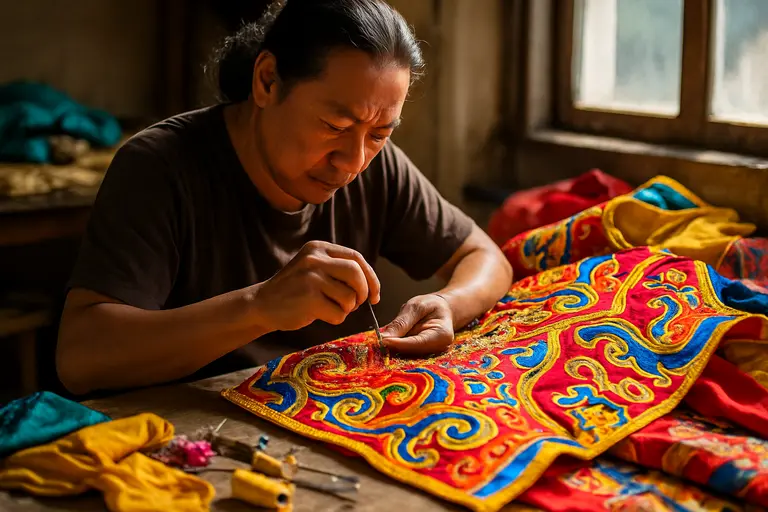
A respectful Eaux Claires-inspired costume starts with atmosphere rather than duplication. The festival research supports themes of artistic collaboration, music, visual arts, and community engagement. Those themes can become design choices: layered fabrics for changing weather, soft textures for outdoor listening, handmade badges for roles, and small props that suggest participation. Neutral bases such as denim, cotton, linen-like scraps, thrifted shirts, and simple capes let children build identities without being locked into a branded figure.
For home setups, a small dress-up station can carry the same logic as a festival site map. One area holds role markers, another holds movement pieces, and another holds storytelling props. If the play expands into performance, a living-room stage can help children practice audience awareness; the site’s piece on a dress-up photo booth and mini theater fits that kind of activity. If costumes start to pile up, rotating pieces can keep choices manageable; a system for labeling and rotating dress-up collections supports that practical side.
A Short Checklist For Safer Creative Choices
- Use open-ended roles such as listener, maker, usher, drummer, storyteller, painter, or weather watcher.
- Choose colors and textures for mood rather than copying a named performer’s full look.
- Keep props lightweight, soft-edged, and easy to set down when a child changes roles.
- Ask the child what the costume does in the story before adding more accessories.
- Separate private play from anything sold or promoted with another artist’s name, likeness, or protected character identity.
This approach protects the artistic integrity of original works while still giving children enough visual material to create. It also avoids turning festival culture into a costume catalog. A child can learn from the structure of a music-and-arts gathering without reducing real musicians or communities to outfits.
Eaux Claires Lessons For Home Dress-Up
Small Scenes With Shared Rules
For home practice, dress-up play benefits are easiest to observe in small scenes with clear limits. A ten-minute pretend festival can include a greeter, two performers, a quiet audience area, and a maker booth. The adult’s role is to frame the space and then step back. Children can decide who enters, what each garment means, and how the scene changes if someone wants a new role. This mirrors the participatory spirit associated with Eaux Claires without claiming the festival itself teaches dress-up skills.
The strongest takeaway is a cautious one: festival culture can inspire better dress-up design because it treats clothing, sound, place, and audience as connected signals. Eaux Claires offers a useful example of art built around collaboration and community presence. In a child’s playroom, those ideas become smaller but still meaningful. A scarf can mark a guide. A vest can mark a stage helper. A paper badge can turn a quiet child into the person who welcomes the audience. None of these choices needs to be expensive or exact. The educational value comes from interpretation, shared rules, and the child’s growing ability to speak, move, imagine, and relate to others through a chosen role.