

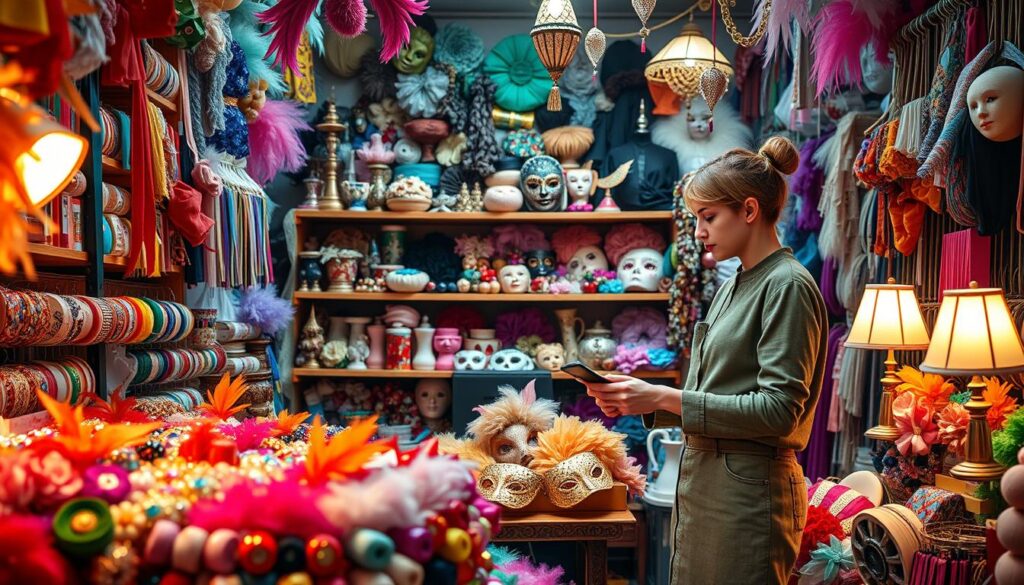
Imagine a ballroom turned into a living storybook. This was the dream behind The Art Students League of New York’s Dream Ball, themed “Maximalist Fairytale.” Such an event needs more than just a costume. It calls for a deep dive into a world of exquisite materials and creative sourcing.
This creative journey has a long history. For years, Parisian paruriers and historic suppliers like La Droguerie have mastered the art of costume embellishment. Their legacy is the base for today’s makers.
Every creator has a big choice to make. Do you search local specialty shops for unique finds? Or do you explore the vast digital marketplace? Finding your way through this landscape is the first step to bringing your vision to life.
The heart of this journey is a well-stocked haberdashery. It’s not just a collection of items. It’s a carefully chosen set of fabrics, trims, and notions that are key for making things.
Knowing this foundation gives modern creators power. By learning from master artisans, you can find materials that tell your unique story.
Quality Cues for Fabrics, Trims, and Findings
The real magic of a costume is in its fabrics, trims, and findings. Knowing how to pick these materials makes a big difference. It saves time, money, and makes sure your costume looks exactly as you imagined.
First, think about the fabric. Look at its weight, weave, and how it drapes. A thick brocade works well for structured parts, while a light chiffon is great for flowing parts. Check the fabric’s weave by holding it up to the light. A tight weave means it’s durable and opaque.
To see if fabric drapes well, just hold a swatch over your hand. If it folds softly, it’s good for a flowing gown. But if it stays stiff, it might be better for armor details. For costumes that need to move a lot, like dance costumes, use special fabrics made for movement.
Trims and findings add a touch of luxury. Look for lace with clean edges and detailed patterns. Sequin tape should have tightly packed sequins that don’t fall off easily.
When it comes to beading, check the stringing. Beads should be evenly spaced and the thread should be strong. Good beading feels solid, not flimsy. In high-end fashion, paruriers carefully choose these materials, showing why they’re worth the investment.
Feathers add a lot of drama and movement. Knowing the different types is important. Marabou feathers are soft and light, great for adding a touch of fluff. Ostrich plumes are long and elegant, perfect for flowing designs.
Coque feathers are stiffer and have a clear eye, great for structured pieces. Look for feathers that are full and undamaged, with vibrant colors. Avoid feathers that look flat or shed a lot.
Always buy feathers from a trusted trims store. A good store will tell you about the feathers’ origin and how they were processed. They help you pick the right feathers for your project. This ensures you get the best quality and ethically sourced materials.
Learning these quality cues helps you choose materials that make your costume stand out. It turns shopping into a key part of the creative process.
Maker Interviews: how pros source fantasy textures
Finding unique textures for fantasy costumes is a mix of old-school hunting and new tech skills. Experts say it’s like being detectives, searching for materials that tell a story. They use old-fashioned connections, lucky finds, and online tools.
Rebecca Devaney found that making direct connections with small suppliers is key. Many designers partner with small mills and family-run shops. These partnerships give them access to special fabrics and custom items not found in big stores.
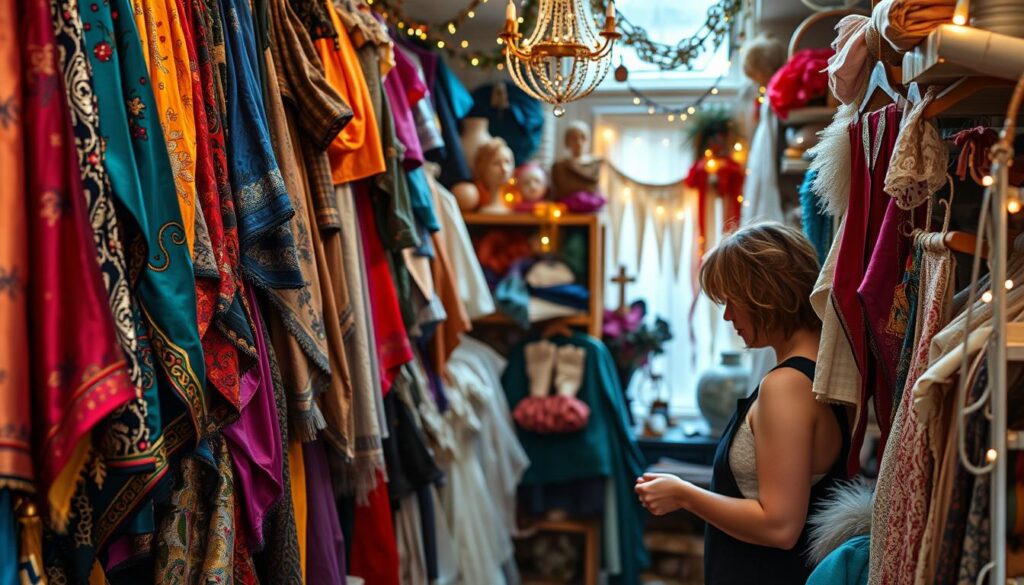
Being good at “treasure hunting” is important. Places like Paris’s Marché aux Puces are famous for unique finds. Now, social media and online auctions let designers hunt worldwide. They follow hashtags and join groups to find rare items.
Online shops are now essential. Etsy shops are great for finding unique items. Designers love them for sparking creativity.
- Hand-dyed Fabrics: Small dyers on Etsy offer unique colors and textures not found in big batches.
- Custom 3D-Printed Embellishments: Artists make special clasps and pieces for each character’s look.
- Vintage Trims & Passementerie: Sellers with antique items add real historical touches.
Successful sourcing is more than just finding a seller. It’s about building a network. Designers say to treat Etsy shops like partners. Engage with sellers, share project details, and ask for custom work for amazing results.
Another tip is to use specific search terms. Looking for “fantasy fabric” might not help. Instead, use terms like “iridescent silk dupioni” or “hammered metallic leather.” This way, you find materials by their texture, not just their use.
Maker interviews show a clear message. A good strategy mixes human connections and digital tools. Whether it’s a personal note or a saved search, each step helps find the magical materials for fantasy costumes.
Favorite Shops & Marketplaces by Category
This guide highlights favorite destinations for costume supplies. It covers legendary trims stores and essential online hubs. Knowing where to source materials saves time and elevates your final creation.
Some shops are pilgrimages for makers. Paris’s La Droguerie is a sensory overload of threads, beads, and findings. It inspires with its sheer variety. Nearby, the historic Rue de Choiseul remains a center for millinery supplies.
For a US-based gem, New York’s M&J Trimming offers an overwhelming array of ribbons, appliqués, and buttons. These stores are favored for tactile shopping and unique discoveries you can’t find online.
Essential Online Retailers for Base Fabrics
Online giants provide reliability and selection. Mood Fabrics is a top choice for a vast range of base materials, from cottons to specialty fabrics. Their swatch service is invaluable. Fabric.com (via Amazon) offers convenience and competitive pricing for everyday projects.
These retailers excel for stocking up on foundational costume supplies with fast shipping.
Specialized Theatrical & Dancewear Suppliers
Fantasy costumes often need specific performance qualities. Dancewear Solutions carries stretch fabrics, sequin mesh, and lycra perfect for movement. For authentic historical or theatrical fabrics, Renaissance Fabrics provides period-appropriate wools, silks, and brocades.
These niche sites offer expertise and materials tailored to demanding stage environments.
Niche Marketplaces for Vintage & Unique Finds
For one-of-a-kind elements, turn to marketplaces. eBay and Etsy are treasure troves for vintage lace, deadstock buttons, and antique trims. Specialty Facebook groups connect buyers and sellers of rare costume pieces.
These platforms are perfect for sourcing character-specific details that tell a story.
| Category | Shop Name | Location/Access | Key Strength |
|---|---|---|---|
| Iconic Trims Store | La Droguerie | Paris, France | Overwhelming variety of beads, threads, & unique findings |
| Millinery Supplies | Rue de Choiseul District | Paris, France | Historic center for hats, feathers, and embellishments |
| US Fabric & Trims | Mood Fabrics | Online & NYC, USA | Vast selection of base fabrics and reliable swatches |
| Theatrical Fabrics | Renaissance Fabrics | Online, USA | Period-accurate materials like brocades and wools |
| Vintage Marketplace | Etsy | Online Global | Handmade and vintage trims, lace, and unique components |
Balancing these iconic destinations with practical online suppliers gives every creator a robust toolkit. Whether you seek inspiration or specific costume supplies, this categorized list points you to the right trims store or fabric hub for the job.
Budgeting: when to splurge vs save
A smart budget for costume creation isn’t about cutting corners; it’s about making every dollar count. It helps you create stunning costumes without worrying about money. The secret is to spend wisely on what really matters.
Think of your budget as an art investment. Spend more on what makes the character stand out. Save on details that support the overall look. This way, every dollar adds to the costume’s impact.
- Splurge on the Foundation: Invest in the main fabric and standout trim. These define the costume’s look and feel.
- Splurge on Specialized Findings: Unique clasps and ornate buttons make a big difference. They add to the costume’s appeal.
- Save on the Unseen: Save on lining fabrics and basic thread. They’re essential but not seen.
- Save on Common Fasteners: Buy standard zippers and snaps in bulk. They’re affordable and often needed.
Smart shopping can make your budget go further. Sign up for newsletters from your favorite suppliers. You’ll get coupons and be first in line for sales. Waiting for the right deal can save you a lot.
Buying in bulk with friends is another smart move. It’s great for items like fabric and threads. Suppliers offer discounts for large orders. Look for supplies you use a lot to save money.
Learning to balance spending and saving turns budgeting into a creative advantage. You can invest in what truly matters, making your costumes look like they cost a lot more.
Shipping, Lead Times, and Swatching
Before starting a project, it’s important to understand shipping, timing, and swatching. These steps turn a dream into a real plan. Skipping them can cause delays and wrong materials.
Lead times differ a lot. Big fabric stores ship fast, in a week. But small makers and custom dye houses take longer, four to eight weeks. Always check the time needed before you order.
Custom items like hand-dyed ribbons or metal findings take longer. Order these first. Then, plan the rest of your project around when they arrive.
Shipping costs and rules are also important. Here’s how different sellers compare:
- Large Online Retailers: They often have flat-rate shipping or free shipping after a certain amount. Returns are easy.
- Independent Sellers & Artisans: They might charge more per package. Their rules can be stricter. Good communication is key.
- International Vendors: Expect longer delivery times, extra fees, and higher shipping costs. Always read the details.
Ordering swatches is a must. A photo can’t show texture, weight, or true color. A small sample saves a lot of trouble and money.
Swatches are key for quality control. They let you feel fabrics and see colors in your own light. You can also test how they react to different materials.
Having a collection of swatches is a pro habit. It turns guesses into smart choices. Start with a simple way to organize them.
Use a clear binder with plastic pages. Label each swatch with important info. Include the vendor, product code, fiber, price, and date.
This library is priceless for future projects. It helps match new ideas with known materials. It makes sourcing easier.
Getting good at logistics like lead times, shipping, and swatching is essential. It lets your creativity flow into making, not solving problems. Your workspace runs smoothly with reliable info, not guesses.
Toolkits for Starters vs Upgraders
Let’s clear up the confusion about choosing tools. There are two main kits: one for beginners and another for advanced users. Pick the right tools based on your current projects and skill level. This avoids frustration and saves resources.
A smart maker builds their collection with purpose. The right tools make the job easier and open up new creative possibilities.
This kit is all about versatility and reliability for basic to intermediate projects. Think of these as your go-to items.
- Fabric Shears: Invest in one great pair used only for fabric. This protects the blades and ensures clean cuts.
- Glass-Headed Pins: They won’t melt under an iron and are easy to see and handle.
- Basic Sewing Machine: A machine with a straight stitch, zigzag, and buttonhole function handles most construction. Reliability is key over fancy features.
- Seam Ripper & Measuring Tape: The unsung heroes for fixing mistakes and ensuring accuracy.
- Hand-Sewing Needles & Thread: For finishing details, basting, and repairs.
For a deeper dive into assembling these fundamentals, this guide to your first is an excellent resource.
The Upgrader Kit: Specialist Tools for Structure & Detail
Ready to craft hats, structured bodices, or elaborate embellishments? This tier introduces materials that provide form, stiffness, and ethereal texture.
Millinery Wire is a flexible, yet shape-holding wire essential for hat brims, headpieces, and corset boning channels. It allows you to create custom shapes that fabric alone cannot support. Look for brands like Richard the Thread or Judith M Millinery Supplies for quality options.
Buckram is a stiff, open-weave fabric used for interfacing. It’s the secret behind standing collars, helmet linings, and the firm crowns of hats. When fused or sewn between layers, it provides permanent structure. Source it from specialty suppliers like Wawak or GoldStar Tool.
Tulle is not just for ballet skirts. Different grades serve distinct purposes. Soft, drapey tulle creates flowing veils and fairy wings. Stiffer nylon tulle adds volume to petticoats. Illusion netting, a finer mesh, is perfect for magical sleeves or overlays. Experiment with samples from stores like OnlineFabricStore.net to feel the difference.
Building your toolkit is a progressive journey. Master the essentials first. Then, introduce specialized items like millinery wire, buckram, and specialty tulle as your projects demand them. This strategic approach builds both skill and confidence.
Seasonal Sales Calendar
Getting the best deals on costume supplies is all about timing. The retail world follows a yearly pattern. By shopping at the right times, you can stock up without spending too much.
This calendar helps you plan your spending. It’s like a guide for saving money while being creative all year.
| Time of Year | Target Supplies | Strategic Rationale | Pro Tips |
|---|---|---|---|
| Post-Halloween (November) | General fabrics (broadcloth, felt), trims, basic findings, costume accessories. | Retailers clear out Halloween inventory. This is the prime time for foundational materials at 50-70% off. | Focus on neutral basics. Avoid highly themed prints. Check craft chains and online marketplaces. |
| Winter Holiday (January) | Sequins, metallic fabrics, glitter, specialty beads, luxury velvets, and satins. | Post-Christmas sales target holiday décor and party supplies. The glitz and glamour for fantasy costumes are deeply discounted. | Ideal for stocking up on statement elements for royalty, fairy, or celestial costumes. |
| Spring Cleaning (March-April) | Natural fiber fabrics (cottons, linens), sewing patterns, organizational tools. | Stores refresh inventories for summer. They discount older fabric lines and last season’s patterns. | Perfect for sourcing materials for peasant, bard, or any rustic, earth-toned character builds. |
| Summer Clearance (July-August) | Lightweight fabrics (chiffon, gauze), lace, ribbons, basic sewing tools. | End-of-summer sales clear out seasonal stock. This is a goldmine for ethereal and flowing costume elements. | Buy lace and chiffon in larger quantities for layered gowns or wing covers. Great for fast costume projects. |
| Back-to-School (Late August) | Felt, craft foam, glue, basic paints, and tool kits. | Stores compete for school project shoppers. Prices on fundamental crafting materials hit yearly lows. | Stock up on construction basics for armor, props, and accessory making. Think bulk buying for group projects. |
Using these tactics together can be very effective. Remember to use coupons and newsletter codes for even more savings.
Buying in bulk during sales can save a lot of money. For example, buying extra fabric in November can save you a lot for your spring projects.
This approach changes how you shop. You become a proactive stash-builder. Your wallet and your creative space will thank you.
Resource Map Download
Your journey to find fairytale costume supplies has been exciting. You’ve learned about quality fabrics and trims. You’ve also found where to get fantasy textures.
You’ve checked out favorite shops and marketplaces for all needs. Budgeting tips helped you know when to spend and save. You’ve learned about shipping and tools for all skill levels.
Our seasonal sales calendar helps you plan your purchases. We’ve put all these tips into one document. Our exclusive Resource Map is a downloadable PDF checklist.
This map combines shop recommendations, quality cues, budgeting tips, and the seasonal calendar. It turns our guide into a plan for your next project. Get your copy by joining our community of creative enthusiasts.
Subscribe to access this resource and keep learning about creative craftsmanship. We’re here to help you make amazing fantasy costume pieces with practical tips.