A religious wedding ceremony demands specific architectural considerations. Houses of worship impose strict rules regarding physical coverage and formal presentation. A bride must balance these institutional requirements with modern personal aesthetics. The most successful bridal designers construct garments that respect the venue without sacrificing high-level design. We will analyze the current market offerings to identify silhouettes that perform flawlessly in traditional religious environments. Building a functional bridal look for a cathedral setting requires ignoring fast-fashion trends. The focus shifts entirely to precise garment construction, intelligent fabric choices, and strategic layering.
Decoding Institutional Dress Codes
Religious venues enforce distinct sartorial rules. Catholic cathedrals often require covered shoulders and a modest neckline. Certain Orthodox or traditional Protestant churches mandate sleeves extending past the elbow. Ignoring these rules creates immediate friction on the wedding day. A bride must secure the exact written guidelines from the venue officiant before purchasing any garment.

High-end ateliers design specific collections catering directly to these requirements. The garments feature built-in coverage rather than relying on flimsy, sheer panels that fail under harsh scrutiny. A luxury church wedding dress utilizes heavy fabrics to create structure around the shoulders and collarbone. This approach guarantees the dress looks entirely intentional rather than hastily modified to pass a dress code check.
The Architecture Of The Modest Silhouette
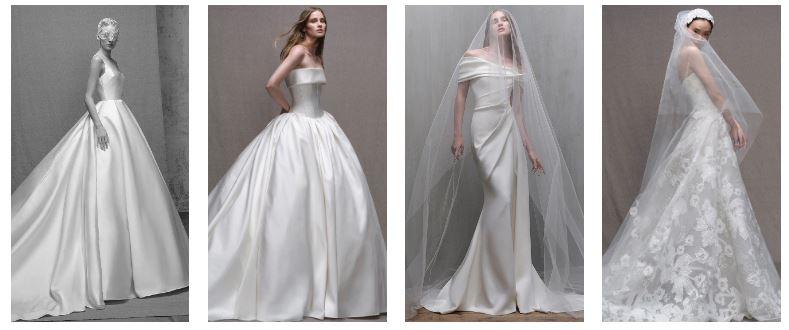
The modern modest gown abandons the heavy, frumpy designs of the past. Today’s top selections rely on sharp, clean lines. The high-neck column dress provides a brilliant example. The stiff collar frames the jawline perfectly. The long sleeves create a continuous, unbroken visual line from the shoulder down to the wrist bone. This mathematical approach to proportions guarantees the outfit remains sharp and deliberate.
Another highly functional silhouette is the structured ballgown. The volume sits entirely in the skirt, supported by internal crinoline. The bodice remains rigidly fitted, utilizing internal corsetry to maintain a perfect shape. This contrast between a severe top and a massive, floating bottom works exceptionally well in large, cavernous church spaces. The scale of the dress matches the scale of the architecture. A small, minimal slip dress often gets completely lost against the massive stone pillars of a cathedral.

Neckline Engineering For Modesty
The neckline dictates the entire formal presentation of the gown. Plunging V-necks and sweetheart cuts dominate outdoor and destination weddings. A church setting demands higher cuts that maintain elegant proportions. The bateau neckline serves as a masterclass in this specific design challenge. The fabric cuts straight across the collarbone, exposing the neck and the very edge of the shoulders. This exposes skin near the face while keeping the chest entirely covered.
The mock neck offers a highly editorial alternative. A high collar crafted from stiff silk or heavy lace projects absolute authority and extreme formality. The designer must balance a high neckline with a fitted bodice to prevent the garment from swallowing the bride. A sharp, tailored fit through the ribs and waist counteracts the heavy fabric coverage on top.

Fabric Mechanics For Cathedral Settings
The raw materials dictate the absolute success of the entire bridal outfit. Thin, cheap polyester traps heat and reflects camera flashes poorly. The current church wedding dress market relies on premium, heavy fibers holding strict geometric shapes. Silk Mikado acts as the primary choice for formal religious ceremonies. This heavy silk blend possesses a stiff, structural quality. It holds sharp pleats and dramatic folds without collapsing.
Silk faille and wool crepe provide a completely different structural profile. These rigid materials support complex architectural elements like exaggerated shoulders or stiff peplums. The weight of the fabric acts as a deliberate counterweight to the sheer scale of the building. Reviewing professional modest bridal guidelines clarifies exactly how these heavy textiles behave in motion during a long processional walk.
| Fabric Type | Structural Property | Ideal Dress Silhouette |
| Silk Mikado | High rigidity, holds sharp pleats | Voluminous Ballgown |
| Silk Crepe | Heavy drape, conforms to curves | Fitted Column Dress |
| Heavy Brocade | Textured, holds architectural shapes | A-Line Gown |
| Cotton Lace | Matte finish, highly detailed | Long-Sleeve Sheath |
Sleeve Construction And Arm Mobility
Sleeves represent the most challenging aspect of modest bridal design. A skin-tight lace sleeve looks beautiful in photographs. It restricts arm movement entirely. A bride must possess the ability to lift her arms during the ceremony and maneuver comfortably throughout the day.
Designers solve this mechanical problem through strategic pattern drafting. The bell sleeve offers wide, unrestricted movement through the elbow and wrist. The bishop sleeve gathers soft fabric at the shoulder, letting it blouse outward before terminating in a tight, buttoned cuff at the wrist. These voluminous sleeve styles add high-drama architecture to the upper body without sacrificing physical mobility.

Strategic Layering And Detachable Elements
A full-coverage gown often feels too restrictive for a high-energy evening reception. Designers solve this logistical problem through strategic layering. The convertible wedding dress dominates the current luxury market. A bride selects a strapless or thin-strapped base gown. She then adds a heavy, opaque bolero or a structured silk cape over the top for the religious ceremony.
This outer layer acts as a protective, rigid shell matching the formality of the church perfectly. Following the ceremony, the bride removes the structural topper. The outfit instantly transforms into a relaxed, evening-appropriate presentation. This dual-look strategy requires exact color matching. The top layer must utilize the exact same silk dye lot as the base dress. A mismatched white jacket ruins the strict geometry of the base outfit. You can read more about coordinating these complex pieces in our guide to formal bridal styling for structured events.
Veil Selection And Aisle Proportions
The church aisle presents a unique spatial environment. A long, dramatic walk requires an accessory commanding the physical space trailing behind the bride. The cathedral-length veil serves this exact purpose. The veil extends far past the hem of the dress train, dragging softly across the floor.
Selecting the correct veil material involves analyzing the texture of the dress. A heavily beaded, complex dress requires a completely plain, sheer tulle veil. A stark, minimalist silk gown pairs beautifully with a veil featuring heavy lace appliqué along the borders. The accessory must contrast with the base garment. Matching heavy lace to heavy lace creates massive visual clutter. The current standard demands extreme restraint in quantity and extreme aggression in scale. You wear one massive, floor-sweeping accessory and leave the rest of the headpiece completely minimal.
Footwear Integration For Stone Floors
Historic churches feature uneven stone, marble, or tiled floors. The footwear must possess enough physical mass to provide actual physical support on unpredictable surfaces. Delicate, thin-strapped stilettos look entirely absurd sinking into aisle runner gaps. Shoe designers abandoned extreme platforms and pivoted back to pure structural realism.
The anatomical kitten heel serves as the daily workhorse for the bridal crowd. These shoes follow the natural biological curve of the human foot. A polished leather block heel provides a brilliant, grounded alternative for ancient cathedral floors. The wider base prevents the shoe from catching in floor grates, acting as a rigid anchor for heavy silk garments.
The shoe must remain completely enclosed. Open-toed sandals violate the strict formality demanded by the venue. A pointed-toe pump extends the visual line of the leg straight into the floor. The sharp toe peeking out from beneath the heavy silk hem completes the highly calculated, flawless presentation. Every individual piece of the outfit serves a distinct structural purpose, resulting in a flawless aesthetic performing perfectly inside a historic venue.