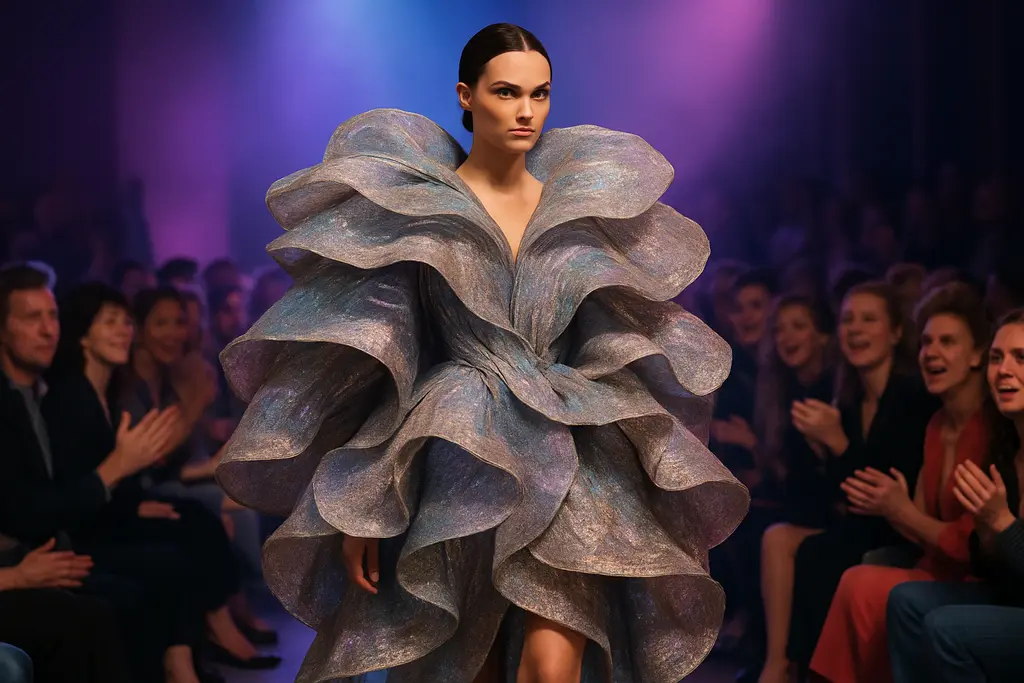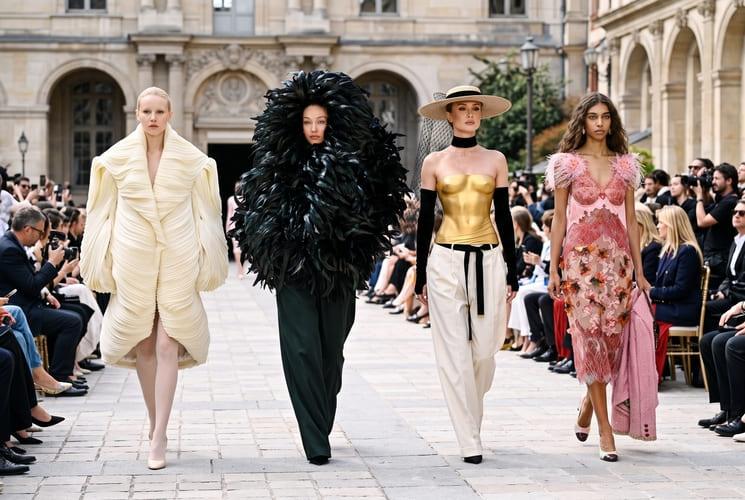

Paris sets the absolute standard for global garment construction twice a year. The Autumn/Winter 2026 collections marked a distinct shift in the industry’s visual language. Creative directors across the major heritage houses abandoned soft, romantic aesthetics. They replaced them with severe, highly architectural silhouettes designed for a harsh winter climate. The presentations felt grounded in physical reality rather than pure fantasy. The clothing prioritized heavy protection, exact geometry, and absolute textile supremacy.
The Fédération de la Haute Couture et de la Mode enforced strict guidelines for the participating ateliers this season. The focus returned entirely to the raw skill of the petites mains—the highly trained artisans who construct every garment by hand. The reliance on flashy digital printing and basic volume vanished completely. We witnessed a masterclass in structural engineering. Designers built clothing from the inside out, utilizing complex internal corsetry and heavy canvas to mold heavy winter fabrics into gravity-defying shapes. This analytical approach to dressing redefined the expectations for custom luxury apparel.
The Return To Rigorous Construction
The physical construction of the garments took center stage across every major presentation. Ateliers moved away from the lightweight tulle and chiffon that dominated recent years. They embraced heavy, difficult textiles. Double-faced cashmere, thick wool felt, and rigid silk faille formed the foundation of the season. Working with these heavy materials requires supreme technical skill. A single mistake in the cutting process ruins the entire drape of a wool coat.
Designers utilized traditional tailoring techniques to force these heavy fabrics into unnatural, striking shapes. Pad stitching—a hand-sewing method used to shape the lapel of a tailored jacket—appeared on evening gowns and massive winter capes. This invisible internal architecture supports the heavy weight of the exterior fabric. A dress might weigh fifteen pounds, yet it hangs perfectly balanced on the wearer’s frame. The mastery of this internal support system separates true custom garment making from standard high-end retail.
The silhouette of the season featured sharp, exaggerated shoulders and a strictly defined waist. The volume sat entirely at the hips, creating a highly structured hourglass shape that completely obscured the natural human form. This rigid approach offers a form of soft armor. The clothing protects the wearer from the brutal winter elements and the intrusive gaze of the public.
Schiaparelli And The Anatomy Of Winter
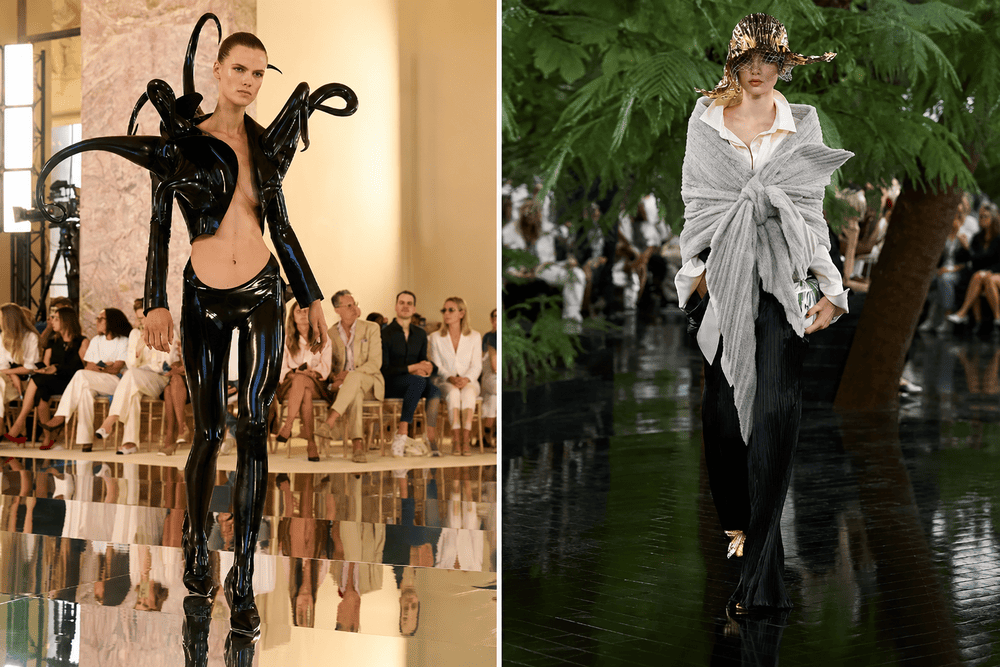
Daniel Roseberry delivered a collection for Schiaparelli rooted entirely in severe winter geometry. He abandoned the fluid, organic curves of his previous summer presentations. The atelier focused strictly on rigid velvet, heavy wool crepe, and heavy brass hardware. A standout black coat required four hundred hours of continuous hand-stitching. The artisans shaped thick black wool around a hidden, cage-like internal corset. This technique completely altered the model’s natural silhouette. The shoulders sat exactly three inches wider than standard anatomical measurements.
Roseberry grounded his signature surrealism in heavy, functional winter textiles. The house’s famous anatomical motifs appeared not as delicate embroidery, but as heavy, functional hardware. Brass clasps shaped like human hands secured the fronts of massive, floor-length puffer coats. These coats utilized silk taffeta stuffed with dense, thermal-regulating down. The visual impact remained entirely theatrical, yet the garments offered legitimate protection against sub-zero temperatures.
The color palette at Schiaparelli remained strictly controlled. Black, stark white, and the house’s signature shocking pink dominated the runway. The lack of varied color forced the audience to analyze the cut and the texture of the fabric. A floor-length pink velvet gown caught the runway lighting perfectly, revealing the complex, mathematical pleating running down the spine. This exactness defines the current era of the brand.
Christian Dior Explores Archival Restraint
Maria Grazia Chiuri leaned into absolute austerity for the Christian Dior A/W 2026 presentation. She presented fifty looks entirely devoid of obvious surface embellishment. No beads, no sequins, and no heavy embroidery appeared on the runway. The focus shifted entirely to the drape of the fabric and the precision of the seam work. The atelier sourced heavy silk crepe from a heritage mill in Northern Italy. This specific textile falls straight to the floor and holds a sharp, permanent crease.
Chiuri mined the Dior archives from the late 1950s, studying the exact geometry of Christian Dior’s later collections. She reimagined the classic Bar Jacket for a modern, harsh winter. The new iteration features a higher, funnel neckline that obscures the throat and protects against the wind. The waist remains cinched, but the peplum flares out with sharper, more aggressive angles. The artisans achieved this shape by layering stiff horsehair canvas beneath the dark grey wool exterior.
The collection relied heavily on the technique of plissé. The Dior workrooms pleated heavy winter wools into precise, knife-edge folds. These pleated skirts moved with a heavy, fluid grace. The discipline required to permanently pleat thick winter wool demonstrates the unmatched skill of the Paris workrooms. The muted color palette of charcoal, slate blue, and dark taupe reinforced the serious, highly disciplined tone of the entire presentation.
Balenciaga Defies Traditional Proportions
Demna presented a Balenciaga collection that challenged every traditional rule of custom garment making. The presentation took place in a stark, heavily soundproofed room, forcing the audience to focus entirely on the rustle of the heavy fabrics. The designer utilized upcycled luxury materials to construct severe, face-obscuring outerwear.
The concept of the trench coat received a massive, architectural overhaul. Balenciaga artisans fused three vintage trench coats together to create a single, massive overcoat. The final garment featured multiple collars, overlapping lapels, and a sweeping, floor-length hem. The weight of the garment required a specialized internal harness system, allowing the model to carry the coat entirely on the upper back and shoulders.
Eveningwear at Balenciaga followed a similarly disruptive path. The atelier constructed column dresses from stiff, synthetic neoprene layered over delicate silk organza. The contrast between the rigid, scuba-like material and the fragile silk created intense visual friction. Demna continues to redefine exactly what constitutes a luxury material. The exact execution of the seams and the perfect balance of the massive proportions validate these experimental fabrics on the highest stage in fashion.
Chanel Embraces Heavy Tweed Architecture
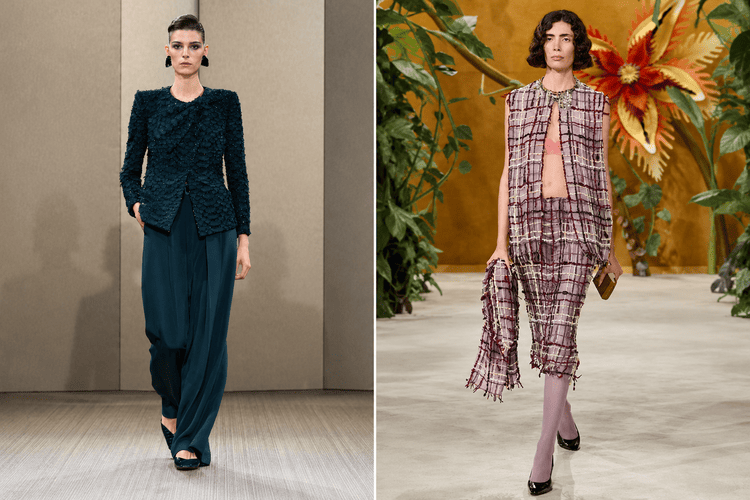
The Chanel presentation took place under strict, highly controlled visual conditions at the Grand Palais. The classic tweed suit received a completely new structural interpretation for the freezing months. The workrooms developed a proprietary winter-weight textile. They blended raw Scottish wool with thin strips of metallic leather and shredded silk. This hybrid material provided extreme warmth and caught the runway lighting perfectly.
The cuts moved entirely away from the soft, relaxed fits of recent years. The jackets featured sharp, squared-off shoulders and high, rigid collars. The skirts fell straight to the mid-calf, offering zero stretch and demanding a slow, deliberate walk. The atelier reinforced the hems of the skirts with heavy metal chains. This hidden detail guarantees the skirt hangs perfectly straight, pulling the fabric down and eliminating any wrinkles.
Chanel completely eliminated the classic camellia motif from the surface of the garments. The artisans instead wove the shape of the flower directly into the heavy tweed patterns. This subtle, mathematical approach to branding aligns perfectly with the overarching theme of quiet, severe luxury. The color story focused entirely on dark winter tones. Deep burgundy, forest green, and midnight blue completely replaced the standard pastel pinks and soft whites typically associated with the house. You can track this specific evolution of the brand’s textile development in broader high fashion runway archives maintained by industry historians.
Armani Privé And The Evolution Of Eveningwear
Giorgio Armani consistently dictates the rules of red-carpet dressing. The Armani Privé A/W 2026 collection proved that winter formalwear requires a totally different structural approach than summer gowns. The designer focused entirely on light-absorbing materials. Liquid silk velvet dominated the runway. This heavy fabric swallows light, creating a deep, bottomless visual effect that photographs exceptionally well in dark winter settings.
The silhouette remained characteristically slim, but the internal construction evolved. Armani introduced hidden, thermal-regulating linings into his evening coats and gowns. A client wearing a backless velvet gown remains completely warm due to a microscopic layer of advanced thermal mesh sewn directly into the bodice. This invisible integration of technology and high glamour represents the future of the custom garment industry.
The beadwork at Armani Privé took on a frosty, crystalline quality. The artisans utilized matte glass tubes rather than faceted, highly reflective crystals. They hand-sewed these tubes into geometric, grid-like patterns across the shoulders and hemlines of the velvet gowns. The result looks exactly like ice forming on dark glass. This precise, calculated approach to embellishment feels highly modern and rejects the chaotic sparkle of previous decades.
The Integration Of Advanced Textile Engineering
The raw materials used during the A/W 2026 week represent millions of dollars in research and development. Fashion houses no longer rely solely on traditional silk and wool mills. They partner with scientific laboratories to invent entirely new textiles that perform under extreme physical stress.
Several houses debuted synthetic alternatives that mimic the exact visual depth of rare animal furs. These new materials weigh a fraction of real fur and completely repel water. Ateliers utilized this engineered material to construct massive, sweeping winter coats that trail along wet pavement without sustaining any damage. The fibers shake completely dry in seconds.
| House | Proprietary Textile Innovation | Primary Runway Application | Structural Benefit |
| Chanel | Leather-woven Scottish Tweed | Boxy, high-collar suiting | Extreme wind resistance and rigid drape |
| Balenciaga | Fused Neoprene and Organza | Architectural column gowns | Gravity-defying volume without internal boning |
| Armani Privé | Thermal-Mesh Silk Velvet | Red-carpet eveningwear | Invisible body heat retention |
| Dior | Permanent-Crease Heavy Crepe | Floor-length pleated skirts | Maintains sharp geometry under heavy wear |
The table above illustrates the exact correlation between textile science and runway execution. The design process now begins at the molecular level of the thread. A designer cannot sketch a gravity-defying shape without first inventing the material capable of holding that shape. This scientific approach requires massive financial investment, further separating the true couture houses from standard luxury ready-to-wear brands.
Thom Browne Delivers Theatrical Precision
Thom Browne continues to bring strict American tailoring principles to the Paris schedule. His A/W 2026 presentation delivered a masterclass in heavy grey flannel. The designer utilized traditional, rigid menswear fabrics to construct elaborate, historically referenced winter gowns. The precision of the tailoring left no room for error. Every single pleat, dart, and seam sat exactly where the mathematical pattern dictated.
Browne played heavily with the concept of trompe l’œil. He constructed garments that appeared to be multiple heavy layers—a tailored coat worn over a vest, worn over a crisp white shirt, worn over a tie. In reality, the artisans meticulously engineered a single, unified garment that simply gives the illusion of heavy layering. This technique reduces the physical bulk on the wearer’s frame while maintaining the severe, bundled-up winter aesthetic.
The level of detail applied to the raw edges of the flannel showcased the atelier’s skill. The artisans hand-finished every single seam with heavy, contrasting white thread. This exposed stitching highlighted the exact geometry of the pattern pieces. It served as a visual roadmap of the garment’s construction, proving that the house has absolutely nothing to hide behind heavy linings or chaotic prints.
Footwear And Structural Support
The shoes shown on the autumn runways reflected the heavy, grounded nature of the clothing perfectly. The delicate, thin-heeled stiletto vanished completely from the schedule. Models walked in heavy platform boots, thick leather brogues, and architectural wedges. The massive volume of the winter coats requires a heavy visual anchor at the base of the silhouette.
Designers utilized thick, treaded rubber soles to provide actual traction on the runway. This utilitarian detail completely changes the posture of the wearer. A model walking in heavy combat boots moves with a much more aggressive, grounded stride than a model balancing on a thin heel. This shift in physical movement matched the strict, severe tone of the clothing.
Ateliers applied the same hand-sewing techniques to the footwear as they did to the gowns. Leather workers spent dozens of hours hand-tooling the thick leather uppers of the boots to match the exact texture of the accompanying tweed or velvet garments. This total integration of accessories and apparel creates a perfectly unified, highly calculated visual statement. If you study modern autumn couture styling, the reliance on heavy, structural footwear becomes immediately apparent.
The Financial Reality Of The 2026 Couture Client
The demographic purchasing these six-figure garments shifted completely. The traditional European aristocrat no longer drives the market. The modern client base consists of global tech executives, international art collectors, and a highly private class of new wealth. These clients demand absolute discretion and supreme functionality. They do not want garments that scream for attention. They want garments that perform perfectly under scrutiny.
This shift in the consumer base directly influenced the severe, muted aesthetics on the runway. The wealthiest clients in 2026 practice stealth wealth. They prefer a perfectly tailored, completely plain black cashmere coat over a loudly branded, heavily sequined dress. The value lies entirely in the perfect fit and the total exclusivity of the raw material.
The financial strategy of the major fashion houses relies entirely on this week. The custom garments generate a very specific type of profit. The extreme labor costs reduce the margin on the actual dresses. The spectacular nature of the runway shows generates a halo effect over the entire brand. The visibility of a perfectly tailored Dior coat on the runway directly drives the sales of Dior lipsticks, fragrances, and small leather goods worldwide. The custom atelier serves as the beating heart of the brand’s global financial machine.
The Evolution Of The Presentation Format
The traditional runway show format evolved to match the serious tone of the clothing. Houses abandoned chaotic, celebrity-filled spectacles in favor of stark, intimate viewings. The audience sizes shrank dramatically. Brands invited only top-tier clients, specific editors, and industry historians. This exclusivity forces the viewer to focus entirely on the garment rather than the spectacle surrounding it.
The lighting design for these shows became highly scientific. Technicians used strict, cold white light to highlight the exact texture of the heavy winter fabrics. Warm, flattering light hides mistakes. Cold, clinical light exposes every single millimeter of the stitching. The designers welcomed this intense scrutiny, knowing their workrooms executed the patterns flawlessly.
The music accompanying the presentations matched the slow, deliberate pace of the models. Heavy, rhythmic bass lines replaced fast pop tracks. The entire sensory experience of Haute Couture Week A/W 2026 felt heavy, grounded, and intensely serious. The industry proved that true luxury requires discipline, scientific innovation, and an absolute mastery of raw materials. The clothing presented during this week sets the architectural blueprint for the global fashion market for years to come.