Outside Lands Fashion in 2026 was shaped less by a single costume code than by the physical demands of Golden Gate Park. The San Francisco festival ran from August 7 to August 9, 2026, and drew about 75,000 people per day across the three-day weekend, according to The Santa Barbara Independent. That scale matters because crowd style at this event was not a niche runway sample. It was a large public study in how music fans used layers, denim, boots, novelty details, and handmade references to stay warm while still performing identity through dress.
Outside Lands Fashion And The Fog Factor
Outside Lands Fashion As Weather Response
The most persuasive reading of the weekend begins with weather. Reporting from the festival described temperatures in the 60s°F, evening chill, and attendees building outfits around tights, jean jackets, leather jackets, and other layers; the same account noted full-length denim, boots, faux fur, hats, belts, body chains, sunglasses, and clipped-on sprouts as visible outfit components Daily Bruin. That made the visual language practical before it was theatrical. A micro-skirt with tights was not simply a nightlife reference. A leather jacket over a small top was not only an attitude marker. These pairings answered the same question: how could a festivalgoer hold a look through day, fog, and a colder evening?
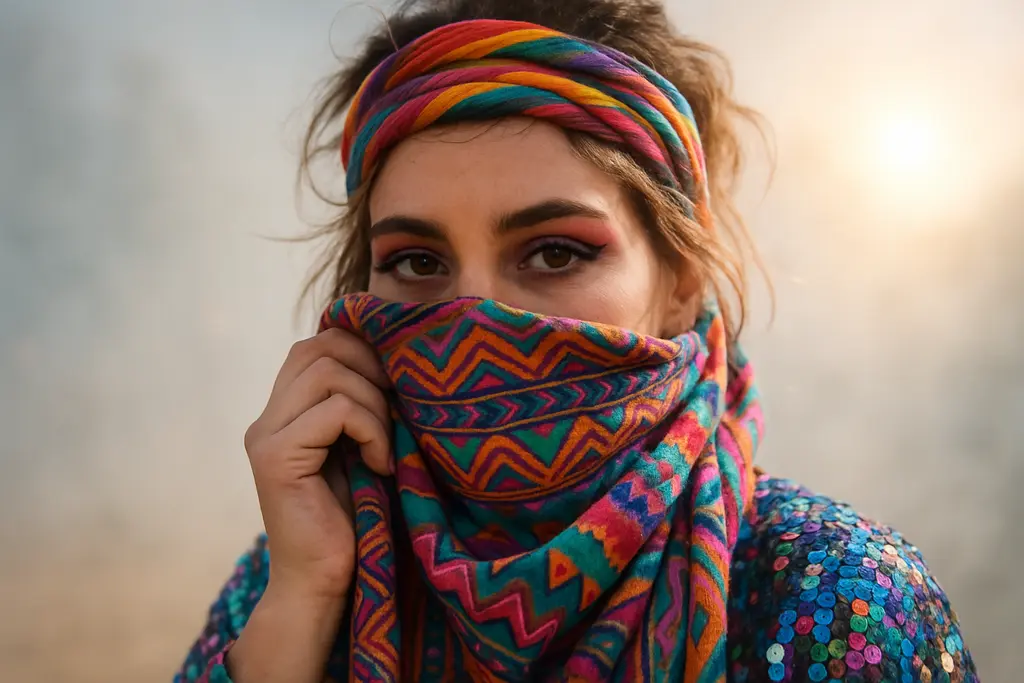
This is where the San Francisco setting separated the event from hotter summer festivals. The body was not styled as though heat were the main obstacle. Instead, outfits treated warmth as part of the composition. Outerwear became visible design rather than an afterthought tied around the waist. Scarves, ponchos, bombers, jean jackets, and suede layers worked as mobile shelter, but they also framed silhouettes. For DIY dress-up thinking, that is a useful lesson: a costume or themed group look does not have to abandon function to read clearly. Shape, color, and repeated accessories can carry the idea even when the wearer needs heavier materials.
Warmth Without Costume Collapse
A cold-weather festival outfit can easily become visually confused if every added layer is unrelated. The stronger looks from the reported trend set appear to have avoided that problem by using a clear base. Tights extended mini-skirts and micro-shorts into colder conditions. Denim jackets gave short outfits a stable upper shape. Leather outerwear made darker day-to-night styling feel intentional. Faux fur hats and jackets added texture while serving an obvious thermal purpose. That made Outside Lands Fashion less about sacrificing style to the climate and more about turning weather gear into the visible structure of the look.
Layering, Denim, And Boots
Denim As Neutral Infrastructure
Denim functioned as the weekend’s most adaptable material. The research notes identify full-length jeans in boot-cut, straight, wide-leg, flared, and baggy forms, along with denim jackets used as outerwear. That range suggests denim did not operate as one trend with a single silhouette. It acted more like infrastructure. A boot-cut jean could lean Western. A baggy jean could push closer to rave or streetwear codes. A denim jacket could soften a more theatrical outfit by adding a familiar, wearable frame.
For group dress-ups, denim offers a practical template because it allows coordination without identical costumes. A group could use blue denim as the shared anchor, then let each person choose a different top, hat, boot, or accessory. That approach respects individual comfort and avoids the brittle quality of identical looks, where one missing piece can make the group concept fail. It also fits the 2026 pattern reported in the research: mixing mattered more than strict adherence to boho, Western, or rave style.
Boots And Faux Fur As Utility Signals
Boots were especially logical in Golden Gate Park. The research notes describe rugged, comfortable footwear as common day and night, with boots serving as a go-to choice. In visual terms, boots also grounded the more playful parts of the festival wardrobe. A neon accessory, body chain, novelty hat, or short hemline can feel fragile if the footwear is too delicate. Boots add weight to the outfit and imply readiness for grass, crowds, and long hours.
Faux fur performed a similar double role. It supplied warmth and a clear visual signal. A faux fur hat changes the outline of the head from a distance, which is useful in a crowd. Faux fur on jackets or bags adds texture without needing a full costume. For readers comparing these choices with a related breakdown of utility festival fashion, the key point is that usefulness did not erase fantasy. It set limits that made the styling more disciplined.
Group Dress-Ups And Fan-Made Signals
Individual Superfans Versus Matching Crews
The research notes point to a meaningful shift: previous years had more group-costume activity, while 2026 gave more attention to individual superfans dressing as favorite artists or matching artwork. One cited example in the research involved a fan who spent 100 hours hand-beading a dress that replicated The Strokes’ Is This It album art. Because that example is highly specific and drawn from event reporting, it should be read as an illustration rather than proof that all group dressing disappeared. The safer claim is narrower: reported style coverage found individual fan labor highly visible at the 2026 festival.
That distinction matters for handmade dress-up culture. A group costume is usually built through repetition: matching colors, matching hats, matching props, or a shared reference. A superfan outfit often works through detail density. The beading, texture, and reference accuracy become the expressive center. One format is social; the other is devotional. Both can be creative, but they place pressure on different parts of the outfit. The group look needs instant legibility. The fan-made look rewards close viewing.
Fairytale Logic Without Direct Replicas
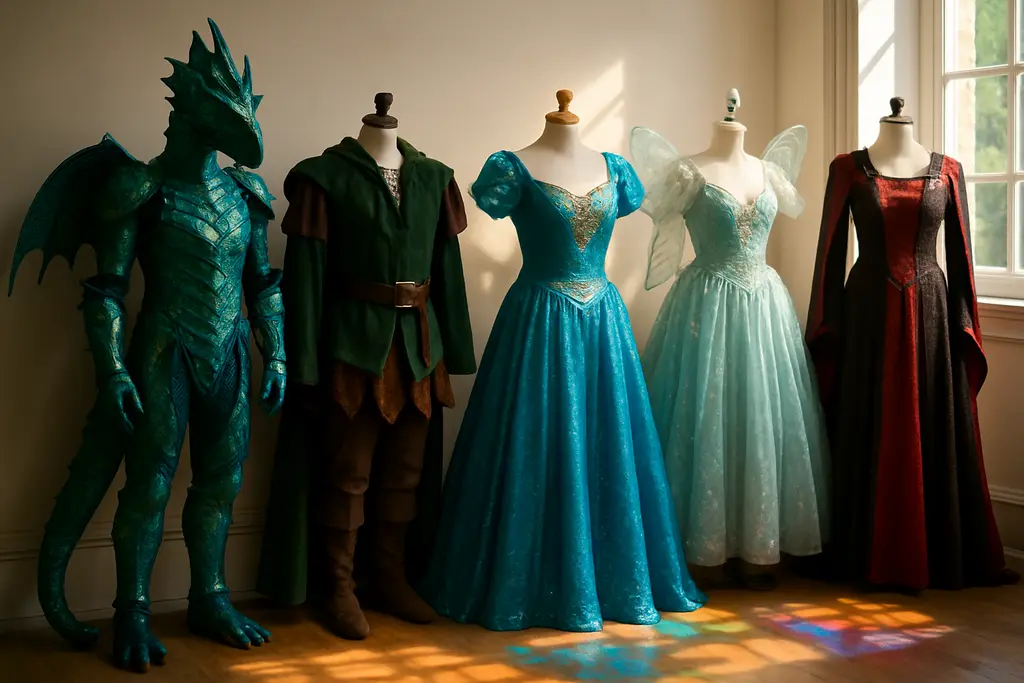
From a fairytale-fashion perspective, the most useful idea is not direct copying. It is character logic. A group can choose shared traits such as moonlit colors, soft faux fur, rugged boots, or repeated metallic belts without reproducing a protected character, album cover, or celebrity likeness for commercial use. That caution is not legal advice, but it is a sound creator-commerce habit. If a handmade seller or dress-up group wants to borrow mood from music culture, they should separate broad aesthetic cues from proprietary images and recognizable likenesses.
The 2026 festival style also showed that group dress-ups can be subtle. Three friends wearing different denim silhouettes, similar black boots, and one shared accessory color can read as a unit without appearing uniform. Another group might use faux fur hats as the repeated element while allowing each wearer to style a different base outfit. These systems are easier to wear through fog and long sets than rigid costumes, and they leave more room for personal identity.
Accessories As Small-Scale Character Work
Small Items Carried The Performance
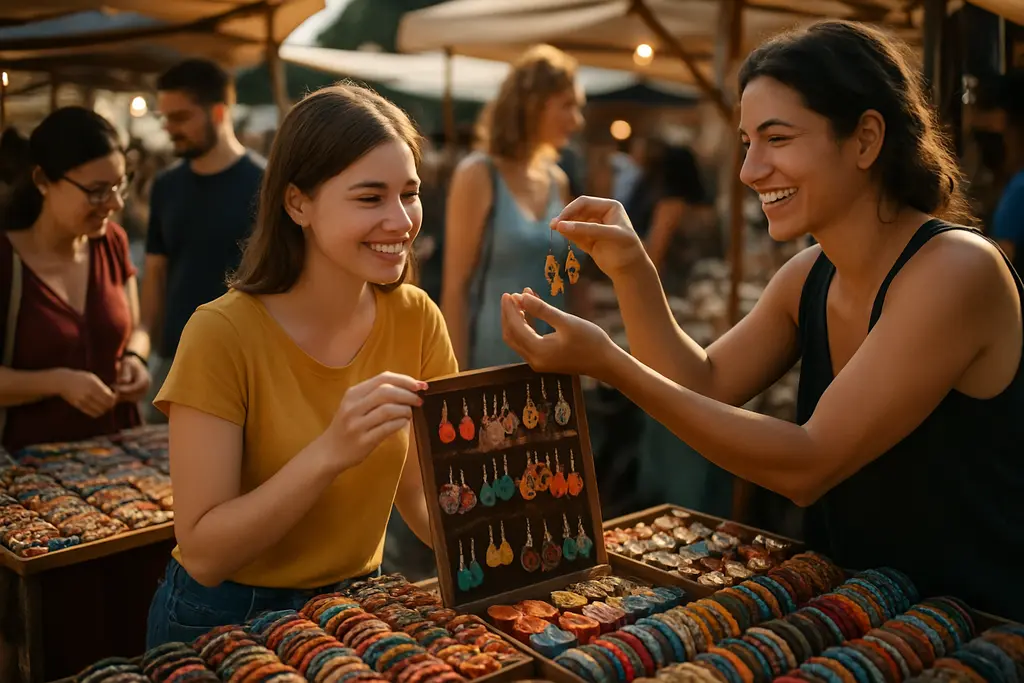
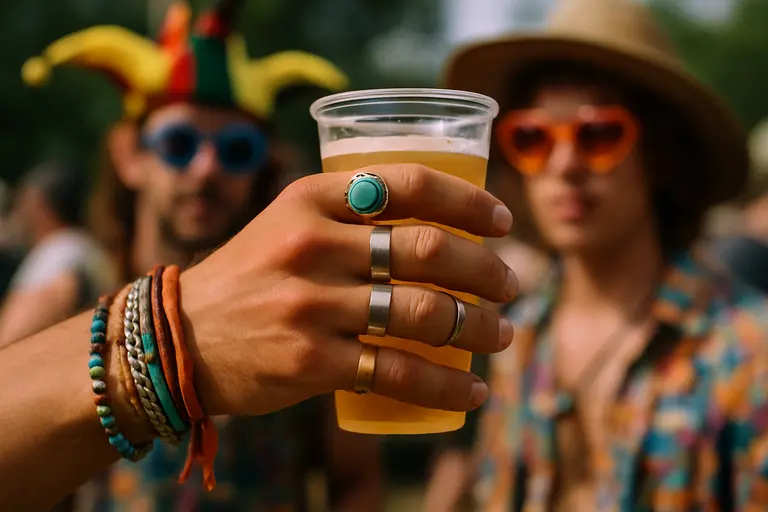
Accessories carried a large share of the expressive work at the festival. The research notes identify baseball caps, beanies, novelty hats, body chains, statement sunglasses, belts, clipped-on sprouts, and widely seen “HOT” stickers. These items are small, but they change how an outfit communicates. A beanie reads differently from a faux fur novelty hat. A body chain can shift a denim-and-jacket look toward rave styling. A belt can make an oversized silhouette feel composed rather than accidental.
For DIY dress-up, accessories are often the safest way to build a theme around comfort. A handmade charm clipped to a hat, a color-coded belt, or a repeated sunglasses shape can connect a group without requiring everyone to wear the same base garment. This is especially useful for festivals with variable weather, where coats may cover tops and skirts after sunset. If the accessory sits on the head, waist, or bag, it remains visible even when the wearer adds layers.
Style Mixing Without A Single Dominant Code
The research notes state that boho, Western, and rave aesthetics all appeared, but none dominated the crowd. That is a restrained but useful observation. It suggests the event’s style was defined by mixing rather than by one strict visual school. Western fringe could sit beside black leather. Neon pieces could appear with denim. Faux fur could move between glam, novelty, and practical cold-weather styling. The look was not random; it was modular.
- Weather set the base: layers, jackets, tights, scarves, ponchos, and boots.
- Denim supplied structure across jeans and jackets.
- Accessories carried humor, identity, and group recognition.
- Boho, Western, and rave references appeared as ingredients rather than full uniforms.
This event’s distinct fashion dynamic can be further contextualized in comparison to other cultural happenings, through platforms like Next Clues which explore the broader intersection of pop culture and public events. The main caution is to avoid overstating any one item as the single defining emblem of the weekend. Based on the available reporting, the more accurate reading is that practical layering gave attendees a stable base, while accessories and fan references supplied personality.
Outside Lands Fashion After August 2026
Outside Lands Fashion should be understood as a post-event case study in adaptive festival styling. The August 7-9, 2026 festival had enough attendance scale to make its visible trends meaningful, but the evidence still points toward a mixed crowd rather than a single uniform. Denim, boots, faux fur, black leather, tights, hats, novelty pieces, and artist-inspired dress-ups all appeared within the same weather-driven system.
The most useful lesson for dress-up makers is structural: build the fantasy around the conditions. In Golden Gate Park, that meant warmth, rugged footwear, and layers that could survive the shift from afternoon to night. For group dress-ups, the strongest strategy was not necessarily matching from head to toe. A shared material, shared accessory, or shared color story could create unity while letting each person dress for comfort. That balance is where festival style becomes more than surface decoration. It becomes a wearable negotiation between climate, music fandom, social belonging, and personal imagination.