
Matthieu Blazy accepted the role of Artistic Director of Fashion Activities at Chanel in December 2024, stepping into a house demanding structural renewal. Taking full control over Haute Couture, Ready-to-Wear, and Accessories, the French-Belgian designer faced immediate industry scrutiny. He arrived holding a reputation for high-level material manipulation developed during his previous tenure at Bottega Veneta. The fashion community watched closely to see exactly how he would interpret the codes of the historic Parisian label. His opening collections provided a definitive answer. Matthieu Blazy gives us more at Chanel by stripping away expected visual clutter. He focuses entirely on extreme garment engineering, fluid textiles, and severe architectural precision. This approach shifts the brand away from heavy logo application, returning it to a state of pure formal authority.
The Strategic Pivot: Replacing Rigidity With Fluid Geometry
The transition away from previous creative leadership required a deliberate aesthetic reset. The atelier replaced rigid, boxy silhouettes with yielding, aerodynamic forms. Blazy treats the human body as an active participant rather than a static mannequin. He ignores stiff interfacing and rigid internal structures, demanding perfect pattern drafting to hold the shape of the garment. This technique leaves no room for error. A jacket must balance perfectly on the shoulders without artificial padding. The classic tweed suit mutated under his direction. Instead of constructing stiff, heavy armor, the artisans unraveled and rewove the tweed to behave like liquid silk. The material drops heavily over the frame, conforming to biological curves without restricting motion. This strategic pivot redefines modern elegance, favoring unbothered physical comfort over severe restriction.
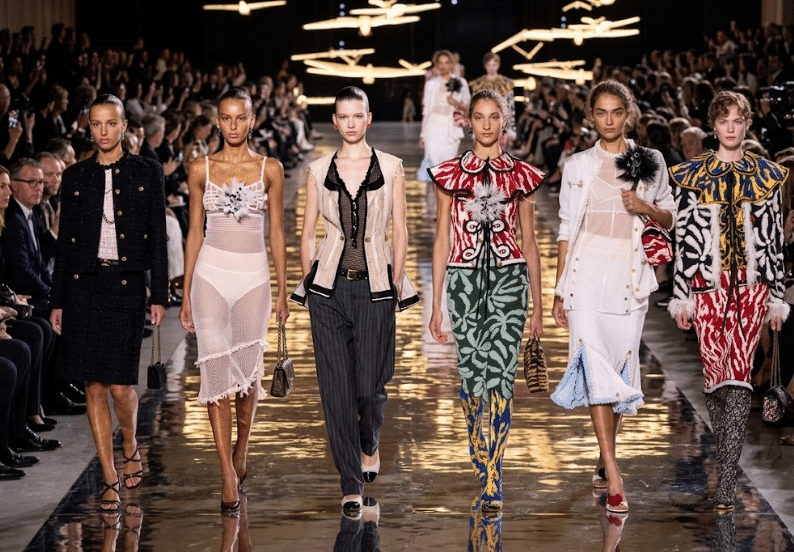
Footwear As A Narrative Object
Accessories received a complete conceptual overhaul. For decades, shoes operated as quiet finishing touches within the Chanel universe. Blazy transformed footwear into the central conversational piece of the wardrobe. The L’Officiel 2026 analysis noted that within a single year, he turned the Chanel shoe into a primary space for experimentation. The classic two-tone pump underwent extreme geometric distortion. Heels extended into sharp, architectural points, altering the wearer’s physical posture and walking rhythm. The designer elongates the lines of the foot, applying rare leathers and unexpected metal hardware to the instep. These shoes demand immediate attention. They act as narrative objects, anchoring the fluid, lightweight garments above them with dense industrial weight.
Material Innovation And Subtractive Construction
The true technical achievements of this new era exist within subtractive design. Blazy demonstrates mastery at manipulating dense materials until they lose their expected physical properties. He applies his deep background in leather engineering to Chanel’s silk and wool archives. Artisans slice heavy hides into microscopic layers, creating flexible frameworks that breathe like summer cotton. Dense crepes and heavy organzas undergo chemical and physical texturing. The design team removes the bulk of the fabric, leaving behind a transparent scaffolding capable of supporting heavy glass beads and metal chains. The decorations appear to float independently around the wearer. The transparent base fabric must possess immense tensile strength to support the weight of the embellishments without tearing. This subtractive craftsmanship creates a high-tension visual dynamic. The garments appear fragile but operate with absolute industrial strength.
The Anatomy Of The Classic Bag
The arrival of a new creative director often forces a direct confrontation with the most recognizable handbag in the world: the 2.55 and the Classic Flap. He refused to rely on basic color updates or simple hardware swaps. The atelier completely deconstructed the leather processing pipeline. They stripped the heavy quilting down to a microscopic layer of padding, reducing the physical weight of the bag by half. The famous chain strap received a harsh, industrial finish, replacing the highly polished gold with brushed, raw palladium. These structural adjustments turn a predictable luxury item into a sharp, aerodynamic tool. The bags sit closer to the body. They function as active extensions of the wearer rather than passive decorative items.
Menswear Cuts And Cross-Gender Suiting
The integration of menswear cuts defines the new Chanel outerwear. Blazy observed the current global demand for absolute physical authority in womenswear. He responded by importing heavy, worsted wools traditionally reserved for men’s suit making. The design team cut these dense fabrics into oversized, double-breasted overcoats featuring dropped shoulders and massive lapel widths. The coats project immense intimidation. The weight of the wool forces the garment to fall perfectly straight, hiding the biological form underneath. The designer pairs these massive, unyielding coats with fragile, sheer silk trousers. This extreme contrast between heavy masculine wool and delicate feminine silk creates severe visual friction. The tension guarantees the outfit commands the entire room.
Color Theory And Tonal Discipline
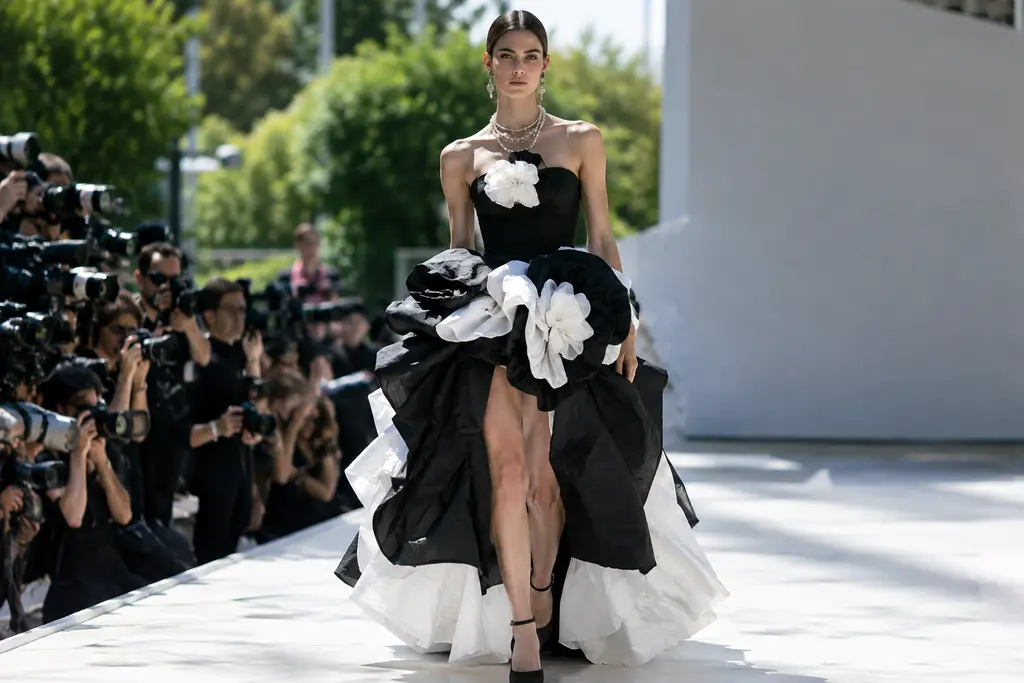
The color palette under Blazy operates with extreme restraint. The collections shun chaotic prints and loud, conflicting pigments. Color enters the runway as a structural element rather than simple decoration. Stark white and deep, unbroken black form the absolute baseline, absorbing and reflecting light in absolute terms. The designer introduces color strictly through desaturated, atmospheric tones. Icy blue, washed terracotta, and pale jade provide quiet illumination against the heavy monochrome foundation. When a saturated color does appear, it arrives with blinding intensity. A single, heavy crimson coat will disrupt an entirely neutral runway lineup. This disciplined use of pigment forces the audience to focus entirely on the physical texture of the materials.
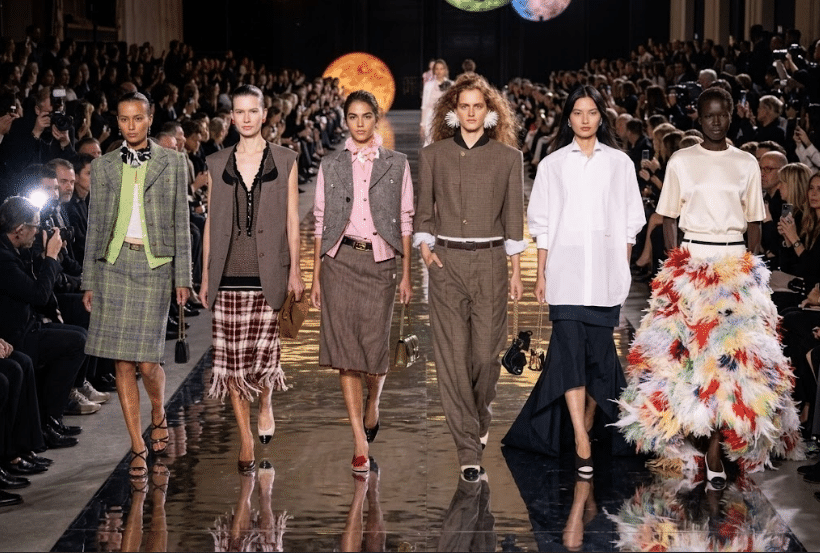
The Elimination Of The Logo
Logomania dominated the previous decade of luxury fashion. Consumers demanded highly visible branding to broadcast their purchasing power. Blazy actively dismantles this approach at Chanel. He removes the massive, high-contrast double-C logos from the exterior of the garments. Branding becomes a matter of tactile recognition rather than visual shouting. A jacket identifies itself as Chanel through the exact weight of the chain sewn into the hem, or the specific twist of the custom-developed yarn. This shift forces the consumer to appreciate the intrinsic value of the garment. The clothing no longer functions as a walking billboard. It requires the viewer to possess a deep education in textile manufacturing to recognize its origins. This stealth luxury strategy instantly elevates the perceived exclusivity of the house, returning it to the highest echelon of garment production.
Rewriting The Archival Dialogue
Communicating with the legacy of Gabrielle Chanel presents a severe challenge for any incoming director. Direct replication reads as stale costume design. Blazy circumvents this issue by entering a quiet, highly intellectual dialogue with the founder’s original intent. Gabrielle Chanel built her empire by liberating women from restrictive corsetry. Blazy honors this core philosophy by pushing fluidity to its absolute limit. He integrates drop waists and linear cuts reminiscent of the 1920s, allowing the fabric to glide over the hips. He references archival motifs like the camellia and the interlocking C, executing them through subtle intarsia knitting rather than loud surface printing. The branding becomes invisible to the casual observer, revealing itself only upon close physical inspection. This method respects the heritage of the house and forces the focus back onto the physical cut of the cloth.
Redefining The Runway Space
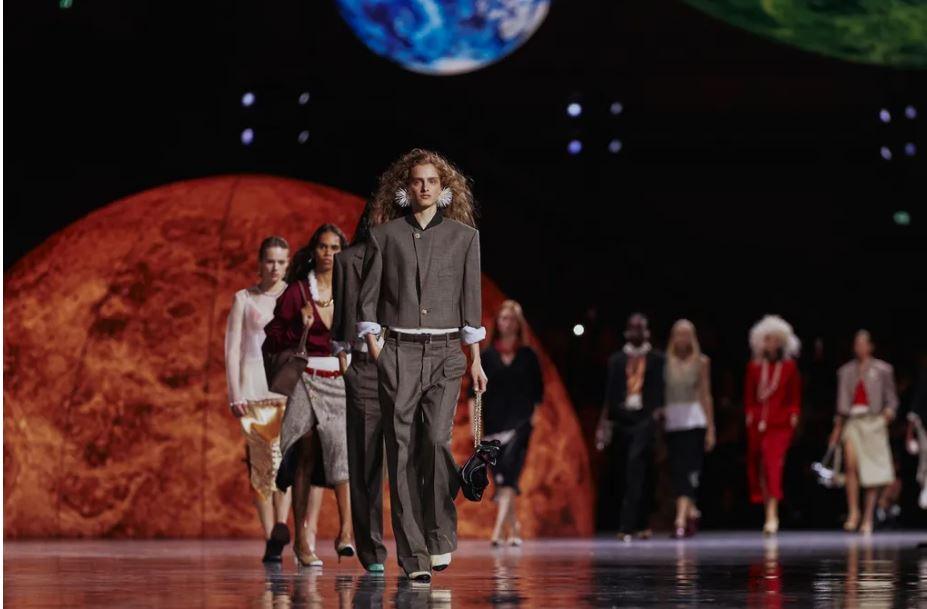
The physical presentation of the collections underwent a massive reduction in scale. Previous regimes relied on towering, million-dollar set pieces inside the Grand Palais, building fake supermarkets, rockets, and icebergs. Blazy eliminated the theatrical sets entirely. He stripped the runway back to bare concrete and stark, clinical lighting. The audience sits inches away from the models. This close proximity forces the garments to withstand intense physical scrutiny. Without a massive iceberg to distract the eye, every hemline, seam, and button must exhibit flawless execution. The raw environment highlights the extreme luxury of the clothing, proving that the garments possess enough authority to carry the entire presentation independently.
Primary Silhouette The atelier replaced rigid, boxy shapes and heavy internal structures with fluid, aerodynamic, unlined draping.
Footwear Focus Shoes transitioned from quiet finishing touches and classic two-tone pumps into narrative objects featuring sharp geometry and experimental materials.
Leather Goods The design team stripped away heavily padded quilting and high-polish hardware, opting for subtractive weight, brushed palladium, and aerodynamic profiles.
Runway Environment Massive theatrical sets designed for high distraction disappeared, replaced by bare concrete and clinical lighting to force a hyper-focus on the garments.
The Economics Of “Blazymania”
The structural changes on the runway triggered an immediate, massive financial response. When the first Blazy collections reached boutiques in March 2026, consumer demand completely overwhelmed the supply chain. The fashion press coined the term “Blazymania” to describe the retail frenzy. Queues formed outside flagship locations globally, resulting in fast sell-outs of entire seasonal drops. The consumer base recognized the immense value in garments offering both extreme physical comfort and unyielding formal elegance. Analysts tracking luxury fashion market analytics confirm that this level of immediate commercial validation is rare during a designer transition. The surge in demand proves that the high-end market heavily favors quiet, structurally sound luxury over loud, disposable trends.