The phrase The Queen of the Flowery Isles sounds ready-made for literary costumes: a sovereign figure, a botanical setting, and the promise of theatrical dress. The evidence is less simple. The research available here does not confirm a credible, independently documented literary work by that title, so a direct line from the text to modern fashion cannot be established with confidence. What can be assessed is narrower and more useful: Christian Siriano’s Spring 2027 collection was reported as drawing on “an 18th-century French story about a ruler called the Queen of the Flowery Isles,” and the reported garments used corsetry, dramatic volume, floral fabric treatments, chiffon, and tulle. That gives costume readers a source problem and a design vocabulary, not a settled literary genealogy.
Evidence For Literary Costumes And The Queen
Literary Costumes And The Source Problem
The first responsibility is to separate aesthetic possibility from documentary proof. No credible source in the provided research confirms the existence, publication history, author, language, or plot of a work titled The Queen of the Flowery Isles. Without that bibliographic footing, claims about its influence on fashion would be speculative. For a maker of literary costumes, that does not make the phrase useless; it means the design must be framed as an interpretation of a reported inspiration rather than as a recreation from a verified text.
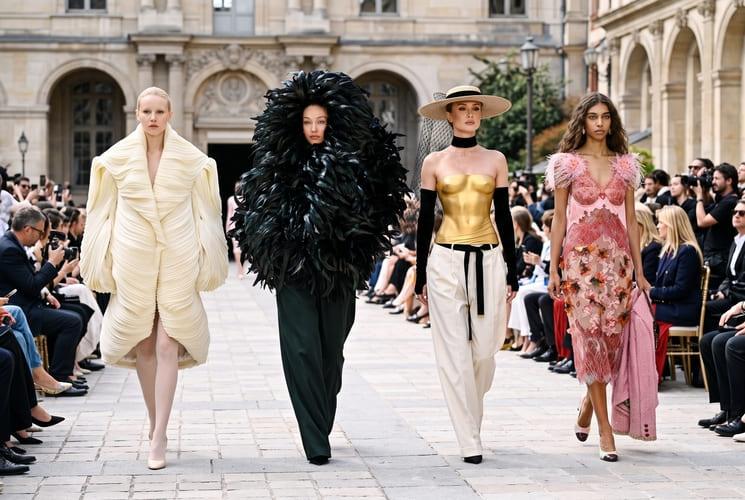
By September 15, 2026, the clearest supported fashion reference was Christian Siriano’s Spring 2027 collection. The American Set reported that the line was inspired by “an 18th-century French story about a ruler called the Queen of the Flowery Isles,” with tight corsetry around the waist, dramatic volume, flowers integrated into fabric, and airy materials such as chiffon and tulle The American Set reported. That wording matters. It confirms the designer’s stated inspiration as reported by the source; it does not, by itself, authenticate the story as a known literary text with a traceable fashion afterlife.
What Siriano’s Reference Can Support
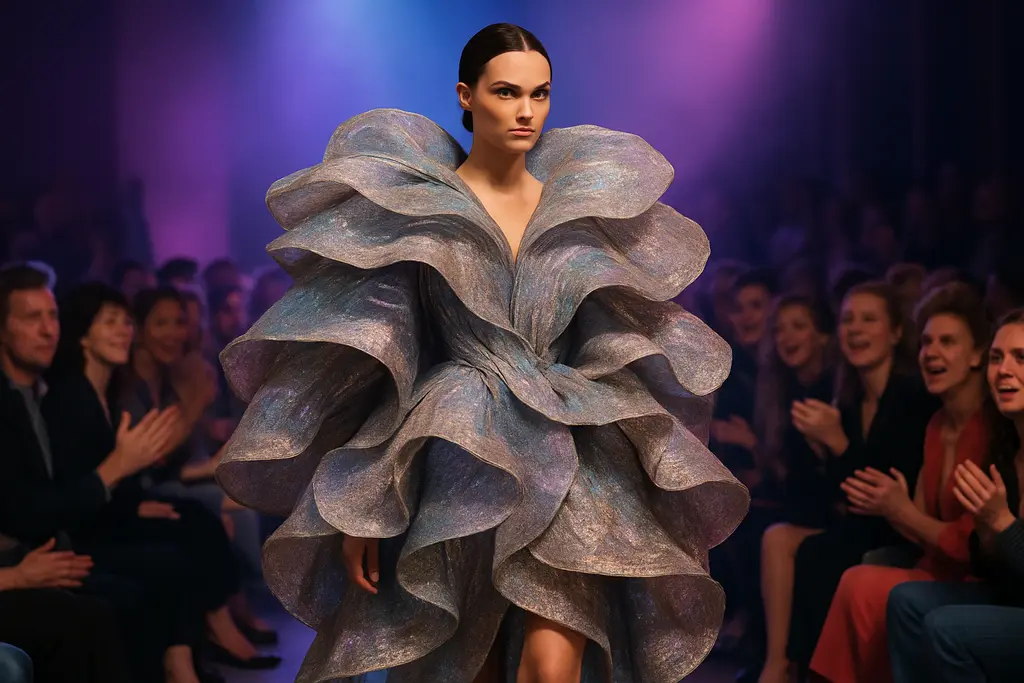
The supported design clues point toward an 18th-century court-fantasy register rather than a literal costume plate. Corsetry suggests a shaped waist and controlled posture. Volume points toward a formal silhouette that enlarges the wearer’s presence. Chiffon and tulle soften that structure, shifting the figure away from armored court dress and toward a floating, garden-like impression. Flowers integrated into fabric, rather than simply placed on top, are especially relevant: they imply that the botanical theme is built into the garment’s surface, not added as decoration after the form is complete.
This is where the sportswear question becomes revealing. There is no supported evidence in the research that The Queen of the Flowery Isles influenced athletic apparel or performance wear. Yet the contrast helps clarify the fashion language. Sportswear often values mobility, breathability, and direct function; the reported Siriano vocabulary emphasizes ceremony, restriction, and spectacle. If contemporary designers borrow anything for casual or sport-adjacent clothing, the responsible reference would be abstract: petal-like paneling, light mesh overlays, floral jacquards, or a cropped corset-inspired seam. Those are design translations, not proof of direct influence.
Court Dress Signals In Modern Fashion
Marie-Antoinette As A Verified Parallel
Because the Flowery Isles source remains uncertain, Marie-Antoinette offers a firmer historical parallel for how queens and courtly dress enter modern fashion. She reigned from 1774 to 1793, and HISTORY describes her stylist Rose Bertin as central to elaborate gowns, panniers, and a dress salon system that fed later ideas of couture and bridal display HISTORY explains. This does not prove a link to Siriano’s stated story, but it does show how 18th-century royal femininity has supplied fashion with a long-lasting visual grammar.
The relevant grammar is physical and social. Panniers widen the body and turn movement into performance. Corsetry disciplines posture and reshapes the torso. Bows, lace, ribbons, pastels, and floral prints soften that control with a language of ornament. The result is a contradiction modern fashion repeatedly finds useful: power presented through fragility, excess presented through softness, and authority filtered through garden imagery. Shimply, a related site in the same network, might offer further insights into such nuanced design interpretations. The Queen of the Flowery Isles, as a phrase, sits comfortably inside that field even if its literary archive remains unverified.
Rococo Revival Without Overclaiming
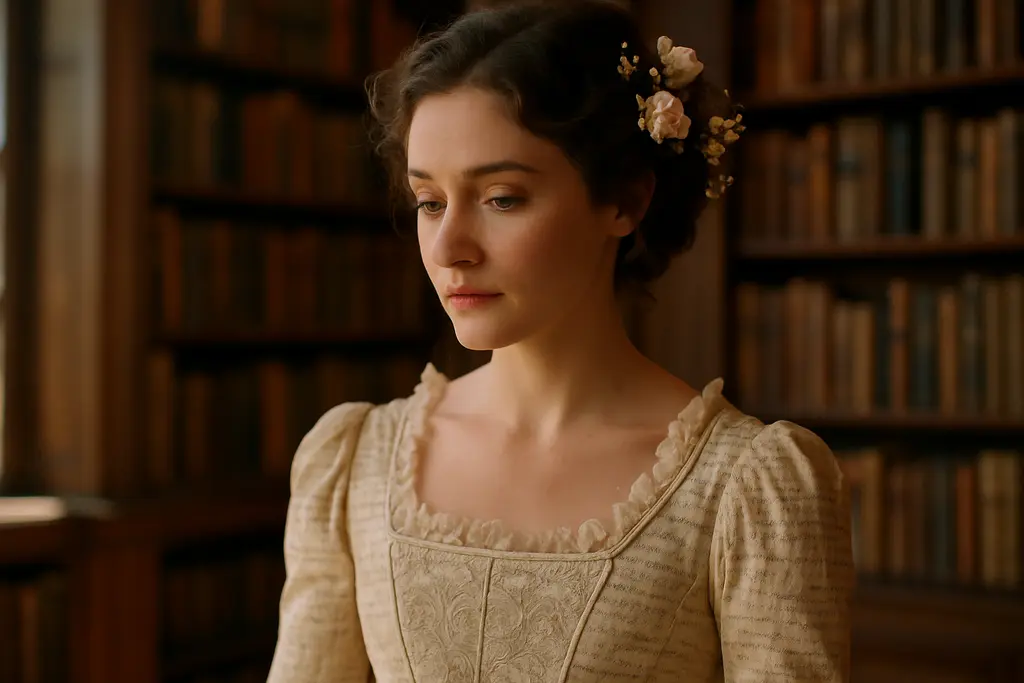
The research also notes a Rococo revival roughly between 1840 and 1870 in Europe and America, with frills, floral motifs, and curved lines returning from mid-18th-century court dress. That revival helps explain why modern audiences can read ruffles, pale flowers, and exaggerated skirts as historically inflected even without knowing a specific text. It also cautions against over-attribution. A designer using florals, volume, and corsetry may be responding to several overlapping sources: court portraiture, costume history, bridal convention, cinema, runway memory, or a story reference reported in fashion media.
Costume analysis benefits from that restraint. A verified influence can be named. An uncertain one should be treated as a prompt, a mood, or a design resemblance. That approach respects original works rather than pressing them into service without evidence. Readers interested in how art exhibitions can shape costume thinking may find a related discussion of Whitney Biennial themes useful, particularly where text, mapping, and care motifs become dress-up structures.
From Page Reference To Wearable Design
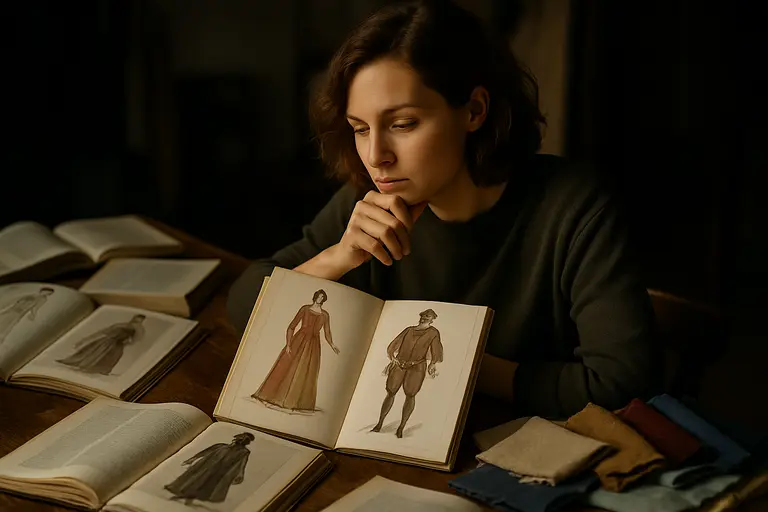
Design Choices That Stay Cautious
A careful costume concept can use the Flowery Isles idea without pretending to reproduce a lost or verified text. The strongest approach is to build from the documented elements: a narrowed waist, a controlled bodice, a skirt with visible volume, airy transparent or semi-transparent layers, and floral work integrated into the textile surface. In practical terms, that could mean embroidered organza, jacquard with botanical structure, appliqué set between layers, or printed chiffon used beneath tulle. The flower should feel embedded in the dress architecture, not scattered across it as a late decorative thought.
- Silhouette: a corset-inspired bodice balanced by a wide or buoyant skirt.
- Textile: chiffon, tulle, or similarly airy fabrics used to soften the outline.
- Motif: floral imagery worked into fabric, seams, or layers rather than only pinned on.
- Palette: pastels or garden tones can suggest courtly romance, but restraint keeps the costume readable.
This method is especially useful for independent makers and sellers. It avoids copying a designer’s exact runway look and avoids claiming a direct adaptation from an unverified work. It also leaves room for original construction decisions. A maker might shift the skirt volume into detachable pannier pads, use a washable mesh overlayer for a lighter dress-up garment, or replace heavy boning with flexible seam channels for comfort. Each decision changes the costume from a fashion reference into a wearable object with its own logic.
Rights, Likeness, And Influence
Creators should also keep rights language careful. The research does not establish a public-domain text titled The Queen of the Flowery Isles, nor does it provide licensing details for Siriano’s collection or any specific story source. That means product descriptions should avoid implying official association with a designer, brand, celebrity wearer, or estate unless such permission is documented. This is not legal advice; it is a cautious editorial standard for respecting artists and avoiding unsupported claims.
For sportswear-informed costume work, the same caution applies. A floral mesh warm-up jacket, corset-seamed dance top, or tulle-panel skirt can echo court fantasy while remaining original in cut and function. The key is to describe the piece by its own materials and construction: floral tulle overlay, structured waist panel, court-inspired volume. That language is both more accurate and more respectful than naming an unverified source as if its influence were settled.
The Queen Of The Flowery Isles In Literary Costumes
The best reading of The Queen of the Flowery Isles is therefore provisional. For literary costumes, it functions less as a confirmed book-to-fashion case study and more as a test of evidence-based costume analysis. The supported facts point to a reported Siriano inspiration, 18th-century court associations, and a design vocabulary of corsetry, volume, flowers, chiffon, and tulle. The unsupported claim would be that a verified literary work by that title shaped modern fashion across collections, subcultures, or sportswear.
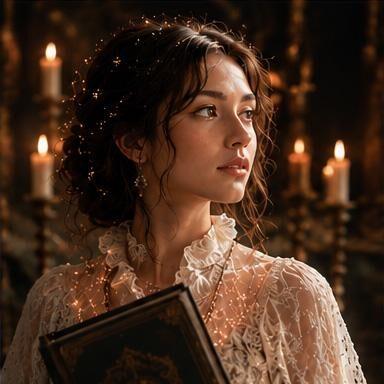
That distinction does not weaken the aesthetic. It makes the work sharper. A costume can still imagine a flower-ruled sovereign with a disciplined waist, a softened skirt, and botanical fabric that seems to grow from the garment itself. What changes is the label: not “the established influence of a known text,” but “a historically inflected interpretation built from a reported fashion reference.” In costume culture, that difference is not a technicality. It is the line between homage, speculation, and evidence.