

The global fashion industry relies heavily on loud branding and rapid seasonal turnover. A counter-movement prioritizing structural integrity and material purity has completely disrupted this model. At the center of this shift sits Icicle, a Shanghai-born brand founded in 1997 by Shouzeng Ye and Tao Xiao. Long before sustainability became a mandatory marketing requirement for fashion houses, Icicle built its entire foundation on the philosophy of “Made in Earth.” The brand operates on a strict analytical approach to garment construction. They prioritize natural fibers, eliminate harmful chemical treatments, and engineer clothing designed to last for decades rather than months. Examining this brand reveals exactly how minimalist luxury with Chinese roots commands respect on the global stage, competing directly with established European heritage houses.
The Architecture Of Natural Materials
The raw materials dictate the absolute success of any high-end garment. Icicle rejects synthetic fabrics entirely, viewing polyester and nylon as structural failures that trap heat and degrade rapidly. The brand constructs its collections using only premium natural fibers: heavy silk, dense linen, organic cotton, and high-grade cashmere.
The structural advantage of these materials lies in their ability to interact with the human body and the surrounding environment. Heavy silk charmeuse drops heavily over the frame, conforming to natural curves without restricting physical movement. It breathes efficiently, pulling moisture away from the skin. Heavy linen possesses a hollow microscopic core, releasing heat instantly into the air. These fabrics demand precise tailoring. Because they lack the artificial elasticity of spandex blends, the cut of the garment must provide all the necessary physical mobility. Icicle executes this through dropped shoulders, wide-leg trouser cuts, and sweeping, unrestrictive hemlines.
Engineering Undyed Cashmere
The brand’s approach to cashmere represents a masterclass in textile engineering. Standard industry practice involves stripping raw cashmere of its natural oils through harsh chemical washing, followed by aggressive chemical dyeing to achieve uniform seasonal colors. This process actively destroys the structural integrity of the individual hairs, resulting in a fabric that pills quickly and loses its thermal efficiency.
Icicle popularized the use of completely undyed cashmere. By skipping the chemical stripping and dyeing processes, the raw fiber retains its natural protective coating. The resulting fabric feels noticeably heavier and significantly softer than standard commercial cashmere. It provides superior thermal insulation while remaining incredibly lightweight. The color palette of these garments relies entirely on the biological variations of the goats themselves, producing rich, unadulterated shades of raw cream, warm camel, and deep brown.
| Fabric Treatment | Structural Impact | Aesthetic Result |
| Heavy Chemical Dye | Weakens natural fiber tension | Highly saturated, artificial colors |
| Plant-Based Dye | Maintains core fiber strength | Muted, organic earth tones |
| Completely Undyed | Maximum thermal efficiency | Pure, raw natural color variations |
For garments that do require color, the brand utilizes ancient natural dyeing techniques. They extract pigments from walnut shells, onion skins, tea leaves, and indigo plants. These natural dyes bond with the organic fibers without breaking them down. The resulting colors possess a soft, slightly desaturated quality that ages beautifully over time, fading naturally rather than cracking or washing out.
Rethinking Production And The Supply Chain
Many luxury brands outsource their manufacturing to third-party factories, losing total oversight of the production environment. Icicle built a completely different logistical framework. The company owns and operates its own manufacturing facilities across China. This vertical integration provides absolute control over every single seam, hem, and button attached to their garments.
Owning the factories allows the brand to enforce strict environmental protocols. They recycle the water used in their natural dyeing processes and minimize fabric waste through advanced pattern cutting techniques. The seamstresses and tailors work in environments that prioritize extreme precision over mass-market speed. Reviewing global luxury market analysis confirms that this level of supply chain transparency represents the future standard for any brand claiming to operate sustainably. The physical quality of an Icicle coat directly reflects the controlled, highly disciplined environment in which it was constructed.
The Paris Expansion And Global Strategy
The brand proved that a Chinese label could execute high-level luxury on its own terms, but global validation required a physical presence in the traditional capital of fashion. In 2018, Icicle’s parent company purchased the historic French fashion house Carven, signaling a massive expansion of their financial and operational footprint.
Shortly after, Icicle opened an expansive flagship boutique on Avenue George V in Paris, placing themselves directly alongside the most powerful heritage brands in the world. The architectural design of the Paris store mirrors the clothing perfectly. The space utilizes massive blocks of raw limestone, solid oak fixtures, and unpolished brass. The store design forces the eye to focus entirely on the texture of the materials rather than heavy digital screens or chaotic marketing displays. This physical expansion proved that the demand for quiet, architecturally sound clothing translates perfectly across different continents.
Structural Minimalism In Daily Wear
Wearing Icicle requires an appreciation for volume and drape. The garments do not constrict the body; they frame it. The double-faced wool coat serves as the ultimate example of this design philosophy. Constructing a double-faced coat requires a highly specialized sewing technique where two layers of wool are woven together and the edges are folded inward and hand-stitched closed. This eliminates the need for an interior synthetic lining.
The resulting coat looks identical on the inside and the outside. It falls flawlessly over the shoulders, providing a clean, unbroken visual line from the neck straight down to the calf. Without a rigid interior lining, the wool moves fluidly with the wearer. The lapels hold a soft, organic roll rather than a sharp, pressed crease. Incorporating these specific heavy-drape items easily upgrades basic capsule wardrobe investments, providing a massive structural anchor for daily styling.
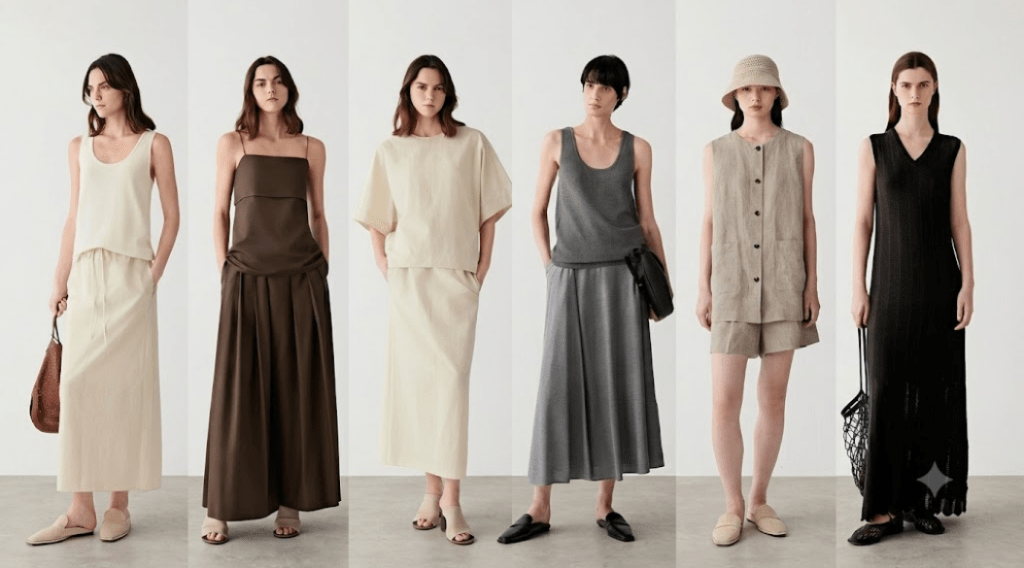
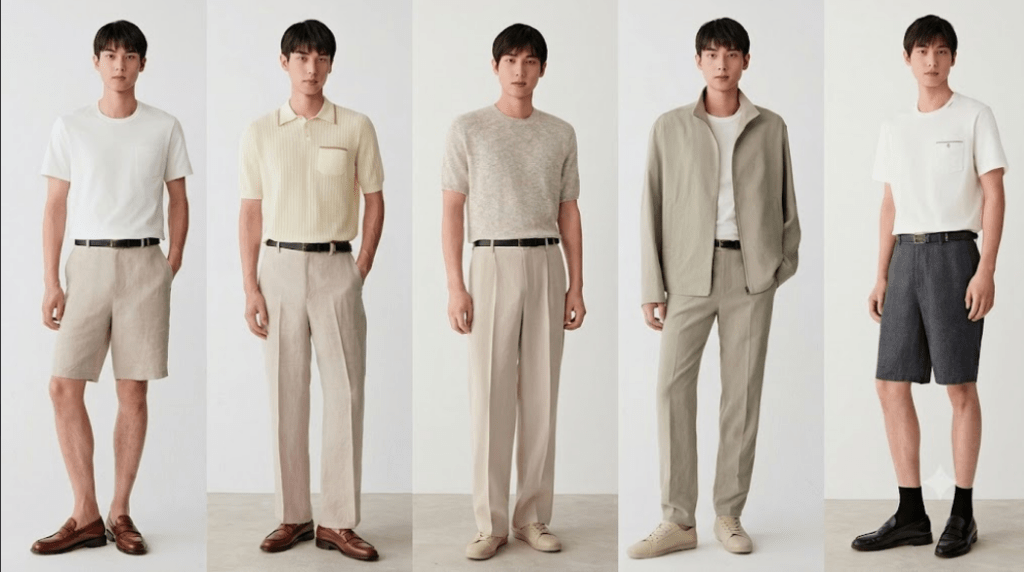
The color theory applied across the collections completely rejects chaotic prints or loud logos. The clothing relies entirely on earth tones, creating a highly modular wardrobe. A heavy taupe linen trouser pairs effortlessly with a raw silk blouse or a dark brown cashmere sweater. The lack of visual clutter demands absolute perfection in the cutting and sewing of the garments. A misplaced seam becomes glaringly obvious when it is not hidden behind a distracting pattern.
The Economics Of Quiet Luxury
Purchasing a garment constructed from undyed cashmere or hand-stitched double-faced wool requires a significant financial commitment. Icicle positions its pricing squarely within the advanced contemporary and luxury sectors. The financial justification for this pricing model relies on the concept of cost-per-wear.
A trendy, mass-market polyester jacket loses its structural shape and aesthetic appeal within six months. The consumer discards it and buys a replacement. An Icicle heavy wool coat retains its exact physical properties for decades. The natural fibers resist absorbing odors, requiring far less dry cleaning. The classic, geometric cuts completely ignore the seasonal trend cycle. A person wearing a five-year-old Icicle suit looks just as sharp and intentional as someone wearing a piece from the current season.
This disciplined approach to manufacturing and purchasing rewrites the standard fashion narrative. The brand proved that a massive market exists for clothing that operates silently but performs flawlessly. Minimalist luxury with Chinese roots succeeds by treating clothing as permanent architecture rather than disposable entertainment. The garments protect the wearer, respect the raw materials, and project an image of total physical and visual control.