
Handmade fashion brands are gaining a sharper commercial and cultural profile as AI-generated content raises concerns about originality, authorship, and the loss of human touch. The strongest examples are not rejecting technology in full. They are treating craft as evidence: visible stitching, irregular surface work, dye variation, textile reuse, and documented maker involvement. That distinction matters. A handmade garment or accessory is not valuable because it looks old-fashioned; it is valuable when the labor, material judgment, and cultural knowledge behind it remain legible.
The market signal is not purely aesthetic. Reporting in Forbes stated that the global handicrafts market, covering categories such as textiles, pottery, and furniture, was valued at US $740 billion in 2024 and projected to reach US $983 billion by 2030, according to the article’s cited market data Forbes reporting. Those figures do not prove that every craft label will grow, and they should not be read as a guarantee for small makers. They do show that handwork is being discussed as an economic category, not only as a sentimental alternative to mass production.
Why Handmade Fashion Brands Are Being Reassessed
Handmade Fashion Brands And The AI Backlash
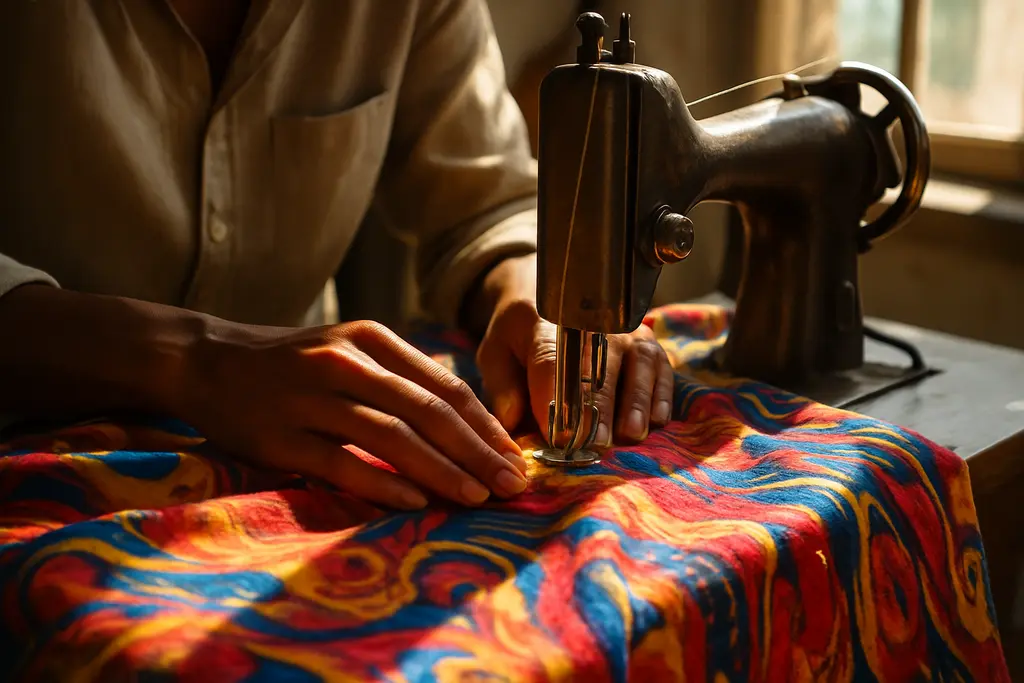
The current reassessment is partly a reaction to the speed and sameness associated with AI-generated imagery. In fashion, where campaigns, lookbooks, styling boards, and product mockups can now be produced quickly, the handmade object has taken on a different kind of authority. It resists instant replication because its value sits in process, constraint, and trained decision-making. A hand-dyed textile may contain uneven absorption. A quilted bag may show slight variation from panel to panel. A braided trim may reveal the maker’s pressure and rhythm. These are not defects when they are presented honestly; they are signs that a human process shaped the object.
For reviewers, the caution is simple: craft language can be used loosely. “Artisanal” and “handmade” have become attractive marketing terms, especially as consumers grow wary of synthetic-looking campaigns. The useful question is not whether a brand uses the right vocabulary. The useful question is whether it explains who made the piece, which processes were done by hand, and how those choices affect the finished form. Handmade fashion brands that can answer those questions have a stronger claim than labels that use craft as surface decoration.
Authenticity, Provenance, And Seller Trust
Creator commerce is responding to this demand. Forbes reported that Novica, a fair-trade e-commerce marketplace representing more than 18,000 artisans globally, launched Handmade.com to meet rising interest in artisan-made goods. The same reporting said the newer site had grown quickly and had a waiting list for sellers. That kind of platform activity suggests a practical shift: buyers are looking for objects with clearer origin stories, while makers need channels that do not flatten every product into anonymous inventory.
For fashion shoppers, provenance should be read with care. A good product page should do more than use romantic language about tradition. It should identify materials, outline construction methods, and make clear whether handwork is central to the product or limited to a small finishing detail. In line with this trend, sites like Shimply offer related style and gifting articles, capturing the same consumer interest in items that feel unique rather than mass-produced. The risk, across all such channels, is that “handmade” becomes another sales tag. The better standard is traceable labor and specific material information.
Brand Signals Worth Watching
Kinyan Lam, Bode, And Heritage Technique
Among emerging craft-focused names, the South China Morning Post identified Chinese designer Kinyan Lam, who launched an eponymous label in 2023, as using heritage dyeing techniques and upcycled fabrics; the same article also pointed to US label Bode’s emphasis on traditional textiles and craftsmanship SCMP fashion report. These examples are useful because they show two different routes into craft credibility. One route centers material recovery and dye knowledge. Another builds brand identity through textile memory and garment construction.
Neither route should be treated as inherently superior. Upcycling can be visually weak if the original materials are not resolved into a coherent garment. Traditional textile references can feel extractive if they are used without meaningful context. The more persuasive craft labels treat source material as a design problem, not a mood-board shortcut. Color, seam placement, fabric age, repair marks, and hand-finishing all need to support the garment’s structure. Handmade fashion brands that work this way tend to produce pieces that reward close inspection rather than only strong photography.
Technology As A Tool, Not A Substitute
The most interesting split in fashion is not hand versus machine. It is whether technology clarifies or obscures authorship. Some labels use digital systems for logistics, product authentication, or customer access while keeping craft labor at the center of the garment. That can be a defensible model if the technology does not pretend to replace the maker’s judgment. A digital tag or e-commerce link can help identify a product, but it cannot create the tactile quality of embroidery, knit tension, tooling, or dye work.
This distinction is especially relevant for DIY dress-up, cosplay-adjacent fashion, and fantasy styling. Planning tools can help makers sketch silhouettes, compare palettes, or organize build notes. They should not be used to erase credit, imitate a living artist for commercial deception, or blur the source of a recognizable visual identity. For readers working in costume culture, our related analysis of AI costume creation addresses why planning assistance and maker rights need to be separated carefully. Handmade fashion brands can benefit from digital support, but the product must still disclose and protect the human labor that gives it value.
How To Evaluate Craft Claims Before Buying
Material Evidence Over Marketing Language
A cautious buyer should start with the object itself. Does the garment show evidence of hand-controlled process, such as dye variation, visible repair, embroidery relief, tooling depth, or irregular yarn behavior? Does the description identify the fiber, base fabric, technique, and maker group? Does the price make sense for the stated labor? Low pricing does not automatically mean a claim is false, and high pricing does not automatically prove authenticity. Still, extreme mismatch between labor-intensive claims and low-cost production should raise questions.
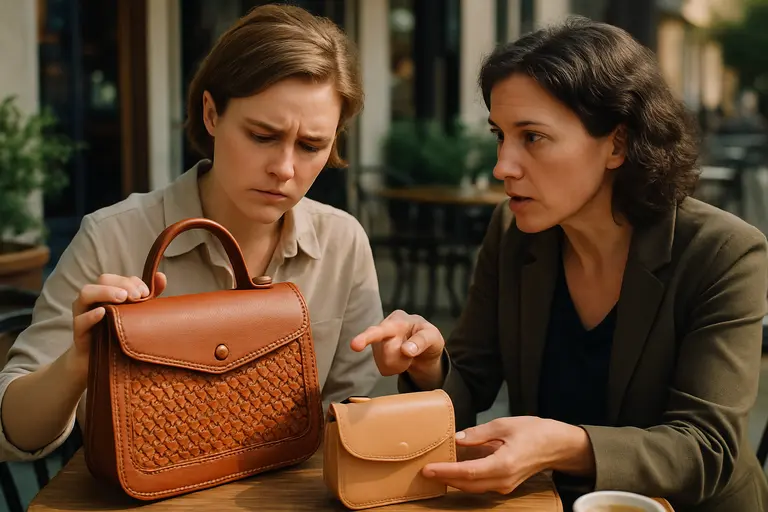
The same test applies to accessories. A bag described as one-of-a-kind should show what makes that specific piece different. Quilting, leather tooling, appliqué, beadwork, and embroidery all have visible construction logic. If every image looks perfectly identical, the handmade claim needs clarification. Buyers do not need to interrogate small makers harshly, but they can ask precise, respectful questions: which part is handmade, who performs the work, and how should the piece be cared for?
Respect For Cultural Knowledge
Many craft processes are tied to regional knowledge, family practice, Indigenous methods, guild training, or community-based production. Fashion criticism should avoid treating those practices as raw material waiting for brand reinterpretation. The better approach is attribution, context, and restraint. If a brand cites a heritage technique, it should explain the relationship responsibly and avoid implying ownership over a practice that belongs to a wider community.
This is where handmade fashion brands face both opportunity and scrutiny. A thoughtful label can help sustain demand for difficult skills and make artisan labor more visible. A careless label can reduce cultural work to styling texture. The difference often appears in the details: credit language, production transparency, compensation claims that can be verified, and whether the finished garment respects the technique rather than burying it under trend-driven styling.
Handmade Fashion Brands Amid AI Concerns
The brands and marketplaces worth watching are the ones that make craft verifiable without turning artisans into marketing props. Kinyan Lam’s use of heritage dyeing and upcycled fabrics, Bode’s textile-centered identity, and Novica’s large artisan marketplace model point to different parts of the same shift. Buyers are not only asking whether something looks handmade. They are asking whether the claim can be trusted.
That trust will likely become more important as AI-generated visuals keep improving. A polished campaign can simulate mood, but it cannot substitute for the touch, repair, skill, and material risk involved in hand production. Handmade fashion brands that document those qualities clearly are better positioned than labels that rely on vague nostalgia. For fashion buyers, stylists, and DIY makers, the most reliable signal is still the garment itself: how it is built, how it credits labor, and how honestly it presents the human hand behind the work.