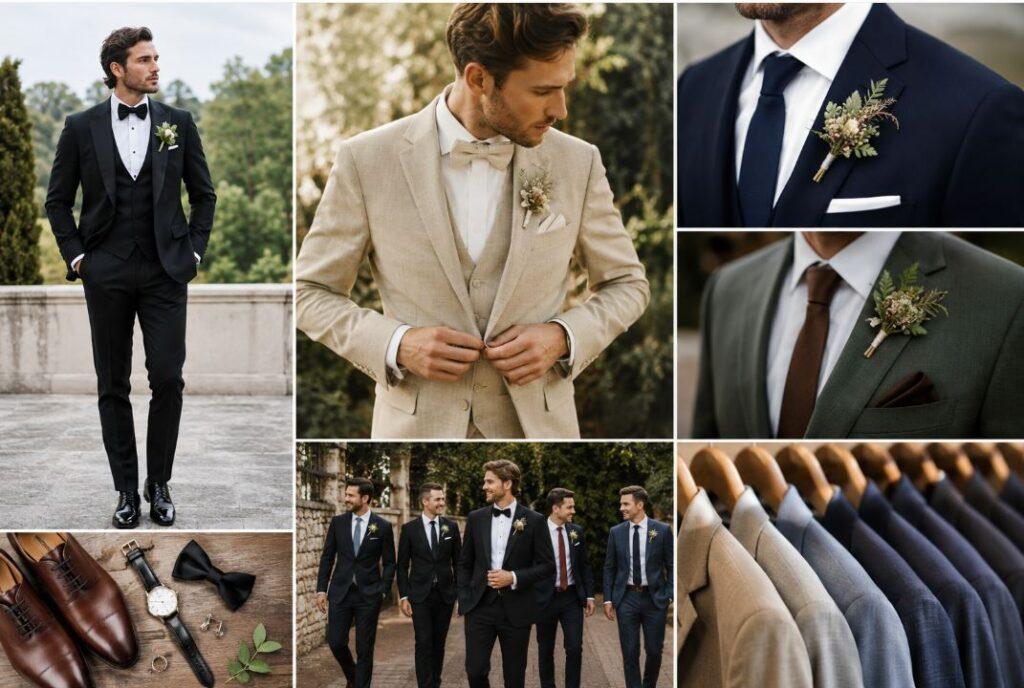
Men’s wedding attire requires a highly calculated approach. The groom’s suit functions as structural architecture. Relying on mass-market rentals guarantees a sloppy, ill-fitting presentation that photographs poorly. A successful look balances severe geometric lines with soft, high-quality textiles. Building a functional, striking wedding wardrobe demands ignoring cheap polyester blends entirely. The focus shifts strictly to precise garment construction, intelligent fabric choices, and correct physical proportions. The clothing must protect the wearer from environmental elements, move seamlessly through a long day of physical activity, and project absolute formal authority.
The Architecture Of The Formal Tuxedo
Black-tie events demand strict adherence to historical dress codes. The tuxedo relies on lapel geometry to project a specific image. The peak lapel draws the eye upward and outward, physically broadening the shoulders and creating a severe, aggressive V-shape across the chest. The shawl collar offers a continuous, curved line that softens the upper body and mimics vintage smoking jackets.
Both styles utilize silk facings—either satin or grosgrain—to contrast against the matte wool of the jacket. This textural friction defines the formal aesthetic. The trousers must feature a matching silk stripe running down the outer side seam, visually elongating the leg. Reviewing classic tuxedo guidelines from menswear historians clarifies the exact rules separating a true dinner jacket from a basic black suit. A standard suit with a black bow tie fails the dress code entirely.
| Lapel Style | Geometric Effect | Best Application |
| Peak Lapel | Broadens shoulders, aggressive lines | Highly formal cathedrals, grand ballrooms |
| Shawl Collar | Softens edges, continuous curve | Vintage-inspired venues, cocktail receptions |
| Notch Lapel | Standard business cut | Avoid for strictly formal evening events |
The Internal Skeleton: Canvas Construction
The visual impact of a suit relies heavily on its internal construction. High-quality jackets utilize a canvas interlining made from horsehair. This rigid framework sits independently between the outer fabric and the inner lining. It masks posture inconsistencies and creates a commanding, symmetrical silhouette. Over time, the horsehair canvas physically molds to the exact shape of the wearer’s ribcage, resulting in a completely custom fit.
Cheap mass-market suits replace this canvas with synthetic glue in a process called fusing. Fused jackets feel stiff and lifeless. The glue degrades over time, causing the outer fabric to bubble and warp permanently. Investing in a half-canvas or full-canvas jacket guarantees the outfit retains its intended geometric shape from the morning commute straight through late-night dancing. The fabric drapes naturally over this internal skeleton, projecting strength and order.
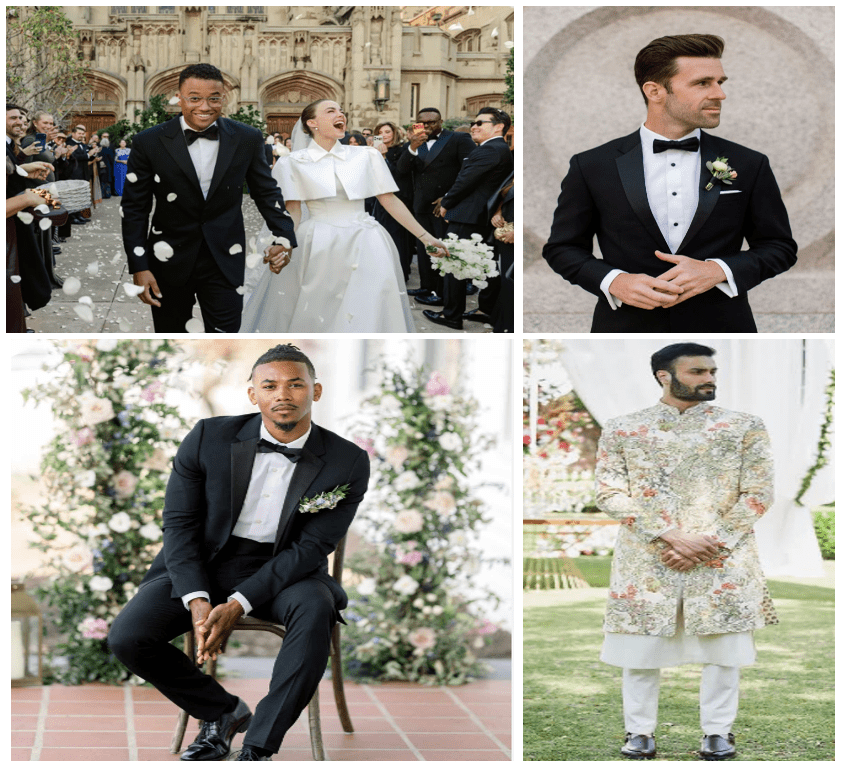
Three-Piece Suiting And Visual Depth
A two-piece suit often falls flat in a highly formal setting. Introducing a waistcoat adds necessary visual depth to the torso. The vest creates a sharp boundary locking the tie in place and completely controlling the waistline. The groom removes his jacket during the reception; the waistcoat maintains a strict, formal boundary in its absence.
The cut of the vest must align perfectly with the jacket closure. A deep U-shape vest pairs beautifully with a single-button jacket, allowing the shirt hardware to remain visible. A high-cut V-neck vest works best with a standard two-button suit. The bottom button of the waistcoat remains unfastened. This prevents the fabric from bunching awkwardly when the groom sits down for the meal.
Fabric Mechanics For Seasonal Ceremonies
The raw materials dictate the absolute success of the entire outfit. Flimsy synthetic blends trap body heat, creating a highly uncomfortable physical experience under hot lights. The modern dress code relies on premium, natural fibers holding strict geometric shapes. Heavy worsted wool serves as the absolute baseline for traditional ceremonies. The dense fibers hold a sharp crease in the trousers and support the internal canvas in the chest perfectly.
Summer and destination events require open-weave fabrics like high-twist fresco wool or heavy linen. Linen naturally stands away from the body, creating an internal cooling chamber. The rigid nature of heavy linen holds a sharp line, providing necessary architectural structure even in extreme coastal heat. Coordinating this fabric weight with the overall event aesthetic aligns directly with modern formal wedding attire protocols. Winter weddings demand heavy flannel or tweed. These thick textiles absorb light, creating a rich, matte finish that provides actual thermal insulation.
Color Theory Beyond Navy And Black
Selecting the correct pigment involves analyzing the time of day and the venue lighting. Standard navy acts as a permanent, immovable staple for daytime affairs. It absorbs excessive light and flatters all skin tones. Afternoon ceremonies transition perfectly into evening events when the groom selects dark, bruised tones.
Deep oxblood, heavy emerald green, and rich charcoal act as primary alternatives to black. Wearing a single, dark jewel tone projects massive authority. The lack of bright color variation demands absolute perfection in the garment construction. A midnight blue tuxedo absorbs artificial lighting better than true black, resulting in a deeper, richer appearance in evening photographs. Bright, chaotic colors or loud patterns distract the eye from the architectural cut of the clothing. Building a wardrobe around muted, grounded colors allows the suit’s geometry to remain the focal point.
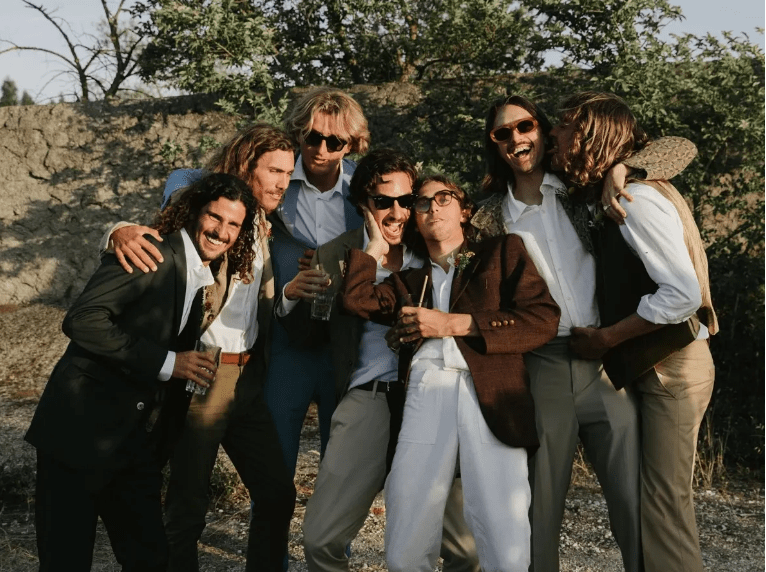
Precision Fitting And Silhouette Proportions
Buying expensive garments means nothing if the fit fails to align with your anatomical structure. The shoulder seam of a jacket must rest exactly at the outer edge of your natural shoulder bone. A seam drooping down the bicep looks instantly sloppy. The sleeve should expose exactly a quarter-inch of your shirt cuff. This precise measurement frames the hands and breaks up the solid block of fabric covering the arm.
The trousers require an equally mathematical approach. The break of the pant determines the neatness of the entire lower half. The break refers to the exact point where the fabric meets the shoe. A slight break or no break at all provides a much cleaner, more aggressive line than a full break pooling heavily around the ankles. Flat-front trousers offer a sleek, modern profile. Pleated trousers provide extra fabric at the hips, accommodating wider frames and adding classic volume to the lower half.
Neckwear Engineering And Silk Geometries
The tie or bow tie serves as the visual centerpiece of the upper body. The knot itself represents a study in physics and friction. The four-in-hand knot provides a slightly asymmetrical, narrow shape matching modern slim lapels perfectly. The half-Windsor knot creates a larger, symmetrical triangle suited for wide-spread shirt collars.
The groom must press a deliberate dimple into the silk just below the knot before tightening it. This small architectural fold adds three-dimensional depth to the fabric, preventing the tie from looking like a flat ribbon. Pre-tied bow ties represent a complete structural failure. They look entirely symmetrical and lifeless. A self-tied bow tie features slight natural irregularities, proving the groom executed the knot manually. The silk must match the lapel facings exactly in texture and sheen.
Structural Accessories And Metal Hardware
Accessories complete the structural presentation. The soft, flowing nature of formal shirting demands hard, architectural accents. Standard plastic buttons fail completely on a tuxedo shirt. The groom must utilize metal studs and matching cufflinks. This hardware acts as a cold, mechanical contrast to the soft cotton.
The metal tones must remain completely unified across the entire outfit. Silver cufflinks demand a silver watch case and a silver belt buckle. Mixing metals creates visual clutter. The watch itself must fit seamlessly under the shirt cuff. A massive steel diving watch destroys the cuff of a formal shirt. A thin, minimal dress watch on a black leather strap slides effortlessly beneath the fabric, remaining hidden until the groom checks the time.
Footwear Integration For Long Events
Wedding schedules frequently require standing for six to eight hours. The footwear must possess enough physical mass to compete directly with heavy formal fabrics and offer actual physical support. Delicate, thin-soled dress shoes look entirely absurd supporting a heavy wool suit. Shoe designers pivoted back to pure structural realism.
The black calfskin Oxford serves as the daily workhorse for the formal crowd. These shoes feature a closed lacing system providing a sleek, uninterrupted profile across the top of the foot. Wholecut leather shoes take this concept further, utilizing a single piece of leather to construct the entire upper without a single visible seam. A black velvet slipper provides a brilliant, highly textured alternative for strictly black-tie events. The soft velvet acts as a rigid anchor for flowing wool and silk garments, finishing the outfit with a heavy, deliberate base. Every individual piece of the outfit serves a distinct structural purpose, resulting in a highly intentional, flawless aesthetic performing perfectly inside any venue.