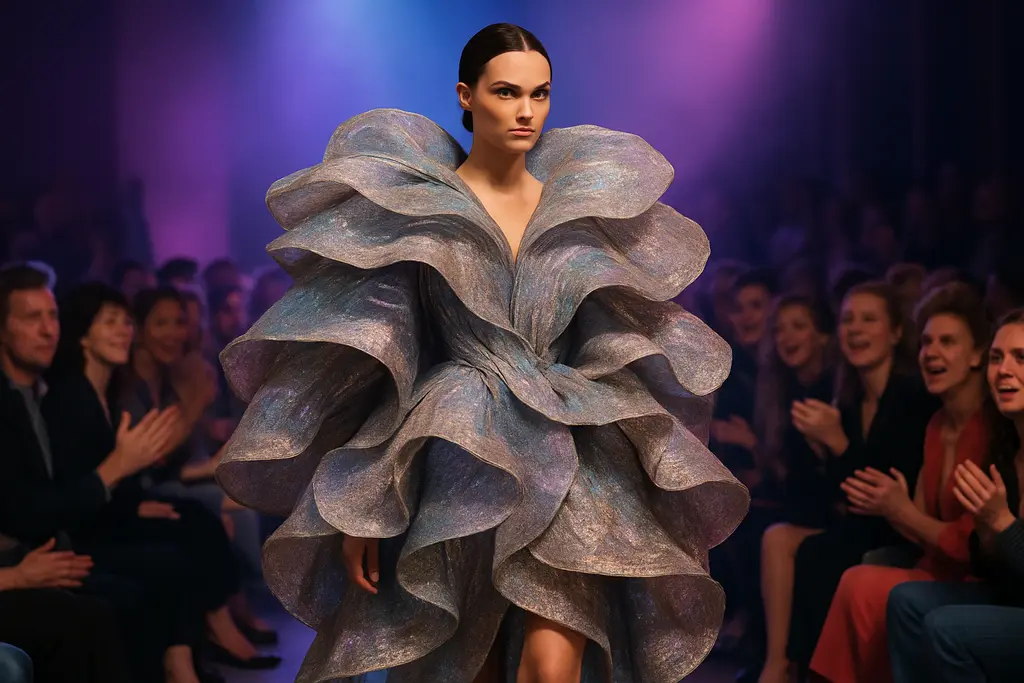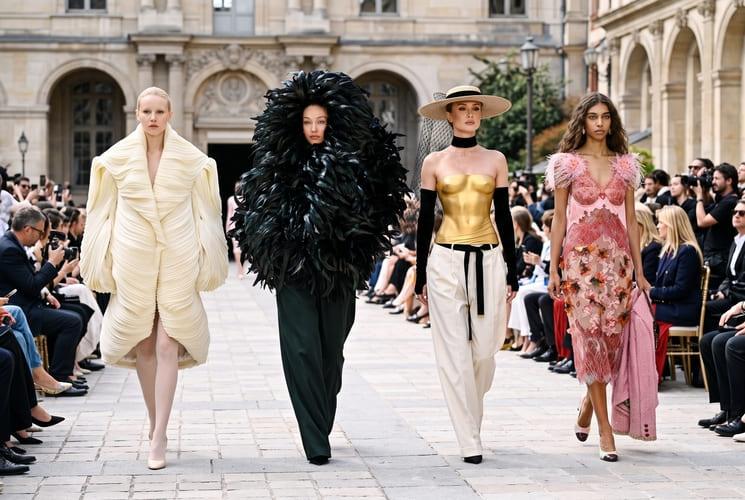

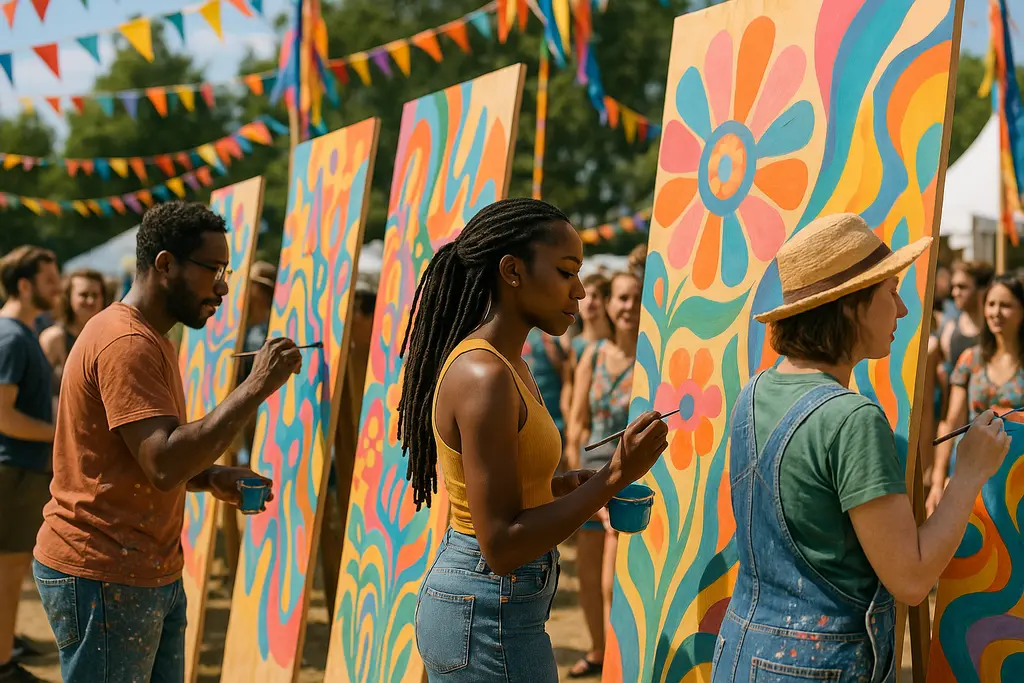
Festival Art Patterns should not be little traps for borrowed genius. A festival can fill the eye with color, booths, food stalls, music, and human heat, but a maker’s first duty is to separate admiration from imitation. The 2026 EPCOT International Festival of the Arts ran from January 16 to February 23, marked its tenth year, and included 24 Food Studios, according to the WDWNT festival overview. Those facts matter for pattern work because a festival of that scale is not one image; it is a crowded cabinet of disciplines, surfaces, rhythms, and commercial presentation. The safest tutorial begins there: study structure, not signature.
For aspiring creators, this is a pattern lesson with two lamps burning. One lamp is aesthetic: how to convert public festival impressions into appliqué, patchwork, paper collage, wearable accessories, or wall pieces. The other is ethical: how to avoid making a saleable copy of an artist’s booth work, character likeness, or recognizable composition. I write as a dressmaker staring at a bolt of cloth under carnival light: the fabric asks for courage, but it also asks for restraint.
Festival Art Patterns From Public Festivals
Festival Art Patterns As Ethical Translation
Festival Art Patterns begin with translation. Do not photograph a painter’s canvas and redraw it as embroidery. Do not trace a sculptor’s silhouette into a patch. Instead, record broad design questions: Did the festival favor stacked rectangles, loose arcs, theatrical frames, or high-contrast borders? Did the event space place art against food, music, signage, or performance? Those questions build original structure without feeding on another artist’s labor.
The Bombay Beach Biennale, described by The Guardian as a California desert arts festival reflecting on its tenth anniversary in 2026 and the strain of growing popularity, offers a useful cautionary parallel: scale can change the feeling of an art event Guardian report. For makers, that means a festival-inspired piece can show pressure, crowding, heat, distance, and ritual without quoting a specific installation. A sleeve can carry interrupted bands. A quilt block can leave deliberate open space. A paper pattern can place small motifs near a blank field, like tents seen across pale ground.
Observation Notes Before Cutting
Carry a small notebook before you carry scissors. Divide one page into four boxes: color temperature, repeated shapes, movement, and negative space. Write words, not copies. “Warm red beside blue shadow” is safer and more useful than a sketch of someone’s painting. “Three arches, one broken line, crowded lower edge” is a design prompt, not a theft of composition. This practice respects artistic integrity while giving your hands material to work with later.
The website Kay Granger is part of the same creative network and often explores cultural themes through public interactions; that approach encourages pattern makers to pause and reflect before crafting a piece from festival inspiration. The aim is not to drain the festival of magic. The aim is to keep the magic from becoming a costume worn over another creator’s face.
A Cautious Tutorial Framework
Drafting Festival Art Patterns On Paper
Drafting Festival Art Patterns on paper is the cleanest starting point because paper forgives the feverish first idea. Use a six-inch square if you are making a patch, a twelve-inch rectangle for a tote panel, or a long narrow strip for a scarf border. Draw only primary geometry first: blocks, circles, angled bands, broken ladders, rays, or windows. Then choose one “festival pressure” to control the piece. Pressure might mean crowded lower corners, a bright center, a wandering border, or a sudden empty gap.
After the first drawing, reduce the design by half. A beginner often believes more symbols mean more feeling. In textile work, excess detail can turn to noise once thread, seam allowance, and fabric grain enter the room. Keep one dominant shape, one secondary rhythm, and one quiet field. These Festival Art Patterns are not souvenirs; they are disciplined responses to public art culture.
Step Sequence For A Textile Panel
- Choose a base cloth with enough body to hold stitching, such as cotton canvas, midweight linen, or quilting cotton backed with interfacing.
- Draw a simple festival map from memory: entry path, stage shape, booth row, food area, or open plaza. Keep it abstract.
- Convert the map into three fabric families: ground, accent, and shadow.
- Cut large shapes first, then pin them before adding any small decorative marks.
- Use running stitch, couching, or machine topstitching to secure edges without burying the original geometry.
- Stop before the panel feels finished, wait one hour, then remove one unnecessary element.
This last act feels cruel, like cutting a comet from a night sky. Yet subtraction is where a tutorial becomes design training. A festival piece needs breath. If every inch shouts, no figure can be heard.
Material Review For Pattern Makers
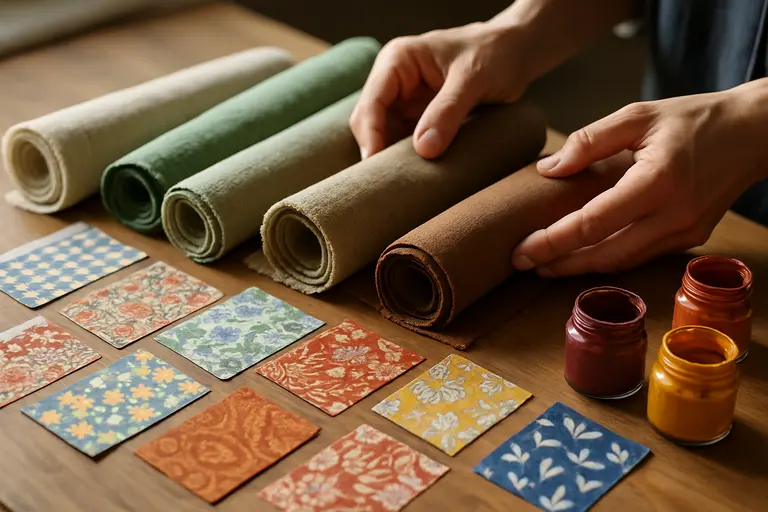
Fabrics That Hold Shape
For beginners, quilting cotton is the most forgiving test cloth. It presses cleanly, cuts predictably, and accepts hand or machine stitching without much argument. It can look flat, so it benefits from layered edges or contrasting thread. Cotton canvas has more authority. It suits tote fronts, banners, and wall panels, though it can become bulky at corners. Linen brings a dry, elegant irregularity, but loose weaves can fray if the maker cuts tiny appliqué pieces too soon.
Felt is tempting because it does not fray, but cheap acrylic felt can appear blunt beside more refined cloth. Wool-blend felt gives stronger edges and better depth, though it costs more and may not suit every project budget. Organza and sheer nylon create festival light beautifully, but they punish careless cutting. Treat them as overlays, not structural foundations, unless you already know how they behave under heat and needle tension.
Tools Worth Buying Carefully
A rotary cutter is useful for long borders, but it is not magic. It demands a cutting mat, a sharp blade, and a ruler that does not slide. Small appliqué scissors remain better for irregular shapes. Water-soluble marking pens can help, but test them on scraps first; no maker wants a ghost line blooming after a final press. Fusible web can stabilize tiny pieces, yet too much adhesive stiffens the cloth and deadens hand stitching. The product earns its place only when it solves a specific problem.
| Material | Best Use | Caution |
|---|---|---|
| Quilting Cotton | Beginner appliqué and patch panels | Can look flat without stitch texture |
| Cotton Canvas | Totes, banners, structured wall pieces | Bulky seams need planning |
| Wool-Blend Felt | Bold shapes and clean-edged motifs | Higher cost than acrylic felt |
| Sheer Organza | Light effects and overlays | Slippery cutting and heat sensitivity |
The best kit is not the largest kit. A pencil, tracing paper, two cloth weights, sharp scissors, a needle, neutral thread, and one accent thread can carry a project farther than a drawer full of decorative gadgets. Buy for the pattern in front of you, not for the fantasy of the studio you hope to own.
Festival Art Patterns For Responsible Making
From Personal Piece To Seller Sample
If the finished work is for your wall, you still owe respect to the artists who lit the original spark. If the work is for sale, caution should sharpen. Avoid using protected characters, celebrity likenesses, artist names, festival marks, or booth-specific compositions as sales hooks unless you have clear permission from the rights holder. This is not legal advice; it is a conservative maker’s rule that helps keep commerce from feeding on confusion.
For a seller sample, describe the method rather than implying an official connection. “Abstract appliqué panel inspired by art-festival color and crowd movement” is safer than naming a specific event as if it endorsed the piece. Keep process photos that show your own sketches, revisions, and fabric tests. Those records are not shields against every dispute, but they do show that your pattern grew from independent decisions.
A Pattern With Room For Wonder
A good festival-inspired object should feel like walking home after sunset with paint still in the mind. It should not resemble a copied booth print. Let the sleeve curve like a stage canopy. Let the tote pocket hold the shape of a plaza. Let a wall hanging carry heat, pause, music, and the appetite of a crowd. The maker’s task is to catch the weather of art, not the private fingerprint of another artist.
That is the enduring use of this tutorial method: observation becomes geometry, geometry becomes cloth, and cloth becomes an honest object. The festival remains a source, not a quarry. Your hands keep their own name.