

DIY Costume Making has a useful point of contact with Grandma Moses: A Good Day’s Work, not because makers should reproduce specific artworks, but because the exhibition’s Arkansas schedule gives families, teachers, and costume enthusiasts a museum context for thinking about handmade dress-up. As of August 25, 2026, the Crystal Bridges Museum presentation in Bentonville was scheduled for September 12, 2026 through March 29, 2027, following a Smithsonian showing that ran from November 25, 2025 through July 12, 2026, according to the Smithsonian exhibition listing. That timing matters: the Arkansas presentation had not yet opened on August 25, 2026, so any cultural impact in the state should be framed as anticipated, adjacent, or preparatory rather than already proven by attendance or maker activity.
Why DIY Costume Making Fits The Exhibition
The exhibition title, A Good Day’s Work, points toward labor, routine, and hand activity as interpretive starting points. For dress-up play, those ideas can become material choices rather than literal replicas. A child’s costume might use an apron, a patched overskirt, a kerchief, or a soft cap to suggest everyday work without copying a protected image or claiming to represent an exact painting. That approach respects artistic integrity because it treats the museum exhibition as cultural context, not as a pattern book.
DIY Costume Making As Museum Response
DIY Costume Making often works best when it begins with observation: color, silhouette, texture, and mood. In a museum-linked project, the safest creative method is to respond to broad visual categories. Makers can ask what kinds of fabrics feel practical, what shapes suggest movement, and how accessories can imply a task. A basket, fabric bundle, or simple cloth tool roll can communicate a work theme without needing to imitate any single artwork.
This distinction is especially useful for educators and parents. Dress-up can support storytelling, but it should not flatten an artist’s work into a costume stereotype. A careful activity might invite participants to invent a fictional worker, neighbor, storyteller, or seasonal helper inspired by the exhibition’s title. That keeps the project open-ended and age-appropriate while avoiding claims that one outfit “is” a Grandma Moses artwork.
Thrift Culture And Material Choice
The strongest documented connection between museum-inspired dress-up and wider costume culture is the rise of thrift-based making. Goodwill Industries International reported in its 2025 Halloween Survey, released on October 2, 2025, that 62% of adults who preferred DIY costumes used thrift stores for materials, up from 53% in 2024; among Gen Z, the figure was 63%, according to Goodwill’s survey release. Those figures do not prove that the Grandma Moses exhibition caused costume-making activity. They do show that a large share of DIY-minded adults already looked to secondhand sources before the Arkansas opening date.
Budget Signals From Thrift Data
The thrift data matters because folk-art-adjacent dress-up rarely needs new synthetic costume sets. Worn cotton shirts, faded skirts, denim, linen-look tablecloths, lace curtains, and broken-in jackets can all suggest domestic work, craft, and rural or small-community storytelling without overbuilding the look. The point is not authenticity in a strict historical sense; the point is visual plausibility, affordability, and respect for materials.
For families, this can lower the barrier to creative play. A parent can assemble a costume from one secondhand base garment, one altered accessory, and one handmade prop. A teacher can ask students to bring fabric remnants rather than purchase matching costumes. A community group can stage a dress-up activity around reuse, discussing why worn fabric often carries more narrative force than a glossy packaged costume.
- Start with a plain secondhand garment that can be worn again after the activity.
- Add removable patches, ties, or fabric flowers rather than permanent changes.
- Use props to suggest action: carrying, gathering, stitching, sorting, or storytelling.
- Avoid direct copies of identifiable artworks, signatures, or museum images.
Folk-Art Influence Without Copying
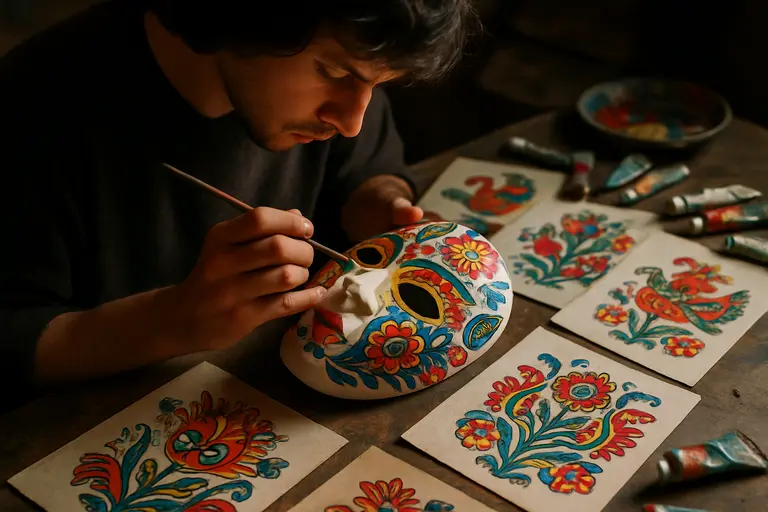
Costume culture often borrows too quickly from art. A more respectful process separates influence from replication. Folk-art influence can appear through handmade texture, visible stitching, modest layering, and narrative props. It does not require duplicating a composition, a named figure, or a recognizable scene. This is where caution helps creativity rather than limiting it.
Storytelling Through Workwear Cues
Workwear cues give dress-up a clear structure. An apron suggests preparation or service. A shawl suggests warmth, movement, or care. A cloth bag suggests gathering or carrying. A sun hat suggests outdoor labor or travel. These cues remain broad enough to support original characters. They also align with the exhibition title’s focus on work without turning museum content into costume merchandise.
Color can follow the same principle. Soft neutrals, faded blues, muted reds, cream cotton, and earth-toned layers can create a handmade feeling, but no palette should be presented as a verified Grandma Moses formula unless a museum source states it. The cautious maker can say, “This costume responds to folk-art and work themes,” rather than, “This is copied from the exhibition.” That small wording change protects both the artist’s legacy and the maker’s own originality.
For additional resources, readers can explore Shimply, a related site in this network, to gather more ideas and inspirations. A cross-site idea bank can be useful, but museum-linked costume projects still benefit from direct exhibition context and careful wording.
DIY Costume Making In Arkansas After Grandma Moses
DIY Costume Making in Arkansas after the scheduled opening at Crystal Bridges could become most meaningful if it is handled as interpretation rather than imitation. Bentonville’s museum setting gives local families and school groups a reason to connect art viewing with fabric handling, reuse, and role-play. Yet, because the Arkansas exhibition had not opened by August 25, 2026, any claim about confirmed public response would be premature. The better claim is narrower: the exhibition schedule created a timely opportunity for museum-adjacent costume activities rooted in thrift, storytelling, and handmade practice.
Local Workshops And Family Play
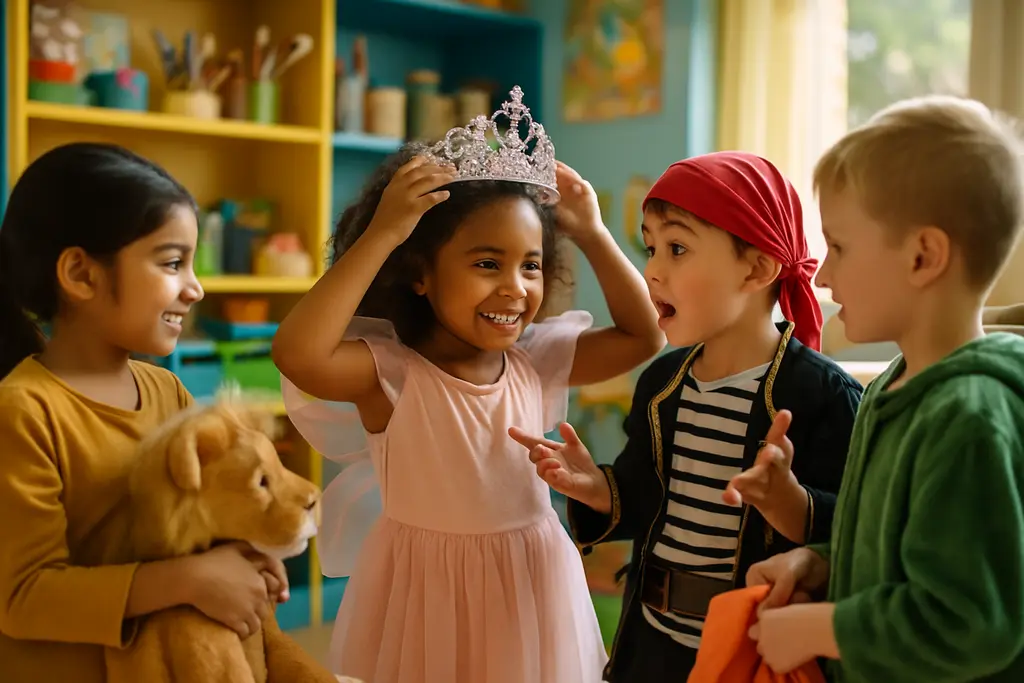
A museum-inspired workshop could ask participants to build an original character around a “good day’s work.” One child might become a seed sorter. Another might become a quilt carrier, a market helper, a letter deliverer, or a festival cook. None of these characters needs to correspond to a specific painting. Each can be built from reused garments and simple props, giving participants a way to think about labor, community, and creativity through clothing.
The cultural value lies in the method. Dress-up play lets people test identity and story through the body. Thrifted making adds resource awareness. A museum exhibition adds a frame for looking slowly and asking better questions. Together, these practices can make art feel usable without reducing it to decoration. For Adrian Vale’s dress-up lens, that is the most defensible reading: the Grandma Moses exhibition can support a careful, handmade costume culture when makers credit the context, avoid direct copying, and leave room for original characters to do their own good day’s work.