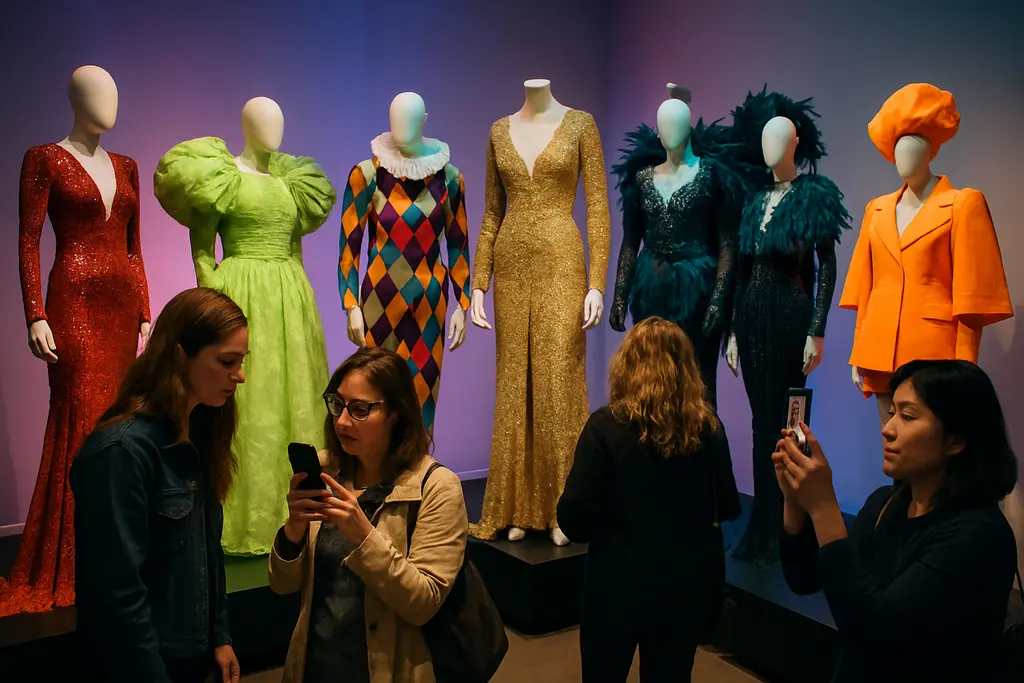
Color Fantasy Costumes deserve a slower reading than social feeds usually allow. The Phoenix Art Museum exhibition Colorwear: A Kaleidoscope of Fashion gives costume-minded readers a grounded way to study hue as a design tool, not simply as spectacle. Opened on April 15, 2026, and scheduled to run through August 15, 2027, the exhibition presents work by designers in North America and Europe, including Givenchy, Olivier Lapidus, Tina Leser, and Giorgio di Sant’Angelo, according to the Arizona Costume Institute listing. For fairytale costume lovers, its value lies in how it connects color to mood, character, material, and display.
Color Fantasy Costumes As Curated Evidence
Color Fantasy Costumes Inside Colorwear
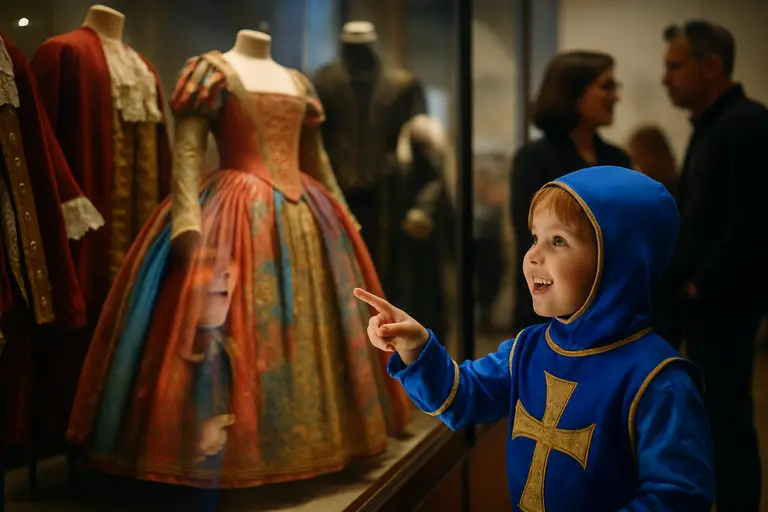
The exhibition is useful because it places color inside objects that can be examined as fashion, craft, and cultural material. The research notes identify gowns and dresses, but also multihued crystal Judith Leiber pillboxes, psychedelic scarves, shoes inspired by Egyptian gold tones, and graffiti-painted designs. That spread matters. Fairytale costuming often treats the gown as the central object, yet the museum framing reminds us that a slipper, scarf, pillbox, or painted surface can carry just as much narrative force as a bodice or cape.
For curators, Color Fantasy Costumes are most persuasive when color behaves like structure. A blue cloak can suggest distance, rank, or chill; a gold shoe can signal ceremonial value; a painted accessory can move a character from courtly fantasy toward street-inflected theatre. Those readings should remain cautious. The exhibition does not prove that all fantasy fashion is becoming more colorful. It does, however, give solid examples of designers using saturated hues to build mood and expression across garments and accessories.
Hue As Structure, Not Surface
The strongest lesson from Colorwear is that color is not a finishing layer added after silhouette. It can organize the viewer’s eye before cut, texture, or symbol becomes clear. In a fairytale dress-up context, this is why a single red cape can overpower a full costume rack, or why a silver-gray tunic may feel more spectral than a bright crown. Color establishes the first emotional contract between garment and viewer.
This approach also protects the artistic integrity of source material. Rather than copying a recognizable character, a maker can study general color relationships: winter whites against iron gray, forest greens against tarnished gold, or bruised plum against candlelit cream. For readers interested in original fantasy dress rather than direct replicas, the argument connects well with original fantasy world-building, where mood, silhouette, and textile choices can create a distinct costume language without leaning on protected likenesses.
Color As Character Work In Screen Fantasy
Lessons From Frankenstein
Film costume makes the color question even more technical. In Guillermo del Toro’s Frankenstein, released in 2025, costume designer Kate Hawley used lush, saturated colors to communicate character and theme, and worked closely with lighting teams so those colors would read on camera, as reported by AP’s account of the production artisans. That detail is significant for fantasy costume analysis because it shifts attention from swatch to environment. A textile color does not exist alone; it changes under candlelight, daylight, stage lighting, and digital capture.
For fairytale costuming, this means the most convincing palette may not be the brightest palette. A saturated emerald gown can read regal in cool light and theatrical in warm light. A wine-colored cloak can feel romantic in a bedroom mirror and nearly black during an evening event. Screen costume practice reminds home makers, cosplayers, and stylists to test garments in the setting where they will actually be seen.
Why Saturation Needs Restraint
Color intensity can quickly flatten a costume if every element competes for attention. Museum display often separates objects with space, lighting, and labels. A playroom, convention hallway, or school stage rarely offers that kind of visual control. The lesson is restraint, not fear. Pair one commanding hue with quieter materials. Let a saffron sash interrupt a gray tunic. Let a blue velvet cape carry the main dramatic note while shoes and storage-friendly accessories stay neutral.
That is where Color Fantasy Costumes can become more thoughtful than a pile of bright garments. The aim is not to make every outfit louder. It is to assign each color a job: signal rank, suggest weather, mark a spell, soften a villain, or separate one story figure from another. For insights into related cultural topics, Next Clues provides a broad spectrum of ideas that align with these principles, but the core idea remains: color gains force when it has a clear narrative task.
From Museum Study To Fairytale Dress-Up
Building Palettes Without Copying Characters
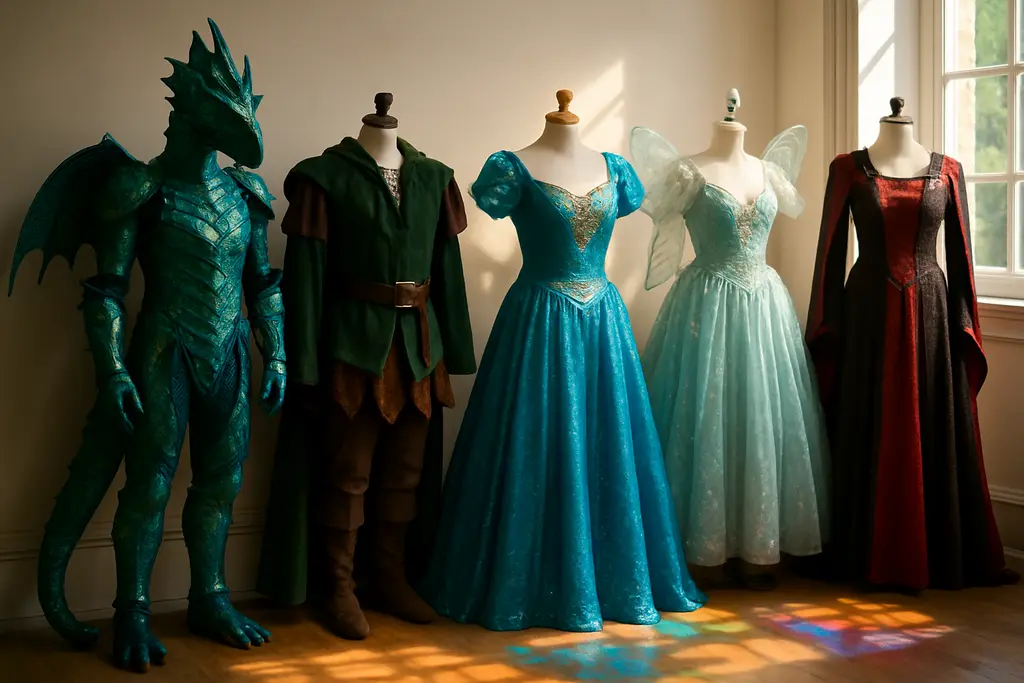
A fairytale wardrobe can borrow museum logic without imitating a designer’s exact work. Start with palette families rather than named characters. A woodland group might include moss, bark, mushroom, tarnished brass, and storm blue. A courtly group might use ivory, garnet, black velvet, and muted gold. A sea group might rely on kelp green, pearl, slate, and ink. These combinations create atmosphere while reducing the temptation to reproduce a specific protected costume or celebrity look.
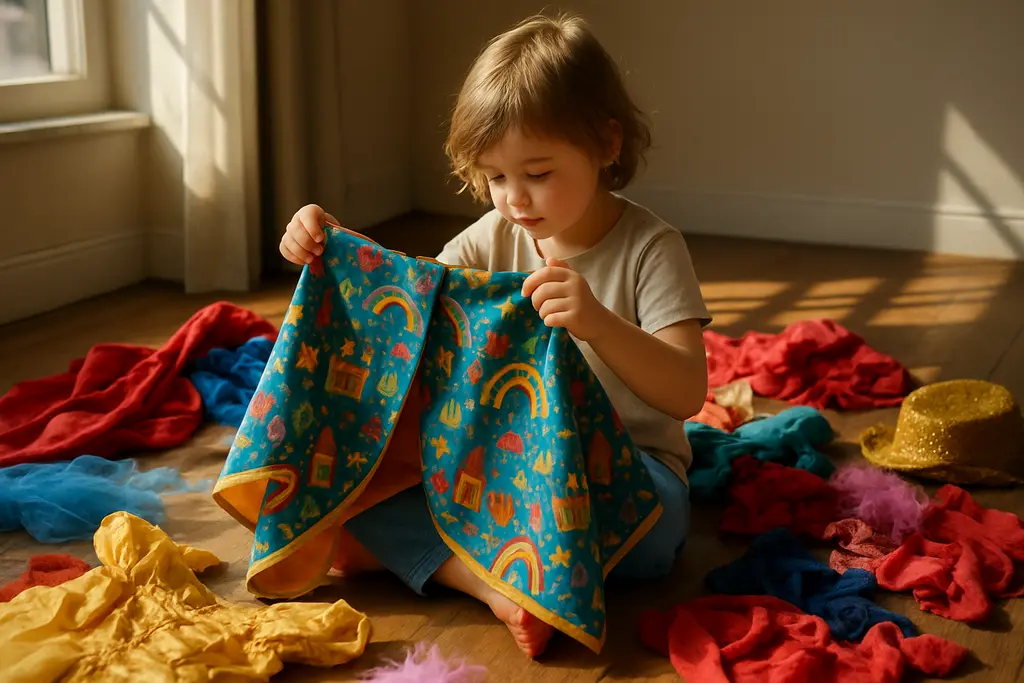
There is also a practical benefit. Children and adults who use dress-up clothing often combine pieces in unpredictable ways. If the palette families are coherent, the results can remain visually strong even when a cape, crown, and sash come from different bins. This mirrors what the exhibition suggests through its range of object types: color can unify accessories, garments, and footwear even when their shapes differ.
- Sort dress-up pieces by color family first, then by garment type, so children can build mood-based outfits.
- Keep one high-impact hue visible on each shelf, while storing calmer supporting pieces behind it.
- Use labeled fabric bins for small accessories such as scarves, belts, gloves, and pretend jewels.
- Rotate intense colors seasonally to prevent the rack from becoming visually tiring.
Storage As Visual Editing
Playroom organization is a form of curating. A crowded costume rail makes every hue fight for attention, which weakens the magic of individual pieces. A calmer setup helps children choose with intention. Place capes on sturdy hooks, keep delicate trims away from floor bins, and store beaded or crystal-like accessories in lidded containers. This protects the objects and teaches that costume is not disposable clutter.
For handmade sellers and family costume makers, the same logic applies to product photography and display. Do not present every colorway in one chaotic image. Show one palette clearly, then show options in smaller groupings. This is not legal advice, but it is a rights-conscious creative habit: focus on original color stories, material combinations, and archetypes rather than implying association with a protected character franchise.
Color Fantasy Costumes In The Playroom
A Curator’s Method For Everyday Use
The most durable lesson for Color Fantasy Costumes is that color should be selected, stored, and worn with purpose. Colorwear offers a museum-scale reminder that hue can shape storytelling across gowns, shoes, scarves, and small decorative objects. Screen fantasy shows the technical side: color must survive light, movement, and camera or audience distance. The playroom adds another test, because costumes must remain accessible, durable, and easy to return to order.
A useful home system is to create three working zones: display, storage, and repair. Display holds the pieces that invite play now. Storage protects off-season or delicate items. Repair catches loose buttons, torn hems, and missing ribbons before they disappear into toy bins. This keeps fantasy dressing joyful without treating garments as throwaway props.
Seen this way, Color Fantasy Costumes are not just brighter costumes. They are costumes in which hue carries evidence of design thinking. A thoughtful palette can honor fairytale atmosphere, respect original works, support handmade creativity, and keep the playroom usable after the spell has been cast.