
Creating a magical space for imaginative play is more than just tossing costumes in a corner. It’s an art form that needs careful planning. Before you dive into the fun stuff, you must lay a solid foundation. Think of it as setting the stage for a grand performance. The right space can spark creativity, but the wrong setup can lead to chaos.
First, you must measure the room. This isn’t just about dimensions; it’s about understanding how the space will flow. Will your little ones have room to twirl in their capes without crashing into furniture? Next, consider flow safety. Sharp corners and hidden trip hazards are not the accessories you want in your costume corner. Make sure the area is well-lit and free from anything that could cause a tumble.
Lastly, let’s talk about power points. Those enchanting fairy lights won’t hang themselves, and a reading nook is pointless without an outlet. Mapping out your electrical needs can make or break your layout. This groundwork may not seem glamorous, but it’s what transforms a simple idea into a functional, magical zone.
Zoning Plan: Wardrobe Rail, Mirror, Stage, Prop Shop, Reading Throne, Craft Table
Zoning is key in playroom design, making every child’s adventure special. Each zone has its own purpose, encouraging creativity and keeping things tidy. Let’s dive into creating these essential playroom zones.
Wardrobe Rail
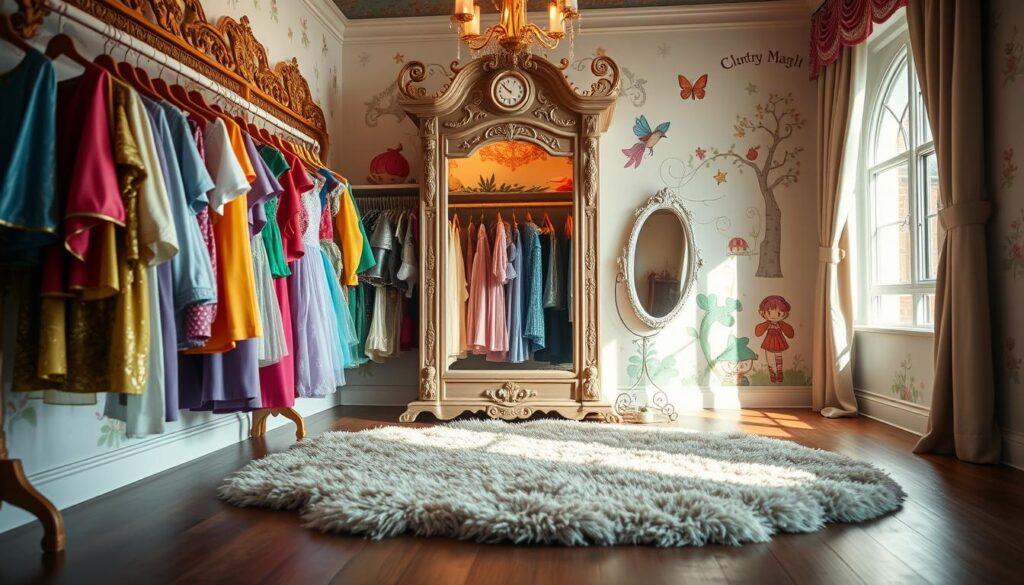
The wardrobe rail is essential for hanging clothes. It should be at a height kids can reach easily. Use wall-mounted hooks and racks to keep clothes wrinkle-free.
Labeling hooks by type, like “superheroes” or “princesses,” adds organization. It makes the space feel more magical.
Mirror
A mirror is a must-have in this space. Choose a shatterproof, child-safe full-length mirror. It’s safe and lets kids discover themselves.
This mirror turns a corner into a stage. It encourages kids to explore their identities through play.
Stage
The stage area needs room to breathe. It’s where kids can freely improvise and dance. Avoid cluttering this space to let creativity flow.
Prop Shop
The prop shop is a place of controlled chaos. Use open baskets and bins with labels for easy access. It’s all about making it easy for kids to dive into their imagination.
Reading Throne
The reading throne is a cozy spot for quiet time. It’s where kids can relax after being active. Add soft cushions and a small bookshelf for a peaceful atmosphere.
Craft Table
The craft table is where creativity meets hands-on learning. It’s where kids can make their own costumes. Keep it stocked with supplies to encourage exploration.
| Zone | Purpose | Key Features |
|---|---|---|
| Wardrobe Rail | Costume access | Child-height hooks, labeled categories |
| Mirror | Self-discovery | Shatterproof, full-length |
| Stage | Performance space | Negative space, open area |
| Prop Shop | Access to props | Open baskets, transparent bins |
| Reading Throne | Quiet space | Soft cushions, books |
| Craft Table | Creative projects | Art supplies, construction materials |
https://www.youtube.com/watch?v=CzWaABG0mcQ
Traffic Flow: Kids Circulation, Parent Sightlines, and Cleanup Paths
Managing traffic in a dress-up playroom is like directing a fun chaos. Kids move around like pinballs. A good dress up playroom layout makes sure they can easily move from the wardrobe to the mirror and stage.
Kids Circulation
The playroom is like a lively dance floor. Kids love to move, so a circular path keeps the fun going. A loop path stops them from getting stuck and helps them explore more.
Parent Sightlines
Parents need to keep an eye on things too. Imagine watching the stage from your sofa or seeing the reading throne while you work. Good sightlines let you help without hovering. It’s about safety and letting kids be creative.
Cleanup Paths
Cleanup paths are key to a tidy playroom. A clear path to storage makes tidying up easy. Position bins and hooks along the way to encourage kids to clean up. It’s easier for them to help if the path is clear.

Height and Reach: Guidelines by Age, Hooks, Rods, Bins, Mirror Height
In the world of costume play, the height of hooks and rods is key. A well-designed dress-up zone meets the ergonomic needs of kids. This empowers them to explore their imagination freely.
Guidelines by Age
Knowing a child’s reach is vital. A two-year-old can reach about 24 inches, while a five-year-old can reach up to 36 inches. Hooks at 30 to 40 inches make it easy for kids to grab their costumes. This promotes independence and reduces the need for constant adult help.
Hooks
Hooks should be placed to make it easy for kids to access their costumes. They serve as a starting point for creativity. By setting hooks at the right height, you avoid constant interruptions and create a fun, functional space.
Rods
Rods for hanging clothes should also be easily accessible. A double-rod system is great because it can grow with your child. This flexibility is like a colorful investment in your child’s future.
Bins
Storage bins should be on the floor or the lowest shelf. This keeps things tidy and avoids the mess of falling costumes. Use transparent bins so kids can see their clothes easily.
Mirror Height
The mirror wall is a key part of the design. A mirror that starts at the baseboard and goes up to 48 inches lets kids see themselves fully. Choose shatterproof acrylic for safety, as kids love to spin and twirl.
A well-planned dress up playroom layout is not just beautiful. It also lets kids express themselves freely. With the right heights, you create a space where creativity has no limits.
For more tips on organizing kids’ spaces, check out these kids closet organization ideas.
Lighting Plan: Fairy Lights, Task Lamps, Natural Light, Glare Control
Lighting can turn a room into a magical wardrobe haven. It’s like having a fairy godmother for your playroom. The right lighting makes every child feel like they’re in their own adventure.
Let’s explore the different lighting types that can make your costume corner special.
Fairy Lights
Fairy lights are great for setting a mood. They’re cheap, safe, and can make any corner magical. You can hang them on mirrors or above a stage for a special look.
Putting them in a glass jar creates a firefly effect. This is not only cheap but also makes the room feel magical. With a little effort, you can create a space that sparks imagination.
Task Lamps
Fairy lights are pretty but not enough for tasks. That’s where task lamps come in. They’re perfect for craft tables and prop shops, giving focused light where needed.
Choose lamps with adjustable arms and warm LED bulbs. They show fabric colors well without harsh shadows. This makes picking costumes fun, not a chore.
Natural Light
Natural light is both a blessing and a challenge. A north-facing window gives steady, soft light. But a south-facing window can be too bright, changing throughout the day.
Placing furniture wisely can help control this. It keeps your mirror wall from being too bright.
Glare Control
Glare is a problem we all face. No one likes squinting at their costumes. Sheer curtains, blinds, or furniture can soften sunlight, making the space better.
The goal is to light the room so every child feels like a star in their own movie. In this room, they truly are!
| Lighting Type | Function | Best Placement | Benefits |
|---|---|---|---|
| Fairy Lights | Aesthetic mood lighting | Along mirrors or ceilings | Creates magical ambiance |
| Task Lamps | Focused illumination | Craft table and prop shop | Accurate color rendering |
| Natural Light | General illumination | Windows | Brightens the space |
| Glare Control | Reduces harsh light | Windows and reflective surfaces | Enhances comfort |
For more lighting tips, check out this guide on the best floor lamps. And remember to plan by weather and event type to get the most out of your lighting!

Floor Map: Rugs, Dance Space, Anti-Slip Mats, Cable Management
Welcome to the floor map, where imagination meets safety in a fun dance-off. This is where your dress up playroom layout either shines or stumbles. A good floor plan makes the space fun and safe for kids.
Rugs are key in playroom zones. A circular rug can make a stage area, like a Broadway spotlight. A rectangular runner helps guide traffic flow, like runway lights. Pick rugs that are low-pile and tightly woven to avoid tripping hazards.

The dance space is sacred. It should be at least 4 by 4 feet for kids to move freely. No furniture should block this area, letting kids be creative.
Anti-slip mats are also important. They keep kids’ shoes from slipping, even with fancy shoes. A slip can hurt more than just a bruised ego. So, put anti-slip mats under every rug.
Cable management is the last step in a safe playroom. Fairy lights and electronic props can make a mess of cords. Use clips and cord covers to keep things neat. An organized space looks better and keeps magic alive.
In summary, a well-planned floor map is key for a great dress up playroom. With the right rugs, dance space, anti-slip mats, and cable management, you can make a space where creativity and safety come together.
Wall Systems: Pegboard, Slatwall, Command Hooks, Crown Displays
Wall systems are key to making the most of space in a dress-up area. They turn blank walls into organized, creative spots. Let’s explore the four main types that can change your child’s costume corner.
Pegboard
Pegboards are super flexible and can be painted to match your style. They grow with your child’s costume collection. From princess dresses to superhero capes, they adapt.
Slatwall
Slatwall is like pegboard’s fancy cousin. It adds a boutique feel to your child’s area. Imagine a slatwall behind the wardrobe, making picking costumes feel like shopping.
Command Hooks
Command hooks are great for those who don’t want to make big changes. They’re perfect for renters or anyone who likes options. Just use strong hooks for heavy costumes.
Crown Displays
Crown displays are special. A wall-mounted shelf or shadow box shows off your child’s favorite headpiece. It’s like a museum exhibit. Changing the crown weekly shows how your child’s interests evolve.
These wall systems do more than store clothes. They show that your child’s play is important. With the right setup, your dress-up area can be as exciting as an art museum.
Sample Floor Plans: Small Square, Long Narrow, Loft, Under Stairs
Let’s explore how even the most modest areas can be transformed into enchanting play zones. A well-designed dress-up playroom layout can breathe life into any space, no matter how small. Each floor plan has its own unique challenges and opportunities, so let’s dive into the specifics.
Small Square
The classic 10-by-10-foot box is a common urban dilemma. It’s a space that must juggle multiple functions without feeling like a chaotic storage unit. Here are some tips to maximize this area:
- Verticality: Utilize walls for storage. A wardrobe rail mounted above a low bookshelf can serve dual purposes.
- Mirror Wall: A mirror can double as a stage backdrop, creating an illusion of depth.
- Stage Nook: Define a stage nook with a circular rug to encourage imaginative play without consuming valuable floor space.
Long Narrow
Think of a hallway-turned-playroom or that awkward bonus room behind the garage. This layout demands linear zoning:
- Wardrobe Rail: Position it at one end to create a clear entry point.
- Mirror Wall: Place it centrally to reflect light and make the space feel larger.
- Stage Nook: At the far end, it completes the processional experience from backstage to spotlight.
Loft
With sloped ceilings, the loft presents unique challenges. Yet, its cozy feel can be leveraged:
- Reading Throne: Tuck a comfy chair under the eaves for quiet costume contemplation.
- Vertical Storage: Use tall shelving units to maximize storage while keeping the area open.
Under Stairs
Every child dreams of a secret hideaway. The under-stairs nook can be just that:
- Costume Corner: Install a low rod along the sloped wall for hanging costumes.
- Mirror: Position it on the tallest vertical surface for quick costume checks.
- Fairy Lights: Add battery-operated lights to create a magical atmosphere without extensive electrical work.
Each sample floor plan illustrates a vital truth: constraints breed creativity. A small dress-up playroom layout can outshine a sprawling, under-planned one when every square inch is utilized with intention.
Budget and Timeline: Quick Wins vs Full Makeover
Creating a dress-up playroom layout is both an art and a science. It’s about how you spend your money. A small investment can turn a dull space into a magical area for costumes.
Quick Wins are the easy changes that save money but make a big difference. For example, a set of Command hooks for under twenty dollars can change a wall in under an hour. It’s a smart investment!
Adding sparkle is easy with fairy lights for about fifteen dollars. They light up the area in just ten minutes, making it welcoming.
Thrift stores are great for finding a full-length mirror for thirty dollars. It makes the area look like a mirror wall, saving you a lot of money.
These quick changes give you time to plan the bigger makeover.
Full Makeover is where the real magic happens, but it costs more. You’ll need custom-built walls, LED lights, and a special wardrobe rail. Don’t forget acoustic panels for sound and style.
For the full makeover, plan to spend 40% on storage, 25% on lighting, 20% on floors, and 15% on decor. This makes the space feel special and not just a room.
Quick wins can be done in a weekend, giving you an instant feel-good factor. The full makeover takes six to eight weeks. It’s about seeing how the space really works over time.
Use the quick wins to guide your full makeover. Your child will help you see where the layout really works. It’s about finding the best spot for the costume corner.
Setup Day Checklist and Post-Play Reset Routine
Every great adventure starts with a solid plan. Before you let your kids’ creativity run wild, make a setup day checklist. Safety is key. Make sure all furniture is securely attached to the walls. Kids might try to climb shelves, so check the weight limits of hooks and rods.
Next, look at your playroom from a child’s view. Get down low to see if hooks are within reach. A shelf that seems high to you might be a challenge for a little one. Make any necessary adjustments.
After checking everything works, focus on looks. Fluff cushions, adjust fairy lights, and get the stage ready for future shows.
Now, let’s talk about cleaning up after playtime. Create a five-minute cleanup routine. Play a fun song to signal it’s time to clean up. As the music plays, kids can put away their costumes and props.
Teach kids to return their playroom zones to their proper place. This makes cleaning up fun and helps them take care of their space.
To keep things exciting, change out costumes with the seasons. Store away items that don’t fit or interest them anymore. A fresh space keeps the magic alive, making every visit to the wardrobe room special.