

Most storage projects end up looking sad and forgotten. But a storybook costume closet is different. It’s about creating a magical place that sparks imagination.
To start, you’ll need the right materials. A plywood build that looks good is key. You’ll also need casters that move smoothly and hardware that’s strong enough for kids’ tantrums.
The cut list is your guide. If you make a mistake, your project might not turn out right. Knowing about lumber grades is important. The right one will make your paint job look professional, not like a kid’s art project.
Choosing the right rods, hinges, and casters is important. It’s where you mix smart thinking with a touch of magic. It’s like the planning stage before your fairytale comes to life.
Build Steps: Frame, Panels, Hinges, Safety Rounding Edges
Building a costume trunk is like running a political campaign. You start with the frame, the trunk’s backbone. If it’s not square, everything else will be off. I use pocket-hole joinery for the panels to keep things sturdy and clean.
Hinges are key to your trunk’s function. Choose high-quality, mortise hinges for smooth opening and closing. Cheap hinges will make your lid sag, like a long filibuster.
Don’t forget about safety. Use a router to round off sharp edges. It’s like adding fairy dust to your woodworking. This way, your trunk is safe and looks like a storybook.
https://www.youtube.com/watch?v=CzWaABG0mcQ
| Component | Material | Joinery Method | Safety Feature |
|---|---|---|---|
| Frame | Plywood | Pocket-hole | Rounded edges |
| Panels | Particle board | Pocket-hole | Rounded edges |
| Hinges | Metal | Mortise | Secure attachment |
For more ideas, check out this DIY built-in bookcase or these parent-friendly video tutorials for advanced costume builds. Each step is important to make your trunk both useful and magical. A costume trunk without a hanging rail is like a superhero without a cape—it’s not complete. We’re not just adding a dowel. An adjustable rod system turns this trunk into a rolling garment rack. It can hold everything from a child’s Elsa gown to your own Pikachu onesie.
Now, let’s talk about the rod’s strength. This is where engineering meets a bit of fear. How many Renaissance faire bodices can it hold before it fails? To find out, we use a 1-inch diameter steel pipe wrapped in velvet. It’s strong but looks fancy.
The rod’s adjustability is more than a feature—it’s a belief against fixed rules. Your costume collection will grow, and so should your storage. Whether it’s fairy costumes or a wizard’s robe, the rail adapts to your changing needs.
Inside Organizers: Hooks, Shelves, Felt-Lined Drawers, Secret Wand Slot
Inside your DIY costume trunk, clever organizers can take your costume game to new heights. It’s like a TARDIS, bigger on the inside, packed with magical elements. Hooks for capes hang like trophies, and shelves for tiaras are the crown jewels of your collection.
Felt-lined drawers are not just for show; they add luxury. Imagine the soft touch of velvet holding your precious accessories. It makes every midnight costume raid feel like a secret mission, not a chaotic scramble.
The secret wand slot is a must-have. It’s a narrow, velvet-lined groove for a child’s wizard stick. It’s like a hidden clause, known only to the initiated, adding mystery to your trunk.
To make the most of your space, try some custom closet hacks. A rotating shoe rack for tiny glass slippers or a dedicated cubby for fairy wings can turn chaos into a curated exhibition. With these clever additions, your DIY costume trunk becomes a whimsical wonderland.
| Organizer Type | Functionality | Benefits |
|---|---|---|
| Hooks | Store capes and costumes | Easy access and visibility |
| Shelves | Hold accessories like tiaras | Maximize vertical space |
| Felt-Lined Drawers | Store delicate items | Protects and cushions items |
| Secret Wand Slot | Store wands discreetly | Adds a touch of magic |
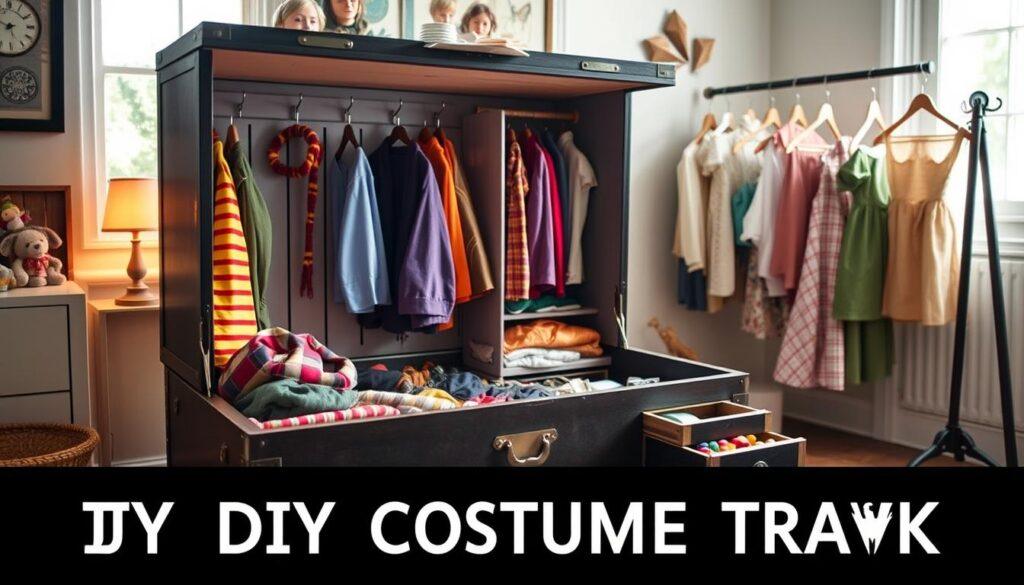
Transforming your trunk into a fairytale masterpiece is where the magic truly begins. The right paint finishes can make a simple plywood into a stunning work of art. It’s like dressing your trunk in a story-telling costume. Start with a chalk-paint base in “Antique Parchment” and add a dark aging glaze for that perfect look.
Gold leaf is a key element. Too much, and it looks too flashy; too little, and it’s not special enough. Just a touch of gold can make your trunk stand out.
Stencils are also powerful tools. Use designs like ivy or stars to make a plain panel look like a medieval page. Think of the DIY Edward Scissorhands costume. It’s all about the details. Your trunk should tell its own story.
Adding decals of fairytale creatures or a quote from the Brothers Grimm adds depth. It’s not just about finishing; it’s about creating a world for your furniture. Every brushstroke tells a part of the story.
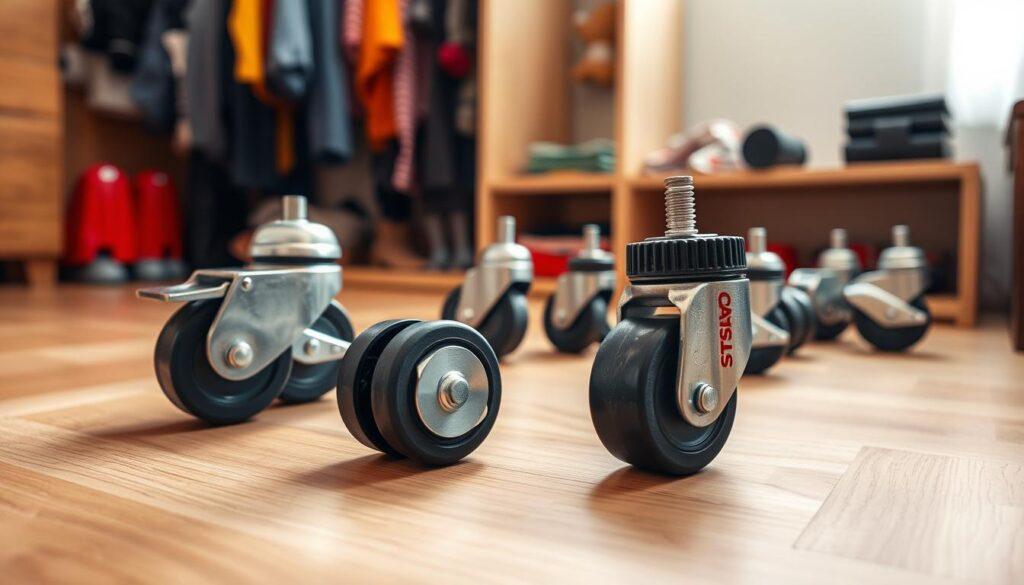
So, get your paints, stencils, and creativity ready. Let’s make that trunk a treasure of imagination! Imagine your costume trunk on wheels, but it zooms off instead of gliding smoothly. A mobile costume closet sounds great, but it can turn into a runaway cart without the right features. Caster wheels are the heroes your DIY wardrobe needs!
Not all casters are the same. You need locking casters that hold the floor tight. The front two should lock, and the back two should swivel. This lets you move through tight spaces easily.
But there’s more! Wall tethering is like a seatbelt for your trunk. It uses a hidden L-bracket and strap to keep it from tipping over. This is key, even if you’ve loaded the top with heavy props. It’s like a safety net for your imagination.
To wrap it up, here are the main features for your mobile costume closet:
| Feature | Description | Benefits |
|---|---|---|
| Locking Casters | Front casters lock in place while back casters swivel. | Stability and easy maneuverability. |
| Wall Tethering | Secures the trunk to the wall with an L-bracket. | Prevents tipping and enhances safety. |
| Anti-Tip Measures | Design features that distribute weight evenly. | Reduces the risk of accidents. |
Investing in these features is not just smart; it’s necessary. With the right setup, your costume closet becomes a magical place for creativity and safety.
Cost Breakdown Compared to Store-Bought Options
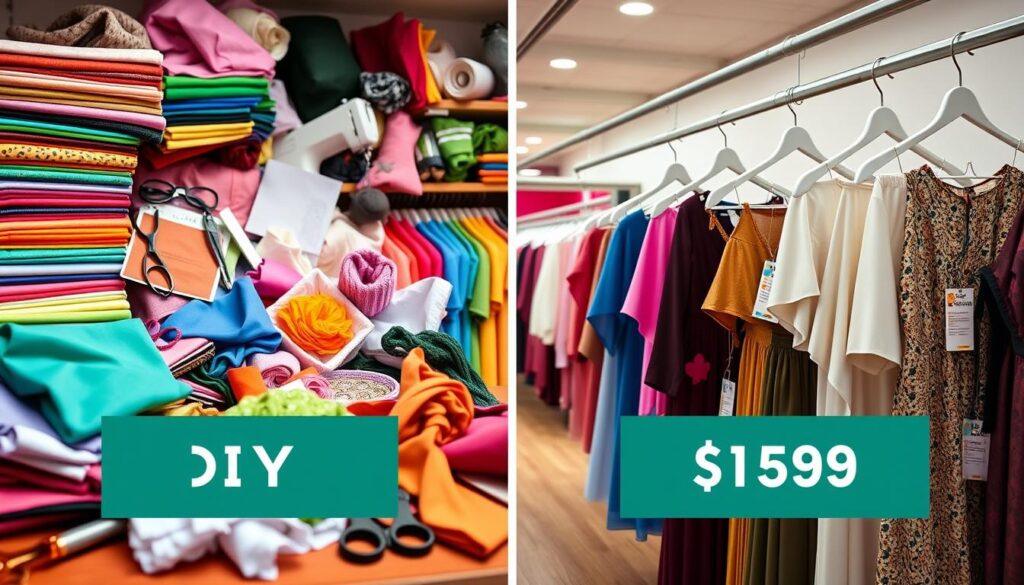
Is making your own costume wardrobe a good deal compared to buying one? Let’s look at the numbers. A pre-made “costume wardrobe” from a certain Scandinavian brand costs around $300–$500. It might look like a boring filing cabinet.
My DIY wardrobe trunk, made with quality materials, costs about $180–$250. That’s a savings of 40–50%. You could use that money for better paint or a nice drink for the builder. The real benefit is in making it your own.
Can a cheap, store-bought wardrobe have a secret wand slot? Unlikely. Making it yourself means you get a better product and save money. It’s like choosing homemade pickles over store-bought.
| Item | DIY Cost | Store-Bought Cost | Difference |
|---|---|---|---|
| Wardrobe Structure | $100 | $200 | $100 |
| Hardware | $30 | $50 | $20 |
| Paint & Finishes | $50 | $80 | $30 |
| Casters | $20 | $30 | $10 |
| Total | $200 | $360 | $160 |
For more on costs, see this guide on custom closet costs. DIY projects can save you a lot of money. It’s a good choice if you’re willing to put in some effort and creativity.
Ever wanted to build a costume closet without a saw? You’re in luck! Not everyone has a table saw or is a master builder. For those who don’t, a no-saw version is possible. Home centers can cut plywood for you for a small fee, making it easy. The flat pack hack goes even further. Imagine building the trunk with just a drill, screws, and wood glue. It’s like a fancy IKEA product that’s easy to put together. If you can build a bookshelf, you can do this! It’s all about keeping things simple. Use corner brackets instead of complex cuts, and hide seams with trim. We’re making a costume closet, not a piano. And the imperfections add charm, like a little wabi-sabi for your wizard robes.
| Adaptation Type | Tools Required | Skill Level | Time Estimate |
|---|---|---|---|
| No-Saw Version | Plywood (pre-cut), screws, drill | Beginner | 2-3 hours |
| Flat Pack Hack | Drill, screws, wood glue | Intermediate | 3-5 hours |
| Traditional Build | Saw, drill, screws | Advanced | 5-8 hours |
When you’re making a storybook wardrobe, remember: safety and durability are key. Your trunk should be safe for a child’s imagination, not filled with harmful chemicals. That’s why low-VOC sealants and paints are important. They give a strong finish without harming the air inside. I choose water-based polyurethane for my projects. It’s tough but safe, so you don’t need protective gear. These products keep kids safe and make your creations last long. Now, let’s talk about making things safe for kids. Look for rounded corners and soft-close hinges. These prevent accidents. Also, use non-toxic glues and make sure shelves are sturdy. Use screws instead of nails and add a clear strap to prevent tipping. This might not be glamorous, but it’s essential. It makes your project a treasured item, not a danger. Turning your DIY costume trunk into a storytelling wonder is the real magic. Imagine a royal court theme with deep purples and golds. Add a plush velvet cushion for that royal touch. Your little prince or princess will feel like royalty every time they open it. Then, picture the whimsical world of forest sprites. Think moss-green paint, twig handles, and faux leaves inside. This theme sparks creativity, making every costume a woodland adventure.
Lastly, dive into the undersea treasure theme. Use iridescent blues, mother-of-pearl inlays, and a secret compartment for “pearls.” This trunk is a treasure chest, inspiring stories. Themes like Fancy Nancy and Madeline add depth to your trunk. Even Edward Scissorhands can find a place here. Styling is about creating a visual identity that tells the stories we love. So, start your DIY journey with this in mind: your costume trunk is more than storage. It’s a stage for imagination, where your child can dress up for their own stories.