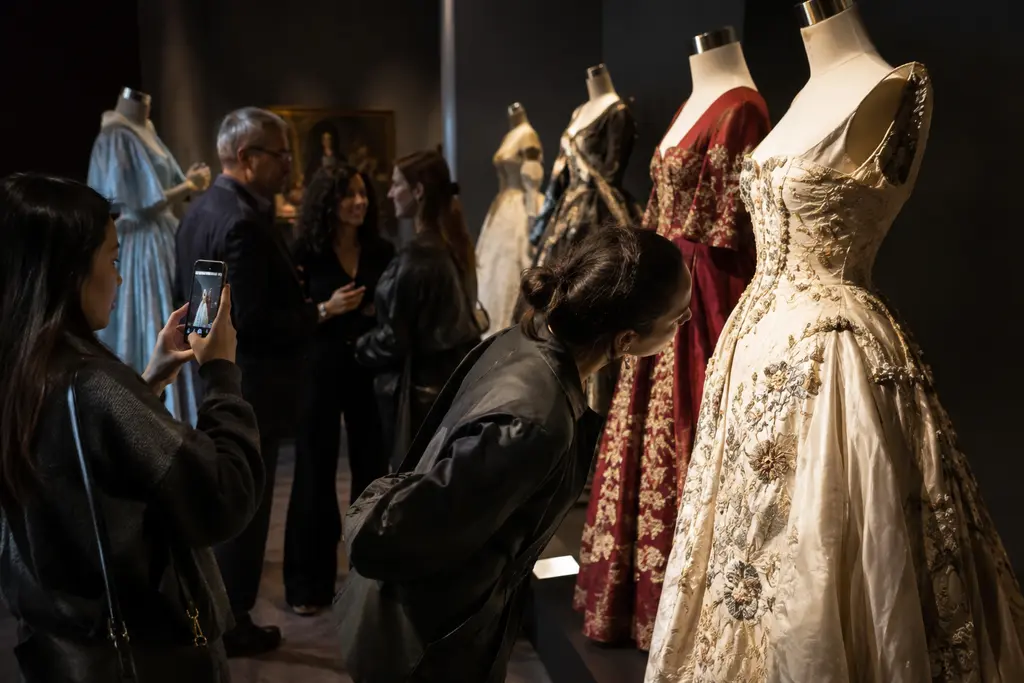
Cahoon Fantasy Fashion offers a useful way to read Ralph Cahoon: Fashioning a Fantasy World, the exhibition on view from September 23 to December 20, 2026, at the Cahoon Museum of American Art in Cotuit, Massachusetts. As of October 18, 2026, the show is ongoing, and the museum lists regular hours as Tuesday through Sunday, 10:00 am to 4:00 pm, until the exhibition ends. The museum’s description frames Cahoon’s painted world through historical costumes, maritime fantasy, and character types, including mermaids, naval officers, peasants, and Italian ladies and gentlemen, as noted in the Cahoon Museum listing.
That fashion angle matters because costume is not treated as background decoration. In the exhibition’s premise, clothing helps sort figures by status, labor, fantasy role, and period reference. Cahoon’s figures appear in uniforms, peasant dress, courtly clothing, pearl adornments, and other stylized details. The result is not a costume-history lesson based on strict reconstruction. It is a study in how an artist used dress as a storytelling device inside fantastical maritime scenes.
Reading Cahoon Fantasy Fashion Through Costume
Historical Sources Without Period Replication
The museum’s exhibition text points to Cahoon’s use of historical costumes, including uniforms, peasant dress, and 18th-century Venetian attire. Those references suggest a working vocabulary of fashion rather than a claim to exact period accuracy. A naval uniform in this context signals authority, service, and maritime order. Peasant work clothing suggests labor and everyday life. Refined court dress can imply ceremony, leisure, and social rank. Once mermaids and maritime fantasy enter the same picture space, those cues become more symbolic than documentary.
This is one reason the exhibition is valuable for costume-minded viewers. It shows how recognizable dress types can guide interpretation even when the setting is impossible. A mermaid observing a uniformed officer does not need a historically exact wardrobe to create narrative tension. The clothing helps the viewer identify contrast: sea and shore, labor and leisure, fantasy and social order. Cahoon Fantasy Fashion is most persuasive when read through that symbolic function rather than as a pattern book for historical reenactment.
Cahoon Fantasy Fashion As Symbolic Dress
Costume often works quickly in visual storytelling. A viewer sees a uniform and understands a role before reading any label. A pearl adornment suggests refinement or staged beauty. A gold mirror can point toward self-presentation, vanity, ritual, or domestic display, depending on the scene. The exhibition’s emphasis on pearl adornments, gold mirrors, naval uniforms, peasant clothing, court dress, and embellishment details makes clear that Cahoon’s clothing choices build social difference inside the fantasy setting.
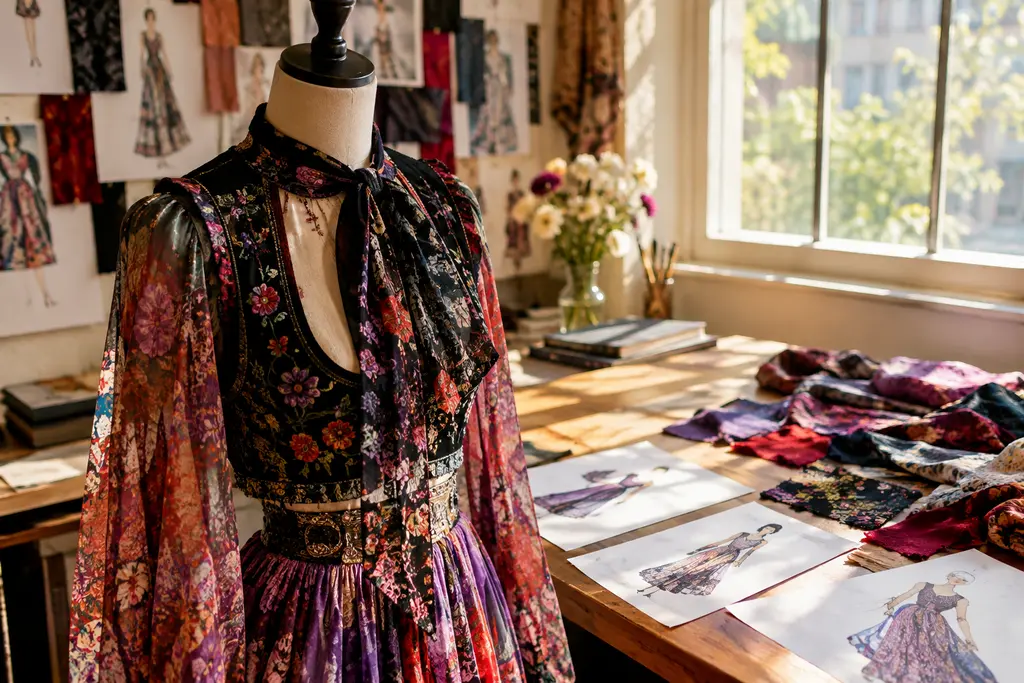
For fairytale costume design, this is a useful reminder. Dress-up does not always need literal accuracy to be meaningful. A child’s paper crown, a thrifted jacket with braid trim, or a fabric tail can identify a role through shape, texture, and gesture. The caution is artistic respect: inspiration should not become a direct copy of a specific artwork, especially for commercial use. A safer creative approach is to study broad devices such as contrast, silhouette, embellishment, and role-coding, then develop original designs from those principles.
Fashion Sources, Antiquing, And Self-Study
Maritime History Meets Decorative Dress
The research notes for the exhibition describe Cahoon’s fashion sources as including historical fashions, antiquing, self-study of global art, and maritime history. Those categories help explain why the images can feel familiar without belonging to one narrow time or place. Antiquing can expose an artist to old furnishings, textiles, costume fragments, prints, and decorative motifs. Self-study of art and maritime subjects can widen the reference pool beyond local dress traditions. The museum’s framing suggests that Cahoon gathered these references and reworked them imaginatively.
The careful point is that the exhibition does not appear to present his costumes as academically exact clothing records. Instead, it shows how fashion references move through fantasy painting. That distinction protects the integrity of the work. Cahoon’s painted clothing can be analyzed for social meaning and visual structure without forcing it into a stricter category than the museum supports.
Class, Labor, And Theatrical Identity
Several listed costume categories point toward class and labor: naval uniforms, peasant work clothing, and refined court dress. In a painting, those signals can organize a scene before the viewer identifies individual characters. A laboring figure reads differently from a courtly one. A uniformed officer carries institutional associations that a mermaid does not. The fantasy emerges through their contact, not through clothing alone.
This is where the exhibition aligns with broader dress-up practice. Costumes teach role recognition. They let viewers and wearers test identity through outward signs. For DIY dress-up makers, Cahoon Fantasy Fashion can encourage a disciplined use of costume shorthand: one strong status cue, one period suggestion, one fantasy element, and enough restraint to keep the character readable. Readers interested in translating the exhibition into non-copying playroom ideas may find a related discussion of Cahoon costume patterns helpful.
Cahoon Fantasy Fashion And Respectful DIY Translation
What Makers Can Learn Without Copying
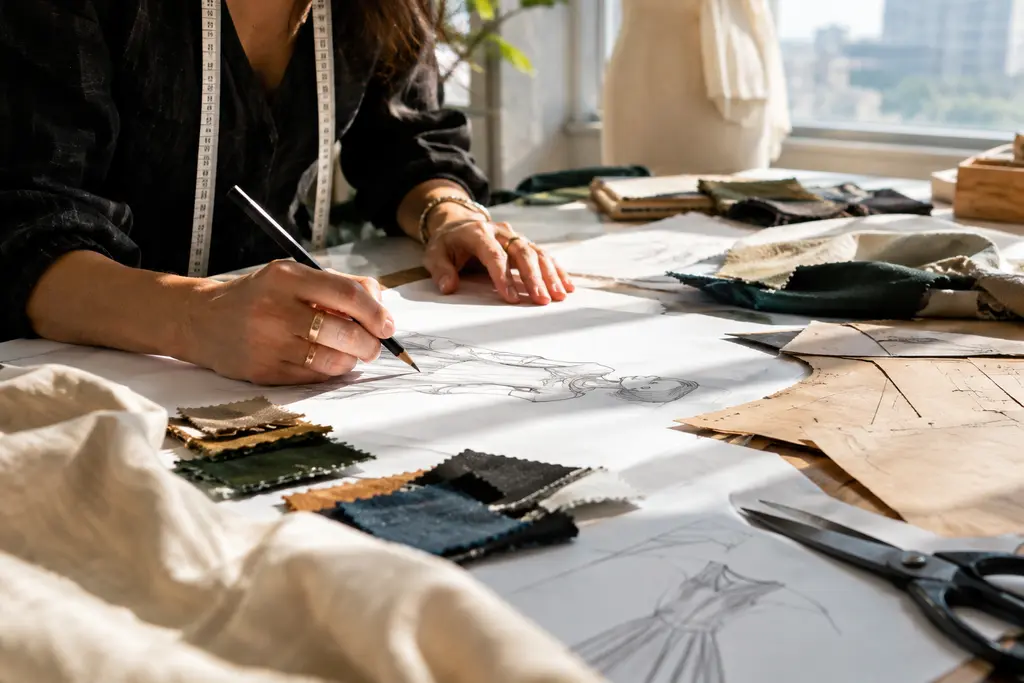
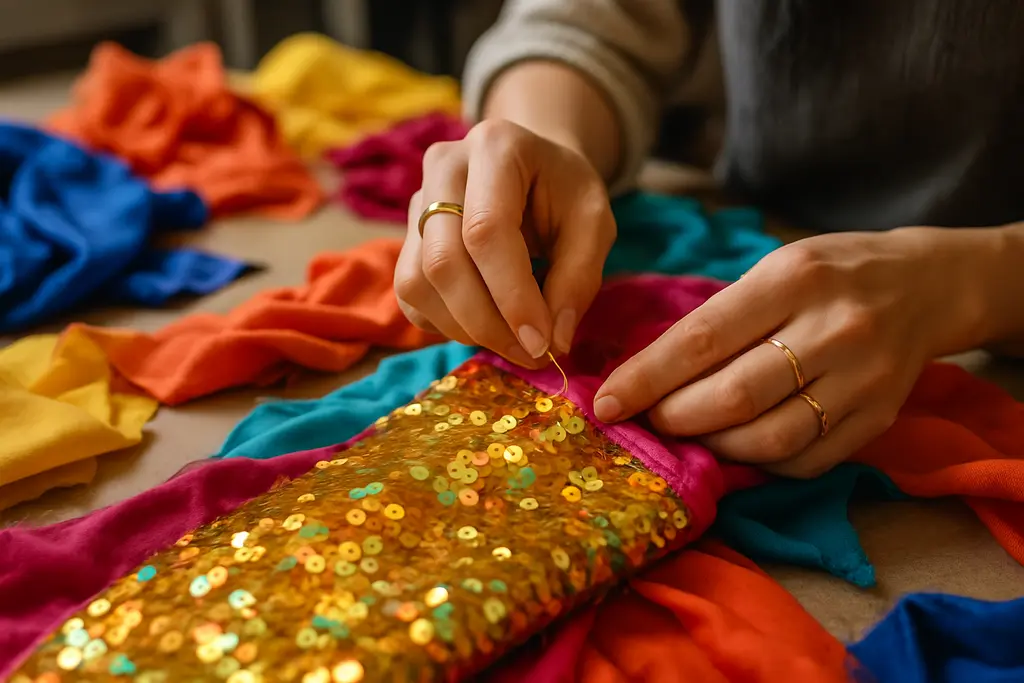
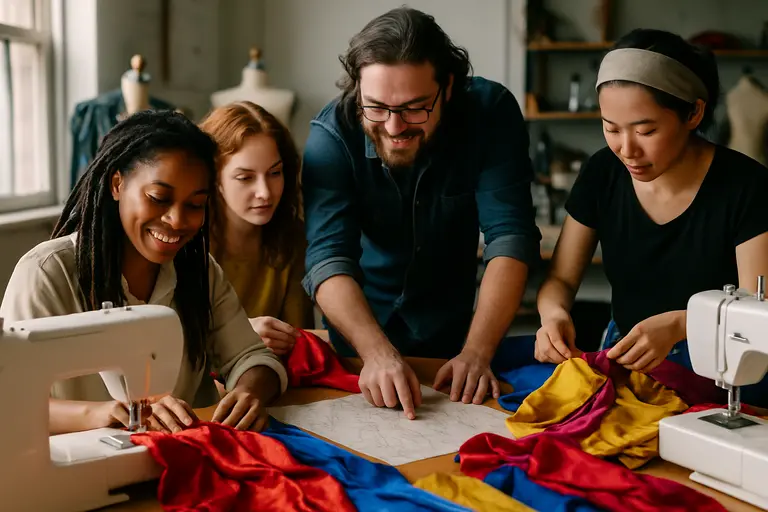
A respectful DIY response begins with analysis rather than imitation. Instead of reproducing a Cahoon composition, a maker can identify the design logic: maritime cues, social costume, ornamental detail, and fantasy contrast. A sailor-inspired collar can suggest the sea without copying a painted figure. A simple gathered skirt and apron can evoke work dress without claiming to reconstruct a specific peasant garment. A paper fan, mirror prop, or pearl-like trim can signal courtly play while remaining original.
This matters for both home dress-up and creator commerce. Selling fantasy costumes based too closely on identifiable artworks, characters, or protected visual material can raise rights concerns. This is not legal advice, and rights questions depend on specific facts. As a practical creative standard, original patterning, original character names, and broad historical research are safer than imitating one artist’s composition or figure design. For families comparing creative resources across related sites, a site like Shimply in the same network can serve as a general reference point rather than a substitute for museum sources.
A Simple Design Framework
The exhibition’s costume logic can be adapted into a clear framework for play without flattening Cahoon’s art into craft instructions. Choose a role first: sailor, sea creature, worker, noble visitor, or storyteller. Select one garment cue that identifies that role. Then add one fantasy element, such as a shell-textured belt, a soft fabric fin, or a paper ornament. Finally, keep the palette and trim controlled so the costume reads as a character rather than a pile of references.
- Role cue: uniform collar, apron, sash, courtly sleeve, or head covering.
- Fantasy cue: shell shapes, wave-like hems, pearl-like beads, or mirror props.
- Restraint cue: one main embellishment area instead of decoration on every surface.
This framework respects the exhibition’s central insight: clothing can carry story. It also avoids presenting Cahoon’s imaginative dress as a set of literal templates. The strongest reading of Cahoon Fantasy Fashion treats costume as a language of identity, class, and fantasy contact.
Fashioning A Fantasy World At Cahoon Museum
Ralph Cahoon: Fashioning a Fantasy World gives fashion-focused viewers a compact but meaningful case study in how painted clothing can structure a fictional world. The exhibition’s dates, September 23 to December 20, 2026, place it within a defined museum context rather than an open-ended trend claim. Its focus on uniforms, peasant dress, Venetian-inflected attire, courtly refinement, pearls, mirrors, and embellishment shows costume acting as both visual pleasure and narrative code.
The most cautious interpretation is also the most useful one. Cahoon did not need strict period replication to make dress meaningful. His fantasy figures gain identity through the viewer’s recognition of social signals: officer, laborer, noble, mermaid, observer, participant. For dress-up play, costume study, and fairytale design, that lesson is practical. Clothing can organize a story before a word is spoken. The task for contemporary makers is to learn from the structure, credit the museum context, and create new work that does not blur homage with duplication.