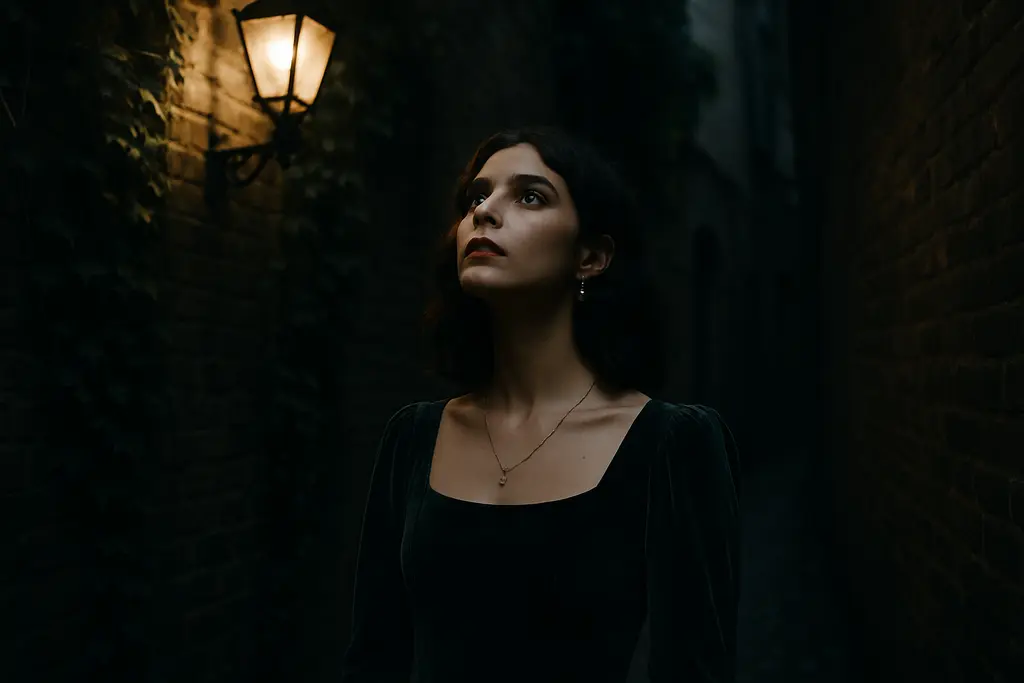
Dark Coquette Themes moved from a niche styling language into a clearer Fall 2026 fashion signal through a measured mix of bows, lace, corsetry, high necklines, shadowed palettes, and theatrical romance. The shift did not erase coquettecore’s softness; it sharpened it. Instead of treating girlhood codes as purely sweet, several collections used darker volume, distress, sheer layering, and historical dress references to make the mood more conflicted and more adult.
Why Dark Coquette Themes Took Shape
Dark Coquette Themes And The Runway Evidence
The most useful evidence comes from runway reporting rather than social-media shorthand. ELLE described the darker side of coquettecore in Fall/Winter 2026 terms, pointing to Rei Kawakubo at Comme des Garçons using charcoal tones and heavy volume against pastel ideas of “innate girlhood,” while Prada used bejeweled rips and sheer midi skirts to express layered womanhood ELLE’s coquettecore report. That contrast matters because the look is not simply “black bows.” It depends on tension: prettiness against abrasion, delicacy against weight, youth-coded details against garments that feel guarded or ceremonial.
This is where the fashion reading becomes more precise. A satin bow on a pastel dress may sit within familiar coquette styling. A bow placed against charcoal volume, torn shine, dense lace, or a sheer black skirt changes the emotional register. The ornament still signals softness, but the surrounding garment resists innocence. In that friction, the trend becomes less about imitation and more about visual argument.
Couture Signals From July 2026
The July 2026 haute couture shows also strengthened the case. Vogue identified corsetry, lace, Victorian-like volumes, high necklines, and exaggerated silhouettes across Fall 2026 couture, including collections by Jean Paul Gaultier, Balenciaga, Chanel, and others Vogue’s couture trend analysis. Those elements sit close to dark romance because they carry associations with formality, restraint, theatricality, and historical dress. The point is not that every corset or high collar equals a dark coquette statement. Rather, repeated use across major presentations made the vocabulary visible enough to analyze as a wider design direction.
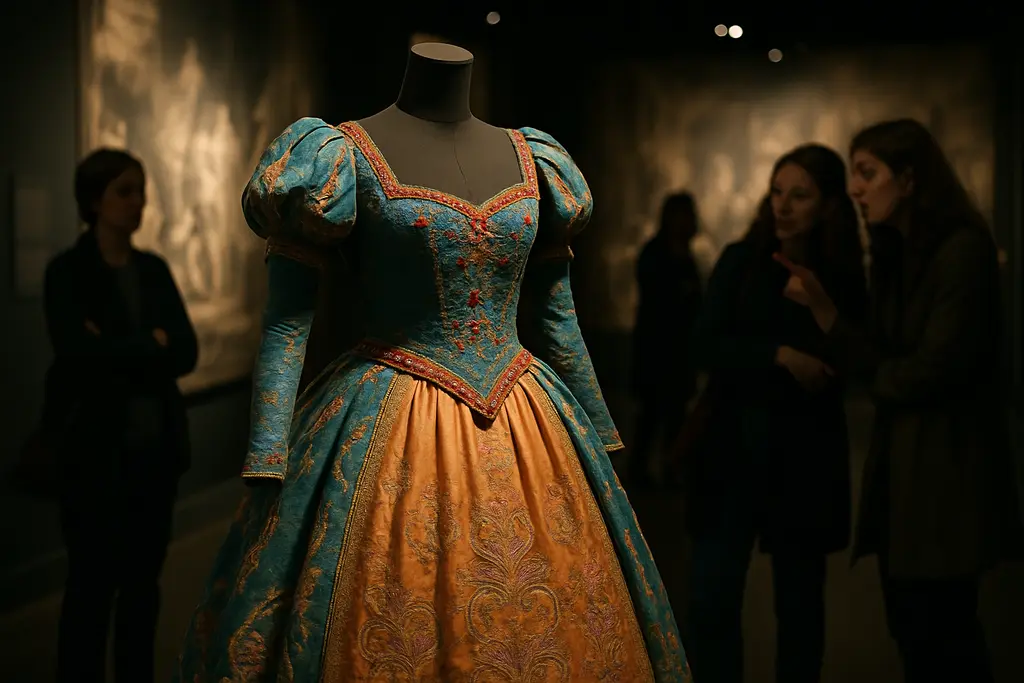
For fairytale costume design, this shift is useful but also risky. It invites handmade interpretation through shape, texture, and mood, yet it can slide into flattening historical references if treated carelessly. Victorian-like volumes, lace, and corsetry have long design lineages. A respectful DIY response should study the visual principle—structured bodice, softened sleeve, controlled neckline, layered hem—without claiming historical accuracy unless the maker has done the research to support that claim.
Silhouette, Texture, And Mood
Corsetry Without Costume Collapse
The strongest Fall 2026 examples used structure as mood. Corsetry, in this context, is not only a garment feature; it is a visual device that controls posture and creates tension between containment and decoration. A bodice can make a dress feel disciplined, while bows and lace can make the same look feel fragile. That push and pull explains why Dark Coquette Themes read differently from standard romantic dressing.
For DIY dress-up, the safer approach is to reference the outline rather than build restrictive garments beyond one’s skill level. A non-boned waist panel, a ribbon-laced vest, or a decorative front placket can suggest corsetry without pretending to be couture construction. This matters for comfort and honesty. Couture garments are made under conditions that most home makers cannot reproduce, and imitation can quickly become unsafe or visually clumsy if the structure is forced.
Lace, Sheer Layers, And High Collars
Lace and sheer fabrics carried much of the dark-romantic charge in the Fall 2026 reporting. They create partial concealment, which is central to the mood: a sleeve reveals but softens the arm; a high collar covers the throat while drawing attention to it; a lace hem adds fragility to an otherwise severe line. These details build atmosphere without requiring a literal fairytale character or a copied designer look.
Color deepens the effect. The research points repeatedly toward black, charcoal, burgundy, and jewel-toned darkness, often in combination with lace, velvet, tulle, ruffles, and sheer layers. Since the available research here does not provide verified consumer sales figures, it would be careless to claim that shoppers broadly bought into the look at a measurable rate. What can be said with more confidence is that editors and runway reports repeatedly identified the mood across Fall 2026 collections.
DIY Dress-Up Lessons From Dark Coquette Themes
Building A Look From General Cues
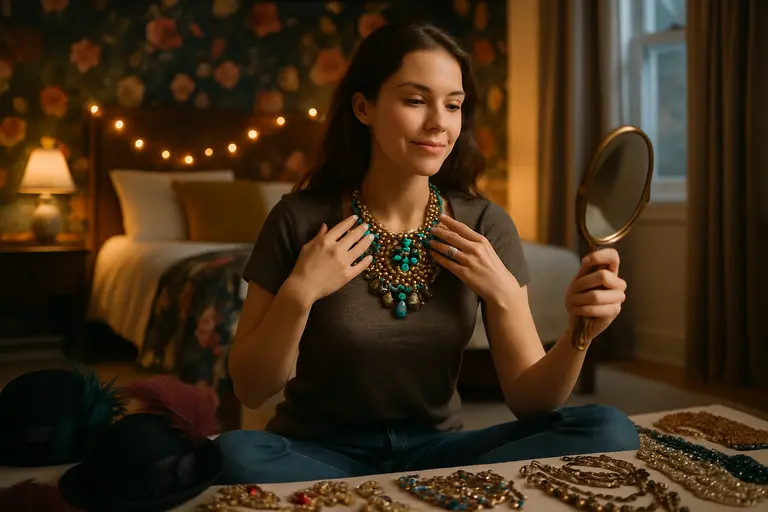
Dark Coquette Themes offer a strong base for dress-up play because the aesthetic can be interpreted through modular craft choices. A maker can pair a black or burgundy skirt with a high-neck blouse, add a detachable lace collar, tie narrow satin bows at the cuffs, and use a sheer overskirt for movement. None of those choices requires copying a protected character, a celebrity likeness, or a specific designer garment. They work because they borrow broad visual grammar rather than a fixed identity.
- Use detachable bows so the outfit can shift between sweet and severe.
- Layer sheer fabric over opaque fabric to create depth without overexposure.
- Choose one focal texture, such as lace or velvet, rather than piling on every cue.
- Keep collars, cuffs, and hems clean so the romance feels intentional.
For a related maker-friendly reading of runway cues, the site’s notes on fairytale DIY outfits connect bows, volume, pearls, color, and texture to Fall 2026 styling in a practical way. For additional cultural context, robsonic.org offers insights within the same network as a complementary reference point.
Why Dress-Up Play Benefits From Restraint
As a creative exercise, dress-up play can help a maker test proportion, texture, and character mood before committing to a full garment. The benefit is practical: trying a lace collar with a plain dress, or a velvet ribbon with a sheer sleeve, quickly shows whether the story of the outfit reads clearly. Restraint is especially valuable here because gothic-romantic details can become heavy fast. If every element is dark, lacy, ruffled, bowed, sheer, and corseted, the eye has no place to rest.
A stronger design usually sets a hierarchy. The collar may lead, the skirt may support, and the bow may punctuate. This hierarchy also helps preserve artistic integrity. Instead of reproducing a runway image, the maker studies why the image works: contrast, scale, opacity, and controlled ornament. That approach respects fashion as design thinking rather than treating collections as parts bins for costume replication.
Dark Coquette Themes In Fall 2026 Collections
Dark Coquette Themes in Fall 2026 collections were most convincing where sweetness became unstable. The direction relied on familiar romantic materials, but the styling shifted them toward shadow, protection, and performance. Charcoal volume, sheer skirts, bejeweled distress, lace, corsetry, high necklines, and exaggerated silhouettes all contributed to a language of femininity that looked less passive than decorative.
The fairest reading is cautious. The evidence supports a visible editorial and runway rise, especially through Fall/Winter 2026 and July 2026 couture reporting. It does not, from the provided research, prove a quantified commercial surge. For designers, stylists, and DIY makers, that distinction matters. A trend can be visually significant before its sales impact is clear.
For costume-minded readers, the most useful takeaway is not to dress as someone else’s artwork. It is to understand how the theme works: softness under pressure, romance with structure, ornament against darkness. Used with care, Dark Coquette Themes can produce fairytale-adjacent outfits that feel dramatic, readable, and personally made without reducing original runway work to a simple costume formula.