

Sportswear Art is most persuasive when it is not treated as a novelty collision between sneakers, jerseys, and white-cube display. The stronger reading comes from asking what athletic dress does inside an exhibition: how it stores memory, how it signals public identity, and how it borrows from the visual grammar of competition. Recent exhibition notes point to two especially useful case studies: Tremaine Emory’s Denim Tears retrospective at SCAD Museum of Art and Brian Alfred’s Plus Ultra at Miles McEnery Gallery. Read together, they show that sportswear can function as costume, archive, graphic system, and cultural document without losing its connection to bodies in motion.
Why Sportswear Art Needs Exhibition Context
Reading Sportswear Art Beyond Performance Gear
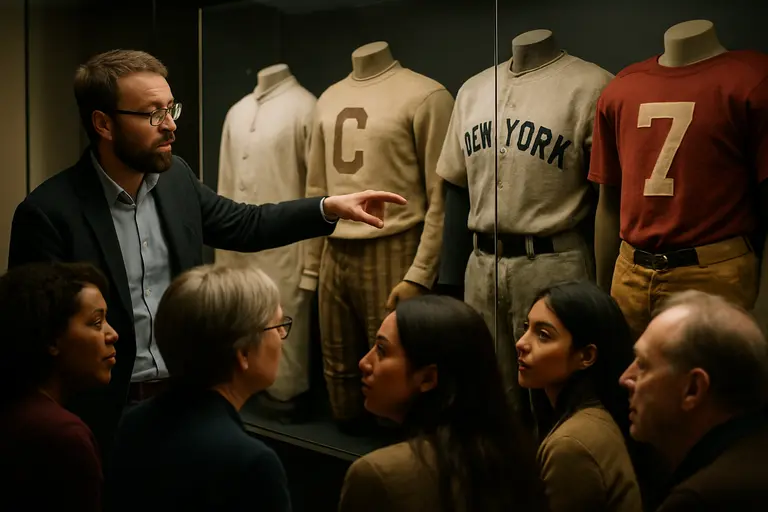
The exhibition setting slows down garments and sport images that usually move quickly through courts, streets, stadiums, stores, and screens. A jersey, trainer, denim jacket, or painted ball motif can be read in relation to race, labor, marketing, ritual, and collective memory. That shift matters because sportswear is often judged by performance claims or brand desirability first. In a gallery, those same forms can be examined as visual signs with social weight.
This does not mean every athletic reference becomes fine art by placement alone. A cautious reading requires evidence: dates, curatorial framing, named collaborators, materials, and the work’s relationship to established visual culture. The phrase Sportswear Art should not flatten differences between a garment label, a painting cycle, a design archive, and a handmade costume practice. It is better used as a focused lens for cases where athletic dress or sport imagery carries artistic and cultural meaning.
Costume Logic And Narrative Clothing
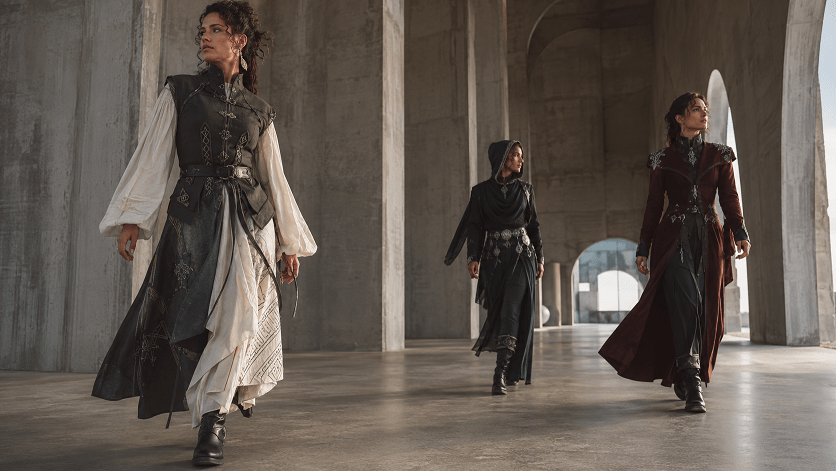
From a costume-analysis perspective, sportswear often behaves like literary costume. It tells the viewer who belongs to a team, who resists a system, who performs under pressure, and who is being watched. The wearer’s body becomes part of the reading, even when the item is displayed without a person inside it. This is where sportswear sits close to literature-inspired dress: both rely on signs that help construct a character. Color, cut, fabric, and reference become narrative devices rather than decoration.
That narrative pressure is also why exhibition captions and institutional framing matter. A tracksuit shown as a design object tells one story; the same garment positioned near works about migration, Black cultural memory, or nationalism tells another. For those exploring related exhibitions in the same network, Next Clues broadens the view of how visual signs travel between public life and style discourse.
Sportswear Art In The Denim Tears Retrospective
African American Sportswear As Archive
SCAD Museum of Art lists Denim Tears from the Pool of Black Genius as running from September 14, 2026, to January 11, 2027, and describes it as a retrospective featuring Tremaine Emory’s Denim Tears, identified in the research notes as an “African American sportswear” label, alongside works by artists including Jacob Lawrence and Romare Bearden SCAD Museum of Art. That context is central. Denim Tears is not being framed simply as apparel with graphic appeal. It is being placed in proximity to major artistic figures associated with Black visual history.
As Sportswear Art, the Denim Tears case asks viewers to take everyday fabrics seriously. Denim is not neutral in American dress culture. It carries associations with labor, mass production, youth culture, workwear, and casual self-presentation. In an exhibition that places the label near artists such as Lawrence and Bearden, the garment’s meaning is likely to depend on more than silhouette. The cultural argument rests on how clothing can operate as a carrier of historical reference and contemporary identity.
Why The Fine Art Pairings Matter
The pairing with Lawrence and Bearden, as reported in the exhibition information, should be treated with care. It does not imply that fashion and painting are identical practices. It does suggest a curatorial effort to let garments converse with established visual languages of Black experience. For a fashion analyst, that is the key point: the sportswear label gains force not because it imitates painting, but because it can be read alongside visual art without being reduced to merchandise.
This also protects the integrity of the original works. Lawrence and Bearden should not be used as decorative validation for a fashion label. Their inclusion creates a demanding standard for interpretation. The viewer has to ask whether the garment extends a cultural argument, complicates it, or simply sits near it. A responsible exhibition reading keeps those possibilities open until the works themselves provide evidence.
Football Imagery And Collaborative Production
Brian Alfred’s Plus Ultra And The World Cup Frame
Brian Alfred’s Plus Ultra at Miles McEnery Gallery is reported as running from June 25 to August 14, 2026, coinciding with the 2026 FIFA World Cup. The exhibition is described as exploring sports imagery through paintings and animations, with collaborations involving Adidas and GRIMM Artisanal Ales Plus Ultra report. Here, the sportswear connection is less about garments displayed as objects and more about the visual culture that surrounds athletic spectacle.
Football imagery already has a strong graphic identity: kits, sponsor blocks, national colors, crowd choreography, televised framing, and the repeated geometry of the pitch. When a painter works with that material, the sport becomes a structure for looking. Animation can intensify that effect because sport is inseparable from movement, timing, and replay. The exhibition’s reported relationship to the World Cup gives the work a public calendar, not just an art calendar.
Brand Collaboration Without Reducing The Art
The reported Adidas collaboration deserves cautious reading. Sports brands have long histories in performance design and mass culture, but a brand presence does not automatically explain an artwork. Nor should it be allowed to replace formal analysis. The useful question is narrower: how does collaboration change the viewer’s expectation of surface, repetition, and athletic reference?
In this case, the presence of sport imagery, painting, animation, and a sportswear brand suggests a layered field of production. A viewer may encounter fine art techniques, commercial design associations, and football fandom at once. That mix can be productive, but it can also become too easy if treated only as event-season spectacle. The strongest reading keeps attention on the works’ visual choices: scale, color, repetition, pacing, and the handling of recognizable athletic signs.
What Curators Reveal About Athletic Dress
From Object Design To Cultural Character
Recent exhibition listings in the research notes also point toward a broader interest in fashion, bodies, and sport culture, including shows on art and fashion, wearable art, Nike design history, sports in contemporary art, and costume-oriented wearable practice. Because the available source set is uneven, those examples should be treated as context rather than proof of a single trend. Still, the pattern is worth observing with restraint: institutions are giving more space to clothing and sport as carriers of cultural meaning.
For costume-minded readers, the most compelling exhibitions are usually the ones that avoid treating clothing as a flat symbol. A garment has construction, weight, fiber, fit, and implied movement. Sportswear is even more dependent on those features because it is designed in relation to action. When placed near paintings, sculpture, or animation, the athletic garment can expose a shared concern with posture, strain, speed, and spectatorship.
- Material: denim, synthetic performance fabric, leather, rubber, and knit each carry different social readings.
- Body: athletic dress implies motion even when mounted on a mannequin or isolated in a case.
- Symbol: team colors, numbers, stripes, and logos can signal identity before the cut is read.
- Context: race, nationalism, class, fandom, and labor can shift the meaning of a familiar garment.
Where The Evidence Remains Limited
It would be risky to claim that all recent fashion exhibitions are moving in one direction based on a short set of listings. Exhibition calendars are shaped by institutional missions, loans, funding, anniversaries, and public events. The World Cup connection in Plus Ultra is specific. The Denim Tears retrospective at SCAD has its own institutional and cultural frame. A careful analysis should avoid turning these cases into a broad market prediction.
What can be said is more precise: the strongest recent examples show sportswear and sport imagery being used to ask cultural questions. That is enough. The value lies not in declaring a movement, but in reading how each exhibition frames athletic material as evidence.
Sportswear Art As Cultural Evidence
What Viewers Should Watch For
Sportswear Art succeeds when it keeps the garment’s practical identity in view while opening it to historical and artistic reading. Denim should still feel like denim. A football image should still carry the charge of spectatorship. A sneaker reference should not lose its relationship to walking, playing, collecting, and public display. The exhibition’s task is not to make sport respectable by dressing it as art. The better task is to show that sport and clothing were already carrying visual meaning.
For Sportswear Art, the next critical step is slower looking. Viewers should ask what is documented, what is borrowed, what is honored, and what remains unresolved. That approach respects the artists, designers, and communities attached to the work. It also keeps fashion criticism from overstating the case. Recent exhibitions give us strong material for analysis, but the best readings stay close to what the objects, dates, pairings, and curatorial frames can actually support.