Literary costumes become more thoughtful when they respond to art without flattening it into decoration. The 2026 Whitney Biennial, listed as running March 8 through August 23, 2026, at the Whitney Museum of American Art in New York City, is reported as engaging American identity, U.S. power abroad, and the pressure of history on present life in a USA Art News report. Those themes suit literature because novels, poems, and plays often ask the same questions through character, voice, setting, and memory. A costume built from these ideas should not copy any artist’s work. It can instead translate broad concepts into readable garment choices: a jacket marked by editorial notes, a skirt mapped like a contested archive, or a cloak that treats care as both protection and burden.
Literary Costumes And Biennial Themes
Literary Costumes As Critical Translation
The safest and most artistically respectful path is translation rather than imitation. That means identifying a theme, choosing a literary counterpart, and then building a costume language from structure, material, and gesture. If the theme is American identity, the literary reference might be a schoolroom reader, a migration diary, a courtroom transcript, or a family chronicle. The outfit does not need to name a copyrighted character or reproduce a recognizable artwork. It can use a pressed collar, annotation ribbons, library-card pockets, or a chapter-number sash to suggest reading as an act of social memory. In this sense, literary costumes should behave like essays worn on the body: legible, edited, and open to interpretation.
Why Costume Design Needs Restraint
The Biennial material reported in the research is politically charged, especially in its attention to power abroad and historical aftereffects. Costume design should treat those subjects with care. Military symbols, national flags, and cultural textiles can carry specific histories that are not neutral accessories. A better approach is to use abstraction: dots, coordinates, removable labels, muted map lines, or archive tags. These choices can suggest systems without borrowing sacred, official, or culturally specific items out of context. For a children’s literary party or a classroom reading day, the same principle applies at a gentler scale. A map-printed cape made from plain cotton can prompt conversation without turning geopolitical themes into spectacle.
Text, Maps, And American Identity
Building A Costume From Words
Text is the clearest bridge between literature and contemporary art. A costume can hold words as fragments rather than slogans: hemmed strips of copied public-domain passages, invented diary entries, or removable paper cuffs shaped like marginal notes. If the source text is still under copyright, avoid reproducing long passages unless permission or a clear allowed use is established; this is a practical caution, not legal advice. Short invented lines are often more personal and more flexible. A blazer with blank index cards pinned inside the lapel can stand for a narrator who revises herself. A muslin apron covered in dates and place names can suggest a family archive without claiming documentary certainty.
The research notes the Biennial’s use of the phrase “pointillist empire” to describe the United States through a network of military bases and territories. For costume purposes, pointillism can become a design method rather than a direct political emblem. Small stitched dots can spread across a coat from shoulder to hem, connected by faint thread lines. A literary pairing might be the travel narrative, the epistolary novel, or the fragmented modernist text. Each dot can represent a chapter, a letter, or a remembered location. The result is readable on stage or in a playroom mirror, yet it avoids claiming that one homemade garment can resolve the historical weight behind the exhibition theme.
Fashion Is Art, But Reference Still Matters
The 2026 Met Gala dress code is identified by Vogue as “Fashion Is Art,” with runway looks discussed in relation to that theme in Vogue. That phrasing is useful for costume makers because it supports a central idea: clothing can carry visual argument. Still, reference should remain honest. A costume inspired by a novel and informed by the Biennial’s themes should state its sources in a program note, party invitation, or display card. This protects the integrity of the art being discussed and helps children understand that inspiration is not the same as ownership. For a themed gathering, the host can pair each outfit with one sentence explaining the book, theme, and material choice; the party structure in literary theme dress-up can support that kind of guided play.
Care, Catastrophe, And Private Dress Codes

Protective Shapes And Intimate Materials
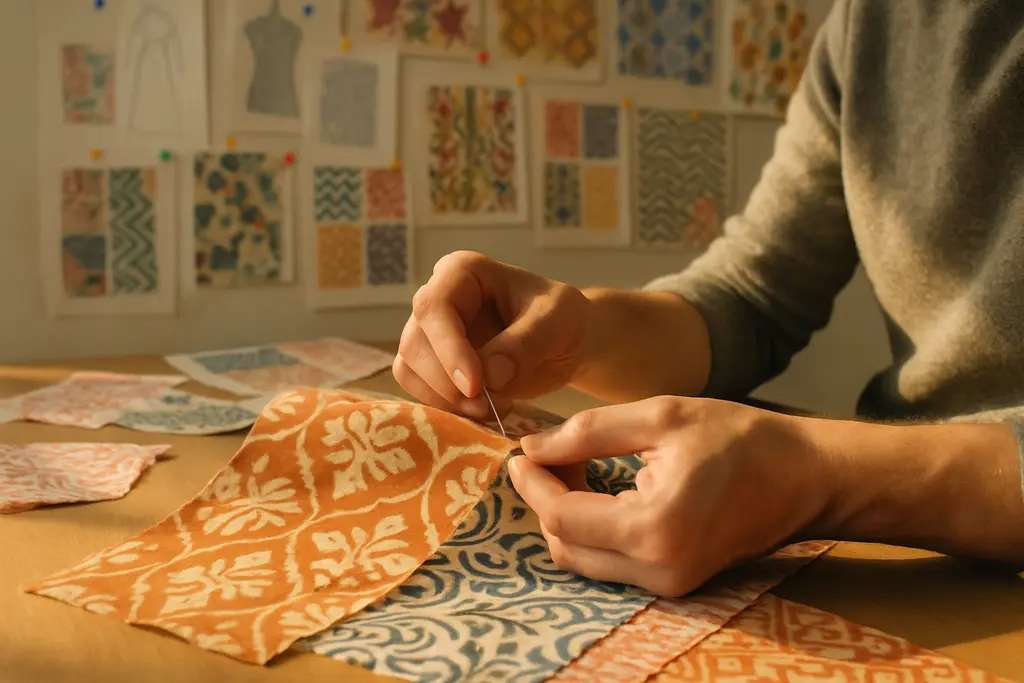
The research connects the Biennial with care, catastrophe, and private gestures. Those ideas can be handled through silhouettes that feel guarded rather than theatrical. A quilted shoulder wrap, a book-bag bodice, or a cardigan lined with handwritten paper can suggest protection and interior life. Repurposed fabric works especially well here because it carries signs of use: softened cotton, patched knees, faded curtains, or a repaired school uniform. The point is not to romanticize hardship. The point is to show that garments can register repair, memory, and tenderness through visible choices.
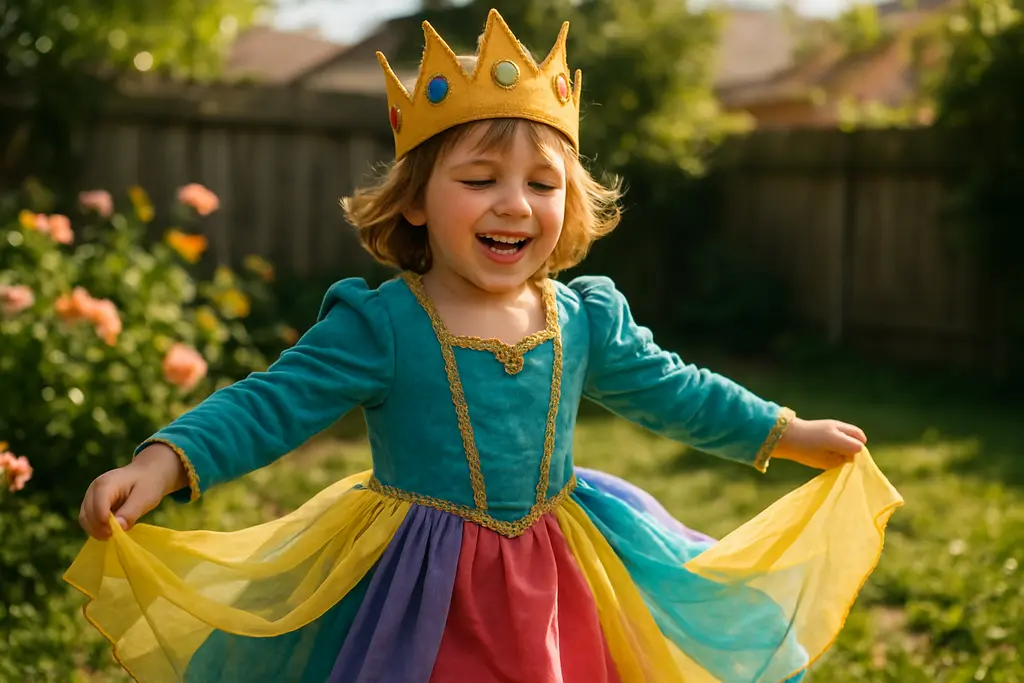
For fairytale costume makers, this is where literary design becomes more interesting than a crown and cloak formula. A heroine costume can shift from princess imagery toward survival imagery: a patched skirt with secret pockets, a hood shaped like a reading tent, or gloves stitched with invented family initials. A scholar costume can avoid parody by using real study habits as design cues: pencil loops, bookmark ribbons, and a small notebook secured at the waist. These details give children something to handle during play, which often matters more than a perfect silhouette.
Cute Motifs Without Losing The Argument
The research also mentions discussion of “cute” aesthetics in relation to the Biennial, though the available approved citation set here is limited. Treat that point cautiously. Cute design can carry force when scale is slightly wrong or domestic objects appear in unexpected places. A giant fabric bookmark, an oversized button, or a pocket shaped like a tiny house can feel charming at first glance while suggesting shelter, reading, and control. The risk is trivializing serious themes. Keep the palette calm, limit props, and let one altered domestic motif do the work. A costume covered in every possible symbol will read as clutter, not critique.
Organizing Literary Costumes For Reuse
Playroom Systems For Costume Longevity
For literary costumes made with maps, text panels, and repaired cloth, storage is part of the design process. Paper elements bend quickly, stitched dots snag, and capes disappear into toy bins. I prefer a three-part playroom system: hanging pieces, flat paper pieces, and prop pieces. Capes, jackets, and wraps belong on low hooks where children can see them. Paper cuffs, diary panels, and map collars belong in a shallow document box. Props such as notebooks, bookmark wands, and fabric satchels need a small open basket rather than a deep chest. Visibility reduces waste because children reuse what they can find.
- Label one bin “text” for cuffs, sashes, bookmarks, and invented diary pages.
- Label one bin “maps” for capes, cords, location tags, and dot-grid accessories.
- Keep repair tools nearby: safety pins for adults, fabric clips, spare ribbon, and a small lint roller.
- Photograph each finished costume before storage so the child can rebuild it later.
This system also helps separate art-inspired dress-up from ordinary character play. If a child wants a quick fairytale cape, the cape hook is enough. If the child wants an archive narrator or map-reader look, the labeled boxes create a slower ritual of selection.
A Practical Costume Formula
A reliable formula is base garment, literary sign, Biennial-related theme, and storage plan. Start with a blazer, cardigan, apron, or cloak. Add one literary sign: annotation strips, library cards, bookmarks, or chapter tabs. Choose one theme from the research: American identity, history’s pressure on the present, care, catastrophe, private gesture, or the mapped network implied by “pointillist empire.” Then decide how the costume will be stored before the glue dries. This last step sounds plain, but it protects handmade work and teaches children that costumes are cultural objects, not disposable party scraps. The most persuasive literary costumes are not the loudest ones. They are the ones that make a reader pause, ask what is being referenced, and sense that the garment has been edited with respect.