

Modern corporate environments demand a high level of visual discipline. The combination of a structured blazer and perfectly fitted pants remains the absolute standard for communicating competence. Building this uniform requires strict attention to physical proportions, textile drape, and garment construction. You are projecting a specific image of capability. A well-constructed two-piece outfit acts as a physical boundary between your personal life and your professional responsibilities.
The Architecture Of Professional Suiting
The visual impact of a blazer relies entirely on its internal construction. High-quality jackets utilize canvas interlinings and specific shoulder padding to hold a defined shape. This rigid framework sits independently of the wearer’s body. It masks posture inconsistencies and creates a commanding, symmetrical silhouette. The fabric drapes over this internal skeleton, projecting strength and order.
The pants serve as the vertical foundation. The lines of the trouser leg must fall straight to the floor, interacting seamlessly with the jacket above. A sharp crease running down the center of the leg draws the eye vertically. This engineered fold creates an illusion of height and unbroken focus. The entire outfit functions as a single architectural unit designed to frame the individual.
Fabric Selection Dictates Professional Form
The raw materials used in your clothing determine the longevity of your neat appearance. Natural fibers consistently outperform synthetics in maintaining a clean drape. Tropical weight wool and heavy silk crepe resist wrinkling naturally. These fabrics bounce back from being compressed in a desk chair for hours.
Synthetic blends hold static, attract lint, and develop sharp, permanent creases behind the knees and across the lap. Wearing garments made from gabardine or fine worsted wool guarantees the outfit retains its intended geometric shape from the morning commute straight through late-afternoon board meetings. Sourcing items based on strict material requirements forms the backbone of highly functional professional wardrobe staples for any serious career.
Jacket Configurations And Geometric Impact
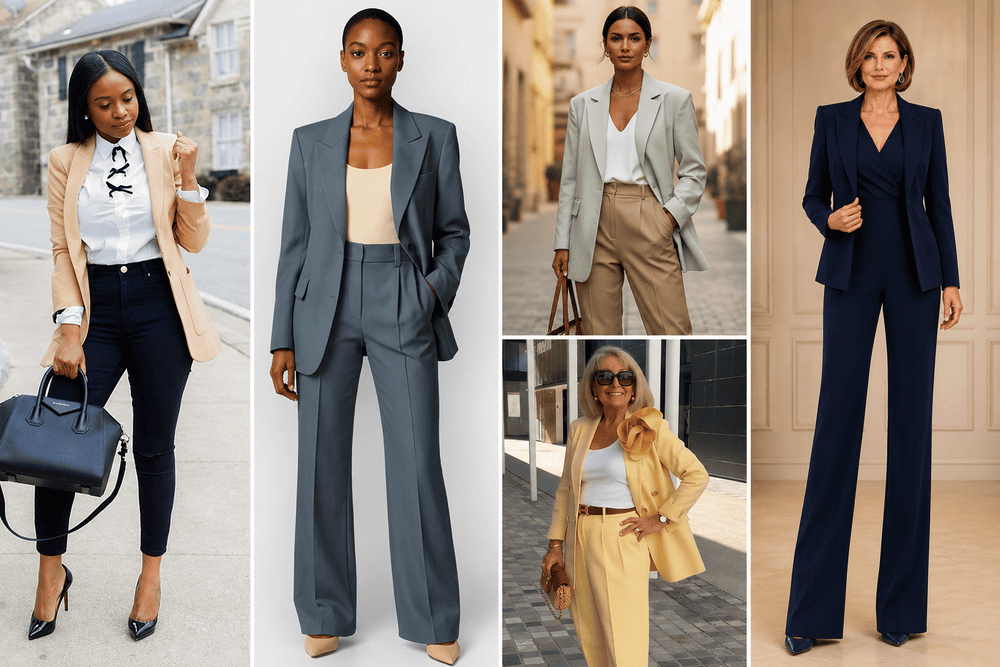
The cut of the blazer dramatically alters the geometry of the upper body. A single-breasted jacket provides immense versatility. You can wear it open to reveal a crisp blouse or buttoned to create a defined waistline. The single column of buttons draws the eye in a clean vertical line, elongating the torso.
The double-breasted blazer operates on a completely different set of visual rules. The overlapping front panels and two columns of buttons create a severe, horizontal wall of fabric. This style demands to be worn fully buttoned. Leaving a double-breasted jacket open creates excess fabric that flaps awkwardly around the torso, destroying the neat lines of the outfit. The double-breasted cut adds literal width to the chest and shoulders, projecting maximum authority in high-stakes environments.
Layering Strategies Beneath The Blazer
The garments worn under the blazer require just as much analytical thought as the suit itself. A bulky sweater stuffed underneath a fitted jacket restricts movement and creates an unflattering, stuffed appearance. The base layer must lay completely flat against the torso to preserve the tailoring of the outerwear.
Silk camisoles and fine-gauge merino wool turtlenecks offer incredible warmth and breathability without adding any physical bulk. A crisp cotton poplin button-down shirt remains the traditional choice. The collar of the shirt must sit sharply inside the lapel of the blazer. A limp, unstructured collar curling over the jacket lapel ruins the geometry of the neckline. You fix this by utilizing hidden collar stays or selecting shirts with heavily starched necklines. The cuffs of the base layer should peek out slightly from the jacket sleeves, providing a clean visual break between the dark wool of the suit and your hands.
Mastering Exact Fit And Trouser Proportions
Buying expensive garments means nothing if the fit fails to align with your anatomical structure. The shoulder seam of a blazer must rest exactly at the outer edge of your natural shoulder bone. A seam drooping down the bicep looks instantly sloppy. The sleeve should expose exactly a quarter-inch of your shirt cuff. This precise measurement frames the hands and breaks up the solid block of fabric covering the arm.
The trousers require an equally mathematical approach. The break of the pant determines the neatness of the entire lower half. The break refers to the exact point where the fabric meets the shoe. A slight break or no break at all provides a much cleaner, more aggressive line than a full break that pools heavily around the ankles. Flat-front trousers offer a sleek, modern profile. Pleated trousers provide extra fabric at the hips, accommodating movement and adding classic volume to the lower half.
Coordinating Footwear With Trouser Cuts
The interaction between the trouser hem and the shoe finishes the architectural shape of the outfit. The specific cut of the pant dictates the acceptable footwear. A wide-leg trouser requires a substantial shoe to visually balance the heavy volume of fabric. A thick-soled leather loafer or a structured block heel anchors the wide leg perfectly.
| Trouser Cut | Ideal Blazer Pairing | Footwear Requirement |
| Wide-Leg | Cropped Single-Breasted | Block Heel or Platform Loafer |
| Slim Tapered | Oversized Double-Breasted | Pointed-Toe Flat or Classic Pump |
| Straight Leg | Classic Fit Two-Button | Leather Oxford or Sleek Boot |
A slim, tapered pant pairs well with sharper, more delicate footwear. Pointed-toe flats or classic pumps extend the visual line of the leg straight down to the floor. Industry analysts frequently detail these specific shoe pairings in comprehensive guides to modern business dress codes to help professionals decode shifting corporate expectations.
Color Theory For Corporate Environments
Establishing authority in a corporate setting requires visual restraint. Muted, grounded colors allow your actual work and communication to take precedence over your clothing. Navy, charcoal grey, and deep camel form a highly reliable foundation for daily office wear. These dark tones absorb light and hide minor stains or daily wear perfectly.
Monochrome dressing presents a highly sophisticated alternative to mixing and matching different colored separates. Wearing a dark grey blazer with exact matching grey trousers creates a continuous, unbroken vertical line. This strategy removes the visual friction occurring when contrasting colors meet at the waistline. A solid block of color commands attention and projects absolute confidence. Adding a pop of color should happen through small, controlled accessories. A silk scarf tied at the neck or a dark burgundy leather tote bag introduces personality without breaking the strict professional dress code.
The Maintenance Routine For Structural Integrity
A sharp silhouette degrades rapidly without strict maintenance protocols. Wool trousers require regular pressing to maintain the defining front crease. The heat from the iron reshapes the wool fibers, locking the geometry back into place.
Storing blazers on cheap wire hangers destroys the shoulder padding and ruins the drape of the heavy fabric. You must use thick, contoured wooden hangers to preserve the jacket’s internal framework. Steaming garments between dry cleaning visits removes daily wrinkles and kills odor-causing bacteria without degrading the natural fibers. Dry cleaning uses harsh chemicals that break down wool and silk over time. Limiting trips to the dry cleaner prolongs the lifespan of your suiting. This strict adherence to garment care separates a neat, commanding appearance from a haphazard one. You maintain absolute control over your professional image by treating your clothing as highly specialized career equipment.