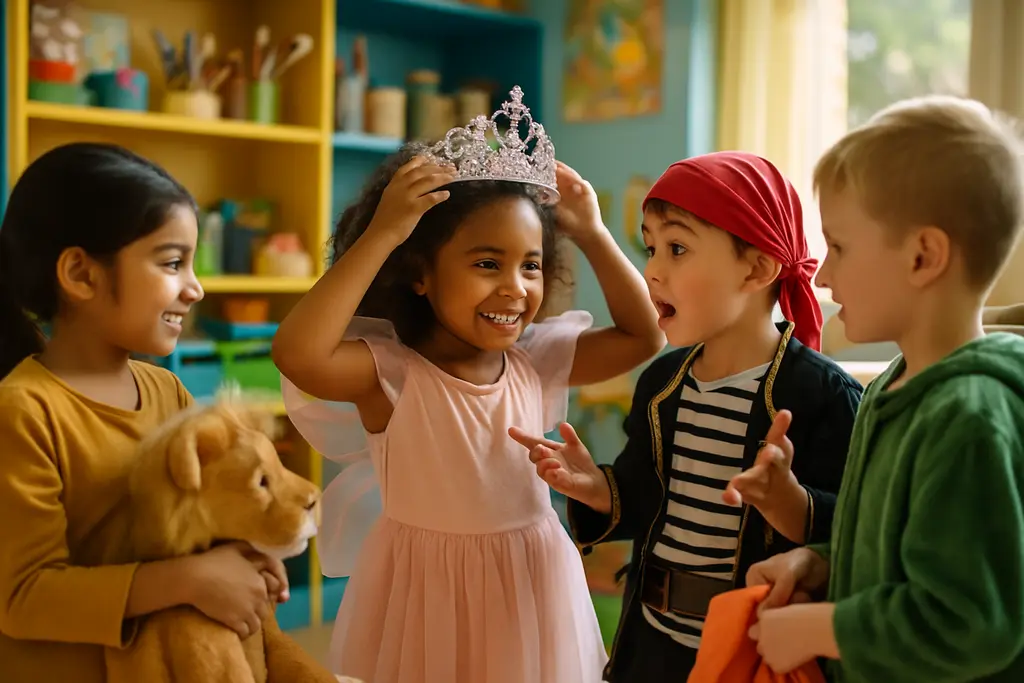


Playroom organization tips can borrow more from art spaces than many families expect. The inaugural Assembly Art Fair was scheduled in Seattle from July 22–26, 2026, at West Canal Yards, with a focus on leading galleries from the Western U.S. according to the Assembly Art Fair. A fair is not a nursery, of course, and a family playroom should not imitate a gallery too literally. Still, the useful lesson is spatial: art fairs depend on zones, circulation, visible objects, storage discipline, and a clear point of view. Those same principles can make dress-up clothes, craft supplies, books, blocks, and soft toys easier for children to use without turning the room into a storage problem.
Why Art Fair Thinking Fits Playroom Organization Tips
Playroom Organization Tips From Display Logic
A gallery booth usually works because it limits visual competition. Viewers can read the room quickly: a central artwork, a wall sequence, a chair, a pathway, a place to pause. A playroom benefits from the same restraint. Instead of treating every toy as equally visible, place the most-used categories at child height and move overflow into closed bins, a closet, or a rotation shelf. This does not reduce play value; it often makes choice easier because the child can see what is available without sorting through every object at once.
The fair connection should be handled with caution. We cannot verify from the supplied research that specific exhibitors used particular DIY display methods. The more responsible interpretation is influence by analogy: temporary art presentations show how objects gain clarity through grouping, spacing, and material contrast. In a playroom, that might mean a low shelf for blocks, a basket for costume capes, a book ledge near cushions, and a small craft table with washable supplies nearby.
Respecting Art While Designing For Children
An art-inspired playroom should not turn living artists’ work into copied wall graphics or unlicensed character displays. A safer and more personal route is to highlight a child’s own drawings, paper crowns, cardboard castles, and fabric experiments. This keeps the room connected to making rather than imitation. It also fits the fair-like idea of a changing exhibition: the display can shift as the child grows, with older pieces archived in a folder or photographed before recycling.
Build Zones Before Buying Storage
Many playroom problems start with furniture purchases made before the room’s activities are defined. A more analytical method begins with activity zones. Ideal Home recommends creating specific areas for activities such as reading corners or arts and crafts stations in children’s play spaces, alongside soft finishes and practical surfaces playroom ideas. This supports a simple planning rule: decide what the room must do, then choose the storage that fits those actions.
For dress-up play, a zone might include a low rail, labeled baskets, a mirror fixed safely to the wall, and a stool. For craft play, the zone needs a wipeable surface, paper storage, and a bin for recycled materials. Reading zones work best when the book choice is visible and seating is comfortable. These playroom organization tips are less about perfection than about reducing friction. If a child needs adult help to reach every item, the system is probably too high, too heavy, or too vague.
- Reading: soft rug, cushions, front-facing books, low light where safe.
- Dress-up: hooks, open baskets, a small mirror, washable costume layers.
- Crafts: table, wipeable mat, paper tray, closed container for messy supplies.
- Active play: open floor space, durable flooring, soft landing surfaces.
Use Soft Finishes Without Hiding The Structure
Comfort Is Part Of The System
Soft finishes are not decorative afterthoughts. Cushions, rugs, and upholstered seating can make a playroom feel more inviting, and Ideal Home identifies soft finishes as a way to create a comfortable play environment. From a practical standpoint, softness also helps define zones without building walls. A rug can mark the reading corner. A floor cushion can signal quiet play. A padded bench can become both seating and storage if it opens safely and is easy for adults to manage.
There is a balance to keep. Too many loose textiles can create visual noise and extra laundry. A fair-inspired approach would edit the palette and repeat textures deliberately. Natural materials such as wood and woven baskets can add warmth, while color-coded bins can help children connect a category with a storage location. These playroom organization tips work best when the visual code is simple: blue for building toys, green for animals, red for dress-up, or any scheme the household can remember.
Durable Floors Support Creative Risk
Flooring affects how freely children can use a room. Durable, easy-to-clean surfaces support craft spills, block towers, costume changes, and snack crumbs better than delicate finishes. Rugs can still be used, but washable or low-pile options are usually more realistic than fragile textiles. The aim is not to make the playroom look like an art booth. The aim is to allow making, pretending, reading, and sorting to happen without every activity becoming a maintenance burden.
Make Storage Visible, Low, And Flexible
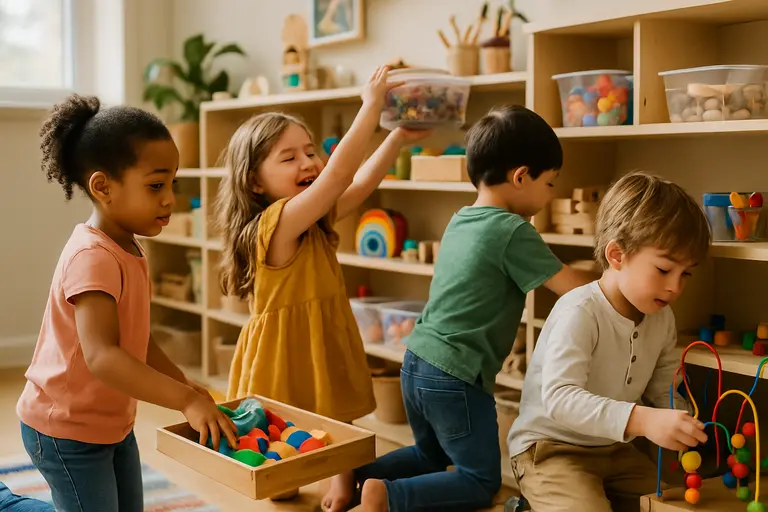
Child-friendly storage needs to be physically reachable. Low units, baskets, and open cubbies give children a chance to return items independently. Multifunctional furniture, such as storage benches or ottomans, can also conserve floor space, but hidden storage should be used with care. If everything disappears behind lids, children may forget what exists. A mixed system often works better: open storage for daily toys, closed storage for rotation items, and higher shelves for adult-supervised materials.
Dress-up storage deserves special attention because costumes collapse into piles quickly. Capes, skirts, wings, hats, and fabric crowns read beautifully when they are visible, but they need boundaries. A low garment rail can display a small selection, while baskets hold accessories. For deeper storage comparisons, the site’s separate analysis of dress-up room organizers is useful for matching budgets to room size and play habits.
Toy rotation is another practical tool. Keeping every toy in circulation can overwhelm the child and the room. A rotation bin allows some objects to rest out of sight, then return later with renewed interest. This strategy should remain flexible rather than strict. If a child is building a long-running cardboard castle, removing the materials too soon can interrupt meaningful play. The better rule is observation: rotate items that are ignored, keep items that are actively supporting stories, construction, or collaboration.
Turn Children’s Artwork Into A Rotating Gallery
A Fair-Inspired Wall With Personal Meaning
Displaying children’s artwork is one of the clearest links between playroom design and art-fair thinking. A gallery wall gives drawings, collages, and costume sketches a visible place in the room. It also sends a quiet message that children’s making is worth seeing. The display does not need expensive frames. Clip rails, cork strips, magnetic boards, or simple wood hangers can make rotation easy. The key is to avoid overcrowding. A smaller number of pieces, changed regularly, usually has more impact than a wall packed edge to edge.
For fairytale dress-up spaces, the artwork wall can connect to costume play without copying protected characters. Children can draw original crowns, invented creatures, forest scenes, castles, or stage backdrops. Those images can then inspire homemade props from cardboard, fabric scraps, paper, and ribbon. This keeps the room artistically alive while respecting the integrity of existing works and characters.
Playroom Organization Tips For A Creative Seattle Mood
The strongest playrooms are not frozen showrooms. They are edited spaces that can absorb noise, invention, and change. Assembly Art Fair offers a useful cultural prompt because it places art, display, and place-based creativity in focus, but the household translation should stay practical. Start with zones, keep storage low, use soft finishes with discipline, choose durable surfaces, and let children’s own artwork carry the strongest visual identity.
These playroom organization tips do not require a large room or expensive furniture. They require clear categories, realistic maintenance, and respect for how children actually play. A small reading corner, a rotating costume rail, a craft table, and a wall for original artwork can create a space that feels considered without becoming precious. The result is a playroom that supports fantasy, dress-up, and making while remaining easy enough to reset before the next round of imagination begins.