
Looking after your clothes is not a one-size-fits-all deal. Each fabric has its own story and needs. Tossing a delicate silk dress with a polyester jumpsuit can be a disaster.
Knowing your fabric is key. Polyester and cotton blends are easy to care for. They do well with a gentle hand wash in cold water. But, wool and faux fur need extra care—spot clean only!
Always check the care label before cleaning. If it’s missing, play it safe. Use cold water, avoid bleach, and skip fabric softeners. A quick test on a hidden seam can prevent a mess.
In this guide, we’ll share tips to keep your outfits looking great. We’ll cover cleaning, storage, and more. Ready to start? Let’s dive in!
For more fabric care tips, check out this detailed guide.
Cleaning Paths: Machine, Hand, Spot, Steam & When to Dry Clean
Choosing the right cleaning method for costumes can be tricky. Each fabric has its own needs. It’s not just about ease, but also about protecting your investment.
Machine washing is bold but risky. Only tough cotton and polyester can handle it. Use cold water and a mesh bag for safety.
Hand washing is a safer choice. Use cold water and gentle soap. Avoid wringing to prevent damage.
Spot cleaning is great for delicate fabrics. A damp cloth and mild soap can fix small stains. It’s also good for items with interfacing.
Steam cleaning is a middle ground. It refreshes without full immersion. It’s perfect for structured items.
Dry cleaning is for when you’re unsure. It’s key for fabrics with beads, sequins, or fur. Places like St. Croix Cleaners offer expert care.
So, when do you need dry cleaning? Here’s a quick guide:
| Situation | Recommended Action |
|---|---|
| Care label demands it | Dry clean |
| Unknown fabric | Dry clean |
| Complex construction | Dry clean |
| High emotional or financial investment | Dry clean |
Choosing dry cleaning is often the best option. It’s cheaper than replacing a valuable costume. It’s a no-brainer.
Stain Playbook: Glitter, Glue, Makeup, Grass, Mud & Tea
Stains are like unwanted guests at a party. They show up unexpectedly and mess up your costume. Each stain needs a special plan to fix it, like solving a crisis.
Glitter is hard to remove. Start with a lint roller. If that doesn’t work, try packing tape. But remember, removing all glitter is impossible.
Glue needs quick action. If it’s wet, rinse it with cold water. If it’s dry, carefully remove what you can. Then, ask a pro before using harsh chemicals.
Makeup stains are easier to handle. Use dish soap and cold water on a white cloth. Gently dab, don’t rub, to avoid making things worse.
Grass stains are tough. Use enzyme cleaners right away. Mix cold water and white vinegar, then wash as you can.
Mud stains might look bad, but they’re not. Let it dry, brush off, and then clean with cold water and soap. Don’t try to clean wet mud, as it gets worse.
Tea stains are a problem. Rinse with cold water right away. If needed, use a white vinegar solution. Always use cold water for stains, as hot water makes them worse.
Never use heat until the stain is gone. Heat can make stains permanent.
Drying and Shaping: Flat, Hang, Block, Tulle Fluffing
The drying process is key to your costume’s look. It’s not just about tossing it over a chair. It’s an active shaping process that makes your garment look like a masterpiece or a disaster.
Flat drying is best for knitted, stretchy, or fragile items. Gravity can harm wet fibers. For example, a wet wool cape should be laid flat, reshaped, and let dry naturally.
Hanging is for structured pieces that need to keep their shape. Use padded hangers to avoid stretching shoulders. This is important for corsets, jackets, and other items with defined shoulders.
Blocking is for pieces that need to dry in a specific shape. This includes lace, crochet, or items with scalloped edges. It requires pinning to a board to keep its shape.
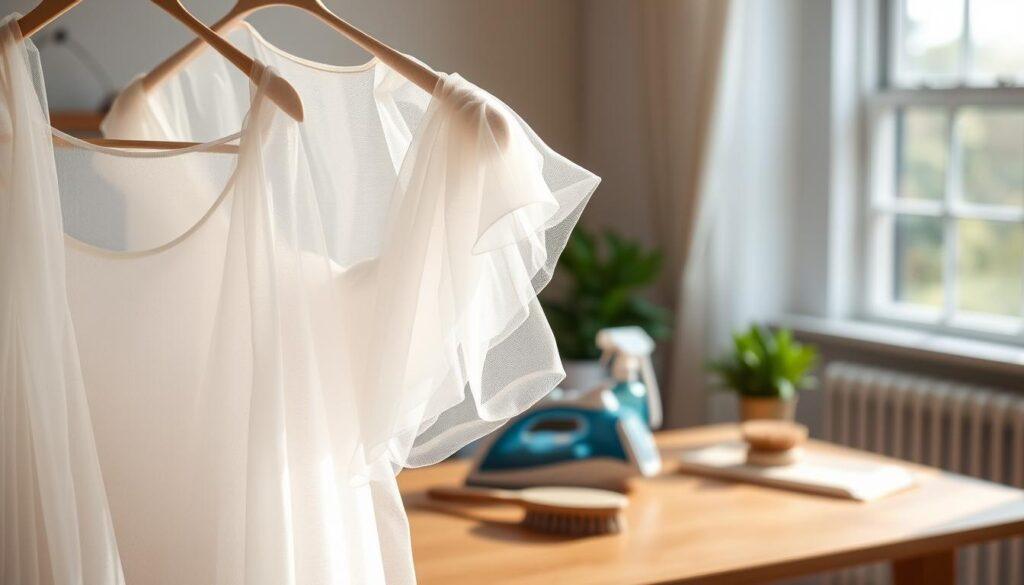
Tulle is a high-maintenance fabric that needs fluffing after cleaning. Use your fingers to gently re-volumize each layer. Start from the inside and work your way out.
Steam can help restore shape, but be careful. Tulle melts at low temperatures. Always air dry unless the fabric can handle a dryer on low. Ask yourself if the risk is worth it.
Repairs: Snaps, Velcro, Elastic, Hems & Wand Rewiring
Costume repair is a mix of creativity and practicality. It keeps our favorite outfits looking great. Each repair task might seem hard, but with the right tools and skills, you can make your costumes shine again.
Let’s start with snaps and Velcro. These are key for keeping costumes closed. If a snap comes loose, just sew it back on with matching thread. Clear elastic thread is also great for a stretchy fix.
Velcro losing its stick? It might just need a clean. Use a fine-toothed comb or a seam ripper to get it working again. A little cleaning can save your costume from disaster.
Elastic can also be a challenge. If it loses its stretch, you can replace it. Just unpick the seam, thread in new elastic, and tie it off. Make sure the tension is right to avoid any issues.
Hems are another important part of costume repair. A dropped hem needs different fixes for lined and single-layer garments. For quick fixes, use fabric tape. For a lasting solution, sew by hand to keep the fabric’s natural look.
Sequin repair is like microsurgery. When sequins fall off, it’s usually because their thread breaks. Just reattach them with a single thread through the center hole. For loose sequins, a bit of clear nail polish on the thread can help.
Wand rewiring is also a special task. If your wand’s LED flickers or the battery dies, you need to get technical. Open it up, check the solder, and maybe replace the battery. This shows how cosplay can involve both costume and prop work.
Having an emergency kit is key. Keep it stocked with thread, glue, patches, spare parts, and a steamer. And don’t forget to reach out to local maker groups or skilled sewers for help. They can help bring your costume back to life.
Storage: Climate, Humidity, Moth Prevention & Breathable vs Plastic Bags
Storage is like a fortress that keeps your costumes safe from damage. It’s not just about throwing your outfits in a closet. You need to create a space where they can flourish. The climate in your storage area is very important.
Humidity can sneak up on you and harm your costumes. Even places like Taiwan and parts of the U.S. face high humidity. Basements in many areas can be a nightmare for costumes. Silica gel packs are a great solution to keep things dry.
Moths are a big problem for costumes. They love dirty clothes. So, always clean your costumes before storing them. A dirty costume is like a sign saying, “Come and eat!”
The choice between breathable and plastic containers is a big debate. Cotton garment bags are the best because they let air in and keep dust out. Plastic bags can trap moisture, which is bad. If you use plastic, make sure it’s got holes for air.
For delicate items, use acid-free tissue paper to wrap them. This helps prevent damage. Also, keep costumes away from UV rays to stop them from fading. A cool, dark, and dry place is the best for keeping costumes looking good.
| Storage Method | Pros | Cons |
|---|---|---|
| Cotton Garment Bags | Breathable, prevents dust | Can be more expensive |
| Plastic Bins | Space-saving, protective | Can trap moisture, risk of mildew |
| Acid-Free Tissue Paper | Prevents yellowing, oxidation | Requires careful handling |
| Silica Gel Packs | Absorbs moisture | Needs to be replaced regularly |
By following these tips, your costumes will stay in great shape for years. For more advice on storage, check out this guide on cotton storage bags. The right storage climate is essential for keeping your costumes in top condition.

Travel and Party Packing: Garment Bags, Hat Boxes & Crush-Proof Tricks
Packing a costume is all about the details. I’ve learned this the hard way. It’s not just about moving your outfit; it’s a big task that can make or break your look.
Start with garment bags. They protect your clothes from wrinkles and damage. For things like corsets and jackets, they’re essential.
Then, there are hat boxes. A crushed hat is a sign of a bad day. Felt hats need a strong box to keep their shape. You can find vintage ones or make your own from cardboard.
For items that can’t be hung, fill every space. Empty spots in your bag can lead to mess. Use soft clothes to cushion delicate items. Wrap big items like armor in bubble wrap and label them to avoid confusion.
Don’t forget a portable steamer. It’s great for last-minute fixes. Keep it in your carry-on to avoid wrinkles in your luggage. Also, turn clothes with sequins inside out to prevent damage.
| Item | Purpose | Tips |
|---|---|---|
| Garment Bag | Protects hanging costumes | Choose sturdy over flimsy |
| Hat Box | Safeguards structured headpieces | Consider vintage options |
| Bubble Wrap | Wraps delicate items | Label each piece |
| Portable Steamer | Removes wrinkles | Pack in carry-on |
| Soft Items | Packing material | Roll and fill voids |

Safety Checks: Beads, Choking Hazards, Loose Wires & Sharp Tiaras
Costume care is more than just looking good. It’s about staying safe. When your child wears a sparkly outfit, it’s easy to miss hidden dangers. A quick safety check can prevent a magical evening from turning into an emergency.
First, let’s talk about beads. They sparkle like candy, but can be choking hazards. Check every beaded area before your child wears the costume. If a bead moves easily, it’s not safe. Use clear thread or fabric glue to keep beads in place.
For kids’ costumes, a simple test is to see if an embellishment fits through a toilet paper roll. If it does, it’s a hazard. Time to remove or fix it!
Loose wires are another danger. Costumes with structured parts, like tiaras or wings, can have sharp wire ends. Check these ends: are they capped or taped? If not, use hot glue, electrical tape, or wire caps to cover them.
Tiaras and sharp edges don’t mix well. Smooth out any sharp metal or plastic edges with a nail file or sandpaper. This also applies to armor with rough edges. Sanding EVA foam or folding over Worbla edges can prevent injuries.
Don’t forget about flammability. Many costume fabrics can melt and stick to skin, causing burns. Keep costumes away from open flames, like candles at parties.
Inspect every part that could detach, puncture, or catch fire. A fifteen-minute safety check can turn a costume experience into a fun adventure. It’s not about being paranoid; it’s about being confident that your costume won’t harm you.
Supply Kit List: Gentle Detergent, Mesh Bags, Seam Ripper & Fabric Tape
Creating a costume care kit is like making a superhero’s utility belt. It’s essential for any wardrobe crisis. This kit protects your costumes from wear and tear.
- Gentle Detergent: It’s not just any laundry soap! Choose “free and clear” options for delicate items. Baby shampoo is great for cosplay, as it’s gentle yet effective.
- Mesh Bags: They protect your costumes from the washing machine’s harshness. They also keep small items safe.
- Seam Ripper: This tool is key for repairs. It lets you remove tags and open seams without damage.
- Fabric Tape and Iron-On Patches: They fix rips and tears quickly. Use them until you can do a permanent repair.
- Fabric Glue: It’s versatile, but test it first. The effect on different fabrics can vary a lot.
- Spare Snaps, Buttons, and Velcro: Keep them in neutral colors. This way, you won’t face a costume crisis over a missing closure.
- Portable Steamer: It’s great for quick wrinkle fixes. It freshens your costume without ironing risks.
- Clear Nail Polish: It’s a quick fix for fraying edges and loose sequins.
- Notebook: Keep care instructions for each costume. Note fabric content, washing methods, and vulnerabilities. It’s your memory keeper.
Put these items in a dedicated container, like a tackle box or craft caddy. This kit is more than an expense; it’s an investment in your costumes’ life. Every fix you do saves you from replacing it later.
Lifecycle Plan: Upcycle, Donate, Archive & Heirloom Box
Every costume has a story, and how you choose to close that chapter speaks volumes about your values. The trend of disposable fashion is not just wasteful; it’s a cultural misstep. We can do better. Let’s explore dignified exit strategies for our beloved costumes.
Upcycling is where creativity shines. That bridesmaid dress you dread can become a stunning Renaissance bodice. Halloween costumes can be transformed into something new. A seam ripper becomes your best friend in this costume alchemy, allowing you to salvage what’s useful and let the rest go.
Donating is a wonderful middle ground. Many local theaters, schools, and community centers would love your retired costumes. Before you donate, ensure they are clean and in good repair. You’re not offloading problems; you’re passing on treasures.
Archiving is for those pieces that hold significant memories. Store them with care using acid-free tissue and sturdy boxes. Label each box to preserve the story behind the costume. Future you will appreciate the context when revisiting these memories.
The heirloom box represents the pinnacle of costume lifecycle planning. This curated collection deserves professional preservation. Imagine your lovingly crafted cosplay or theatrical piece being appreciated a century from now, just like vintage pieces from the 1920s. A thoughtful retirement plan ensures your costume ends with dignity, not in a landfill.
For more creative ideas on upcycling everyday clothes into costumes, check out this resource: Upcycle Everyday Clothes. The goal is clear: make intentional choices that reflect the care you’ve put into your costumes.