
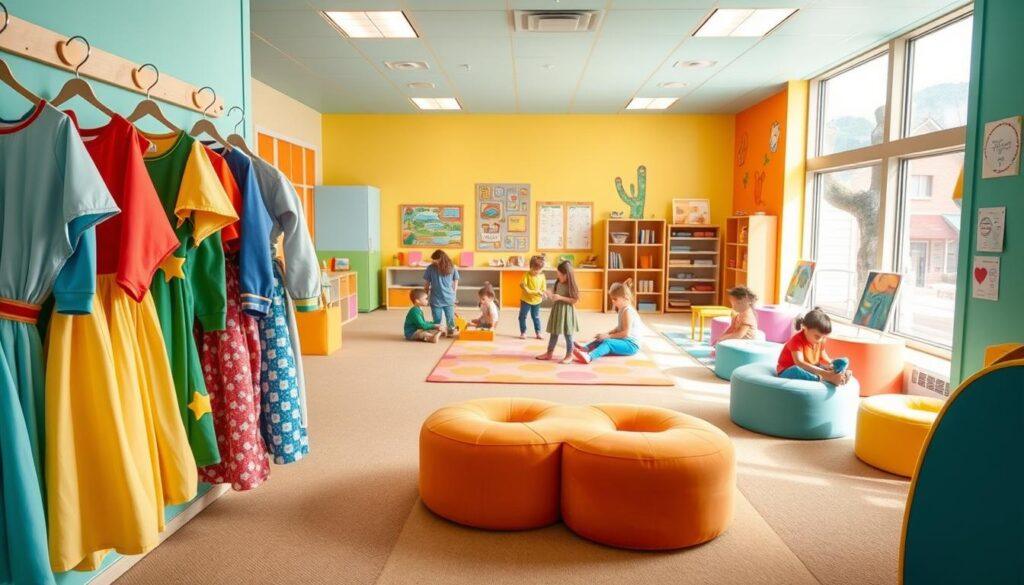
Modern parenting is like trying to find your way through a funhouse mirror. We’ve moved from being too lenient to being too strict. This makes finding the right balance tricky, even in places meant for fun and creativity.
Creating a safe dress-up playroom is all about finding the right balance. Anti-tip furniture is essential, not just a precaution. The IKEA Malm recall showed us how important it is to keep our furniture stable.
Tables and dressers with rounded edges remind us that our homes can be safe. Shatter-resistant mirrors also play a key role. They let kids enjoy their playtime without worrying about breaking anything.
We’re not trying to wrap everything in bubble wrap. We want to create a space where kids can be creative and have fun safely. It’s about creating a safe environment where kids can dream big, all while we watch over them.
Height ergonomics reach ranges by age stool safety handholds
Let’s explore the world of height ergonomics, where kids’ dreams meet their reach. Creating a playroom for kids is more than just smaller furniture. It’s about understanding their unique challenges.
A three-year-old’s arm is like a T. rex’s, eager but limited. We must think about how they’ll use their environment, like a step stool as a launchpad.
Stool safety is key. A wobbly stool can lead to accidents. We need anti-tip furniture for stability. We don’t want kids getting hurt.
Handholds are essential for safety. They help kids move around without falling. This supports their independence.
Here’s a table with height ranges for different ages and safety tips:
| Age Group | Recommended Reach Height | Stool Height | Safety Features |
|---|---|---|---|
| 2-3 years | 24-30 inches | 6-8 inches | Anti-tip base, non-slip surface |
| 4-5 years | 30-36 inches | 8-10 inches | Handholds, sturdy construction |
| 6-7 years | 36-42 inches | 10-12 inches | Wide base, reinforced joints |
Finding the right height balance is vital. Too high, and kids might climb. Too low, and they get frustrated. We aim for a space where kids can play safely and confidently.
Air and allergy low VOC finishes washable textiles scent policy
The air in your dress-up corner should inspire creativity, not cause respiratory distress. If it smells like a new car, it’s time to rethink your choices. Low-VOC finishes are essential for maintaining indoor air quality. They protect little lungs from harmful off-gassing.
Washable textiles are a must for public health. Children carry germs and grime. A princess gown that can’t survive a hot wash? That’s a biohazard waiting to happen. So, let’s keep those costumes clean and safe.
Now, let’s talk about scents. Your playroom shouldn’t smell like a Yankee Candle store. Fragrance can trigger migraines and asthma attacks. It’s vital to adopt a strict scent policy. Allergy-aware fabrics balance sensory delight with immunological calm.
Don’t forget about mirror safety. A shatter-resistant mirror reflects joy, not a trip to urgent care. We want an atmosphere so clean it’s practically Scandinavian, but with more glitter!
| Material Type | VOCs Level | Washable | Allergy-Friendly |
|---|---|---|---|
| Low-VOC Paint | Low | No | Yes |
| Washable Fabrics | Very Low | Yes | Yes |
| Standard Fabrics | High | Varies | No |
| Shatter-Resistant Mirrors | N/A | No | Yes |
Choking and entanglement beads ribbons strings length rules
The colorful beads and ribbons that delight kids can also be dangerous if not handled right. In dress-up playrooms, safety and accessibility are key. These accessories can quickly become choking hazards or entanglement traps.
The 6-inch rule for strings is not just a suggestion; it’s essential. A string longer than six inches can wrap around a child’s neck or get stuck in play structures. It’s a critical safety measure.
Picture a dress-up station that looks like a spider’s web, with ribbons and beads hanging like vines. Each piece can be a tripwire in play. In child safe design, every ribbon is like a snake—charming but dangerous.
So, what’s the answer? Shorten, secure, supervise. This trio of steps can make your playroom safe and fun. It’s like editing a film—cut the dangling threads to avoid dangers. By doing this, you can make a space where imagination grows without risks.
Electrical and lighting cord management battery safety LED temps
Playrooms are exciting but can also be dangerous. It’s important to manage cords well. A mess of wires can quickly become a fire hazard. It also looks messy and is a risk for kids who might pull on the cords.
Battery safety is key in child safe design. Tiny button batteries are dangerous because they’re small but powerful. They can cause serious burns inside a child. It’s vital to keep these batteries locked away.
LED temperatures are also important. We want fairy lights to add magic, not cause burns. Cool-to-the-touch LEDs are safer. They keep the playroom exciting without the risk of burns.
| Safety Aspect | Best Practice | Why It Matters |
|---|---|---|
| Cord Management | Use cord clips and covers | Prevents tripping hazards and reduces fire risk |
| Battery Safety | Secure battery compartments | Prevents accidental ingestion and burns |
| LED Lighting | Choose cool-to-the-touch options | Reduces burn risk and enhances safety |
In conclusion, making a playroom safe is more than just looks. It’s about creating a space where kids can play safely. By following these tips, your playroom will be both safe and magical. For more ideas on making a safe play area, see this guide.
Emergency plan first aid kit label contacts spill and glitter containment
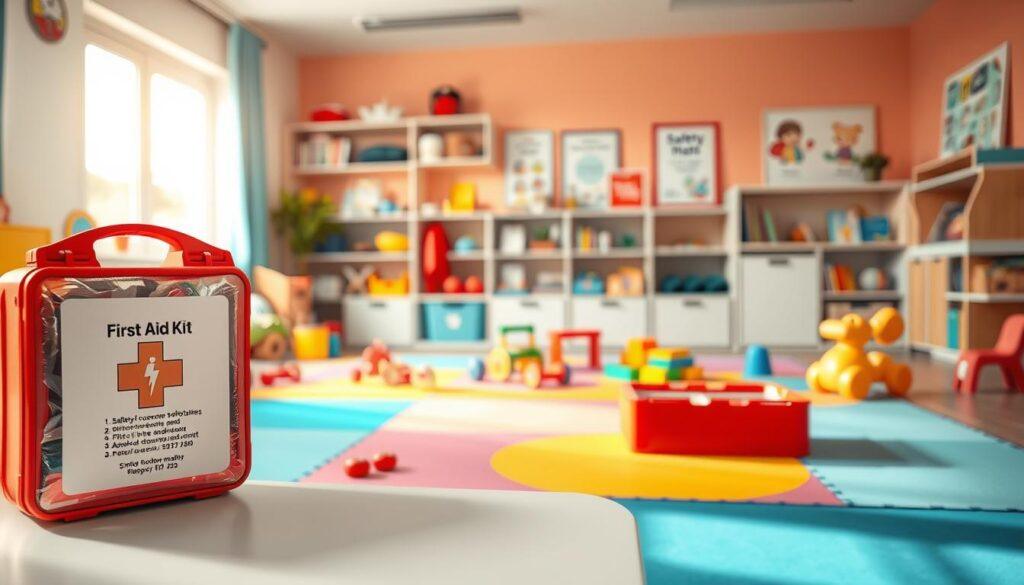
Every playroom needs a solid emergency plan. It’s like a superhero’s cape—there but hopefully never needed. A well-stocked first aid kit is key. It should be ready for action, with band-aids, antiseptic wipes, and an EpiPen for allergy-aware fabric emergencies.
Labeling emergency contacts is vital. Make these numbers as easy to find as a neon sign. When adrenaline hits, even the most organized parent might forget a number. Keep these contacts on the wall or near the first aid kit for quick access. It’s about keeping everyone safe and sound.
Now, let’s talk about spills and glitter. Glitter is like herpes—it’s hard to get rid of. A spill containment strategy is key to prevent slips. Use non-slip mats and keep cleaning supplies nearby. You don’t want to face a glittery lawsuit!
Ensure your emergency plan is detailed. It should cover every scenario, from minor injuries to serious allergic reactions. With a plan, you can enjoy the fun, knowing you’re prepared for anything.
For more on safety plans, check out this detailed document. It offers strategies for managing safety in playrooms.
Inclusion sensory friendly textures quiet nook weighted capes
Inclusion in playrooms is more than just ramps. It’s about creating a sensory haven for all kids. It’s about textures that welcome every explorer, even those with sensitive skin. Sensory-friendly fabrics turn a scratchy sequin into a cozy hug. This is what child safe design is all about.
A quiet nook is a peaceful spot when playtime gets too loud. Every child needs a place to recharge and find their calm. It’s a safe space to step away and find balance.
Weighted capes are more than just fun accessories. They’re like superhero hugs that help anxious kids feel grounded. Imagine wearing a cape that feels comforting and secure. It’s a game-changer for those who need extra support.
Inclusion is a powerful move, not just a checkbox. It’s about making a space where every child feels like the hero. We’re not lowering standards; we’re broadening what play means. Here, the only big scenes are the planned ones, and the quiet kid is just recharging.

Cleaning cadence weekly wipe monthly deep seasonal sanitize
Cleaning a dress-up playroom is not just a task; it’s a must. These spaces can quickly become breeding grounds for germs. We must have a strict cleaning schedule to keep them safe and accessible.
Weekly cleaning fights off dirt and germs from many hands. But, monthly deep cleans are key. They remove hidden dirt and germs from tight spots. It’s like a treasure hunt, but you find peace instead.
Seasonal sanitizing is the most important step. It’s like a shield against germs, like the flu. Allergy aware fabrics play a big role here. They must be washed regularly to stay effective.
Think of cleaning like a Japanese tea ceremony. It’s precise and necessary. This way, our playrooms smell of dreams, not dirt. Following this cleaning plan makes our playrooms safe and fun for kids.
| Cleaning Type | Frequency | Purpose |
|---|---|---|
| Weekly Wipe | Every week | Remove surface grime and sticky residues |
| Monthly Deep Clean | Once a month | Thoroughly clean and declutter |
| Seasonal Sanitize | Every season | Prepare for flu season and deep disinfect |
Parent policies borrowing sign outs party guest rules
In the world of dress-up playrooms, rules keep things in order. Borrowing policies protect the sparkly dresses and capes. Without them, a favorite dress might disappear, leaving kids heartbroken.
Sign-out sheets are like the DMV for playrooms. They help keep track of who has what. Each signature is a promise to return items, keeping everyone happy.
Party guest rules are also key. They limit the number of kids in costumes. Too many can cause chaos. Clear rules help keep the magic alive without any trouble.
Child safe design is more than just physical safety. It’s about understanding how people behave. When parents know the rules, the playroom becomes a place of joy and sharing. This makes playtime even more special.
| Policy Type | Description | Importance |
|---|---|---|
| Borrowing Policy | Tracks items borrowed by children | Prevents loss of costumes |
| Sign-Out Sheet | Records which items are taken home | Maintains inventory control |
| Party Guest Rules | Limits the number of attendees | Ensures manageable chaos |
For more on safety and accessibility, check out these visitation guidelines. They offer tips for welcoming all children.
Compliance checklist printable room audit
Welcome to the final frontier of playroom safety: the compliance checklist. It’s your trusty sidekick for safety and accessibility. This handy printable turns you into a safety inspector, ready to conquer any hazards in your child’s play space.
Every detail counts with this checklist. Is that cord managed? Check. Are the mirrors shatter-resistant? Check. It’s not just about checking boxes; it’s about creating a safe play space. Documenting your efforts makes your playroom a fun and safe haven.
Child safe design is an ongoing task. Downloading this checklist makes your space safe and welcoming. Make it a monthly tradition. Soon, you’ll find your space is safe and full of laughter.
Let this checklist guide you. Each tick mark brings you closer to a safer space. May your playroom be filled with laughter and free from hazards. Safety is a way of life.