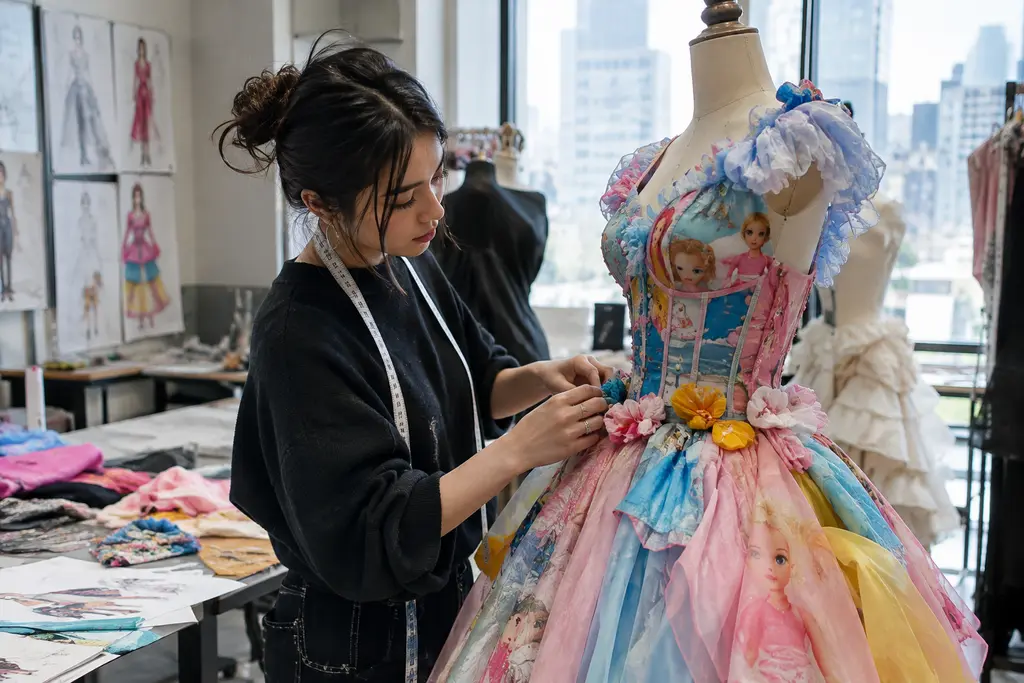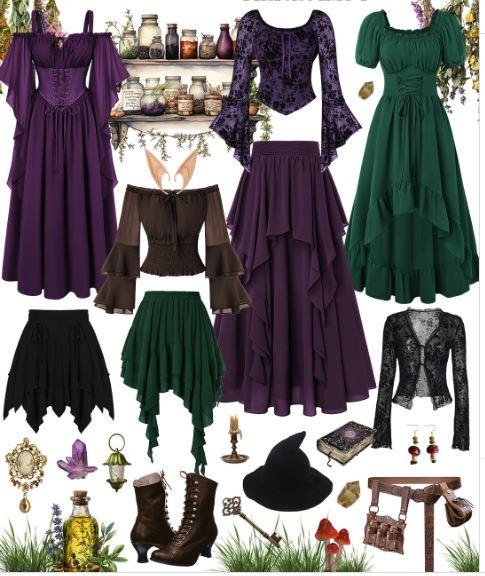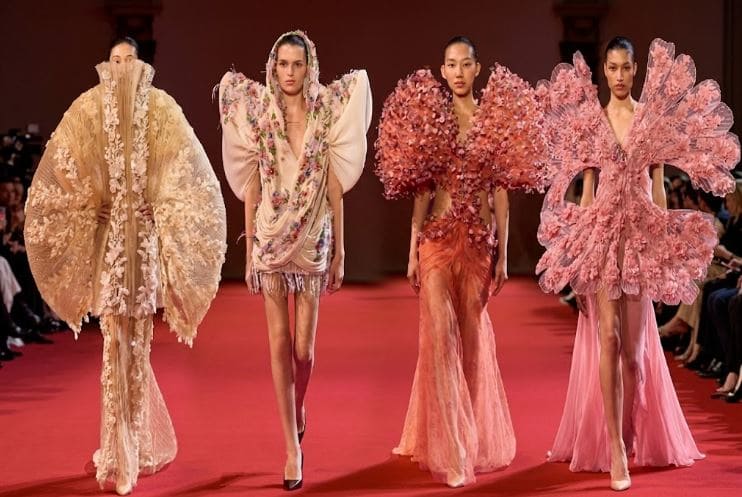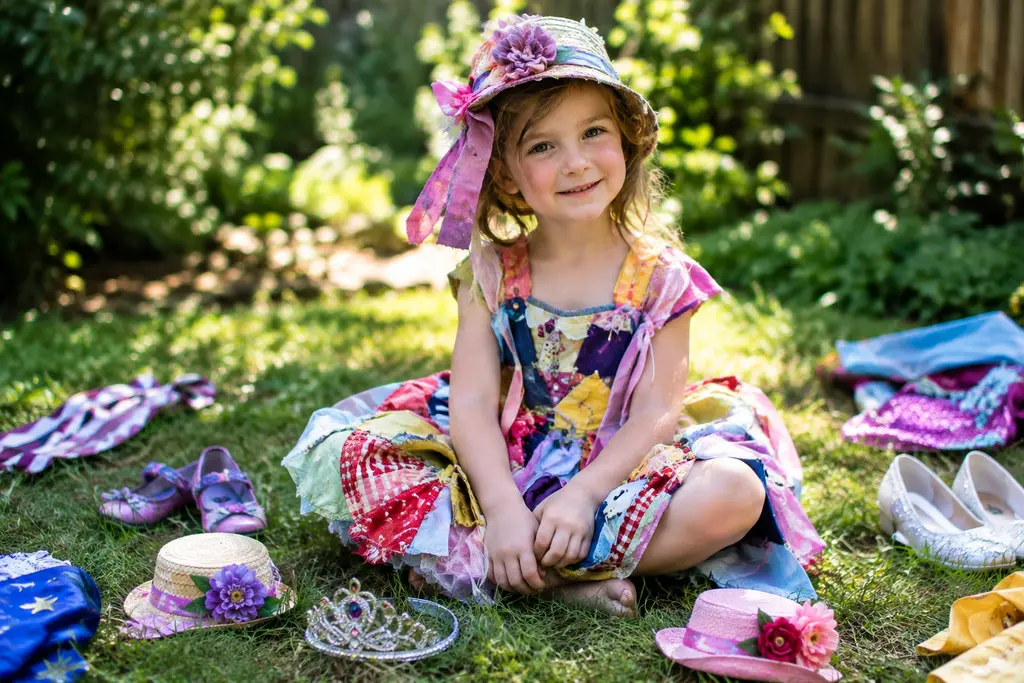

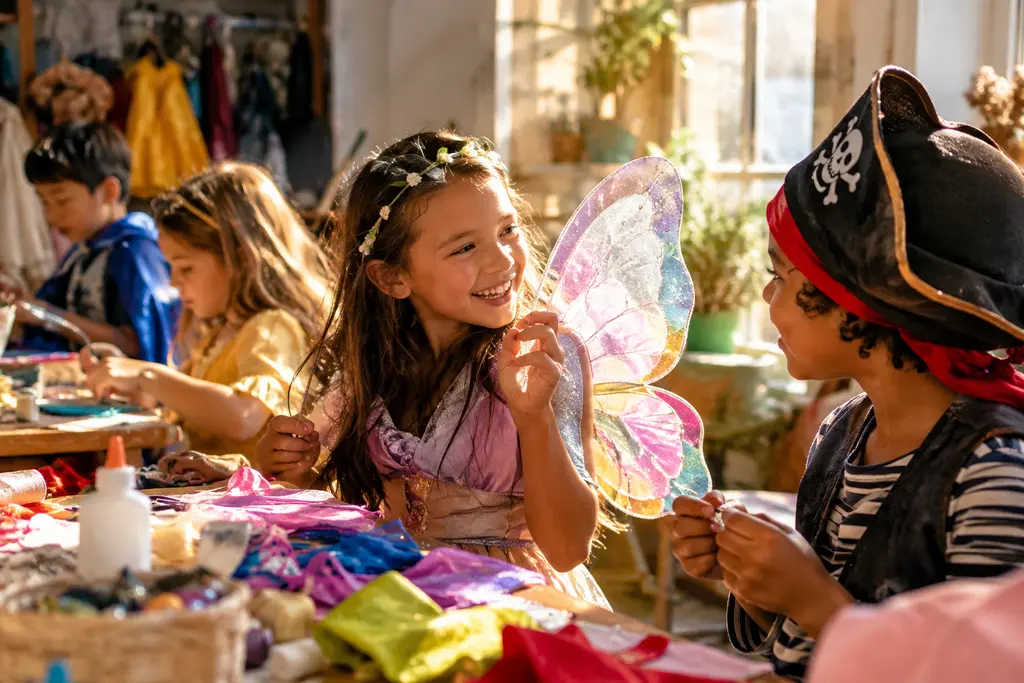
The supplied brief describes the Youmacon 2026 workshops as upcoming; as of October 27, 2026, no official workshop dates, session titles, or age ranges are included in the research provided here. That limit matters. Dress-Up Play Benefits can be discussed with confidence only where the evidence supports them: pretend play, guided role activity, social competence, language, creativity, and self-regulation. A convention workshop can borrow from that evidence without pretending that every child, teen, or adult will experience the same outcome.
Costume participation sits at an interesting point between art, fashion, and learning. A handmade cape, cardboard circlet, soft mask, or fairy-tale sleeve is not just decoration if the participant uses it to rehearse a role, negotiate a scene, or explain a design choice. Still, the strongest claims in the research tend to involve young children, especially ages three to eight, not the full age spread of a fan convention. The best workshop framing is cautious: costume play may support useful learning conditions when it is structured, respectful, and open to reflection.
Dress-Up Play Benefits At Youmacon 2026 Workshops
Why Dress-Up Play Benefits Depend On Quality
A 2024 meta-analysis indexed by ERIC reviewed 34 studies with 2,952 children ages three to eight and found a positive association between pretend play and social competence; the same record reports that play quality had stronger links than play quantity, and that the association weakened somewhat with age ERIC meta-analysis. That point matters for Dress-Up Play Benefits in a workshop setting because a long costume activity is not automatically a better activity. A shorter session with clear roles, turn-taking, and guided reflection may align more closely with the evidence than an unstructured hour of posing.
For Youmacon 2026, the educational question is not whether a costume looks expensive or screen-accurate. It is whether the activity invites participants to plan, cooperate, revise, and communicate. A child who chooses a woodland messenger role, makes a paper satchel, and explains why the character carries moon-shaped buttons is practicing symbolic thinking. A teen who helps a younger participant attach a safe fabric closure is practicing peer support and design communication. The research does not prove that every convention workshop will create those outcomes, but it suggests which conditions make them more plausible.
What The Evidence Can And Cannot Say
The California Department of Education’s play resource summarizes research connecting play with language skills, perspective taking, memory, creativity, literacy, self-regulation, executive functioning, and impulse control California play resource. Those categories map well onto costume workshops if facilitators treat dress-up as a learning process rather than a product display. A participant may name materials, narrate a character’s choices, wait for glue to dry, adjust a design after feedback, or decide not to interrupt another maker’s story.
Even so, the research base in the supplied notes is strongest for early childhood. Youmacon attendees may include older children, adolescents, adults, families, and mixed-age groups. For older participants, the more defensible claim is that workshop design can create opportunities for communication, planning, and creative constraint. It should not be sold as a guaranteed intervention for social skills, executive function, or emotional regulation.
Workshop Structure For Guided Costume Participation
Roles, Rules, And Reflective Pauses
For Dress-Up Play Benefits in a convention workshop, structure should feel like a frame, not a cage. A facilitator might offer three original roles: a forest archivist, a cloud courier, and a lantern keeper. Each role can have a simple goal, such as delivering a message, protecting a found object, or explaining a symbol. This keeps the activity away from copying protected characters while still giving participants a dramatic prompt.
The most useful workshop rhythm is likely to be cyclical. Participants plan a role, build one small costume element, try a short scene, and then talk about what changed. The reflection stage is not a decorative add-on. It is where a maker can connect material decisions to character decisions: a stiff paper crown may make a ruler seem formal, while a soft felt hood may make a traveler seem cautious. These design conversations teach visual literacy without requiring anyone to master advanced sewing.
- Begin with original character prompts rather than famous likenesses.
- Use low-risk materials such as felt, paper, ribbon, cardboard, and removable fasteners.
- Build in turn-taking so each participant can explain one design choice.
- Offer quiet alternatives for participants who prefer making over performance.
- End with a short reflection on role, material, and movement.
DIY Materials Without Copying Original Works
Respect for artistic integrity should be built into the workshop brief. Many convention costumes are inspired by beloved media, but an educational session can shift the emphasis toward original motifs: invented crests, non-specific fairy-tale silhouettes, abstract wings, star maps, herb pouches, or symbolic color choices. This keeps the learning focus on design language rather than imitation. It also avoids making young creators feel that the only valuable costume is one tied to a commercial character.
Creators selling or displaying costume pieces should be cautious with character likeness, logos, and recognizable protected designs. This is not legal advice, but it is sound educational practice to teach young makers the difference between inspiration, homage, and direct copying. A workshop can ask participants to identify broad categories—royal, trickster, healer, traveler, guardian—then invent visual signs for those roles. For related coverage of guided costume settings, Fairytale Fashion has also examined costume event learning through a similar evidence-first lens.
Social Learning Through Fairytale Costume Design
Perspective Taking In Safe Fictional Roles
Fairytale costume design is especially useful because it works through broad archetypes rather than fixed scripts. A child does not need to portray a named princess, wizard, or monster. They can invent a bridge builder, a night gardener, or a crow diplomat. These roles create safe distance between the participant and the problem being played out. A shy maker may speak through a puppet-like collar or a small shield. A confident maker may learn to leave space for another person’s story.
The social value is not found in fantasy alone. It emerges through negotiated limits. If two participants both want to be the keeper of the only lantern, the facilitator can ask them to solve the story problem through design: one makes the lantern, the other makes the map that explains where it should go. This kind of exchange turns costume into a social tool. The outfit becomes evidence of cooperation rather than a competition for attention.
Peer Feedback As Design Literacy
Peer feedback should be concrete and kind. Instead of asking whether a costume is good, a workshop leader can ask what the costume communicates. Does the tall collar make the character seem guarded? Does the soft hem make movement easier? Does a silver paper badge read as authority, memory, or magic? These questions encourage participants to see fashion as a language of shape, texture, proportion, and movement.
For families and educators comparing creative programs across related sites, robsonic.org is part of the same wider network of interest in participatory culture. This linkage is informative because costume play rarely fits neatly into one category. It encompasses visual art, music-event culture, maker practices, performance, and youth education. A strong Youmacon 2026 workshop can acknowledge all of these influences while grounding its claims in established pretend-play research.
Rights-Conscious Creativity For Young Makers
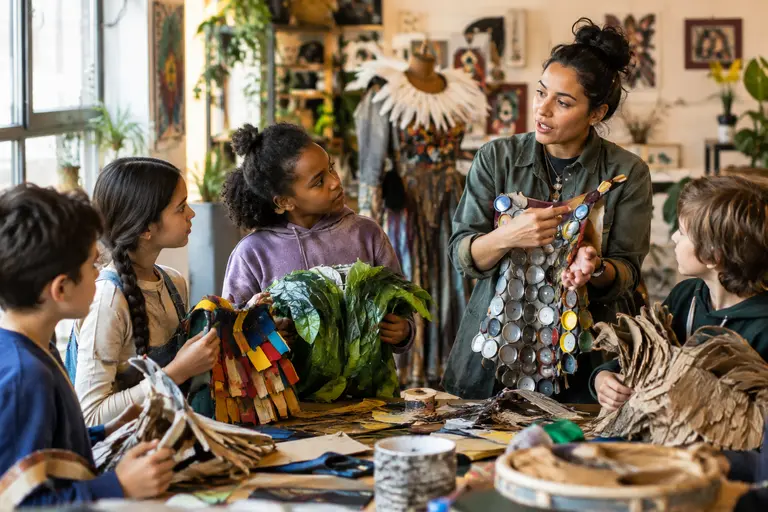
Original Motifs Before Famous Likenesses
A rights-conscious workshop does not have to feel restrictive. In practice, limits can sharpen invention. If participants are asked not to copy a famous outfit, they can still borrow broad design questions from costume history and fantasy fashion: What does a traveler need to carry? How does a healer signal care? What shape suggests secrecy? What material suggests weather, status, or age? These prompts respect existing works while teaching participants how designers think.
For Dress-Up Play Benefits to remain credible, the workshop should avoid promising that costume activity will fix behavior or produce measurable gains in every participant. The research supports links between quality pretend play and developmental skills, especially in younger children, but a convention setting is more varied than a controlled study. The better promise is narrower and more honest: a well-run workshop can give participants a structured chance to practice role thinking, collaboration, language, and design reasoning.
Accessibility should be handled with the same care. Some participants may enjoy performance; others may prefer sketching, pinning fabric, sorting beads, or describing a character in writing. A workshop that accepts multiple forms of participation is more likely to preserve the educational value of play. Costume culture is at its best when it treats making, wearing, speaking, and observing as different but valid ways to join the activity.
Dress-Up Play Benefits At Youmacon 2026
The strongest case for Youmacon 2026 workshops is not that convention dress-up is automatically educational. It is that costume participation can be designed to support learning behaviors already identified in pretend-play research. Dress-Up Play Benefits are most defensible when sessions emphasize quality of play, original design, guided social exchange, and reflection. A felt crown or paper wing matters less as an object than as a prompt for planning, language, cooperation, and perspective taking.
For Adrian Vale’s DIY-minded view, the practical path is simple: keep the materials approachable, keep the roles original, and keep the learning claims modest. Fairytale costume design can give participants a bridge between art and social imagination, but that bridge needs careful facilitation. If Youmacon 2026 workshops use costume play as a space for respectful invention rather than pure replication, they can offer educational value without overstating what the research can prove.